





Aqua therapy is a specialized form of physiotherapy conducted in a temperature-controlled pool to aid recovery from injuries. For an ankle sprain, which is a ligament injury caused by twisting or rolling the ankle, this low-impact rehabilitation is exceptionally effective. Whether you have a mild Grade 1 sprain or a more moderate Grade 2 or 3 sprain, guided **aqua therapy for ankle sprains** allows you to begin healing and movement sooner and more safely than land-based exercises alone.
What is an Ankle Sprain? Causes, Grades and Symptoms Explained
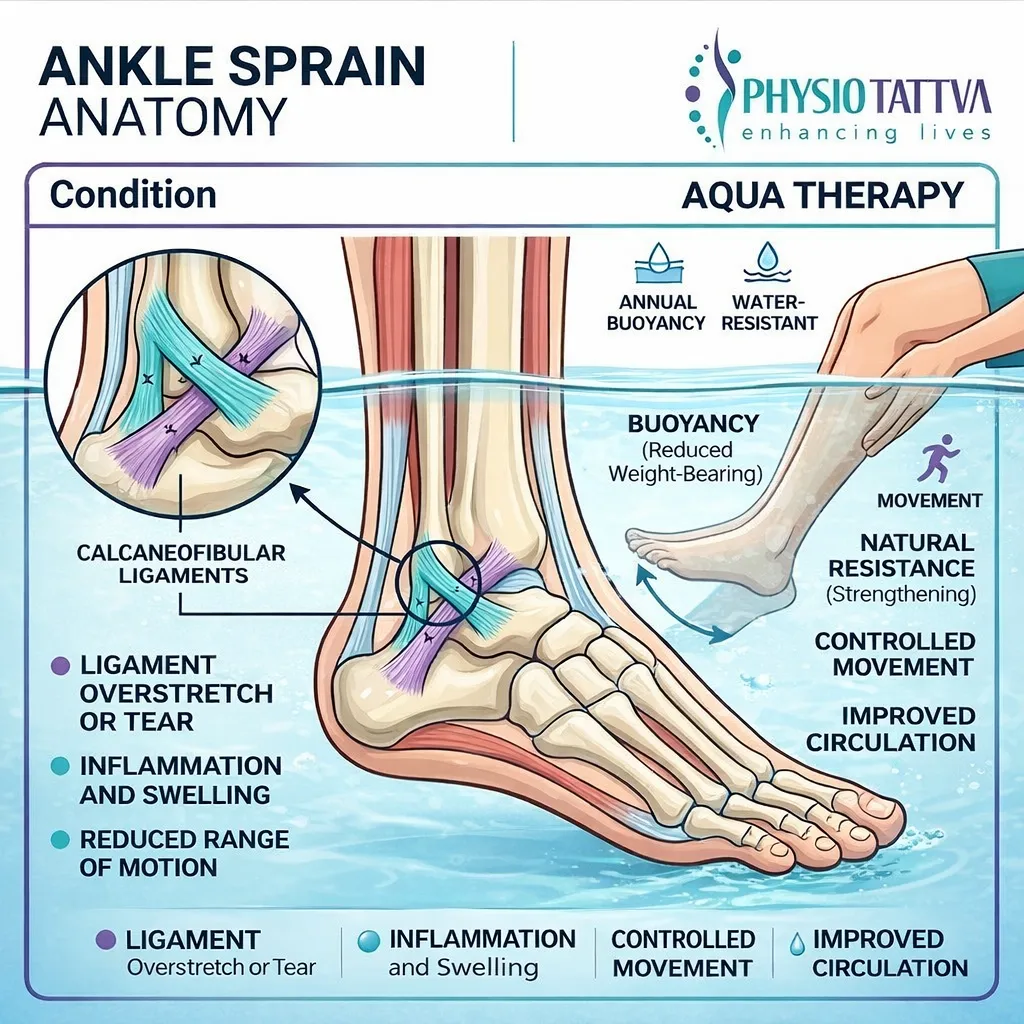
At its simplest, an ankle sprain is an injury to the tough, elastic ligaments that act like rubber bands, connecting the bones of your leg to your foot and providing stability to the joint. When you twist your ankle, these ligaments can be stretched too far or even torn. Sprains are typically classified into three grades:
- Grade 1: A mild sprain with stretching or microscopic tearing of ligament fibres.
- Grade 2: A moderate sprain involving a partial tear of the ligament.
- Grade 3: A severe sprain with a complete tear or rupture of the ligament.
Regardless of the grade, proper healing is non-negotiable. Rushing back to activity without fully restoring strength and balance can lead to Chronic Ankle Instability (CAI), a condition where the ankle constantly feels like it’s about to “give way.” This increases your risk of recurring sprains and can significantly hinder your long-term athletic performance and daily confidence.
How Ankle Sprains Affect Mobility and Balance
An untreated or poorly rehabilitated ankle sprain can significantly disrupt your life. The injury directly impacts your ability to:
- Walk without a limp or pain
- Climb stairs confidently
- Participate in sports and recreational activities
- Maintain balance, increasing the risk of falls and re-injury
What is Aqua Therapy? Clinical Hydrotherapy for Ligament Healing
Aqua therapy, also known as hydrotherapy, is a form of specialized physiotherapy performed in a temperature-controlled pool under the guidance of a trained therapist. It’s far more than just swimming; it’s a therapeutic science that harnesses the unique properties of water to create the perfect environment for healing. The magic lies in three key principles:
How Buoyancy Reduces Weight Bearing Stress on the Ankle
Water counteracts gravity, providing an upward thrust that lifts your body. In chest-deep water, you bear as little as 25-30% of your body weight. This dramatically offloads stress from your injured ankle, allowing you to stand, walk, and perform exercises much earlier and with significantly less pain than you could on land.
How Hydrostatic Pressure Reduces Swelling and Inflammation
The pressure exerted by the water on your submerged body acts like a full-body compression sleeve. This constant, gentle pressure helps to reduce swelling (edema) by pushing excess fluid away from the injured area and back into circulation. It can also help decrease pain sensitivity.
How Water Resistance Strengthens the Ankle Safely
Water is denser than air, creating a consistent, 360-degree resistance to movement. This natural resistance provides a safe way to strengthen the muscles surrounding your ankle without the jarring impact or instability of weights. The faster you move, the greater the resistance, allowing for easily controlled, progressive strengthening.
Clinical Benefits of Aqua Therapy for Ankle Sprain Rehabilitation
This unique combination of properties makes aqua therapy an incredibly effective tool for ankle sprain rehabilitation. Here are the top five benefits you can expect.
Reduces Pain and Swelling in the Early Recovery Phase
The moment you step into a warm therapy pool, you feel relief. The warmth of the water helps to relax tense muscles and improve blood flow (vasodilation), which promotes healing. Simultaneously, the hydrostatic pressure acts tirelessly to reduce inflammation and swelling around the joint. This powerful one-two punch means less reliance on pain medication and a more comfortable recovery experience from day one.
Supports Earlier and Safer Weight Bearing
One of the biggest hurdles in ankle sprain recovery is the transition back to bearing weight. It can be painful and scary. Buoyancy solves this problem. By supporting most of your body weight, the water allows you to practice walking with a normal gait pattern long before it’s comfortable to do so on land. This early movement prevents muscle atrophy and helps your brain retrain the correct motor patterns, accelerating your return to walking normally.
Improves Ankle Mobility and Flexibility
Ankle stiffness is a common and limiting consequence of a sprain. The supportive, warm environment of the hydrotherapy pool relaxes tight muscles and allows your ankle to move more freely. Under a therapist’s guidance, you can perform gentle range-of-motion exercises like ankle circles, pointing and flexing your foot, and writing the alphabet with your big toe, all with less pain, allowing you to restore mobility much faster.
Builds Ankle Strength and Stability Gradually
Strong muscles around the ankle are your best defence against future injuries. Aqua therapy provides a perfectly progressive way to rebuild that strength. Simply walking through the water challenges your muscles. As you get stronger, your therapist can increase the difficulty by having you walk faster, sideways, or backwards, or by introducing underwater equipment like fins or resistance jets. This ensures your muscles are consistently challenged without ever being overloaded.
Enhances Balance and Proprioception After Injury
Proprioception is your body's "sixth sense"—its ability to know where its parts are in space without you looking. An ankle sprain damages the nerve receptors responsible for this, which is why your balance feels off. The gentle turbulence of the water constantly challenges your stability, forcing the proprioceptive system in your ankle to fire up and recalibrate. This retraining is crucial for preventing future sprains and building a truly resilient ankle.
Who is an Ideal Candidate for Aqua Therapy for Ankle Sprains?
Aqua therapy is particularly beneficial for individuals with:
- Acute Grade 1 and Grade 2 ankle sprains
- Post-surgical ankle rehabilitation needs
- Chronic ankle instability
- Those needing rehabilitation after a period of immobilization (casting or bracing)
Who Should Avoid Aqua Therapy? Safety and Contraindications
While highly safe, aqua therapy may not be suitable for everyone. You should avoid it if you have:
- A severe Grade 3 ligament tear that has not been medically cleared
- Open, unhealed wounds or skin infections
- Fever or a contagious illness
- Severe cardiac conditions or uncontrolled blood pressure
- Incontinence
What Happens During an Aqua Therapy Session at Physiotattva?
Stepping into aqua therapy for the first time can be a new experience, but our team at Physiotattva makes it simple and effective. Here’s a look at a typical session:
- Initial Assessment: Your session begins on land with a qualified physiotherapist who will review your injury, assess your current pain levels and range of motion, and discuss your recovery goals.
- Guided Entry & Warm-Up: You’ll be guided into our state-of-the-art, temperature-controlled pool. Your therapist will start you with gentle movements to warm up the muscles and acclimatize your ankle to the water.
- Targeted Exercises: Your therapist will lead you through a series of exercises tailored specifically for your stage of recovery. This may include:
- Range-of-Motion Drills: Ankle alphabets, points, and flexes.
- Gait Training: Practicing walking forwards, backwards, and sideways to restore a normal walking pattern.
- Strengthening Exercises: Gentle calf raises, marching, and single-leg balancing as you progress.
- Flexibility Stretches: Using the water for support to gently stretch the calf and surrounding muscles.
- Cool-Down: The session concludes with slow, gentle stretches to relax the muscles and aid recovery.
- Personalised Plan: Every program at Physiotattva is 100% customized. Your therapist will continuously adapt your exercises based on your progress, ensuring you are always moving forward safely and effectively.
Why Choose Physiotattva for Ankle Sprain Rehabilitation?
Don't let an ankle sprain dictate your life for weeks or months. Our state-of-the-art hydrotherapy pools in Bangalore and Hyderabad offer the ideal environment for your recovery. Our certified physiotherapists specialize in designing and supervising personalised aqua therapy programs that deliver faster, safer results. We are committed to providing one-on-one care to help you get back on your feet with confidence.
At Physiotattva physiotherapy clinics in Bangalore and Hyderabad, you receive personalised care tailored to your specific needs, ensuring effective results and comfort throughout your journey to recovery.
Don’t wait to start your recovery! Get in touch with Physiotattva for more details! Contact us at +91 89510 47001.
Why Physiotattva?
22+
50,000+
95%
200+
25+
4.8
Cities We Serve

Bangalore
At Physio Tattva, we are committed to bring access to quality physio care through ultra-modern clinics and high-skilled practitioners to all.
.webp)
Hyderabad
At Physio Tattva, we are committed to bring access to quality physio care through ultra-modern clinics and high-skilled practitioners to all.
.webp)
Vishakhapatnam
At Physio Tattva, we are committed to bring access to quality physio care through ultra-modern clinics and high-skilled practitioners to all.
Core Treatments
Core Conditions
Core Symptoms
Frequently Asked Questions
When Can I Begin Aqua Therapy After an Ankle Sprain?

Do I Need Swimming Skills for Aqua Therapy?
How is Aqua Therapy Different from Recreational Swimming?
How Many Aqua Therapy Sessions Are Needed?






%20(1)-p-3200.jpeg)


.jpg)
.webp)
.webp)
.webp)