




Aqua therapy is a specialized form of physiotherapy that utilizes the physical properties of water to facilitate effective, low-impact rehabilitation. For a hamstring strain, which involves the tearing of muscle fibres in the back of the thigh from overstretching or sudden overload, aquatic exercises provide a uniquely supportive environment for healing and strengthening without the stress of land-based movements.
What is a Hamstring Strain? Causes, Grades and Symptoms Explained
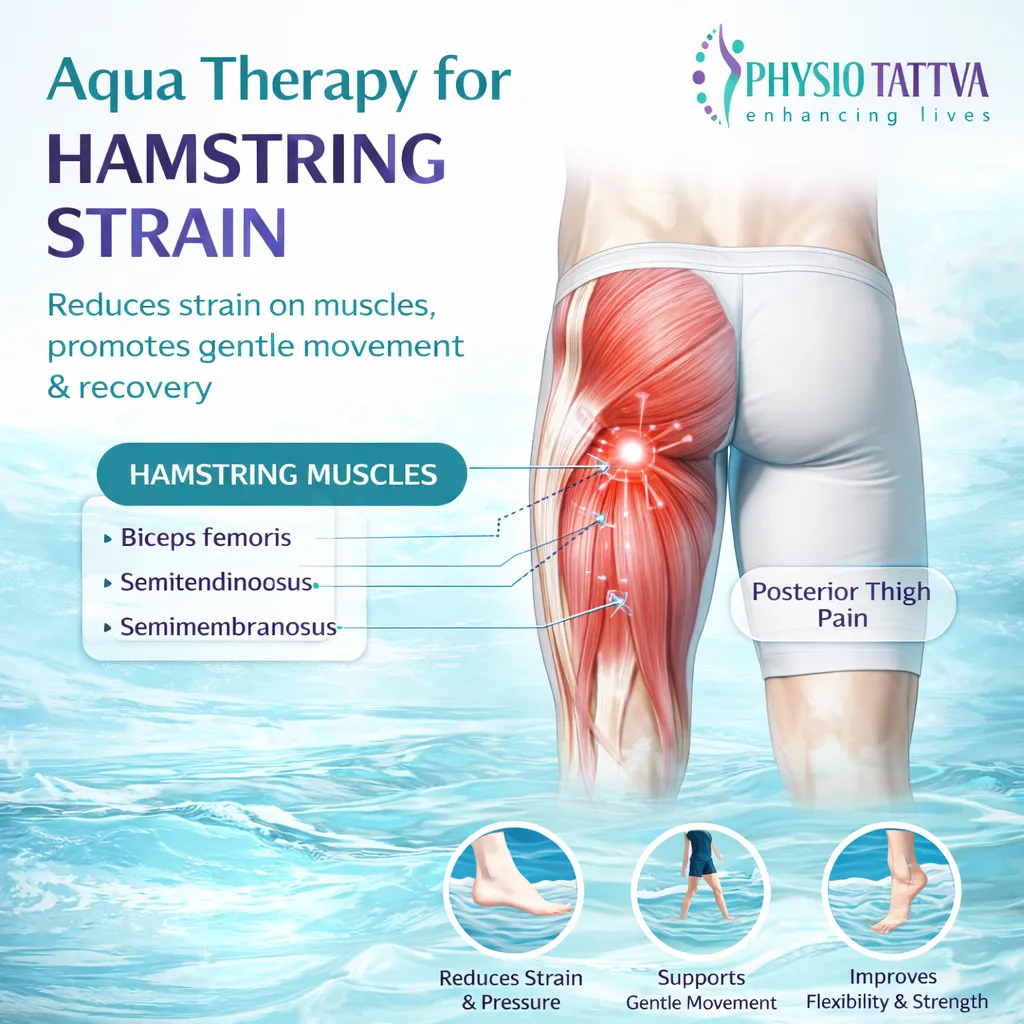
Before we dive into the solution, it's essential to understand the injury itself. The "hamstrings" are not a single muscle but a group of three large muscles running along the back of your thigh. A hamstring strain occurs when one or more of these muscles are overstretched or torn. These injuries are typically graded based on their severity:
- Grade 1: A mild pull or strain with micro-tears in the muscle fibers. You might feel tightness and discomfort but can still walk.
- Grade 2: A partial tear of the muscle. This causes more significant pain, swelling, and a noticeable loss of strength.
- Grade 3: A complete rupture of the muscle. This is a severe injury accompanied by intense pain, swelling, and an inability to use the leg.
Common causes include explosive movements like sprinting, sudden stops and starts in sports, overstretching, or an imbalance between the strength of your hamstrings and your quadriceps. Traditional recovery can be slow, as the muscle needs to be rested but also gradually strengthened without being re-injured.
How a Hamstring Strain Affects Movement and Athletic Performance?
A hamstring injury directly impacts your ability to walk, run, climb stairs, and bend over. It limits your athletic performance by reducing power, speed, and agility. Without proper and complete rehabilitation, the risk of re-injury is significantly high, potentially leading to chronic pain and long-term weakness in the muscle.
What is Aqua Therapy? Clinical Hydrotherapy for Muscle Rehabilitation
Imagine a recovery environment where your body feels lighter, movement is free from painful impact, and your muscles are gently soothed. This is the essence of aqua therapy. Far from just swimming laps, aqua therapy (or hydrotherapy) involves performing specific, targeted therapeutic exercises in a temperature-controlled pool under the supervision of a qualified physiotherapist. The water is typically kept at a warm, therapeutic temperature (around 33-36°C), which helps relax tight muscles, reduce pain, and improve circulation to the injured area, creating the perfect setting for rehabilitation.
How Aqua Therapy Helps Heal a Hamstring Strain?
Aqua therapy isn't just about feeling good; it's a scientifically proven method for effective rehabilitation. The unique physical properties of water create a superior environment for recovering from a hamstring strain. Here’s why:
How Buoyancy Reduces Load on the Injured Hamstring?
This is the star of the show. Water’s buoyancy counteracts gravity, supporting up to 90% of your body weight when you're chest-deep. This support offloads the injured hamstring, allowing for early, pain-free movement. You can begin gentle range-of-motion and strengthening exercises far sooner than you could on land, accelerating the healing process.
How Hydrostatic Pressure Reduces Swelling and Supports Healing?
The water exerts a gentle, constant pressure on your submerged body. This acts like a full-body compression wrap, helping to naturally reduce the swelling (edema) in your injured leg. This pressure also helps to decrease pain perception and improve your body awareness.
How Water Resistance Rebuilds Strength Safely?
Water provides 360-degree resistance that is both safe and effective. Unlike weights, which can put undue stress on joints, the water’s viscosity provides a gentle force to push against. By simply adjusting the speed of your movements, you can easily progress from gentle motion to more challenging strengthening, rebuilding the hamstring and supporting muscles (like glutes and quads) without risk of re-injury.
How Warm Water Relaxes Tight Muscles and Reduces Pain?
The warm therapeutic pool soothes the injured muscle, promoting relaxation and reducing painful muscle spasms. This warmth also increases blood flow to the hamstring, delivering essential oxygen and nutrients that are vital for tissue repair and faster healing.
Evidence Based Aqua Therapy Exercises for Hamstring Rehabilitation
Under the guidance of a physiotherapist, these targeted aquatic exercises for a torn hamstring can significantly speed up your healing. They are designed to improve flexibility, strength, and function without stressing the healing tissue.
Disclaimer: Always perform these exercises after a thorough assessment and under the direct supervision of a qualified physiotherapist at a facility like Physiotattva. Your therapist will tailor the program to the specific grade and stage of your injury.
Water Walking and Light Jogging for Gait Reeducation
Here’s how to perform this exercise safely and understand its role in recovery.
- How-to: In chest-deep water, begin by walking forward and then backward across the pool. Focus on a normal heel-to-toe pattern. As you improve, progress to a slow jog in place, lifting your knees gently.
- Why it helps: This is a safe, low-impact way to restore your normal walking pattern (gait) and gently activate the hamstring muscles without the jarring force of land-based walking.
Standing Hamstring Curls in Water
Follow these steps to do this exercise correctly and gain maximum benefit.
- How-to: Stand near the pool wall for support. Keeping your thigh still, slowly bend your injured knee, bringing your heel up toward your glutes against the water's resistance. Hold for a moment, then slowly lower your foot back down.
- Why it helps: This exercise directly isolates and strengthens the hamstring muscles in a controlled, supportive environment.
Gentle Knee Extension for Mobility Restoration
Your physiotherapist may guide you through this movement to restore balance and coordination.
- How-to: Standing on your uninjured leg, hold onto the wall for balance. Slowly straighten the knee of your injured leg forward, pushing against the water's resistance. Return to the starting position slowly.
- Why it helps: Strengthening your quadriceps (the opposing muscle group) is crucial for creating stability around the knee joint and balancing the forces on your leg, which helps protect the hamstring.
Hip Extension Drills for Posterior Chain Strength
Here’s a controlled movement that strengthens both your glutes and hamstrings.
- How-to: Face the pool wall and hold on for support. Keeping your injured leg straight, slowly swing it backward from the hip. Squeeze your glute at the top of the movement and return to the start with control.
- Why it helps: This movement strengthens both the glutes and the hamstrings, which work together to produce powerful, functional movements like running and climbing.
Pendulum Swing for Hamstring Flexibility and Control
This gentle movement helps improve flexibility without straining the muscle.
- How-to: Stand on your uninjured leg while holding the pool wall. Allow your injured leg to hang freely in the water. Gently swing it forward and backward like a pendulum within a pain-free range. Do not force the movement.
- Why it helps: This promotes gentle, dynamic stretching and improves the range of motion in your hip and hamstring, reducing stiffness without aggressive stretching.
Who is an Ideal Candidate for Aqua Therapy for Hamstring Strain?
Individuals with Grade 1 and 2 hamstring strains.
- Patients in the early stages of rehabilitation who cannot bear full weight.
- Athletes looking for a safe way to maintain fitness and return to sport
- People with recurrent hamstring injuries needing to break the cycle.
Who Should Avoid Aqua Therapy? Safety and Contraindications
Aqua therapy is very safe but may not be suitable for everyone. You should avoid it if you have:
- A severe (Grade 3) hamstring rupture requiring surgery.
- Open wounds, skin infections, or rashes.
- Fever, infection, or contagious diseases.
- Uncontrolled cardiac conditions or severe breathing difficulties.
- Incontinence.
What to Expect During Aqua Therapy at Physiotattva
At Physiotattva, we specialise in providing personalised hamstring strain treatment in Bangalore and Hyderabad. We believe in a holistic recovery plan where advanced techniques like hydrotherapy are integrated seamlessly with traditional physiotherapy for hamstring strain. Your journey with us includes:
- A comprehensive initial assessment to diagnose the grade of your strain.
- One-on-one sessions in our state-of-the-art aquatic therapy facilities.
- A personalised program combining aquatic exercises with hands-on physiotherapy, strength training, and flexibility work.
- Guidance from certified physiotherapists who monitor your progress and safely advance your program until you are ready for a full return to your sport or daily activities.
Why Choose Physiotattva for Hamstring Strain Rehabilitation?
A hamstring strain can be a significant setback, but it doesn't have to mean a long and painful layoff. Aqua therapy provides a scientifically proven, gentle, and highly effective path to recovery. By harnessing the unique properties of water, you can reduce pain, restore strength and flexibility, and get back to the life you love, faster and safer.
At Physiotattva physiotherapy clinics in Bangalore and Hyderabad, you receive personalised care tailored to your specific needs, ensuring effective results and comfort throughout your journey to recovery.
Don’t wait to start your recovery! Get in touch with Physiotattva for more details! Contact us at +91 89510 47001.
Why Physiotattva?
22+
50,000+
95%
200+
25+
4.8
Cities We Serve

Bangalore
At Physio Tattva, we are committed to bring access to quality physio care through ultra-modern clinics and high-skilled practitioners to all.
.webp)
Hyderabad
At Physio Tattva, we are committed to bring access to quality physio care through ultra-modern clinics and high-skilled practitioners to all.
.webp)
Vishakhapatnam
At Physio Tattva, we are committed to bring access to quality physio care through ultra-modern clinics and high-skilled practitioners to all.
Core Treatments
Core Conditions
Core Symptoms
Frequently Asked Questions
When Can I Begin Aqua Therapy After a Hamstring Injury?

Do I Need Swimming Skills for Aqua Therapy?
How is Aqua Therapy Different from Recreational Swimming?
Is Aqua Therapy Painful During Hamstring Recovery?






%20(1)-p-3200.jpeg)


.jpg)
.webp)
.webp)
.webp)