




Physiotherapy Treatment for Knee Pain
The knee joint is one of the largest joints of the human body and is mostly designed to support the entire weight of your body.
Aqua therapy is a specialized form of physiotherapy conducted in a temperature-controlled pool to relieve pain and improve physical function. If you struggle with knee pain caused by conditions like osteoarthritis, ligament injuries, or post-surgical recovery, you likely experience stiffness, swelling, and difficulty walking. Aqua therapy offers a low-impact solution for knee rehabilitation, using water's natural properties to help you strengthen muscles and regain mobility without placing stress on your joints.
Knee pain can stem from various injuries and conditions, including:
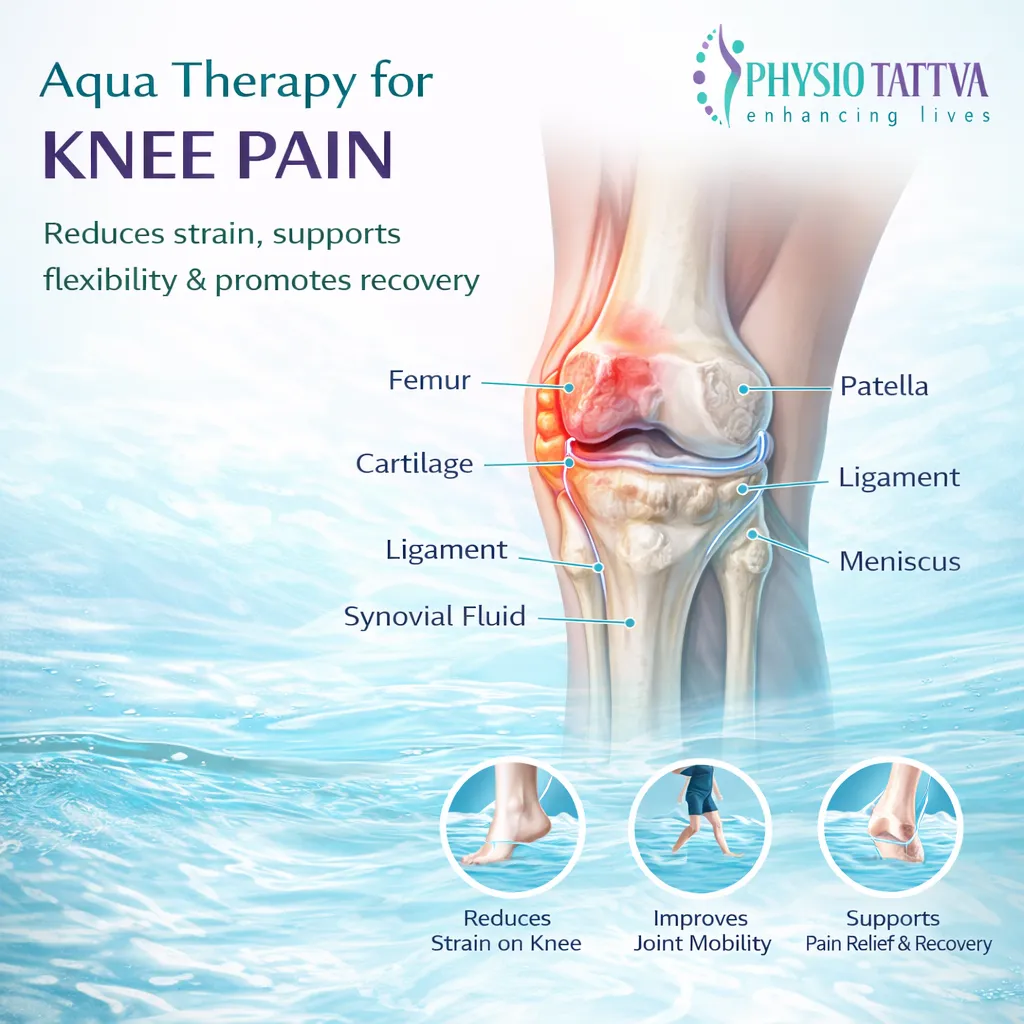
At its core, aqua therapy is a specialized form of physiotherapy conducted in a purpose-built, temperature-controlled pool under the supervision of a trained therapist. The magic lies in the unique properties of water, which create an ideal environment for healing. Three key principles make this form of aquatic physical therapy so effective:
When you begin hydrotherapy for knee pain, the benefits go far beyond just a soothing dip in the pool. Here’s how it directly targets your recovery.
The combination of warm water and buoyancy provides immediate relief. The warmth soothes sore muscles and eases joint stiffness, while the buoyancy offloads the knee joint. Many patients report a significant decrease in pain from their very first session.
Land-based exercises like squats or lunges can be jarring for a painful knee. In water, you can perform these same strengthening movements with far less impact. The water’s resistance challenges your muscles, allowing you to build strength safely and progressively.
Stiffness is a common complaint with knee pain. The support of water allows you to move your knee through a wider range of motion with greater comfort and confidence. This helps break down scar tissue, reduce stiffness, and restore flexibility faster than on land.
The hydrostatic pressure of the water is a natural anti-inflammatory. It helps to push excess fluid away from the injured or arthritic knee, effectively reducing swelling and promoting a healthier environment for your tissues to heal.
The gentle currents and turbulence in the water constantly challenge your stability. This trains your body’s awareness of its position in space (proprioception), improving your balance and coordination. This is crucial for preventing future falls and re-injuries.
Aqua therapy is not a one-size-fits-all solution, but it is exceptionally effective for a wide range of knee-related issues. Our physiotherapists highly recommend it for individuals with:
While aqua therapy is very safe, it may not be suitable for everyone. Please consult your doctor before starting if you have any of the following conditions:
Your session will be tailored to your specific needs by a Physiotattva therapist. However, some common water exercises for knee pain include:
Disclaimer: Always consult a physiotherapist to get a personalized exercise plan. These exercises are for informational purposes only and should be performed under professional guidance.
Your path to knee pain treatment in Bangalore and Hyderabad starts here. Physiotattva offers state-of-the-art aquatic therapy facilities staffed by certified physiotherapists. We don’t believe in generic plans. Your journey begins with a thorough assessment, after which we design a one-on-one, custom treatment program tailored to your condition, pain level, and recovery goals. Let our experts guide you back to the active life you miss.
At Physiotattva physiotherapy clinics in Bangalore and Hyderabad, you receive personalised care tailored to your specific needs, ensuring effective results and comfort throughout your journey to recovery.
Don’t wait to start your recovery! Get in touch with Physiotattva for more details! Contact us at +91 89510 47001

At Physio Tattva, we are committed to bring access to quality physio care through ultra-modern clinics and high-skilled practitioners to all.
.webp)
At Physio Tattva, we are committed to bring access to quality physio care through ultra-modern clinics and high-skilled practitioners to all.
.webp)
At Physio Tattva, we are committed to bring access to quality physio care through ultra-modern clinics and high-skilled practitioners to all.

.webp)







%20(1)-p-3200.jpeg)


.jpg)
.webp)
.webp)
.webp)


