





Physiotherapy for Loss Of Balance
It is quite self-explanatory from the name itself. Balance problems are when the person fails to maintain balance within the center of gravity.
Aqua therapy is a specialized form of physiotherapy conducted in a warm-water pool to improve balance and prevent falls. Loss of balance, often caused by impaired coordination from vestibular, neurological, or musculoskeletal issues, can lead to instability and a significant risk of falling. This therapeutic approach uses the unique properties of water to create a safe, supportive environment for balance rehabilitation and confidence building.
Feeling unsteady isn't a simple case of being clumsy. Our ability to stay upright is a complex symphony conducted by three main systems in our body. When one or more of these systems are compromised, your balance falters.
The ability to maintain balance is a complex process that relies on the coordination of three key systems in your body. These systems work together to help you stay upright and navigate your environment. When one or more of these systems is compromised, balance issues can arise. The three pillars of balance are:
Several underlying factors can interfere with how your balance systems work, making everyday movements feel unstable or unsafe. Some of the most common contributors include:
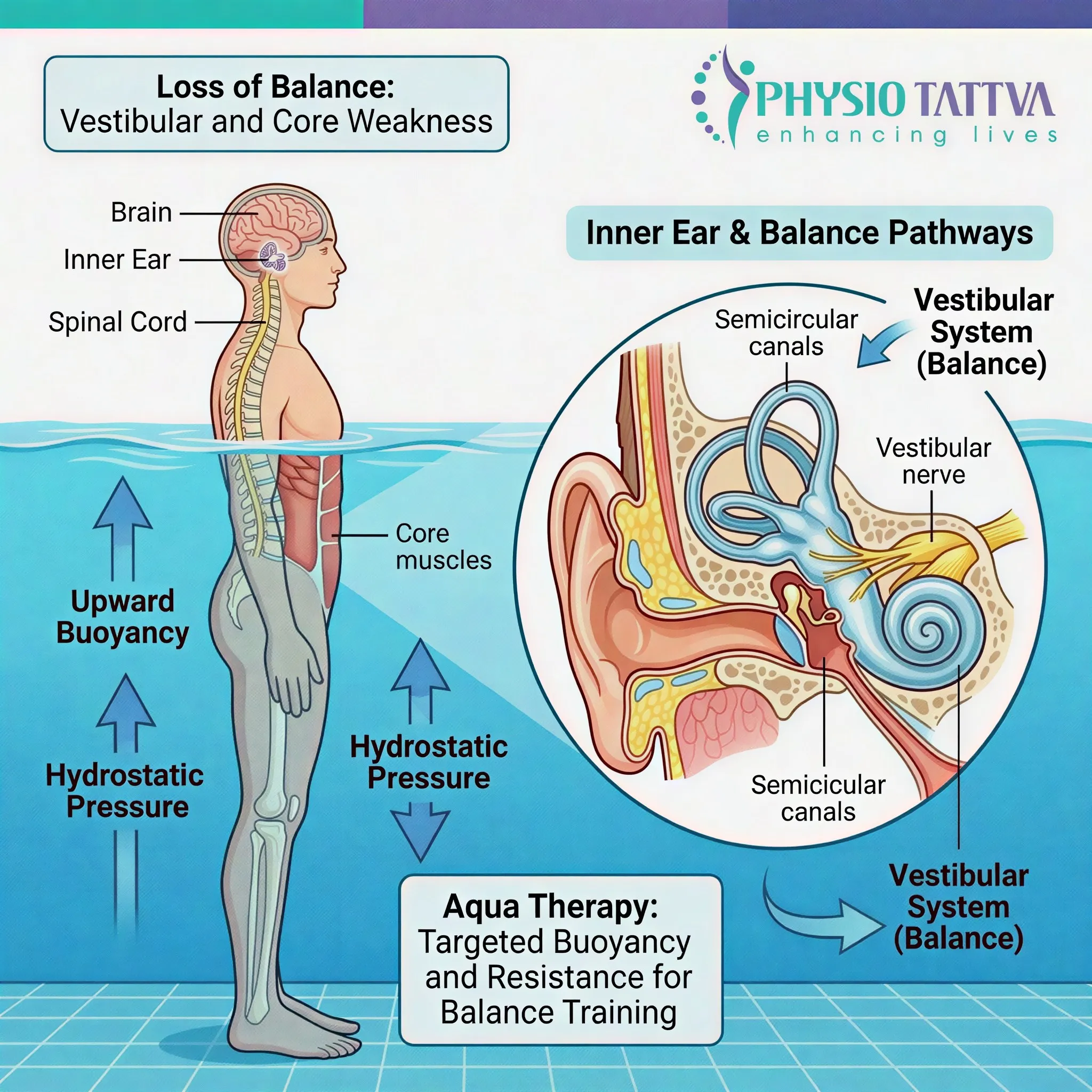
When picturing therapy in water, many people think of swimming. However, aqua therapy, also known as hydrotherapy for balance, is fundamentally different. It is a specialised form of physiotherapy performed in a purpose-built, warm-water pool under the direct supervision of a trained healthcare professional.
It’s not about swimming laps or performing generic water aerobics. Instead, an aqua therapy session involves a series of specific, prescribed exercises meticulously designed to address your unique physical challenges and therapeutic goals. The constant presence and guidance of a qualified physiotherapist ensures every movement is performed safely and effectively, making it a clinical and targeted form of rehabilitation.
Water possesses unique physical properties that make it the perfect medium for falls prevention and balance retraining. This isn't magic; it's science. Understanding why aquatic physiotherapy works can build your confidence in the process.
Your Built-In Safety Net Water’s natural upward thrust, or buoyancy, counteracts the pull of gravity. When you're submerged up to your chest, the water supports up to 90% of your body weight.
This dramatically reduces stress on sore joints and weak muscles, making movement easier and less painful. Most importantly for balance disorders, it creates a safe environment where the fear of falling is virtually eliminated. This allows you to practice challenging movements with confidence that you simply couldn’t attempt on land.
A Gentle, Reassuring Squeeze Water exerts a constant, gentle pressure on every part of your submerged body. Think of it as a consistent, full-body supportive hug.
This pressure helps reduce swelling (edema) in injured limbs, decreases pain sensitivity, and, crucially, enhances your proprioceptive feedback. The constant stimulation on your skin sends a flood of information to your brain, heightening your awareness of where your body is in space, a key component of better balance.
The 360-Degree Gym Water provides resistance to movement in all directions. Unlike on-land exercises, where you often need weights, the water itself provides the challenge. This gentle, consistent resistance forces your core, hip, and leg muscles, the very muscles responsible for stability, to work harder. As you push against the water, you are strengthening your entire support system. The faster you move, the greater the resistance, allowing your therapist to progressively increase the difficulty of your physiotherapy for balance as you get stronger.
Soothing and Healing Therapeutic pools are kept at a comfortable warm temperature, typically between 33-36°C (92-96°F).
This warmth is more than just a comfort. It helps your muscles relax, alleviates stiffness, and increases blood circulation. This improved flexibility and pain reduction make it easier to perform the exercises needed to restore your balance.
Embarking on a new treatment can be intimidating. At Physiotattva, we demystify the process by following a clear, patient-centric approach to ensure you feel supported from your very first step.
While your program will be personalized, here are some examples of exercises commonly used to treat balance disorders in the water:
Disclaimer: These exercises are for illustrative purposes only. They should only be performed under the direct supervision of a qualified physiotherapist as part of a prescribed treatment plan to ensure safety and proper technique.
Aqua therapy is highly beneficial for a wide range of individuals, including:
While generally safe, you should consult a doctor and avoid aqua therapy if you have:
Loss of balance doesn't have to control your life. Aqua therapy at Physiotattva provides a safe, effective, and empowering solution to restore stability, helping you regain your confidence and independence. Whether caused by age, neurological conditions, or post-surgical recovery, aqua therapy offers a gentle yet powerful way to improve your balance and strength. Don’t let unsteadiness hold you back any longer. Take the first step towards a stable, pain-free life by scheduling a consultation with our aqua therapy specialists.
At Physiotattva physiotherapy clinics in Bangalore and Hyderabad, you receive personalised care tailored to your specific needs, ensuring effective results and comfort throughout your journey to recovery.
Don’t wait to start your recovery! Get in touch with Physiotattva for more details! Contact us at +91 89510 47001.

At Physio Tattva, we are committed to bring access to quality physio care through ultra-modern clinics and high-skilled practitioners to all.
.webp)
At Physio Tattva, we are committed to bring access to quality physio care through ultra-modern clinics and high-skilled practitioners to all.
.webp)
At Physio Tattva, we are committed to bring access to quality physio care through ultra-modern clinics and high-skilled practitioners to all.








%20(1)-p-3200.jpeg)


.jpg)
.webp)
.webp)
.webp)
