




Effective Muscle Stiffness Treatment and Physiotherapy Solutions
Muscle stiffness is when the muscles feel tight, and it becomes difficult to move, especially after rest. It can be the result of multiple injuries or conditions.
Aqua therapy, also known as hydrotherapy, is a specialised form of physiotherapy that uses the physical properties of water to provide gentle relief for tight, rigid, and stiff muscles. If you experience muscle stiffness from overuse, injury, neurological conditions, or poor posture, this low-impact therapy can help relax muscles, reduce pain, and improve your overall flexibility and movement.
Muscle stiffness is a common complaint where muscles feel tight, sore, and difficult to move. It’s often a symptom of an underlying issue.
Key causes and risk factors include:
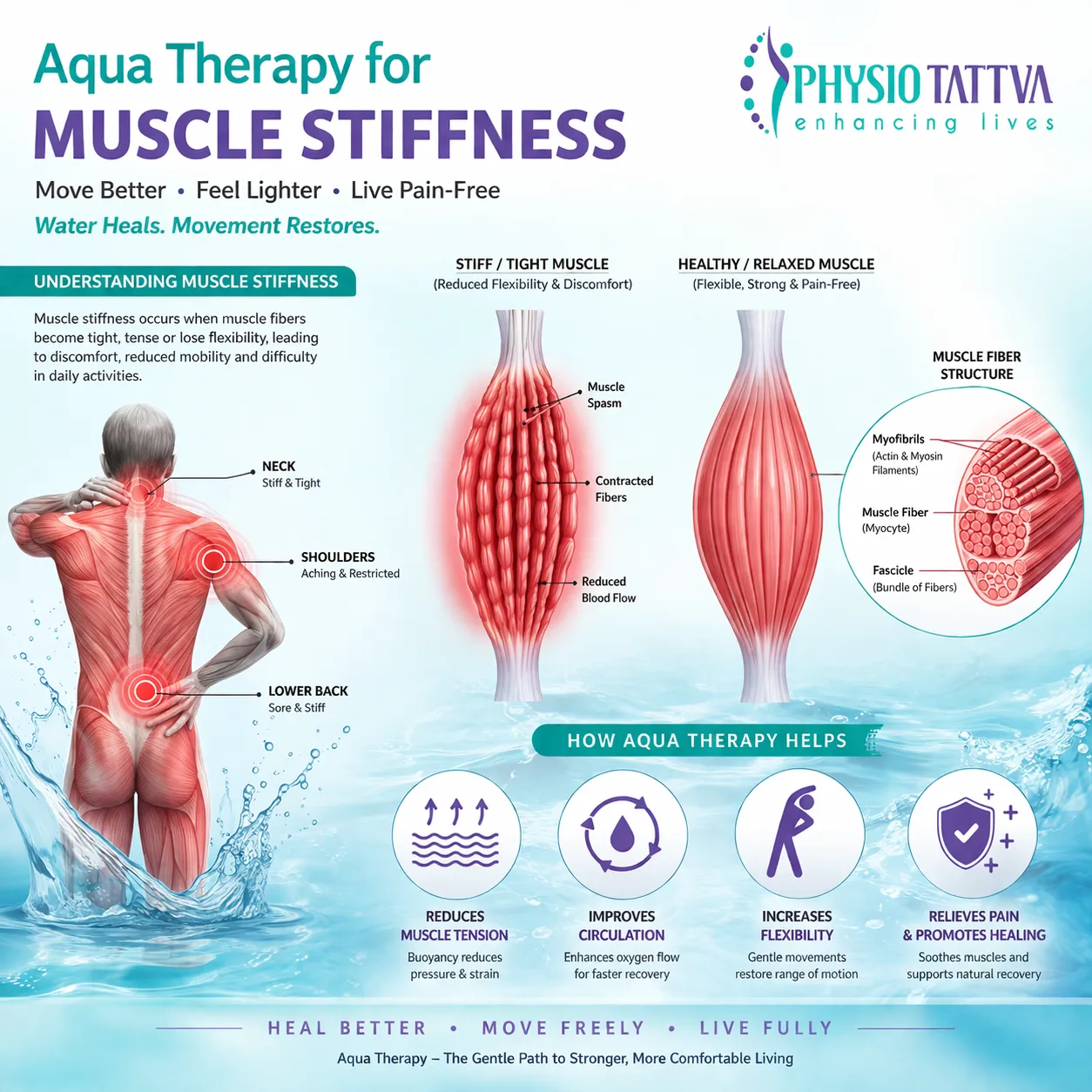
Aqua therapy is a specialised form of physiotherapy performed in a purpose-built, temperature-controlled pool under the direct supervision of a trained physiotherapist. It’s important to distinguish this from general swimming or water aerobics. Aqua therapy, or aquatic physical therapy, involves a set of specific, prescribed exercises designed to address a patient's unique condition and therapeutic goals. The physiotherapist is in the water with you or guiding you from the poolside, ensuring every movement is performed safely and effectively to maximise healing and minimise any risk of strain. It is a targeted medical treatment, not just recreation.
The magic of aqua therapy lies in the fundamental principles of physics and how they interact with the human body. Water creates a therapeutic environment that is nearly impossible to replicate on land. Understanding these properties helps build confidence in how this gentle approach yields such powerful results.
floads immense pressure from stiff muscles and aching joints, effectively creating a low-impact exercise environment. For someone with pool therapy for joint stiffness in mind, this means being able to move, stretch, and strengthen with significantly less pain than they would on land.
The pressure exerted by the water on your submerged body acts like a gentle, full-body compression wrap. This hydrostatic pressure helps reduce swelling (edema) by promoting the flow of fluid away from injured tissues. It also enhances circulation, bringing oxygen-rich blood to stiff muscles, and can even calm the nervous system to decrease pain sensitivity.
Moving through water creates more resistance than moving through air. This natural viscosity means every movement you make is a gentle strengthening exercise. Unlike weights, which provide resistance in one direction, water provides it from all directions. This helps build balanced muscle tone and stability around your joints without the jarring impact of land-based weight training.
Physiotattva’s therapeutic pools are heated to a comfortable temperature (typically 33-35°C). This warmth helps to relax tight, spastic muscles, increase blood vessel dilation for better circulation, and provide an immediate sensation of soothing relief, making it easier to perform exercises and stretches.
Choosing aqua therapy opens the door to a wide range of positive outcomes. The benefits of aquatic therapy are both immediate and long-lasting, focusing on restoring function and improving your overall well-being.
For certain conditions, aqua therapy may be combined with land-based physiotherapy modalities such as ultrasound therapy, laser therapy to further reduce inflammation and muscle tightness. While water exercises improve mobility and strength, laser therapy helps accelerate tissue healing and pain relief, creating a more comprehensive recovery program.
Aqua therapy is a versatile treatment suitable for a wide array of conditions. You may be an ideal candidate if you are experiencing:
While generally safe, aqua therapy may not be suitable for everyone. You should avoid it if you have:
At Physiotattva, we believe in a personalised approach to healing. Your aqua therapy journey with us is structured to ensure you receive the highest standard of care in a premium, supportive environment.
As a leading provider of physiotherapy in Bangalore and Hyderabad, we are equipped to guide you on this healing journey.
Aqua therapy offers a uniquely supportive way to manage and overcome muscle stiffness by using the natural properties of warm water to reduce pain, relax tight muscles, and restore movement. With buoyancy easing pressure on your joints and guided exercises improving flexibility and strength, it creates a safe environment for meaningful recovery. Whether your stiffness is linked to chronic pain, arthritis, surgery, or limited mobility, aqua therapy provides a gentle yet powerful pathway back to comfort and function.
At Physiotattva physiotherapy clinics in Bangalore and Hyderabad, you receive personalised care tailored to your specific needs, ensuring effective results and comfort throughout your journey to recovery.
Don’t wait to start your recovery! Get in touch with Physiotattva for more details! Contact us at +91 89510 47001.

At Physio Tattva, we are committed to bring access to quality physio care through ultra-modern clinics and high-skilled practitioners to all.
.webp)
At Physio Tattva, we are committed to bring access to quality physio care through ultra-modern clinics and high-skilled practitioners to all.
.webp)
At Physio Tattva, we are committed to bring access to quality physio care through ultra-modern clinics and high-skilled practitioners to all.


.jpeg)





%20(1)-p-3200.jpeg)

.jpg)
.webp)
.webp)
.webp)
