




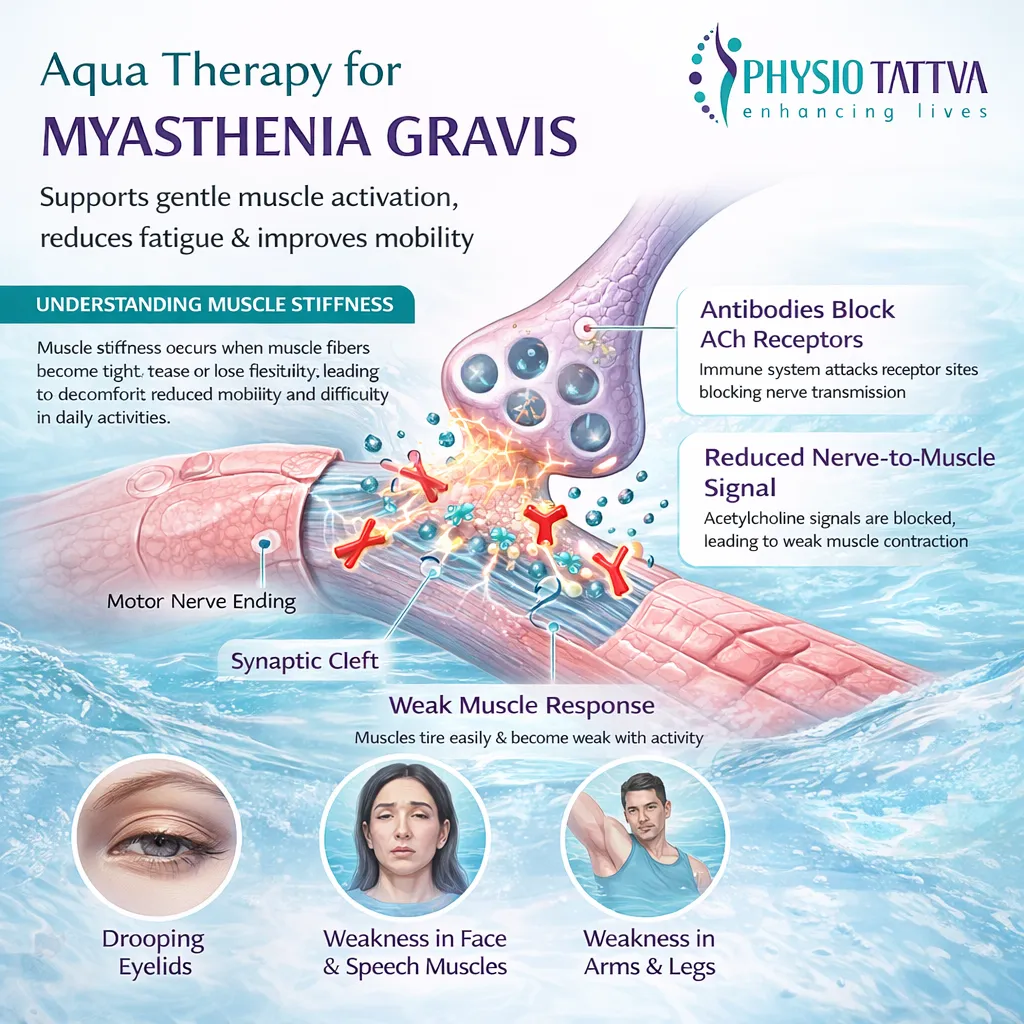
Aqua therapy, also known as hydrotherapy, is a specialized form of physiotherapy performed in a temperature-controlled pool to aid rehabilitation. For individuals with Myasthenia Gravis (MG), it offers a safe, low-impact way to build strength, improve balance, and manage debilitating fatigue without over-stressing the body. Myasthenia Gravis is an autoimmune neuromuscular disorder that causes fluctuating muscle weakness and fatigue, significantly impacting daily activities. This supervised rehabilitation technique uses the unique properties of water to support movement and facilitate gentle exercise, making it a highly effective component of MG management.
What is Myasthenia Gravis? Symptoms, Causes and Functional Impact
Before diving into the solution, it's crucial to understand the condition. Myasthenia Gravis is an autoimmune neuromuscular disorder that disrupts communication between nerves and muscles. This results in fluctuating weakness in the voluntary skeletal muscles—those you control for movement. A key characteristic of MG is that this muscle weakness worsens with activity and improves with rest. This is why traditional, land-based exercises can be so difficult or even counterproductive. The effort required to fight gravity can quickly lead to increased fatigue and weakness, making the search for safe alternatives like hydrotherapy for MG not just a preference, but a necessity.
How Myasthenia Gravis Affects Mobility, Balance and Energy Levels
The fluctuating weakness and fatigue associated with MG directly impact daily function and independence. This can manifest as:
- Difficulty walking long distances or climbing stairs.
- Reduced endurance for simple tasks like household chores.
- Increased risk of falls due to poor balance and sudden weakness.
- Generalised fatigue that limits participation in social and physical activities.
What is Aqua Therapy? Clinical Hydrotherapy for Neuromuscular Rehabilitation
Aqua therapy is not just swimming; it is a specialized form of physiotherapy performed in a purpose-built, temperature-controlled pool under the guidance of a trained therapist. The magic of aquatic exercise for Myasthenia Gravis lies in the natural properties of water, which create a uniquely therapeutic environment. Three core principles make it so powerful:
- Buoyancy: This is the upward force of water that counteracts gravity. When you're in water up to your chest, your body is bearing only a fraction of its weight, making you feel significantly lighter.
- Hydrostatic Pressure: This is the gentle, consistent pressure that water exerts on your submerged body. This pressure acts like a full-body compression garment, supporting your muscles and joints.
- Viscosity/Resistance: This refers to the natural "drag" or friction of water. It provides gentle, consistent resistance to your movements, no matter which direction you move.
How Aqua Therapy Supports Safe Strength and Energy Conservation?
The properties of water directly address the specific challenges faced by individuals managing MG symptoms, making it an ideal choice for physical activity.
Reduces Muscle Strain and Injury Risk
The buoyancy of water is the most significant benefit for those with MG. By supporting your body weight, it drastically reduces the load on weakened muscles and fragile joints. This allows you to perform movements with far less effort, conserving precious energy. For many, the fear of falling during exercise is a major barrier to activity. The supportive pool environment virtually eliminates this risk, boosting confidence and encouraging more fluid, natural movement.
Enables Gradual Muscle Strengthening Without Overfatigue
Lifting weights can be too much for muscles affected by MG. Water’s viscosity, however, provides a safe and effective alternative. It offers consistent, gentle resistance from all directions, helping to strengthen muscles without the harsh impact of weights. Your physiotherapist can tailor exercises to be more or less challenging simply by changing the speed of movement or using small aquatic tools. This allows for gradual, progressive strengthening that is perfectly matched to your energy levels on any given day.
Improves Balance and Neuromuscular Coordination
Balance can be a significant concern when muscles are weak and unpredictable. The supportive environment of water allows you to safely practice balance exercises that would be too risky on land. Furthermore, the hydrostatic pressure provides constant sensory input to your skin and joints. This feedback improves proprioception—your body's awareness of its position in space—leading to better coordination and stability both in and out of the pool.
Supports Energy Conservation and Fatigue Control
Managing muscle weakness in MG is all about conserving energy. Because buoyancy does most of the work of supporting you, less energy is expended to perform movements in the water. This allows for a longer, more effective therapy session without the profound fatigue that might follow a land-based workout.
A crucial note on temperature: Our therapy pools are kept in a specific therapeutic temperature range—warm enough to be soothing, but not hot. Extreme heat can worsen MG symptoms, so our therapists carefully control the environment for your safety and comfort.
Improves Cardiovascular and Respiratory Endurance
Even gentle aerobic activity in the pool, such as water walking, can improve your cardiovascular health without undue strain. Additionally, the hydrostatic pressure on your chest wall provides light resistance as you breathe. This acts as a natural, gentle workout for your respiratory muscles, which can also be affected by MG. Strengthening these muscles is a vital part of a comprehensive physiotherapy for Myasthenia Gravis plan.
Evidence Based Aqua Therapy Exercises for Myasthenia Gravis
These are some examples of safe exercises for MG that you might perform in a session. It is essential to remember that this is for informational purposes only.
Disclaimer: An individualized exercise plan from a qualified physiotherapist at Physiotattva is crucial for your safety and to achieve the best results. Never attempt a new exercise program without professional consultation.
Water Walking and Marching for Endurance
Water walking and gentle marching exercises help MG patients improve gait mechanics, balance, and lower-body endurance without overloading fatigued muscles. The buoyancy of water reduces joint stress, allowing smoother steps and better coordination. This exercise also helps maintain cardiovascular fitness in a controlled, low-effort environment ideal for energy-sensitive individuals.
Gentle Leg Lifts for Lower Limb Strength
Slow, controlled leg lifts in multiple directions use the water’s natural resistance to build strength in the hips, thighs, and glute muscles. This helps support walking, standing, and sit-to-stand movements—all areas commonly affected in MG. The reduced load prevents overexertion while still promoting meaningful muscle activation.
Supported Squats for Functional Strength
Supported squats in water allow MG patients to strengthen the major lower-body muscles without strain. Buoyancy makes rising easier, while water resistance adds gentle challenge. This exercise is excellent for improving functional movements such as sitting, standing, and stair climbing, all while keeping fatigue levels safely managed.
Controlled Upper Body Movements for Shoulder Strength
Performing slow arm circles and directional arm movements builds strength in the shoulders, chest, and upper back, areas often weakened in MG. Water resistance supports the arms while providing enough challenge to activate key stabilising muscles. This improves posture, upper-body coordination, and daily task performance without triggering exhaustion.
What to Expect During an Aqua Therapy Session at Physiotattva?
We understand that starting a new therapy program can feel daunting. At Physiotattva, we are committed to providing a safe, personalized, and empowering experience from day one.
- Initial Assessment: Your journey begins with a comprehensive evaluation by one of our senior physiotherapists. We take the time to understand your specific MG symptoms, current strength levels, fatigue patterns, and personal goals.
- Personalized Plan: Based on your assessment, we create a one-on-one, customized aqua therapy program. This plan is designed specifically for you, with a primary focus on avoiding overexertion while promoting functional strength.
- Supervised Sessions: Every session is conducted under the constant, hands-on supervision of a trained therapist in our state-of-the-art pools in Bangalore and Hyderabad. They ensure you use the proper technique, stay safe, and adjust your exercises in real-time based on how you are feeling.
- Focus on Progression: Our goal is your empowerment. We focus on gradual, meaningful progress, celebrating every small victory and helping you regain confidence in your body’s abilities.
Who is an Ideal Candidate for Aqua Therapy for Myasthenia Gravis?
- Individuals with a stable Myasthenia Gravis diagnosis.
- Those who have received medical clearance from their neurologist.
- People experiencing mild-to-moderate weakness, fatigue, and balance issues.
Who Should Avoid Aqua Therapy? Safety and Contraindications
Aqua therapy may not be suitable for everyone. It is generally avoided for individuals with:
- Unstable MG or those experiencing a myasthenic crisis.
- Severe respiratory compromise.
- Open wounds, rashes, or active infections.
- Fever or contagious illness.
- Uncontrolled cardiac conditions.
Why Choose Physiotattva for Myasthenia Gravis Rehabilitation?
Managing Myasthenia Gravis can feel overwhelming, but you don’t have to navigate it alone. Aqua therapy provides a safe, gentle, and scientifically supported way to rebuild strength, improve mobility, and enhance energy management without overstraining your muscles. The warmth, buoyancy, and resistance of water create an ideal environment for movement, confidence, and steady progress. With expert physiotherapists guiding every session, you receive personalised support that adapts to your daily energy levels and long-term goals.
At Physiotattva physiotherapy clinics in Bangalore and Hyderabad, you receive personalised care tailored to your specific needs, ensuring effective results and comfort throughout your journey to recovery.
Don’t wait to start your recovery! Get in touch with Physiotattva for more details! Contact us at +91 89510 47001.
Why Physiotattva?
22+
50,000+
95%
200+
25+
4.8
Cities We Serve

Bangalore
At Physio Tattva, we are committed to bring access to quality physio care through ultra-modern clinics and high-skilled practitioners to all.
.webp)
Hyderabad
At Physio Tattva, we are committed to bring access to quality physio care through ultra-modern clinics and high-skilled practitioners to all.
.webp)
Vishakhapatnam
At Physio Tattva, we are committed to bring access to quality physio care through ultra-modern clinics and high-skilled practitioners to all.
Core Treatments
Core Conditions
Core Symptoms
Frequently Asked Questions
Generally safe for stable cases but requires medical evaluation.

How Often Should I Do Aqua Therapy for MG?
What Should I Wear and Bring to My Aqua Therapy Session?



%20(1)-p-3200.jpeg)

.jpg)
.webp)
.webp)
.webp)