Aqua Therapy for Numbness and Tingling: Safe Nerve Pain Rehabilitation

Aqua Therapy for Numbness and Tingling: Safe Nerve Pain Rehabilitation

Aqua therapy is a specialised form of physiotherapy performed in a warm-water pool to treat pain and improve movement. It offers gentle, low-impact rehabilitation for numbness and tingling, also known as paresthesia, which is often caused by nerve compression, neuropathy, or poor circulation. Conditions like sciatica, carpal tunnel syndrome, and diabetic neuropathy can trigger these sensations, and a structured aqua therapy for numbness and tingling program provides a safe environment to regain function and reduce discomfort.

What is Paresthesia? Causes, Symptoms and Risk Factors Explained

While we’ve all experienced a limb "falling asleep," chronic numbness and tingling is a different matter. Paresthesia is a sensory symptom that indicates an issue with your nervous system. It’s a sign that nerve signals are being disrupted, and it’s crucial to understand the root cause to find an effective numbness and tingling treatment.

Common underlying conditions that lead to paresthesia often involve nerve health:

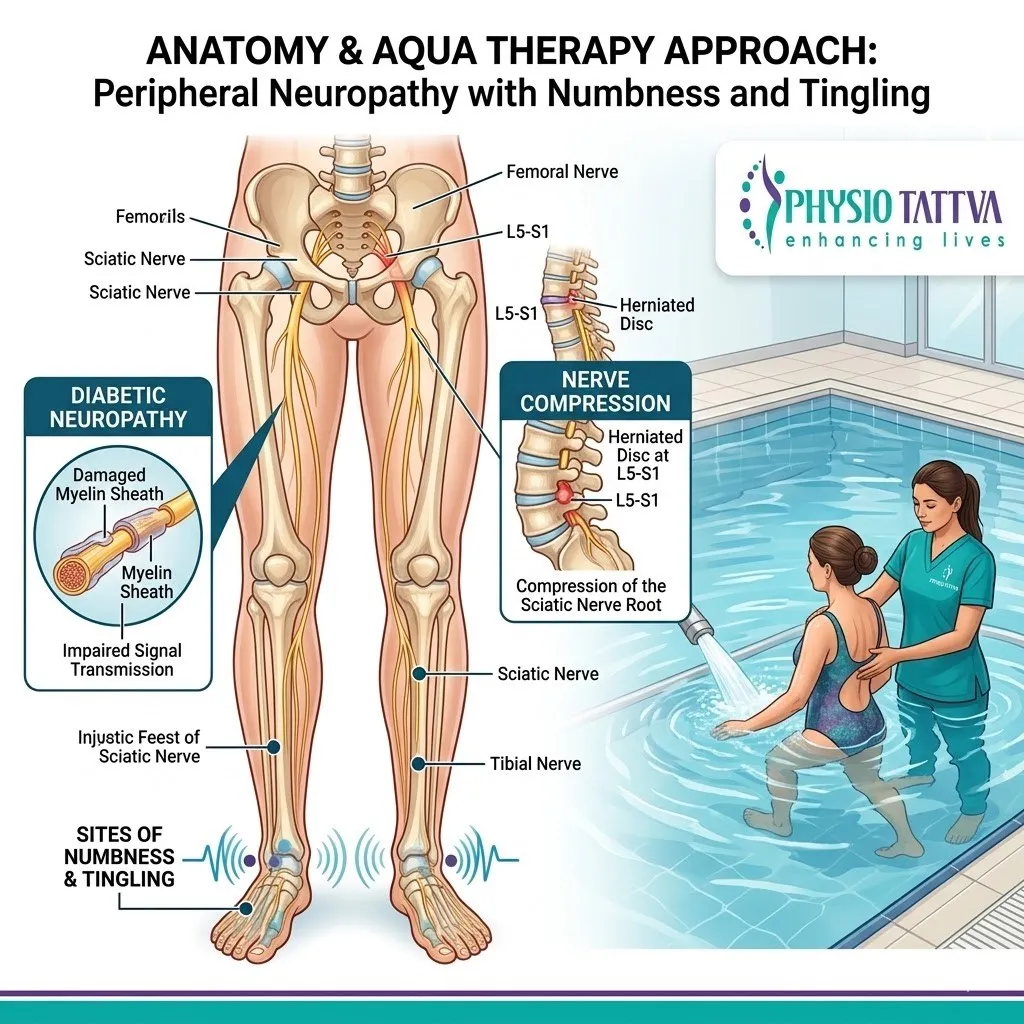
  • Nerve Compression: This is one of the most frequent culprits. Conditions like Sciatica (where the sciatic nerve is pinched in the lower back), Herniated Discs (where spinal discs press on nerve roots), and Carpal Tunnel Syndrome (compression of the median nerve in the wrist) directly squeeze nerves, causing them to misfire.
  • Peripheral Neuropathy: This refers to damage to the peripheral nerves, which can result from various conditions. It's often associated with diabetes, where high blood sugar levels damage nerves over time, or with vitamin deficiencies (particularly B vitamins).
  • Poor Circulation: Nerves require a steady supply of oxygen-rich blood to function. Conditions that restrict blood flow, such as peripheral artery disease, can starve nerves and lead to sensations of numbness and tingling.
  • Post-Surgical or Injury-Related Nerve Irritation: Following a surgery or physical trauma, inflammation and swelling can irritate or compress nearby nerves, leading to temporary or chronic paresthesia.

Treating the symptom is not enough. A proper diagnosis from a qualified physiotherapist is essential to identify the underlying cause and develop a targeted, effective treatment plan.
How Nerve Compression Affects Movement and Daily Function

When nerves are compressed, they cannot function correctly, impacting your daily activities. This can lead to symptoms beyond just tingling.

  • Muscle weakness in the affected limb.
  • A persistent burning or aching sensation.
  • Reduced coordination and difficulty with fine motor skills.
  • Loss of sensation, increasing the risk of injury.

What is Aqua Therapy? Clinical Hydrotherapy for Nerve Rehabilitation

When people hear "aqua therapy" or "hydrotherapy," they might picture swimming laps. However, this is a highly specialized form of physiotherapy conducted in a controlled aquatic environment. It’s not about athletic swimming; it’s about using the unique properties of water to heal and rehabilitate the body in a way that isn't possible on land.

The therapeutic magic of aqua therapy comes from four key properties of water:

  1. Buoyancy: The upward force of water that supports the body, counteracting gravity.
  2. Hydrostatic Pressure: The consistent, gentle pressure that water exerts on the body from all sides when submerged.
  3. Viscosity & Resistance: The natural "thickness" of water that provides resistance to movement, allowing for strengthening without weights.
  4. Warmth: Therapeutic pools are heated to a specific temperature (typically 33-36°C or 92-96°F) to relax muscles and soothe pain.

How Aqua Therapy Reduces Nerve Compression and Improves Circulation

Hydrotherapy for paresthesia isn’t just a soothing experience; it’s a targeted medical treatment that directly addresses the physiological causes of nerve-related symptoms. Here’s how each property of water contributes to your relief.

How Buoyancy Reduces Pressure on Irritated Nerves

Imagine feeling almost weightless. When you are submerged in chest-deep water, its buoyancy supports up to 90% of your body weight. For someone with sciatica or a herniated disc, this is revolutionary. The gravitational load on your spine is dramatically reduced, creating space between the vertebrae. This decompression immediately relieves pressure on impinged nerve roots, which is often the direct cause of numbness and tingling radiating down a leg or arm. Achieving this level of safe, sustained decompression on land is far more difficult and often requires specialized equipment.

How Hydrostatic Pressure Improves Blood Flow to Nerves

The constant, gentle pressure of the water acts like a full-body compression garment. This has two profound benefits for nerve health. First, it helps to push excess fluid and swelling (edema) out of the tissues and back into the circulatory system. Since swelling is a common contributor to nerve compression, reducing it provides immediate relief. Second, this pressure assists in promoting blood flow. Improved circulation delivers more oxygen and vital nutrients to irritated or damaged nerve endings, facilitating their healing and helping to restore normal sensation.

How Warm Water and Resistance Support Muscle Stability

The warm, therapeutic water is incredibly effective at soothing tight, spasming muscles. Tense muscles around the spine or joints can often be a primary or secondary cause of nerve compression. As these muscles relax in the warmth, the pressure on the nerves diminishes. Furthermore, the water’s viscosity provides a safe, uniform resistance. This allows you to perform water exercises for nerve pain that strengthen the core and stabilizing muscles around the affected area. Building this support system is crucial for long-term relief, as stronger muscles help maintain proper posture and prevent future nerve impingement, all without the jarring impact of traditional weight training.

Evidence-Based Aqua Therapy Exercises for Numbness and Tingling

Our therapists design a gradual exercise program focused on mobilising nerves safely and building strength to prevent future irritation.

Water Walking and Gait Training

  • Improves blood circulation throughout the lower limbs.
  • Enhances balance and coordination without the fear of falling.
  • Promotes normal walking patterns to reduce nerve strain.

Gentle Range of Motion and Nerve Gliding Movements

  • Encourages smooth, controlled movement of affected joints.
  • Gently mobilises nerves through their pathways to reduce adhesions.
  • Increases flexibility without aggravating symptoms.

Core and Postural Strengthening Exercises

  • Focuses on strengthening abdominal and back muscles.
  • Improves spinal stability to maintain decompression.
  • Corrects postural imbalances that contribute to nerve irritation

Who is an Ideal Candidate for Aqua Therapy for Nerve Symptoms?

Aquatic therapy is a versatile treatment, but certain individuals and conditions respond exceptionally well to hydrotherapy for paresthesia. You may be an ideal candidate if you have:

  • Sciatica or Lumbar Radiculopathy: The decompressive effect of buoyancy is especially beneficial for these conditions.
  • Diabetic Peripheral Neuropathy: Those seeking to improve sensation, balance, and circulation in their lower extremities find aquatic therapy for neuropathy to be a safe and effective option.
  • Post-Operative Conditions: Patients recovering from spine surgery, hip replacement, or knee replacement can begin rehabilitation earlier and more gently in the water.
  • Chronic Pain and Fibromyalgia: Individuals whose pain levels make land-based exercise impossible can often move more freely and with less pain in the water.
  • Arthritis or High Body Weight: The support of the water reduces stress on painful joints, making exercise accessible and enjoyable.

Who Should Avoid Aqua Therapy? Safety and Contraindications

While generally very safe, aqua therapy is not suitable for everyone.

  • Individuals with open wounds, skin infections, or rashes.
  • Those with a fever, infection, or contagious disease.
  • Patients with severe, unstable cardiac or respiratory conditions.
  • People with uncontrolled bowel or bladder issues.

What Happens During an Aqua Therapy Session at Physiotattva?

Embarking on a new treatment can be daunting, but at Physiotattva, we ensure your journey is clear, supportive, and tailored to you. Here’s what you can expect:

  1. Comprehensive Initial Assessment: Your journey begins on land with a thorough evaluation by one of our senior physiotherapists. We take the time to understand your symptoms, perform diagnostic tests to identify the root cause of your numbness, and collaborate with you to set clear, achievable goals.
  2. Personalised In-Pool Treatment Plan: Based on your assessment, our therapists design a specific program of water exercises for your condition. This could include gentle stretches to improve nerve mobility, balance exercises to restore proprioception, or strengthening routines to build structural support.
  3. One-on-One Guided Sessions: Your safety and progress are our top priorities. All aqua therapy sessions are conducted one-on-one with a trained therapist who is in the pool with you. They ensure you maintain correct form, feel safe and supported, and are progressively challenged using aquatic equipment like floats, resistance jets, and noodles.
  4. Integrated Care: We believe in a holistic approach. Aqua therapy is often one component of a comprehensive treatment plan that may include hands-on physiotherapy, chiropractic care, or specialised modalities available at our Physiotattva Bangalore or Hyderabad clinics.

Why Choose Physiotattva for Nerve Rehabilitation?

Persistent numbness and tingling are not symptoms you have to live with. They are messages from your body asking for help. Aqua therapy offers a powerful, gentle, and decompressive solution that addresses the root causes of nerve pain. It empowers you to rebuild strength, restore sensation, and reclaim your quality of life in a safe and soothing environment. Don't let paresthesia control your life any longer.

At Physiotattva physiotherapy clinics in Bangalore and Hyderabad, you receive personalised care tailored to your specific needs, ensuring effective results and comfort throughout your journey to recovery. 

Don’t wait to start your recovery! Get in touch with Physiotattva for more details! Contact us at +91 89510 47001.

Frequently Asked Questions

Do I Need Swimming Skills for Aqua Therapy?

FAQ Icon
Absolutely not. The therapy is conducted in shallow, chest-deep water where you can comfortably stand. A dedicated physiotherapist is with you at all times to ensure your complete safety and comfort.

Retrieving data. Wait a few seconds and try to cut or copy again.

FAQ Icon
Quite the opposite. Aqua therapy is specifically designed to be gentle and is often much less painful than equivalent land-based exercises. The primary goal is to work within your comfort level to reduce pain and improve function, not cause more of it.

How is this different from just exercising in a regular pool?

FAQ Icon
The difference is significant. Aqua therapy is a targeted medical treatment. It involves specific, prescribed exercises tailored to your diagnosis, performed in a temperature-controlled therapeutic pool, and supervised by a trained physiotherapist. General swimming or pool exercise does not offer this level of clinical expertise or customisation.

How many sessions will I need to see results for my tingling?

FAQ Icon
This varies depending on the individual and the condition. However, many patients report feeling a noticeable reduction in pain and pressure after the very first session. A consistent plan of 6-8 sessions often yields significant and lasting improvement in sensation and function.

Where is Aqua Therapy Available at Physiotattva?

FAQ Icon
Physiotattva is proud to offer specialized, state-of-the-art hydrotherapy in Bangalore and aqua therapy in Hyderabad at select, fully-equipped clinics. Please contact us directly to find the nearest facility and book an appointment with our expert team.

Related Therapies

Our Professionals

Dr. Anup Brahmbhatt (PT)

Chief Chiropractor and Physiotherapist

Read MoreBook an appointment

DR. MAMTA GUPTA (PT)

Senior Zonal Physiotherapist

Read MoreBook an appointment

Dr SURAKSHA SHANBHAG (PT)

Senior Clinical Physiotherapist

Read MoreBook an appointment

Dr SOJIMOL K.B (PT)

Clinical Co-ordinator

Read MoreBook an appointment

HARSHITA BAID

Homecare Physiotherapist

Read MoreBook an appointment

Get In Touch

Valid number
Thank you! Your submission has been received!
Oops! Something went wrong while submitting the form.