





Parkinson's disease is a progressive neurological disorder that affects movement, balance, and muscle control, often causing tremors, rigidity, and slow movement. Aqua therapy, a form of hydrotherapy, is a supportive and low-impact neuro-rehabilitation approach. It uses the unique properties of water to help you manage Parkinson's symptoms safely and effectively, improving your mobility and quality of life.
What is Parkinson's Disease? Symptoms and Motor Challenges Explained
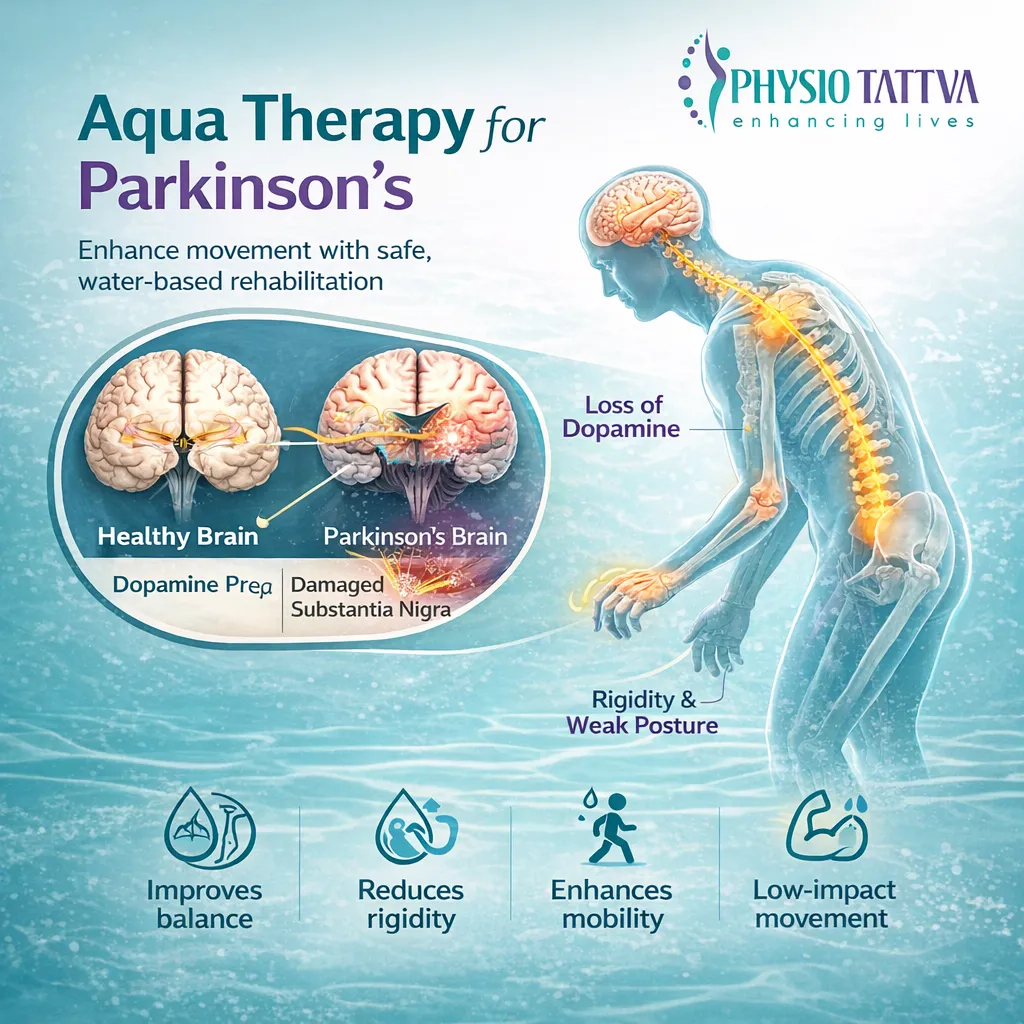
To appreciate the power of aqua therapy, it's important to first understand the challenges it directly addresses. Parkinson's disease primarily affects motor function, leading to four "cardinal" symptoms:
- Bradykinesia: Slowness of movement, making it difficult to initiate actions.
- Rigidity: Stiffness in the limbs, neck, and trunk, which can be painful and limit range of motion.
- Resting Tremors: Involuntary shaking, typically in a hand or limb, when it is at rest.
- Postural Instability: Impaired balance and coordination, which significantly increases the risk of falls.
These symptoms can diminish confidence and independence, making everyday activities a source of anxiety.
How Parkinson's Affects Balance, Gait and Daily Activities?
The motor symptoms of Parkinson's directly impact daily life in several ways:
- Freezing of Gait: A temporary, involuntary inability to move your feet, often occurring when starting to walk or turning.
- Increased Fall Risk: Poor balance and shuffling steps significantly elevate the chances of falling.
- Reduced Independence: Difficulty with movement can make activities like dressing, walking, and standing up challenging.
What is Aqua Therapy? Clinical Hydrotherapy for Neurological Rehabilitation
Aqua therapy, also known as hydrotherapy for Parkinson's disease, is not just about swimming or splashing around. It is a specialised form of physiotherapy conducted in a purpose-built, temperature-controlled pool under the expert guidance of a certified therapist. The magic of aqua therapy lies in the unique properties of water, which create an ideal environment for rehabilitation.
- Buoyancy: Water's upward lift counteracts gravity, supporting up to 90% of your body weight. This offloads stress from joints, making movement easier and less painful.
- Hydrostatic Pressure: Water exerts gentle, consistent pressure on your entire body. This helps reduce swelling, enhance circulation, and increase your awareness of your body's position in space (proprioception).
- Viscosity & Resistance: Water provides natural resistance in every direction. This allows you to strengthen muscles effectively without the strain of heavy weights. The faster you move, the greater the resistance, allowing for progressive strengthening.
- Warmth: Our pools are heated to a therapeutic temperature (typically 33-36°C). The warmth helps to relax tight, stiff muscles and soothe aching joints, preparing your body for gentle movement.
How Aqua Therapy Improves Mobility and Reduces Fall Risk?
The combination of these properties delivers life-changing benefits of aquatic therapy for individuals with Parkinson's. Here are the top five advantages you can experience.
Improves Balance and Reduces Fear of Falling
Postural instability is one of the most dangerous symptoms of Parkinson's. The buoyant support of water creates a completely safe space to practice balance exercises you would never dare to try on land. If you lose your balance, the water catches you, eliminating the fear and risk of injury. This allows you to challenge your stability, retrain your body's responses, and build true confidence that translates back to daily life.
Reduces Rigidity and Enhances Flexibility
The hallmark rigidity of Parkinson's can be debilitating. The combination of warm water and gentle, therapist-guided stretching can significantly reduce muscle stiffness. The warmth relaxes the muscles, allowing for a greater range of motion and smoother, more fluid movements. This can make everything from getting dressed to reaching for an object on a shelf feel easier.
Builds Muscle Strength and Endurance Safely
Weakness can worsen gait problems and fatigue. Performing water exercises for Parkinson's, such as walking, leg lifts, and arm movements, uses the water's natural resistance to build functional strength. This low-impact workout strengthens the core, leg, and upper body muscles essential for posture and stability, all while being gentle on your joints.
Improves Gait Pattern and Coordination
The viscosity of water naturally slows down your movements. This is incredibly beneficial for Parkinson's, as it encourages more deliberate and controlled steps. In the water, you can focus on practicing proper walking patterns—lifting your feet, taking longer strides, and swinging your arms—without rushing. This helps the brain relearn and improve coordination, leading to a safer and more efficient gait on land.
Relieves Pain and Supports Mental Wellbeing
Chronic pain often accompanies the muscle stiffness and postural changes of Parkinson's. The soothing warmth of the hydrotherapy pool provides natural pain relief. Furthermore, the experience of moving freely and safely in the water is often joyful and empowering. This reduction in stress, combined with the physical benefits, provides a significant boost to overall mental and emotional well-being.
What Happens During an Aqua Therapy Session at Physiotattva?
Starting a new therapy can feel daunting, but we've designed our process to be clear, supportive, and reassuring from day one.
- Initial Consultation: Your journey begins with a comprehensive one-on-one assessment with a specialised neurological physiotherapist on dry land. We take the time to understand your specific symptoms, medical history, physical limitations, and most importantly, your personal goals.
- Personalized Program: Based on your assessment, your therapist will design a customised aqua therapy program. Every exercise is chosen to address your unique needs, whether it's improving stride length, strengthening your core, or increasing shoulder flexibility.
- The Session Itself: In the pool, your therapist is in the water with you, providing constant one-on-one guidance and support. They ensure you perform each exercise with the correct form for maximum benefit and absolute safety. Handrails, non-slip surfaces, and easy-access steps are standard in all our facilities.
Why Choose Physiotattva for Parkinson's Rehabilitation?
Aqua therapy for Parkinson's is a highly specialised service that requires certified therapists and state-of-the-art facilities. At Physiotattva, we are proud to be a leading provider of Parkinson's physiotherapy in Bangalore and Hyderabad, offering a patient-centric approach in our advanced hydrotherapy pools. Our expert team is dedicated to helping you harness the power of water to improve your mobility and reclaim your independence.
Our advanced aqua therapy facilities are available at select clinics in Bangalore and Hyderabad.
Who is an Ideal Candidate for Aqua Therapy for Parkinson's?
Aqua therapy is particularly beneficial for individuals who:
- Are in the early to moderate stages of Parkinson's disease.
- Experience challenges with balance, stiffness, and slow movements
- Are cleared by their doctor for light to moderate physical activity.
- Find land-based exercises difficult or painful.
Who Should Avoid Aqua Therapy? Safety and Contraindications
While generally safe, aqua therapy may not be suitable for everyone. You should consult your doctor and physiotherapist if you have:
- Open wounds, skin infections, or rashes.
- Uncontrolled heart conditions or unstable blood pressure.
- Fever or infectious diseases.
- Severe instability or a very high fall risk, even in water.
- Incontinence.
Start Your Parkinson's Rehabilitation Journey with Physiotattva
Living with Parkinson’s can be challenging, but the right therapy can make every step feel more supported and confident. Aqua therapy offers a uniquely gentle environment where buoyancy, warmth, and guided resistance work together to reduce stiffness, improve balance, and restore smoother, more controlled movement. By practicing functional exercises in water, patients gain the freedom to move without fear of falling—an essential part of rebuilding independence.
Why Physiotattva?
22+
50,000+
95%
200+
25+
4.8
Cities We Serve

Bangalore
At Physio Tattva, we are committed to bring access to quality physio care through ultra-modern clinics and high-skilled practitioners to all.
.webp)
Hyderabad
At Physio Tattva, we are committed to bring access to quality physio care through ultra-modern clinics and high-skilled practitioners to all.
.webp)
Vishakhapatnam
At Physio Tattva, we are committed to bring access to quality physio care through ultra-modern clinics and high-skilled practitioners to all.
Core Treatments
Core Conditions
Core Symptoms
Frequently Asked Questions
Do I Need Swimming Skills for Aqua Therapy?

Is Aqua Therapy Safe for All Stages of Parkinson's?
How Often Should I Attend Aqua Therapy Sessions?
What Should I Bring to My Aqua Therapy Session?






%20(1)-p-3200.jpeg)


.jpg)
.webp)
.webp)
.webp)