Aqua Therapy for Shoulder Pain: Safe Relief and Mobility Restoration
Aqua therapy creates an ideal healing environment for shoulder pain by reducing joint stress and enabling pain-free movement. Warm water relaxes tight tissues, while resistance builds strength gradually. Physiotattva’s expert therapists design personalised sessions that improve flexibility, restore function, and support long-term recovery.
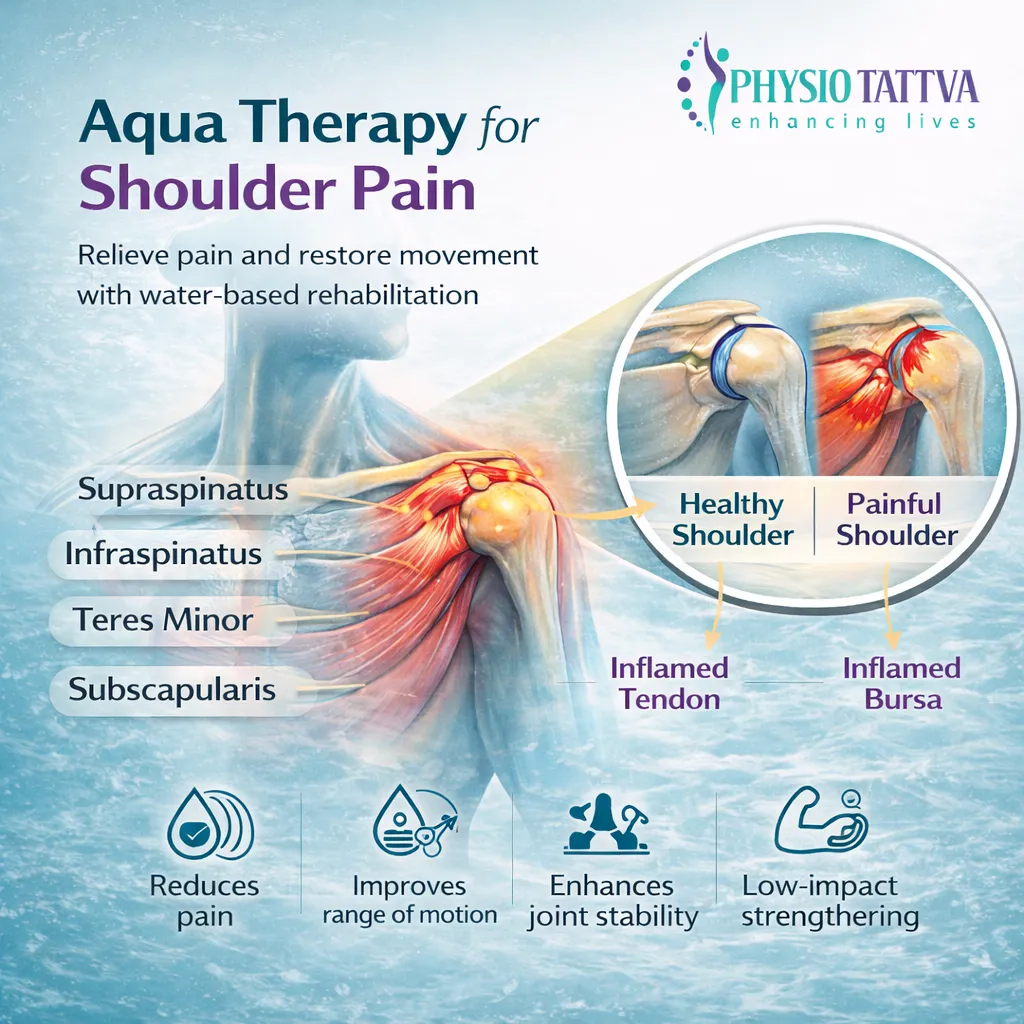
Aqua therapy is a gentle, low-impact form of physiotherapy conducted in a warm water pool to relieve pain and improve joint function. Shoulder pain, often caused by conditions like rotator cuff strain, impingement, frozen shoulder, or arthritis, can severely limit your range of motion and cause discomfort with simple overhead movements. Aqua therapy for shoulder pain offers a supportive environment to begin rehabilitation, reduce stress on the joint, and safely restore mobility.
What Causes Shoulder Pain? Common Conditions Explained
Shoulder pain can stem from various conditions affecting the joints, muscles, and tendons. Understanding the cause is the first step towards effective treatment.
Rotator Cuff Injury: Tears or inflammation in the group of muscles and tendons surrounding the shoulder joint.
Frozen Shoulder (Adhesive Capsulitis): Stiffness and pain in the shoulder joint, leading to a significant loss of motion.
Tendonitis: Inflammation or irritation of the tendons, often due to overuse.
Arthritis: Degeneration of the joint cartilage, causing pain, swelling, and stiffness.
How Shoulder Pain Affects Daily Activities and Sleep?
Persistent shoulder pain can disrupt your life far beyond the physical discomfort.
Difficulty with Daily Tasks: Lifting objects, getting dressed, or reaching for items on a high shelf can become challenging.
Impaired Sleep Quality: Lying on the affected side is often painful, leading to disturbed sleep and fatigue.
Reduced Participation: Hobbies and sports that involve arm movement may become impossible to enjoy.
What is Aqua Therapy? Clinical Hydrotherapy for Shoulder Rehabilitation
Many people hear "water therapy" and immediately think of swimming laps. However, aquatic therapy is much more specific. It isn't just a general exercise; it's a specialized form of shoulder physiotherapy performed in a temperature-controlled pool under the guidance of a trained therapist. The magic of aquatic therapy for the shoulder lies in the natural properties of water, which are harnessed based on three core scientific principles:
Buoyancy: Water counteracts gravity, supporting up to 90% of your body's weight. This unloads the shoulder joint, reducing stress and compression. For a painful, inflamed shoulder, this buoyancy allows you to move in ways that would be agonizing on land.
Hydrostatic Pressure: The pressure of the water acts like a gentle, full-body compression wrap. This constant pressure helps to reduce swelling, decrease pain perception, and improve blood circulation to the injured tissues, promoting faster healing.
Viscosity/Resistance: Water provides a natural, consistent resistance to movement. Unlike weights, this resistance is present in all directions, allowing you to strengthen the delicate muscles around your shoulder joint safely and gently, without any jarring impact.
How Aqua Therapy Reduces Pain and Improves Shoulder Function?
When you’re in pain, the last thing you want is an exercise program that hurts. This is where aquatic therapy for shoulder conditions truly shines. The unique environment of the water provides a host of advantages that make it a superior choice for many patients.
Significant Pain Reduction: The combination of warm water and buoyancy provides immediate relief. The warmth soothes and relaxes tense muscles around the shoulder, while buoyancy offloads the joint, allowing for movement with drastically reduced pain.
Improved Range of Motion: The supportive embrace of water allows you to move your shoulder through a greater range of motion than you could on land. This is crucial for conditions like a frozen shoulder, where regaining mobility is the primary goal.
Gentle and Progressive Strengthening: Water's viscosity provides a safe and controlled way to build strength. Your therapist can modify exercises to increase or decrease resistance, ensuring that your rotator cuff and supporting muscles become stronger without the risk of re-injury posed by heavy weights.
Reduced Fear of Movement: After an injury or surgery, it's natural to be afraid to move the affected shoulder. The gentle, supportive nature of water helps build confidence, encouraging you to perform therapeutic movements without the fear of sudden pain or damage.
Accelerated Post-Surgical Recovery: Following procedures like rotator cuff repair or shoulder replacement, hydrotherapy for the rotator cuff is an ideal environment to begin early, gentle mobilization once approved by your surgeon. It minimizes stress on healing structures while preventing stiffness.
Who is an Ideal Candidate for Aqua Therapy for Shoulder Pain?
Aquatic therapy is a versatile treatment that can be adapted for a wide range of musculoskeletal issues. It has shown exceptional results for individuals suffering from various common shoulder conditions, including:
Rotator Cuff Tears or Tendinitis
Shoulder Impingement Syndrome
Frozen Shoulder (Adhesive Capsulitis)
Shoulder Arthritis
Post-operative rehabilitation (e.g., after rotator cuff repair or shoulder replacement)
General shoulder weakness, instability, or chronic pain
If your condition is on this list, you are likely an excellent candidate for this gentle and effective therapy.
What Happens During an Aqua Therapy Session at Physiotattva?
Stepping into a new therapy program can be intimidating, so we believe in making the process clear and comfortable from the start. Here’s what a typical aqua therapy journey at Physiotattva Bangalore looks like:
First, your journey begins on dry land. A qualified Physiotattva physiotherapist will conduct a thorough initial assessment to understand your medical history, pain levels, current range of motion, and specific recovery goals.
Based on this assessment, your therapist designs a completely personalised water exercises for shoulder pain program tailored just for you. No two plans are the same because no two injuries are the same.
During your session, your therapist is in the water with you, providing one-on-one guidance. They ensure you are using the correct form, offer hands-on support, and progress your exercises safely as you get stronger.
We use specialised equipment like floats, foam noodles, and underwater dumbbells to either assist your movement or add gentle resistance. A typical session lasts between 30 and 45 minutes, focusing on quality movement over exhausting duration.
Evidence Based Aqua Therapy Exercises for Shoulder Pain
While your program will be customised, here are a few examples of exercises you might perform.
Disclaimer: These exercises are for informational purposes only. Always consult with a qualified physiotherapist before starting any new exercise program to ensure they are appropriate for your specific condition.
Wall Push-ups: Stand in chest-deep water facing the pool wall. Place your hands on the wall at shoulder height and width. Gently lean in and push back out, performing a slow, controlled push-up motion to engage your shoulder and chest muscles against the water’s resistance.
Shoulder Flexion & Extension: Stand with your back against the pool wall for support. Slowly raise your affected arm straight forward to shoulder height, keeping your elbow straight. Then, slowly lower it back to your side. The water provides gentle resistance throughout the movement.
Pendulum Swings: In waist-to-chest-deep water, bend slightly at the hips and let your affected arm hang down into the water. Let the water’s buoyancy support your arm as you gently swing it forward and backward, side to side, and in small circles. This is an excellent exercise for a frozen shoulder.
Why Choose Physiotattva for Shoulder Pain Rehabilitation?
Shoulder pain doesn't have to limit your life or force you into painful treatment plans. Aqua therapy is a proven, gentle, and highly effective way to reduce pain, regain strength, and restore mobility. The expert team at Physiotattva is dedicated to providing personalized care that gets you back to doing what you love. Don't let shoulder pain hold you back any longer. Take the first step towards a pain-free life.
At Physiotattva physiotherapy clinics in Bangalore and Hyderabad, you receive personalised care tailored to your specific needs, ensuring effective results and comfort throughout your journey to recovery.
Absolutely not. The therapy is conducted in shallow, chest-deep water where you can comfortably stand. A dedicated physiotherapist is with you at all times to ensure your complete safety and comfort.
How is Aqua Therapy Different from Recreational Swimming?
While swimming is excellent general exercise, aqua therapy is a prescribed medical treatment. The exercises are specifically designed by a physiotherapist to target the muscles and movements that will alleviate your DDD symptoms and restore function. The focus is on controlled, deliberate movements, not athletic performance.
What Should I Bring to My Aqua Therapy Session?
All you need to bring is a comfortable swimsuit, a towel, and a pair of non-slip sandals or flip-flops for walking on the pool deck. We will provide all the necessary therapeutic equipment for your session.
How many aqua therapy sessions will I need?
The number of sessions is unique to each individual's condition and goals. After your initial assessment, your physiotherapist will recommend a personalised treatment plan and duration. Typically, patients see significant improvement within 6 to 12 sessions, with a plan for ongoing management.






.webp)
.webp)


.webp)






%20(1)-p-3200.jpeg)


.jpg)
.webp)
.webp)
.webp)