




Aqua therapy is a low-impact form of physical rehabilitation conducted in a specialized warm-water pool to relieve pain and improve function. For spinal stenosis, a condition where the spinal canal narrows and compresses nerves, this therapy provides a supportive environment to reduce pressure, strengthen muscles, and ease symptoms like leg pain, numbness, and walking difficulty.
What is Spinal Stenosis? Causes, Symptoms and Risk Factors Explained
Before diving into the solution, it’s important to understand the problem. Think of your spinal canal as a busy highway for your nerves. Spinal stenosis is like a permanent traffic jam on that highway. The narrowing of this space, which can occur in your neck (cervical stenosis) or lower back (lumbar stenosis), compresses the nerves that travel through it.
This compression leads to a host of debilitating symptoms:
- Pain in the lower back or neck.
- Numbness, tingling, cramps, or weakness in the legs, feet, arms, or hands.
- Pain that gets significantly worse when you stand or walk for extended periods (a condition called neurogenic claudication).
- A feeling of relief when you lean forward, sit down, or curl up, as this temporarily opens the spinal canal.
Understandably, this persistent pain often leads people to become less active. However, this inactivity creates a vicious cycle: muscles weaken, posture worsens, and the underlying condition can feel even more severe. Breaking this cycle requires an exercise solution that is both effective and forgiving—which is where aqua therapy shines.
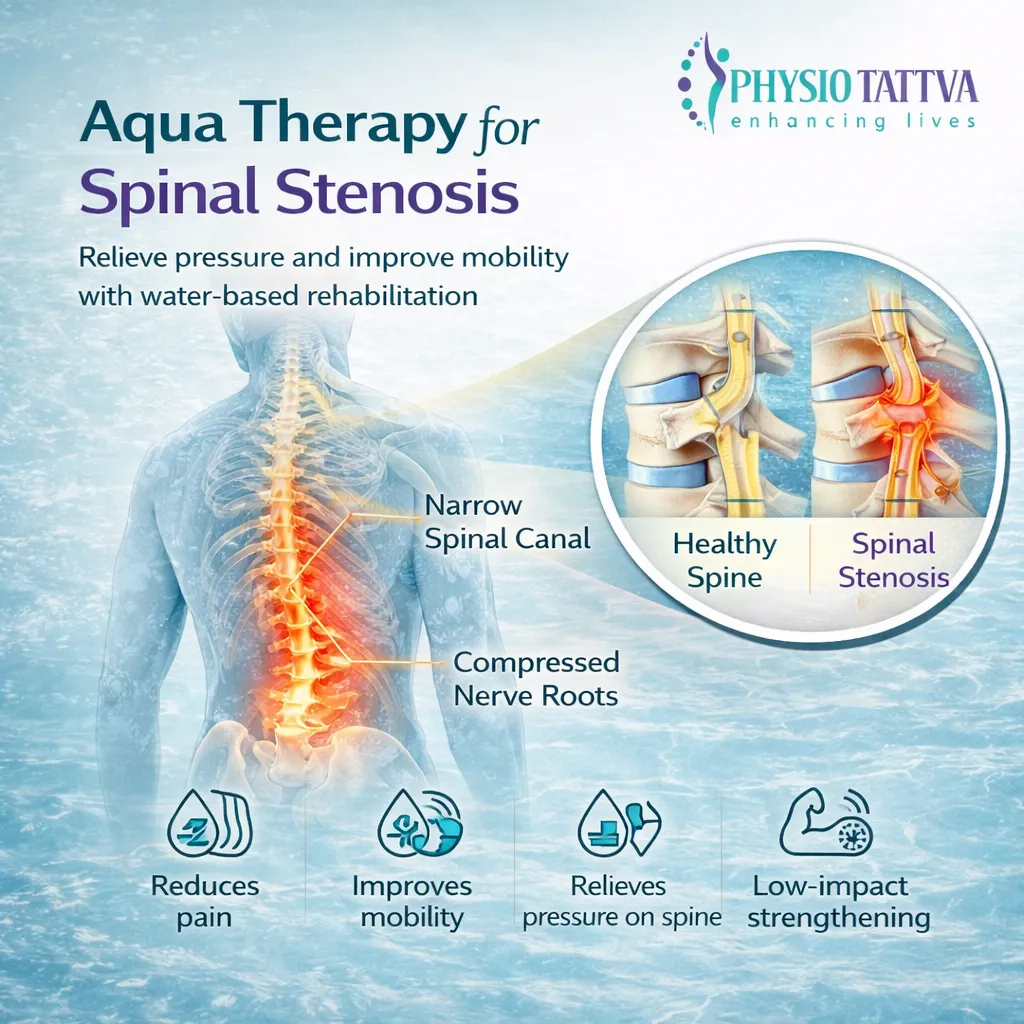
How Spinal Stenosis Affects Walking, Posture and Nerve Function?
The nerve compression from spinal stenosis leads to distinct symptoms, particularly affecting mobility and comfort.
- Neurogenic Claudication: This causes pain, cramping, or numbness in the legs when walking or standing for long periods.
- Positional Pain: Symptoms often worsen when the spine is extended (standing straight) and feel better when it is flexed (bending forward or sitting).
- Balance Issues: Nerve pressure can interfere with balance and increase the risk of falls.
What is Aqua Therapy? Clinical Hydrotherapy for Spinal Care
Many people hear “water exercise” and think of swimming laps or a seniors' water aerobics class. Aquatic physical therapy is fundamentally different. It is a specialized form of physiotherapy performed in a temperature-controlled pool, prescribed and supervised by a licensed and trained physiotherapist.
Unlike general water fitness, aqua therapy is a medical treatment with specific therapeutic goals. It is not about swimming; it's about using the unique properties of water to perform targeted exercises that would be difficult or painful to do on land. Each session is built around a personalized program designed to address your specific diagnosis, symptoms, and recovery goals, all within a safe and controlled environment.
How Aqua Therapy Reduces Nerve Compression and Improves Mobility?
This is where the magic of water truly comes into play. The principles of physics that govern objects in water are precisely what make it the perfect medium for treating spinal stenosis. It’s a powerful combination of support, pressure, and resistance that works in perfect harmony.
How Buoyancy Supports Natural Spinal Decompression?
On land, gravity is constantly compressing your spine. For someone with spinal stenosis, this compression is the primary source of pain. In chest-deep water, the principle of buoyancy supports up to 90% of your body weight. This is a game-changer. The immense pressure is lifted off your vertebrae and spinal nerves, creating a feeling of weightlessness and providing immediate pain relief. This natural decompression allows you to stand, walk, and perform stretches with far greater ease and without the fear of aggravating your symptoms. It's the ultimate form of low-impact exercise for back pain.
How Hydrostatic Pressure Reduces Swelling and Improves Circulation?
When you are submerged in water, it exerts a consistent pressure on your entire body. This is called hydrostatic pressure. Think of it as a gentle, full-body compression sleeve. This pressure has two major benefits. First, it helps reduce swelling (edema) in the lower limbs, a common issue for those with lumbar spinal stenosis. Second, it improves circulation and can even have a calming effect on the nervous system, further helping to decrease pain perception.
How Warm Water and Resistance Relieve Pain and Build Stability?
Physiotattva’s hydrotherapy pools are kept at a therapeutic temperature (typically 33-36°C). This warmth is incredibly soothing for tight, spasming back muscles and irritated nerves. It promotes relaxation and increases blood flow to the affected areas, which speeds up the healing process.
Furthermore, water has viscosity- it provides resistance. Pushing or moving through water is more challenging than moving through air. This provides a gentle, 360-degree resistance that strengthens the crucial core, back, and leg muscles that support your spine. You can build functional strength without the jarring impact of weights or land-based machines, protecting your joints and spine from further stress.
Evidence Based Aqua Therapy Exercises for Spinal Stenosis
Disclaimer: These exercises are for informational purposes only. An effective and safe aqua therapy program must be designed and supervised by a qualified physiotherapist who can tailor the movements to your specific condition, strength level, and pain tolerance.
Here are a few examples of what you might do during a session of aquatic physical therapy:
- Water Walking and Marching: Simply walking forward, backward, and sideways in chest-deep water. The water’s resistance strengthens leg muscles, while its buoyancy supports your spine. Marching in place helps improve balance and core stability.
- Pool Wall Push-Ups: Facing the pool wall and placing your hands on the edge, you perform a modified push-up. This strengthens your chest, shoulders, and core muscles without putting any strain on your back.
- Gentle Knee-to-Chest Stretches: While floating on your back (supported by the therapist or floatation devices), you can gently bring one or both knees towards your chest. This provides a deep, safe stretch for the lower back muscles—a movement that is often painful on land.
- Core Stabilisation: Using a pool noodle for support, you can practice balancing exercises, like standing on one leg. The constant, gentle corrections your body must make to stay stable are excellent for strengthening the deep core muscles that act as a natural corset for your spine.
What to Expect During an Aqua Therapy Session at Physiotattva?
At Physiotattva, we don't just put you in a pool; we guide you on a structured and supportive healing journey. For those looking for premier spinal stenosis treatment in Hyderabad or physiotherapy in Bangalore, our process is designed for optimal outcomes.
- Step 1: Comprehensive Initial Assessment: Your journey begins on land with one of our expert physiotherapists. We conduct a thorough physical evaluation to understand your specific diagnosis, pain patterns, functional limitations, and personal goals.
- Step 2: A Personalised Aquatic Program: Based on this assessment, we design a one-on-one aqua therapy program tailored precisely to you. No two programs are the same because no two patients are the same.
- Step 3: Guided Sessions in Our State-of-the-Art Pools: You will work directly with your therapist in our clean, private, and temperature-controlled hydrotherapy pools. They will guide you through each exercise, ensuring correct form, patient safety, and gradual, confident progression.
Who is an Ideal Candidate for Aqua Therapy for Spinal Stenosis?
- Individuals with mild to moderate lumbar stenosis.
- Patients who find land-based exercises too painful or difficult.
- Seniors seeking a safe way to improve mobility and balance.
- hose with chronic back pain that worsens with standing or walking.
Who Should Avoid Aqua Therapy? Safety and Contraindications
While generally safe, aqua therapy is not suitable for everyone
- Individuals with open wounds, skin infections, or rashes.
- Patients with a fever, infection, or uncontrolled medical conditions.
- Those with severe cardiac or respiratory instability.
- Individuals with bowel or bladder incontinence.
Why Choose Physiotattva for Spinal Stenosis Rehabilitation?
Spinal stenosis does not have to be a life sentence of pain and restricted movement. Aqua therapy for Spinal stenosis offers a powerful trifecta of benefits: immediate pain relief through decompression, gentle muscle strengthening through resistance, and improved mobility in a safe, supportive environment. It empowers you to take control of your health.
At Physiotattva physiotherapy clinics in Bangalore and Hyderabad, you receive personalised care tailored to your specific needs, ensuring effective results and comfort throughout your journey to recovery.
Don’t wait to start your recovery! Get in touch with Physiotattva for more details! Contact us at +91 89510 47001.
Why Physiotattva?
22+
50,000+
95%
200+
25+
4.8
Cities We Serve

Bangalore
At Physio Tattva, we are committed to bring access to quality physio care through ultra-modern clinics and high-skilled practitioners to all.
.webp)
Hyderabad
At Physio Tattva, we are committed to bring access to quality physio care through ultra-modern clinics and high-skilled practitioners to all.
.webp)
Vishakhapatnam
At Physio Tattva, we are committed to bring access to quality physio care through ultra-modern clinics and high-skilled practitioners to all.
Core Treatments
Core Conditions
Core Symptoms
Frequently Asked Questions
Do I Need Swimming Skills for Aqua Therapy?

How is Aqua Therapy Different from Pool Exercise?
How Many Sessions Are Required for Improvement?
Is Aqua Therapy Safe for Seniors with Spinal Stenosis?






%20(1)-p-3200.jpeg)

.jpg)
.webp)
.webp)
.webp)