Aqua Therapy for Tremors: Safe Movement and Stability Training in Water

Aqua Therapy for Tremors: Safe Movement and Stability Training in Water

Aqua Therapy for Tremors is a specialized form of physiotherapy that uses the unique properties of water to help manage involuntary muscle movements. Tremors, often seen in conditions like Parkinson's disease or essential tremor, can significantly impact coordination, balance, and daily activities, making simple tasks challenging. This supportive neuromuscular rehabilitation provides a safe, low-impact environment to improve motor control, stability, and overall confidence.
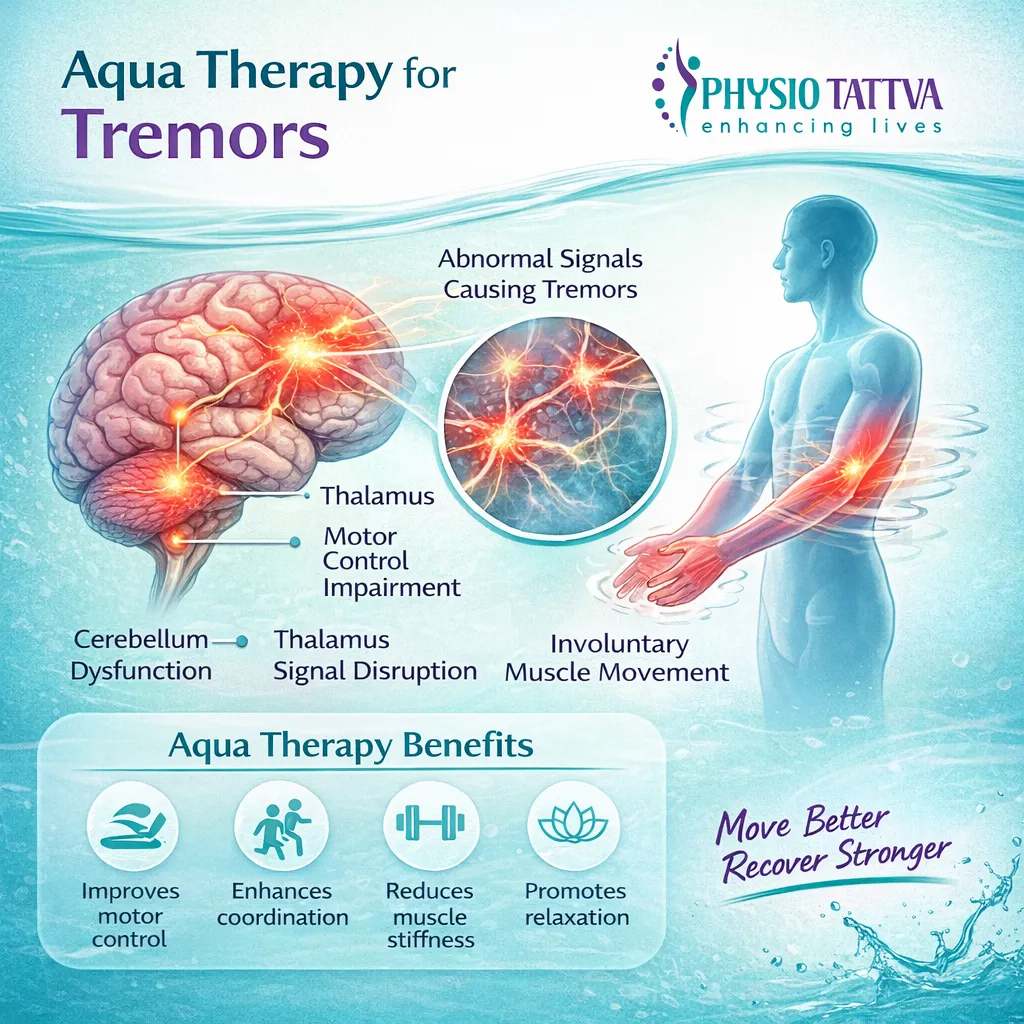
What Causes Tremors? Types and Underlying Conditions Explained

  • Essential Tremor: The most common movement disorder; tremors typically occur during voluntary movements like writing or holding a cup.
  • Parkinsonian Tremor: A resting tremor that occurs when muscles are relaxed, often starting in one limb.
  • Intention Tremor: A tremor that worsens as you get closer to a target, caused by damage to the cerebellum.

How Tremors Affect Balance, Coordination and Daily Activities

  • Difficulty with fine motor skills like writing, buttoning a shirt, or using utensils.
  • Challenges in maintaining a steady posture while standing or walking.
  • Spilling food or drinks.
  • Impaired balance, increasing the risk of falls.

What is Aqua Therapy? Clinical Hydrotherapy for Neurological Rehabilitation?

Aqua therapy, also known as aquatic physical therapy or hydrotherapy, is not simply swimming or water aerobics. It is a specialised form of physical therapy that involves performing prescribed exercises in a warm-water pool under the supervision of a trained therapist. The environment is controlled and therapeutic, designed to help individuals with physical ailments and movement disorders achieve their functional goals in a safe, supportive setting.

How Aqua Therapy Improves Motor Control and Reduces Movement Instability

The magic of aqua therapy lies in the physical properties of water, which create a unique environment for retraining the body and calming the nervous system.

How Buoyancy Stabilizes the Body During Involuntary Movements

Water counteracts gravity, supporting up to 90% of your body weight. This weightlessness reduces stress on joints, making movement easier and less painful. For individuals whose tremors are exacerbated by the effort of movement, this support can lead to smoother, more controlled actions and a significantly reduced fear of falling. When the body doesn't have to fight gravity, it has more resources to focus on controlled movement.

How Hydrostatic Pressure Enhances Proprioception and Control

Water exerts a gentle, uniform pressure on the entire submerged body. This constant pressure acts like a "full-body hug," providing a wealth of sensory input to the brain (proprioception). This enhanced body awareness can help the nervous system better regulate limb position and movement, which may help to dampen or "quiet" tremors during therapy. It also has a calming effect on the nervous system as a whole, reducing anxiety that can often worsen tremors.

How Water Resistance Slows and Controls Rapid Movements

Water provides 360-degree resistance to movement. Unlike air, it pushes back from every direction. This resistance forces movements to be slower and more deliberate. Rapid, jerky movements that can trigger or worsen tremors are naturally discouraged. This slow, controlled movement builds functional strength and teaches the body smoother motor patterns that can carry over to activities on land.

How Warm Water Relaxes Muscles and Reduces Tension

Therapy pools are typically heated to a comfortable 92-96°F (33-36°C). The warm water helps relax tight, rigid muscles—a common symptom in conditions like Parkinson's. This reduction in stiffness allows for a greater range of motion and can decrease pain, creating a better foundation for effective exercise and more fluid movement.

Clinical Benefits of Aqua Therapy for Tremor Management

Engaging in a structured aquatic program can lead to significant improvements:

  • Improved Balance and Stability: The buoyant support removes the fear of falling, allowing you to practice and challenge your balance in ways that would be impossible on land. This builds both physical stability and the confidence to move more freely.
  • Enhanced Coordination and Motor Control: The water’s resistance encourages slower, more purposeful movements, helping to retrain neurological pathways for better coordination between your limbs and core.
  • Increased Muscle Strength and Endurance: Moving against water resistance builds strength in the core, legs, and arms without the need for heavy weights or high-impact stress on your joints. A stronger core is the foundation of better balance.
  • Reduced Tremor Amplitude: The combined effect of hydrostatic pressure, warmth, and focused movement can have a direct calming effect on the nervous system, often leading to a temporary reduction in the severity of tremors both during and after the session.
  • Decreased Pain and Stiffness: The warmth and gentle movement can alleviate joint pain and muscle stiffness, common co-occurring symptoms that often make exercise on land difficult.
  • Improved Gait and Walking Patterns: Practicing walking forward, backward, and sideways in the water helps normalize walking mechanics in a safe environment, improving stride length and stability.
  • Boosted Confidence and Mental Well-being: Successfully performing exercises in the pool and feeling more in control of your body is incredibly empowering. The reduction in anxiety and the joy of movement can have profound psychological benefits.

What Happens During an Aqua Therapy Session at Physiotattva?

A session is tailored to your specific needs and abilities, but generally follows this structure:

  1. Initial Assessment (On Land): Before you get in the pool, a physical therapist will assess your condition, muscle strength, range of motion, balance, and personal goals. This ensures the program is perfectly suited to you.
  2. Warm-Up: The session begins with gentle movements in the warm water, such as walking or light stretching, to prepare your muscles and acclimate your body to the environment.
  3. Targeted Exercises: This is the core of the session. The therapist will guide you through exercises focused on:
    • Balance: Standing on one leg, walking a "tightrope" line on the pool floor, or shifting weight side-to-side.
    • Gait Training: Marching in place, high-knee walking, and sidestepping to improve walking patterns.
    • Strengthening: Using foam "dumbbells" or noodles for resistance, performing leg kicks, or arm circles.
    • Coordination: Making figure-eight patterns with your arms or legs, marching with opposite arm swings to retrain brain-body communication.
    • Core Stability: Using the water's turbulence (created by the therapist or yourself) to challenge and strengthen your abdominal and back muscles as you work to stay stable.
  4. Cool-Down: The session ends with gentle stretching and relaxation techniques, often floating with support, to leave your muscles relaxed and your mind calm.

Who is an Ideal Candidate for Aqua Therapy for Tremors?

  • Individuals with stable neurological conditions like Parkinson's disease, essential tremor, or cerebellar ataxia.
  • Those seeking a low-impact exercise option to improve balance and coordination.
  • Patients who experience pain or instability with land-based exercises.

Who Should Avoid Aqua Therapy? Safety and Contraindications

Aqua therapy may not be suitable for individuals with:

  • Open wounds, skin infections, or infectious diseases.
  • Severe, uncontrolled medical conditions like unstable blood pressure or cardiac failure.
  • Fever or urinary incontinence.
  • A qualified physiotherapist will assess your suitability before beginning treatment.

Why Choose Physiotattva for Tremor Rehabilitation?

Aqua therapy for tremors offers a safe, gentle, and effective way to regain control and stability. By harnessing the healing properties of water, it helps improve strength, balance, and coordination while reducing the intensity of tremors. The warm water and controlled exercises create an environment that calms the nervous system and boosts confidence. If you’re looking for a non-invasive approach to managing your tremors, aqua therapy could be the ideal solution. Take the first step towards better movement and a more balanced life. 

At Physiotattva physiotherapy clinics in Bangalore and Hyderabad, you receive personalised care tailored to your specific needs, ensuring effective results and comfort throughout your journey to recovery. 

Don’t wait to start your recovery! Get in touch with Physiotattva for more details! Contact us at +91 89510 47001.

Frequently Asked Questions

Do I Need Swimming Skills for Aqua Therapy?

FAQ Icon
Absolutely not. The therapy is conducted in shallow, chest-deep water where you can comfortably stand. A dedicated physiotherapist is with you at all times to ensure your complete safety and comfort.

How is Aqua Therapy Different from Water Aerobics?

FAQ Icon
Aqua therapy is a clinical treatment prescribed and supervised one-on-one by a licensed physiotherapist. The exercises are specifically chosen to treat your medical condition. Water aerobics, on the other hand, is a general fitness class designed for a group, not for individual rehabilitation.

Can Aqua Therapy Cure Tremors?

FAQ Icon
No, aqua therapy is not a cure for tremor-producing conditions like Parkinson's disease or Essential Tremor. It is a highly effective complementary therapy designed to help you manage the symptoms. The goal is to improve your functional ability, build foundational strength and balance, and enhance your overall quality of life alongside the primary treatments recommended by your neurologist.

How Long Do the Benefits Last After a Session?

FAQ Icon
Many people experience a noticeable, temporary reduction in tremor severity during the session and for a short period afterward. This immediate effect is due to the calming combination of warm water and focused movement. However, the true long-term benefit comes from consistent therapy. Over time, you build strength, coordination, and motor control that carry over to your daily life on land, leading to better overall management of your tremors.

How Soon Can I Expect Improvement?

FAQ Icon
You will likely feel some benefits, such as muscle relaxation and easier movement, from the very first session. However, significant improvements in balance, strength, and motor control are cumulative. Most people notice meaningful functional changes after several weeks of consistent sessions. Your therapist will help you set realistic goals and track your progress.

Is Aqua Therapy Covered by Insurance?

FAQ Icon
In many cases, yes. When it is prescribed by a physician as "aquatic physical therapy" to treat a diagnosed medical condition, it is often covered by insurance plans in the same way as land-based physical therapy. It is crucial to get a referral from your doctor and check with your specific insurance provider about their coverage policies.

Are There Any Contraindications for Aqua Therapy?

FAQ Icon
Yes, aqua therapy is not suitable for everyone. Major contraindications include: Open wounds or skin infections Fever or contagious illness Severe incontinence Certain unstable cardiac conditions or uncontrolled blood pressure Chlorine or bromine allergies

Related Therapies

Our Professionals

Dr. Anup Brahmbhatt (PT)

Chief Chiropractor and Physiotherapist

Read MoreBook an appointment

Dr NIRANJAN EGANDHER (PT)

Senior Clinical Physiotherapist

Read MoreBook an appointment

DR. NEHA (PT)

Clinical coordinator

Read MoreBook an appointment

Dr MATLA BHULAKSHMI

Clinical Physiotherapist

Read MoreBook an appointment

Dr SAVIOUR YUMNAM CHANNU (PT)

Senior Clinical Physiotherapist

Read MoreBook an appointment

Dr PUNITHRAJ (PT)

Homecare Physiotherapist

Read MoreBook an appointment

Get In Touch

Valid number
Thank you! Your submission has been received!
Oops! Something went wrong while submitting the form.