




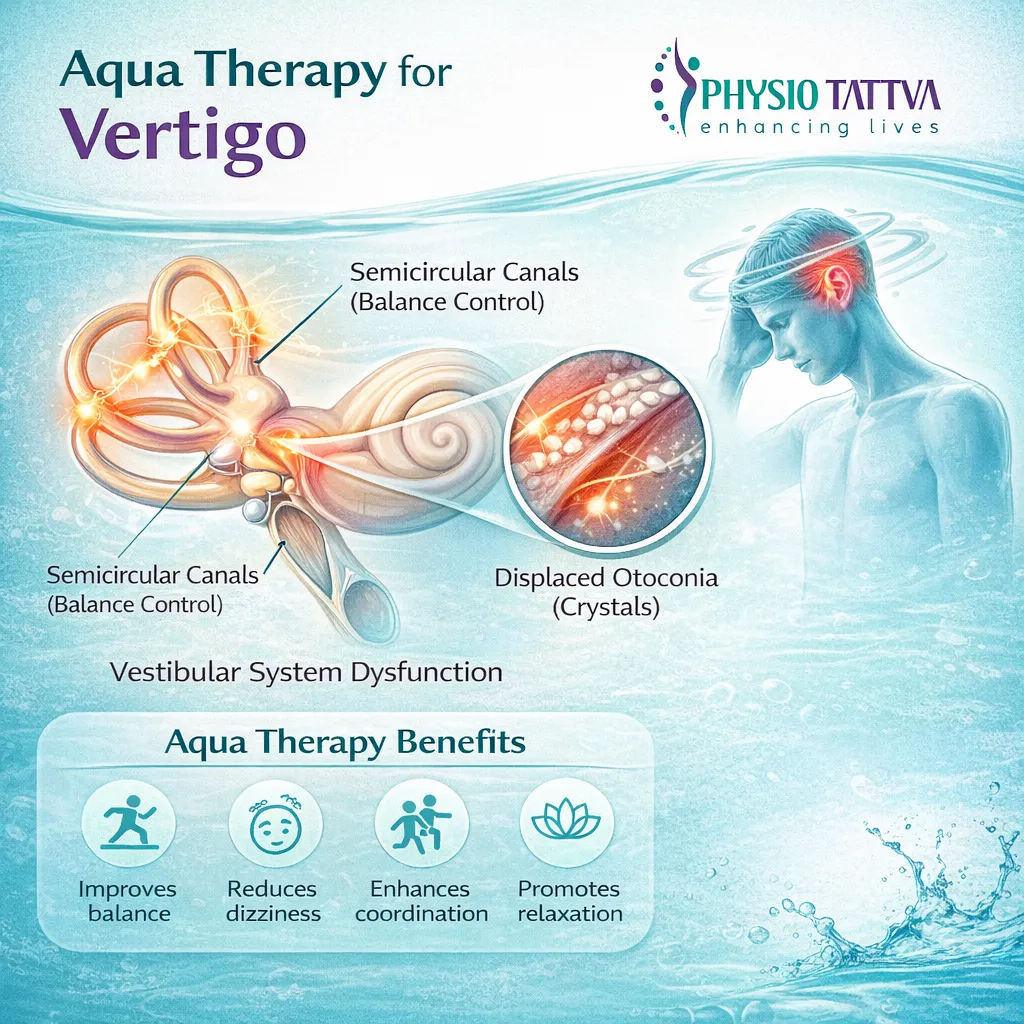
Aqua therapy for vertigo is a specialized form of physiotherapy that uses the properties of water to help retrain the body's balance system. It provides a safe, supportive environment to perform vestibular rehabilitation exercises that can be challenging on land. If you experience vertigo, a false sensation of spinning or movement often caused by inner ear or vestibular system dysfunction, this gentle therapy can significantly reduce symptoms like imbalance, dizziness, and nausea, helping you regain confidence and stability.
What is Vertigo? Causes, Symptoms and Types Explained
It’s crucial to understand that vertigo isn't a disease but a symptom of an underlying issue within your vestibular system—the complex network in your inner ear and brain responsible for balance. While many use "dizziness" and "vertigo" interchangeably, vertigo is specifically a spinning sensation. Common causes include BPPV (Benign Paroxysmal Positional Vertigo), Meniere's disease, or vestibular neuritis. Regardless of the cause, the primary challenges remain the same: impaired balance, a heightened risk of falls, and a significant loss of confidence in your body's ability to move safely through the world.
How Vertigo Affects Balance, Gait and Daily Life?
Living with vertigo can seriously disrupt your daily routine and overall quality of life. The condition often leads to:
- Constant feelings of instability and unsteadiness
- An increased risk of falls, especially in older adults.
- Difficulty walking straight or making quick turns.
- Symptoms worsened by simple head movements.
- Anxiety and avoidance of certain activities.
What is Aqua Therapy? Clinical Hydrotherapy for Balance Training
Aqua therapy, also known as hydrotherapy for balance, is a specialised form of physiotherapy performed in a purpose-built, temperature-controlled pool. It’s far more than just swimming or water aerobics; it is a clinical practice that harnesses the unique physical properties of water to create an ideal therapeutic environment. The effectiveness of aquatic therapy for dizziness lies in three key principles:
- Buoyancy: Water’s upward thrust counteracts gravity, reducing your body weight by up to 90%. This offloads stress from your joints and provides natural support, making it easier and safer to perform exercises that would be difficult or impossible on land.
- Hydrostatic Pressure: The water exerts gentle, consistent pressure on your entire body. This helps reduce swelling, improve circulation, and enhance your sensory awareness (proprioception), sending clear signals to your brain about where your body is in space.
- Viscosity: Water provides natural resistance to movement. This resistance helps strengthen muscles in a controlled, gentle manner without the need for weights, improving your stability and endurance.
How Aqua Therapy Supports Vestibular Rehabilitation?
Connecting the principles of water to the challenges of vertigo reveals why this treatment is so successful. The benefits of aqua therapy create a superior environment for vestibular rehabilitation, allowing patients to progress faster and more safely than with land-based therapy alone.
Here’s why it works so well:
- A Safe & Supportive Environment: The number one barrier to vertigo rehabilitation is the fear of falling. Buoyancy all but eliminates this risk. In the water, you can confidently practice balance exercises, knowing that the water will support you, allowing your brain to focus on relearning balance instead of fearing an impact.
- Enhanced Sensory Input: For a vestibular system that’s out of sync, clear sensory information is vital. The constant, gentle pressure and movement of the water provide rich tactile and proprioceptive feedback. This flood of reliable information helps the brain recalibrate and remap the body's sense of balance and position.
- Graduated Balance Training: An aquatic therapist can precisely control the level of challenge. By changing water depth, moving you away from the support of the pool wall, or introducing gentle turbulence, they can safely and progressively challenge your vestibular system to adapt and improve.
- Core and Postural Strengthening: Water's viscosity creates 360-degree resistance. Every movement you make engages the core, hip, and leg muscles—the pillars of your stability. Strengthening these postural muscles is fundamental to preventing falls and maintaining balance during daily activities.
What Happens During an Aqua Therapy Session at Physiotattva?
Embarking on a new treatment can be daunting, but at Physiotattva, we prioritize your comfort and confidence from the very first step. Your journey with aqua therapy for vertigo begins with a comprehensive, one-on-one consultation with a physiotherapist specializing in vestibular disorders. They will assess your specific symptoms, balance deficits, and overall physical condition to create a truly personalized plan.
You will then be introduced to our state-of-the-art aquatic therapy pools. These are not recreational pools; they are immaculately clean, heated to a comfortable therapeutic temperature, and equipped with handrails for support.
During your session, your therapist will be in the water with you, providing hands-on guidance, ensuring correct form, and offering constant support. They will lead you through a series of exercises tailored to your ability, starting gently and progressing only when you are ready. This guided, supportive approach ensures every session is safe, effective, and empowering.
Who is an Ideal Candidate for Aqua Therapy for Vertigo?
Aqua therapy is particularly beneficial for individuals who:
- Are in the recovery phase of BPPV or vestibular neuritis.
- Suffer from chronic imbalance and general unsteadiness.
- Have a high fear of falling that limits land-based therapy.
- Are looking for a low-impact way to improve their stability.
Who Should Avoid Aqua Therapy? Safety and Contraindications?
While generally safe, aqua therapy may not be suitable for everyone. You should consult a doctor and avoid it if you have:
- Severe, uncontrolled dizziness that occurs even when resting.
- Unstable cardiac conditions or uncontrolled blood pressure.
- Open wounds, skin infections, or rashes.
- Fever, flu, or any contagious illness.
Key Aqua Therapy Exercises for Vestibular Rehabilitation
While your treatment plan will be unique, here are some examples of exercises used in vestibular rehabilitation to give you a clearer picture of what a session might involve.
Disclaimer: These exercises are for informational purposes only and should only be performed under the direct supervision of a qualified physiotherapist in a controlled aquatic environment.
- Gaze Stabilization: While standing in chest-deep water, you’ll be asked to keep your eyes fixed on a target on the pool wall. You will then perform slow, controlled head movements (nodding "yes," shaking "no," or tilting side to side). The water’s resistance helps slow the movement, giving your brain time to process and adapt.
- Tandem Walking: Walking heel-to-toe is a classic balance test that can be terrifying on land. In the pool, buoyancy provides support and removes the fear of falling, allowing you to practice this crucial skill safely.
- Single-Leg Stance: Balancing on one leg is essential for functional movement, like climbing stairs. In the water, you can start by holding the pool wall for support and gradually progress to balancing without assistance as your stability improves.
- Controlled Turns & Pivots: Turning your head and body is often a major trigger for vertigo. In the pool, you can practice slow, deliberate pivots and turns, retraining your vestibular system in a safe, buoyant setting.
Why Choose Physiotattva for Vestibular Rehabilitation?
Vertigo doesn't have to control your life. You can move with confidence again. Aqua therapy for vertigo offers a proven, safe, and empowering method to reduce your symptoms, build foundational strength, and restore your quality of life. It’s time to stop feeling like you’re on the sidelines.
At Physiotattva physiotherapy clinics in Bangalore and Hyderabad, you receive personalised care tailored to your specific needs, ensuring effective results and comfort throughout your journey to recovery.
Don’t wait to start your recovery! Get in touch with Physiotattva for more details! Contact us at +91 89510 47001.
Why Physiotattva?
22+
50,000+
95%
200+
25+
4.8
Cities We Serve

Bangalore
At Physio Tattva, we are committed to bring access to quality physio care through ultra-modern clinics and high-skilled practitioners to all.
.webp)
Hyderabad
At Physio Tattva, we are committed to bring access to quality physio care through ultra-modern clinics and high-skilled practitioners to all.
.webp)
Vishakhapatnam
At Physio Tattva, we are committed to bring access to quality physio care through ultra-modern clinics and high-skilled practitioners to all.
Core Treatments
Core Conditions
Core Symptoms
Frequently Asked Questions
Do I Need Swimming Skills for Aqua Therapy?

Is Aqua Therapy Safe During Active Vertigo Episodes?
How Many Sessions Are Needed for Vertigo Rehabilitation?






%20(1)-p-3200.jpeg)


.jpg)
.webp)
.webp)
.webp)