Dry needling therapy is an effective treatment for managing pain and improving mobility in individuals with osteoporosis. At Physiotattva, we offer tailored dry needling sessions designed to relieve muscle tightness and enhance muscle function around weakened bones. Our experts focus on reducing pain, increasing blood flow, and promoting healing through personalized care. Learn how this therapy can complement your recovery plan and improve your quality of life by easing discomfort and supporting muscle health. Contact us today for more details!
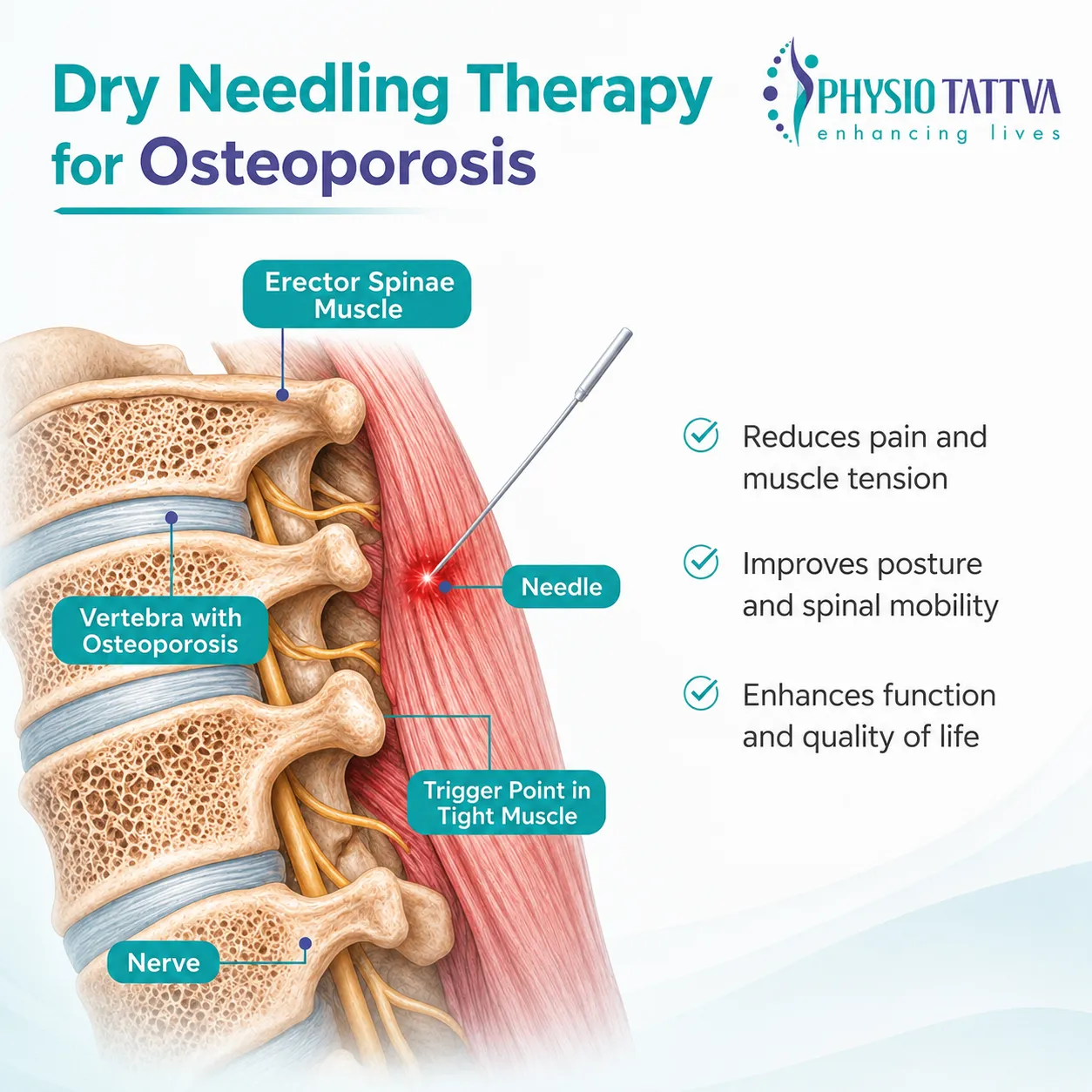
Dry needling therapy for osteoporosis is a physiotherapy technique used to relieve muscle pain and stiffness that often develops around weakened bones. The treatment involves inserting thin, sterile needles into tight muscle trigger points to help release tension and improve muscle function.
By stimulating these trigger points, dry needling helps improve blood circulation, relax overactive muscles, and reduce discomfort caused by posture changes or protective muscle guarding. This can make everyday movements such as walking, bending, and turning easier and less painful.
Dry needling therapy is commonly used alongside physiotherapy exercises, posture correction, and strengthening programmes to support safe movement and rehabilitation. When performed by a trained physiotherapist, it is generally a safe, supportive treatment that helps improve mobility and manage osteoporosis-related muscle discomfort.
Dry needling therapy for osteoporosis is a physiotherapy technique in which thin, sterile needles are inserted into specific muscle trigger points to help relieve muscle tension, reduce pain, and improve mobility in areas affected by reduced bone density. In people with osteoporosis, changes in posture, spinal alignment, or protective muscle guarding can cause certain muscles around the spine, hips, and shoulders to become tight or overactive. These tight muscles may contribute to discomfort, stiffness, and limited movement.
Dry needling targets these trigger points within the surrounding soft tissues rather than the bones themselves. By stimulating the affected muscle fibres, the therapy may help relax tight muscle bands, support improved blood circulation, and promote better muscle function around weakened skeletal structures. As muscle tension decreases and mobility improves, patients may find everyday movements such as turning the neck, bending, or walking more comfortable.
How Does Dry Needling Therapy Work for Osteoporosis-Related Muscle Pain?
Dry needling therapy helps relieve osteoporosis-related muscle pain by targeting tight trigger points in the muscles surrounding weakened bones. By stimulating these trigger points with fine needles, the therapy may reduce muscle tension, improve circulation, and support better mobility.
The treatment works through several physiological responses:
Trigger point release: Thin sterile needles are inserted into tight muscle bands to help relax overactive muscles that contribute to pain and stiffness.
Muscle relaxation: Needle stimulation may trigger a brief muscle twitch response, helping reduce tension in the affected muscle fibres.
Improved blood circulation: The therapy may increase local blood flow, supporting oxygen and nutrient delivery to muscles around the affected area.
Reduced muscle guarding: Muscles often tighten to protect fragile bones in osteoporosis; dry needling may help reduce this protective muscle stiffness.
Improved mobility: As muscle tension decreases, movement in areas such as the back, hips, and shoulders may become easier and less painful.
In osteoporosis management, dry needling therapy typically focuses on the surrounding soft tissues rather than the bones themselves and is often combined with physiotherapy exercises and posture correction to support safe movement and functional recovery.
When Is Dry Needling Therapy Recommended for Osteoporosis?
Dry needling therapy may be considered when muscle tightness, trigger points, or movement-related discomfort develop around areas affected by osteoporosis. These muscle issues often occur due to postural changes, reduced mobility, or protective muscle guarding around weakened bones.
Dry needling therapy may be recommended if you experience:
Persistent muscle stiffness in areas such as the back, hips, or shoulders
Muscle pain associated with postural changes caused by reduced bone density
Limited flexibility or reduced range of motion during daily activities
Trigger point pain that worsens with movement or prolonged sitting or standing
Muscle tightness that interferes with rehabilitation exercises
A physiotherapy assessment may be required first if:
Recent fractures related to osteoporosis are suspected
Severe bone fragility or sudden worsening pain is present
Unexplained swelling or severe tenderness occurs in the affected area
Underlying medical conditions may affect treatment safety
If these symptoms persist or begin to affect daily movement and comfort, a physiotherapy evaluation can help determine whether dry needling therapy is an appropriate supportive treatment within a comprehensive osteoporosis management plan.
What Musculoskeletal Issues in Osteoporosis Can Dry Needling Address?
Dry needling therapy for osteoporosis may help manage muscle-related pain and stiffness that develop due to postural changes and reduced mobility around weakened bones.
It may help address:
Muscle tightness and trigger points around the spine, hips, or shoulders
Posture-related muscle pain caused by spinal alignment changes
Myofascial pain syndrome (painful muscle knots)
Muscle stiffness and reduced flexibility during daily activities
Muscle guarding, where muscles tighten to protect fragile bones
By reducing muscle tension, dry needling may help improve mobility and support physiotherapy rehabilitation.
What Types of Dry Needling Therapy Are Used for Osteoporosis?
Different types of dry needling therapy for osteoporosis may be used depending on the location of muscle tightness, trigger points, and the depth of affected muscles. A physiotherapist selects the appropriate technique after assessing muscle tension and movement limitations.
Trigger Point Dry Needling: This technique targets tight muscle knots known as trigger points. Thin needles are inserted into these areas to help release muscle tension, reduce discomfort, and support improved mobility.
Superficial Dry Needling: Superficial dry needling focuses on the upper layers of the skin and muscles. It may help relax surface muscles and improve circulation in areas experiencing mild muscle stiffness.
Deep Tissue Dry Needling: Deep tissue dry needling targets deeper muscle layers that contribute to persistent tightness or restricted movement. It may help improve muscle flexibility and reduce deeper muscle tension.
Functional Dry Needling: Functional dry needling combines dry needling with controlled movements or exercises. This approach may help improve muscle coordination and support better movement during daily activities.
What Are the Benefits of Dry Needling Therapy for Osteoporosis?
Dry needling therapy for osteoporosis may help reduce muscle tension, improve mobility, and support better muscle function around weakened bones. The therapy targets trigger points in tight muscles that often develop due to postural changes and reduced movement.
Key benefits of dry needling therapy for osteoporosis include:
Pain Relief: Dry needling may help release tight muscle bands and trigger points, which can reduce muscle-related pain and stiffness around the spine, hips, or shoulders.
Improved Muscle Function: By relaxing overactive muscles, the therapy may support better muscle coordination and improve the ease of daily movements such as walking, bending, or standing.
Improved Blood Circulation: The stimulation from the needles may increase blood flow in the treated area, helping deliver oxygen and nutrients to muscles and supporting tissue recovery.
Reduced Muscle Spasms: Dry needling may help relax involuntary muscle contractions that often occur when muscles tighten to protect fragile bones.
Supports Physiotherapy Rehabilitation: Dry needling is often combined with physiotherapy exercises and posture correction programs to support safe movement and improved musculoskeletal function.
What to Expect During a Dry Needling Therapy Session for Osteoporosis?
A dry needling therapy session is typically short, controlled, and performed by a trained physiotherapist. The treatment focuses on releasing tight muscles and trigger points that may develop around areas affected by osteoporosis. It is often combined with physiotherapy exercises to support safe movement and rehabilitation.
A typical session may include the following steps:
Clinical assessment – The physiotherapist evaluates your symptoms, posture, movement patterns, and areas of muscle tightness to determine whether dry needling therapy is appropriate.
Positioning – You will be positioned comfortably, usually lying or seated, so the affected muscle areas, such as the back, hips, or shoulders, can remain relaxed during treatment.
Preparation of treatment area – The therapist identifies trigger points or tight muscle bands that may be contributing to pain or restricted movement.
Needle insertion – Thin, sterile needles are inserted into the targeted muscle trigger points to help release muscle tension and improve muscle function.
Muscle response – Some patients may feel a brief muscle twitch or mild pressure as the trigger point is stimulated.
Session duration – The procedure usually lasts 10–20 minutes, depending on the number of areas being treated.
After-care guidance – The physiotherapist may recommend gentle stretches, posture corrections, or strengthening exercises to support recovery.
Treatment plan – Dry needling is often included within a broader physiotherapy program, and several sessions may be recommended based on symptom severity and rehabilitation goals.
How Soon Does Dry Needling Therapy Start Working for Osteoporosis?
Some people may notice reduced muscle stiffness and improved movement within a few sessions of dry needling therapy, although results vary depending on muscle tightness and participation in physiotherapy exercises.
Typical response timelines include:
Mild muscle tightness: Improvement may appear within a few sessions as trigger points release and muscle tension reduces.
Moderate muscle tension: Symptoms may improve over several weeks when dry needling is combined with physiotherapy exercises.
Chronic muscle stiffness: Long-standing muscle tightness may require multiple sessions over a longer rehabilitation period.
Individual results vary depending on health status, mobility level, and adherence to the physiotherapy programme.
Is Dry Needling Therapy for Osteoporosis Safe? Risks and Precautions
Dry needling therapy for osteoporosis is generally considered safe when performed by a trained physiotherapist using sterile techniques and appropriate clinical judgement. The treatment targets muscle trigger points around weakened bones and focuses on relieving muscle tension rather than treating the bone directly.
Before starting treatment, it is helpful to understand which short-term reactions may occur after a session and when caution is required.
What Temporary Effects Can Occur After Dry Needling Therapy?
Some mild and temporary reactions may occur after a session. These usually resolve within 24–48 hours.
Mild soreness at the needle insertion site
Temporary muscle tenderness after treatment
Slight redness or minor bruising around the treated area
A brief muscle twitch response when trigger points are stimulated
These effects are typically short-lived and part of the body’s normal response to muscle stimulation
What Are the Possible Risks of Dry Needling Therapy for Osteoporosis?
Dry needling therapy is generally well tolerated, but like most physiotherapy treatments, minor risks may occasionally occur.
Possible risks may include:
Minor bruising around the needle insertion site
Temporary increase in muscle soreness after treatment
Small bleeding spots where needles are inserted
Local muscle fatigue in the treated area
Serious complications are rare when the procedure is performed by a trained physiotherapist using proper techniques.
Who Should Avoid Dry Needling Therapy for Osteoporosis?
Dry needling therapy may not be suitable for everyone. A physiotherapy assessment is required to determine whether the treatment is appropriate.
Treatment may be avoided or modified in cases such as:
Active infection near the treatment area
Bleeding disorders or anticoagulant medication use
Recent fractures related to osteoporosis
Severe bone fragility in the targeted region
Certain medical conditions requiring medical evaluation
Your physiotherapist will review your medical history, symptoms, and bone health status before recommending dry needling therapy.
What Precautions Should Be Followed During Dry Needling Therapy for Osteoporosis?
Dry needling therapy helps reduce muscle tension, but safe movement and rehabilitation guidance are important for recovery.
Recommended precautions may include:
Avoid sudden or high-impact movements during early treatment sessions
Do not forcefully stretch painful muscles without guidance
Follow prescribed physiotherapy exercises and posture corrections
Allow muscles adequate rest between treatment sessions
Inform the physiotherapist if pain, swelling, or unusual discomfort occurs
Clinical caution:A proper physiotherapy evaluation is necessary to identify the cause of muscle pain and ensure dry needling therapy is safely integrated into an osteoporosis management plan.
How to Choose the Right Dry Needling Therapist for Osteoporosis
Selecting a qualified professional is important when considering dry needling therapy for osteoporosis. A trained physiotherapist should understand bone fragility and muscle-related pain associated with osteoporosis to ensure safe and effective treatment.
What Should You Look for in a Dry Needling Therapist for Osteoporosis?
When selecting a therapist for dry needling therapy for osteoporosis, consider the following factors:
Professional qualifications: Ensure the therapist is a licensed physiotherapist trained in dry needling techniques.
Clinical experience: Look for experience in managing osteoporosis-related muscle pain and mobility limitations.
Specialised training: The therapist should have certified training in dry needling therapy.
Understanding of osteoporosis: Knowledge of bone fragility and muscle compensation patterns is important for safe treatment.
Evidence-based approach: The therapist should combine dry needling with physiotherapy exercises and rehabilitation strategies.
What Questions Should You Ask Before Starting Dry Needling Therapy for Osteoporosis?
Before beginning treatment, asking the right questions can help you understand the therapy and feel confident in your care plan.
You may consider asking:
Have you treated patients with osteoporosis using dry needling therapy before?
How will the treatment be adjusted for bone fragility or previous fractures?
How many sessions are typically required to see improvement?
What results or improvements should I realistically expect?
Are there any risks or side effects associated with this therapy?
Will dry needling be combined with physiotherapy exercises or other treatments?
How will my progress be tracked during the treatment programme?
Discussing these points helps ensure that dry needling therapy for osteoporosis is delivered safely and tailored to your rehabilitation needs.
What Are the Contraindications for Dry Needling Therapy for Osteoporosis?
Dry needling therapy for osteoporosis may not be suitable for everyone. A physiotherapist will assess your medical history, bone health, and current symptoms to determine whether the treatment is safe and appropriate.
Dry needling therapy for osteoporosis may be avoided or modified in situations such as:
Active infection near the treatment area, where needles may increase irritation or spread infection
Bleeding disorders or use of anticoagulant medications, which may increase the risk of bruising or bleeding
Recent osteoporosis-related fractures, where the surrounding tissues require protective healing
Severe bone lossor fragile bones in the targeted area, which requires careful treatment planning
Certain medical conditions affecting healing or immune response
Uncontrolled systemic conditions that require medical evaluation before physiotherapy
Before starting dry needling therapy for osteoporosis, it is important to inform your physiotherapist about any health conditions, medications, or recent injuries. This helps ensure the therapy is delivered safely or that alternative physiotherapy treatments are recommended when necessary.
Clinical note: A physiotherapist may combine dry needling therapy for osteoporosis with strengthening exercises, posture training, and mobility work to support long-term musculoskeletal health and safe movement.
Why Choose Physiotattva for Osteoporosis?
Choose Physiotattva for osteoporosis since we have specialised services in the treatment of this illness through dry needling and other efficient modalities. At Physiotattva, we have expertise in pain management with dry needling therapy for Osteoporosis for improvement of mobility.
We offer individualised treatment plans catering specifically to you and your needs, fully cooperating with other therapies.
We apply modern techniques and ensure that our patient is well-informed and knowledgeable regarding how each form of treatment will benefit them. By reaching out to Physiotattva, you get an all-rounded approach toward enhancing the quality of life and living with osteoporosis.
At Physiotattva physiotherapy clinics in Bangalore, Hyderabad, and Visakhapatnam- our latest clinic, you receive personalised care tailored to your specific needs, ensuring effective results and comfort throughout your journey to recovery.
Can Dry Needling Therapy Help Muscle Pain in Osteoporosis?
Dry needling therapy may help relieve muscle pain associated with osteoporosis by targeting tight muscles and trigger points that develop due to posture changes or reduced mobility. The therapy uses fine needles to relax overactive muscles, improve local blood circulation, and reduce stiffness. When combined with physiotherapy exercises and posture correction, it can support better movement and comfort.
Is Dry Needling Good for Osteoporosis?
Yes, dry needling can be beneficial for Osteoporosis by reducing muscle pain and improving function. It targets muscle trigger points around affected joints, helping to alleviate discomfort and support better movement.
How Much Does Dry Needling Therapy for Osteoporosis Cost?
The cost of dry needling therapy for osteoporosis can vary depending on factors such as the number of sessions required, clinic location, and whether the therapy is included as part of a broader physiotherapy programme. A personalised physiotherapy assessment is typically needed to evaluate muscle pain, mobility limitations, and treatment goals before determining the overall treatment plan and associated costs.
How Many Dry Needling Sessions Are Needed for Osteoporosis-Related Muscle Pain?
The number of dry needling therapy sessions for osteoporosis depends on the severity of muscle tightness, trigger points, and overall movement limitations. After a clinical assessment, a physiotherapist typically creates a personalised treatment plan. In many cases, patients may require 4–8 sessions, often combined with strengthening exercises and mobility training to improve muscle function and support comfortable movement.
How Long Does a Dry Needling Session for Osteoporosis Take?
A dry needling therapy session for osteoporosis-related muscle pain typically lasts 10–20 minutes, depending on the number of muscles or trigger points being treated. The procedure is usually quick and performed by a trained physiotherapist. Most patients can resume normal daily activities shortly after the session, although mild muscle soreness may occur temporarily.
Where Can I Get Dry Needling Therapy for Osteoporosis?
Dry needling therapy for osteoporosis should be performed by trained physiotherapists who can assess muscle pain, movement limitations, and bone health before starting treatment. Physiotattva offers dry needling therapy as part of personalised physiotherapy care at its clinics in Bangalore, Hyderabad, and Visakhapatnam following a clinical evaluation. You can contact Physiotattva at +91 89510 47001 to book an assessment and confirm whether this therapy is suitable for your condition.





.webp)
.webp)


.webp)




.jpeg)



.webp)
.webp)




.webp)







.webp)
.webp)








%20(1)-p-3200.jpeg)


.jpg)
.webp)
.webp)
.webp)


