




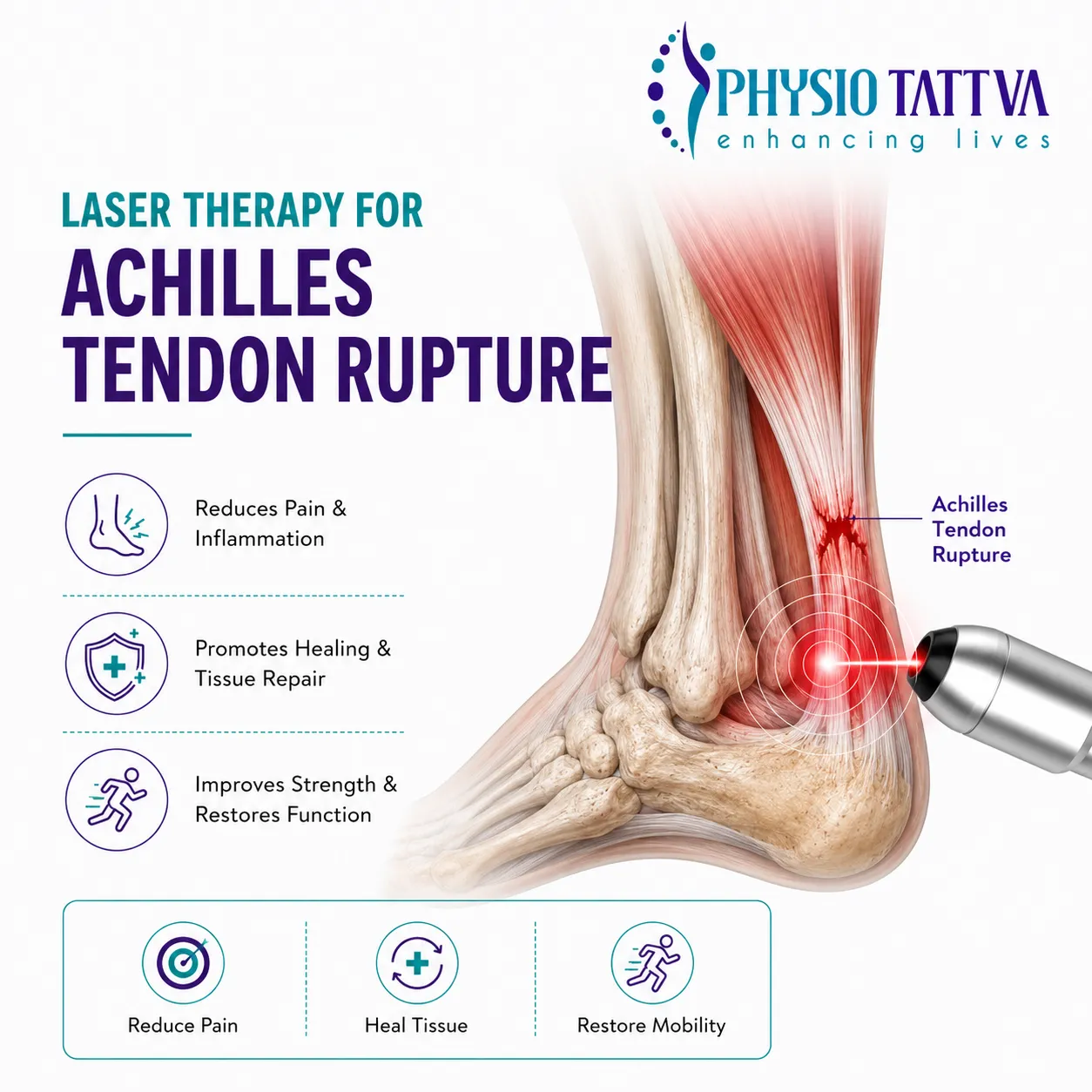
Laser therapy for Achilles tendon rupture is a non-invasive physiotherapy treatment used to support tendon healing and reduce pain during rehabilitation. It does not replace surgery or immobilisation but helps improve recovery quality by delivering controlled light energy to stimulate cellular repair and enhance local circulation. The therapy may reduce inflammation, improve comfort during protected movement phases, and support collagen organisation as the tendon heals under guided loading. It is commonly used for partial tears and during post-surgical rehabilitation.
Sessions are typically brief, lasting about 5 to 15 minutes, painless, and performed alongside structured physiotherapy. Improvement develops gradually and depends heavily on adherence to immobilisation guidelines and progressive strengthening protocols. Laser therapy does not physically reattach a completely ruptured tendon, but it is considered safe when introduced after proper medical diagnosis and stabilisation.
What is Laser Therapy for Achilles Tendon Rupture?
Laser therapy for Achilles tendon rupture is a non-invasive physiotherapy treatment used to support tendon healing and reduce pain during recovery. It delivers controlled light energy into the injured tissue, stimulating cellular repair processes and improving local circulation so rehabilitation exercises can be performed more comfortably.
This treatment is commonly used for partial tears and during post-surgical rehabilitation. Rather than replacing immobilisation or strengthening therapy, laser therapy helps prepare the tendon for gradual loading and movement as healing progresses.
How Does Laser Therapy Help Achilles Tendon Repair?
Laser therapy delivers controlled light energy to injured tendon tissue. This energy may influence inflammatory processes, local circulation, and collagen activity within the healing area. In rehabilitation settings, it is used to help manage symptoms and improve tolerance to prescribed physiotherapy exercises.
The therapeutic light triggers several biological responses that support Achilles tendon recovery:
Cellular Repair Support
When tendon cells absorb light energy, cellular energy production (ATP) increases. This supports the repair of damaged fibres and helps the tissue gradually adapt to movement during rehabilitation.
Pain and Inflammation Control
After a rupture, swelling and irritation can limit walking and exercise. Laser therapy may help reduce inflammatory activity and temporarily decrease pain sensitivity, making movement more comfortable.
Circulation Improvement
The treatment encourages local blood flow, improving the delivery of oxygen and nutrients required for tissue recovery while assisting removal of metabolic waste products.
Collagen Organisation During Healing
Tendon healing depends on collagen formation. Laser therapy may support organised collagen production, helping the tissue tolerate gradual loading when combined with strengthening exercises.
When Is Laser Therapy Used During Achilles Tendon Rupture Recovery?
Recovery from an Achilles tendon rupture occurs in stages. Laser therapy is not a standalone treatment — it is used at different points of rehabilitation to support healing and improve tolerance to physiotherapy exercises.
- Early Phase (Protection Phase): During the initial immobilisation period (boot or cast), laser therapy may be used to help manage swelling, local inflammation, and discomfort around the injured tendon while movement is restricted.
- Middle Phase (Repair Phase): As guided ankle motion begins, laser therapy can support tissue recovery by helping reduce stiffness and improving comfort during early physiotherapy and controlled loading exercises.
- Late Phase (Strengthening Phase): During strengthening and walking retraining, laser therapy may help improve exercise tolerance and reduce post-activity soreness as the tendon adapts to progressive loading.
Clinical Note: Laser therapy supports rehabilitation progression but does not replace immobilisation, structured exercise therapy, or surgical repair when required.
What to Expect During Laser Therapy for Achilles Tendon Rupture
Laser therapy sessions are brief, comfortable, and performed as part of a structured rehabilitation plan. The goal is to support healing while allowing safe progression into movement and strengthening exercises.
- Initial assessment: Your physiotherapist examines pain, swelling, walking ability, and tendon integrity to confirm suitability and plan treatment intensity.
- Positioning: You will lie comfortably with the lower leg supported to keep the tendon relaxed and accessible.
- Application of laser: A handheld probe is moved over the injured area to deliver controlled light energy into the tendon tissue.
- Sensation during treatment: Most people feel mild warmth or no sensation at all. The procedure is generally painless.
- Session duration: Treatment typically lasts about 5–15 minutes, depending on the rehabilitation stage.
- After the session: You may begin or continue guided mobility and strengthening exercises based on tolerance and healing progress.
When Will You Notice Improvement After Achilles Tendon Laser Therapy?
Improvement usually develops gradually rather than immediately. Laser therapy supports tissue healing and comfort, while strength and function improve through progressive rehabilitation exercises.
- Week 1–2 (Pain-calming phase): Laser therapy first reduces irritation around the ruptured fibres. You may notice less stiffness in the morning, easier ankle movement, and reduced tenderness while walking or standing.
- Week 3–5 (Active healing phase): As cellular repair accelerates, the tendon begins forming organised collagen. Swelling decreases, walking becomes smoother, and physiotherapy exercises feel more stable and less guarded.
- Week 6–10 (Functional recovery phase): The tendon gradually tolerates load again. Balance improves, push-off strength returns, and activities like climbing stairs or controlled jogging become possible under therapist guidance.
Because laser therapy enhances biological repair rather than masking pain, improvement often feels steady and reliable. Patients typically report meaningful functional progress earlier compared to conventional healing timelines when combined with structured rehabilitation.
What are the Safety and Limitations of Laser Therapy for Achilles Tendon Rupture
Laser therapy is considered safe when performed by a qualified physiotherapist using appropriate treatment settings. The therapy is non-invasive and designed to support tendon healing without damaging surrounding tissues.
However, it works as a rehabilitation aid, not a standalone cure.
What Laser Therapy Cannot Do in Achilles Tendon Rupture Recovery
Laser therapy supports biological healing but does not replace essential medical management for a torn tendon.
- It cannot physically reattach a completely ruptured Achilles tendon
- It does not replace surgery when surgical repair is medically required
- It cannot substitute immobilisation (cast/boot) in early healing stages
- It does not restore strength without progressive physiotherapy exercises
- It cannot immediately return you to sports activity
Laser therapy works best as an adjunct treatment, helping pain control, tissue repair, and exercise tolerance while the tendon heals through proper medical and rehabilitation care.
Normal Temporary Reactions After Laser Therapy for Achilles Tendon Rupture
Some mild reactions can occur as circulation and cellular activity increase:
- Gentle warmth in the treated area
- Mild soreness after the session
- Temporary redness of the skin
- Slight tightness as tissues begin adapting
These usually settle within a few hours.
Who Should Avoid or Delay Laser Therapy for Achilles Tendon Rupture
Laser therapy remains safe in most cases, but caution is required in certain situations:
- Over open wounds unless medically approved
- Directly over known or suspected malignancy
- Pregnancy (avoid tendon area if near pelvis unless cleared)
- Reduced sensation or neuropathy
- Immediately after severe rupture before medical stabilisation
Always inform your physiotherapist about medical history before starting treatment.
Safety Considerations in Laser Therapy for Achilles Tendon Rupture
Laser therapy is generally safe when performed by trained clinicians, but certain precautions are necessary:
- Avoid application directly over open wounds unless medically cleared
- Not used over known or suspected malignancy in the treatment area
- Protective eyewear must be worn during treatment
- Should only be performed after proper medical diagnosis and assessment
Clinical Note: Treatment parameters and timing are determined based on the stage of healing and medical recommendations to ensure safe rehabilitation progression.
Am I a Good Candidate for Laser Therapy for Achilles Tendon Rupture?
Laser therapy is typically used when the Achilles tendon has begun healing and controlled rehabilitation is safe. A physiotherapy assessment determines whether supportive treatment can aid recovery alongside immobilisation, bracing, or post-surgical rehab.
Laser therapy may be suitable if you experience:
- Partial tear managed conservatively or post-surgical repair phase
- Pain and stiffness while walking or pushing off the foot
- Swelling around the heel during recovery stages
- Difficulty regaining ankle movement after immobilisation
- Weakness during heel raises or early strengthening exercises
- Tightness during controlled calf stretching
You may need medical management first if you have:
- Complete untreated rupture requiring surgical repair
- Sudden inability to walk or push off the injured leg
- Large gap felt in the tendon area
- Severe swelling or extensive bruising immediately after injury
- Suspected bone injury or tendon avulsion
- Circulation or nerve-related symptoms in the foot
A physiotherapist evaluates tendon continuity, strength, and healing stage before introducing laser therapy into a structured rehabilitation plan.
How Physiotattva Combines Laser Therapy With Complete Achilles Tendon Rehabilitation
Laser therapy works best when it is part of a structured rehabilitation plan rather than a standalone treatment. At Physiotattva, the goal is not only symptom relief but safe tendon recovery and functional return to activity.
Every program begins with a clinical assessment to understand tear severity, healing stage, walking ability, and load tolerance. Based on this evaluation, physiotherapists determine the appropriate laser dosage, treatment frequency, and rehabilitation progression.
Targeted Pain and Tissue Preparation
Laser therapy is applied to manage inflammation and improve tissue readiness for movement.
- Reduces irritation in healing tendon fibres
- Improves comfort during ankle movement
- Prepares tissue for therapeutic exercise
Manual Therapy and Mobility Restoration
Hands-on physiotherapy helps restore ankle mechanics safely.
- Gentle manual therapy to reduce stiffness around the ankle
- Joint mobilisation to improve movement quality
- Soft tissue release to improve flexibility
Progressive Tendon Strengthening Program
Exercises are introduced gradually based on healing capacity.
- Range-of-motion restoration exercises
- Gradual calf strengthening progression
- Balance and control retraining
- Walking pattern correction
Education and Re-Injury Prevention
Recovery also depends on load management and activity modification.
- Guidance on safe daily movements
- Return-to-activity planning
- Strategies to reduce re-injury risk
This combined approach helps the tendon heal while restoring strength, movement confidence, and functional independence rather than focusing only on short-term pain reduction.
Next Steps for Managing Achilles Tendon Rupture Safely
Proper recovery begins with early assessment and a structured treatment plan tailored to the severity of the tear. Protecting the tendon in the initial phase is essential before gradually restoring movement and strength through guided rehabilitation.
If you experience sudden calf pain, difficulty pushing off the foot, or weakness while walking, seek professional evaluation promptly. Timely physiotherapy, including supportive treatments like laser therapy, can help improve healing quality and reduce the risk of long-term stiffness or re-injury.
At Physiotattva physiotherapy clinics in Bangalore, Hyderabad, and Visakhapatnam- our latest clinic you receive personalised care tailored to your specific needs, ensuring effective results and comfort throughout your journey to recovery.
Don’t wait to start your recovery! Get in touch with Physiotattva for more details! Contact us at +91 89510 47001.
Key Takeaways
Laser therapy can play a supportive role in Achilles tendon rupture recovery when integrated into a medically guided rehabilitation plan.
- Laser therapy helps manage pain and inflammation so patients can tolerate progressive physiotherapy exercises more comfortably.
- It supports tendon healing by improving circulation and cellular energy production during different rehabilitation stages.
- It is most useful during post-immobilisation and strengthening phases rather than immediately after an untreated rupture.
- The treatment is non-invasive and does not interfere with surgical repair when appropriately timed.
- Long-term strength and re-rupture prevention depend primarily on progressive calf loading and structured rehabilitation, not passive treatment alone.
- Complete ruptures require medical evaluation and often surgical repair before laser therapy is introduced.
- A detailed physiotherapy assessment ensures laser therapy is applied safely according to healing stage and load tolerance.
Why Physiotattva?
22+
50,000+
95%
200+
25+
4.8
Cities We Serve

Bangalore
At Physio Tattva, we are committed to bring access to quality physio care through ultra-modern clinics and high-skilled practitioners to all.
.webp)
Hyderabad
At Physio Tattva, we are committed to bring access to quality physio care through ultra-modern clinics and high-skilled practitioners to all.
.webp)
Vishakhapatnam
At Physio Tattva, we are committed to bring access to quality physio care through ultra-modern clinics and high-skilled practitioners to all.
Core Treatments
Core Conditions
Core Symptoms
Frequently Asked Questions
Is laser therapy for an Achilles rupture painful?

How many sessions of laser therapy will I need for Achilles Tendon Rupture?
When will I see results from laser therapy for Achilles Tendon Rupture?
Is laser therapy treatment safe for Achilles Tendon Rupture?
Are there any side effects of laser therapy for Achilles tendon rupture?
Will laser therapy reduce re-rupture risk?
Where can I get laser therapy for an Achilles tendon rupture?





%20(1)-p-3200.jpeg)
.jpg)
.webp)
.webp)
.webp)