

Physiotherapy Treatment for Foot Pain
Much like the hand and wrist, the foot is often considered a complicated part of the body, comprising of bones, muscles, nerves, and ligaments.
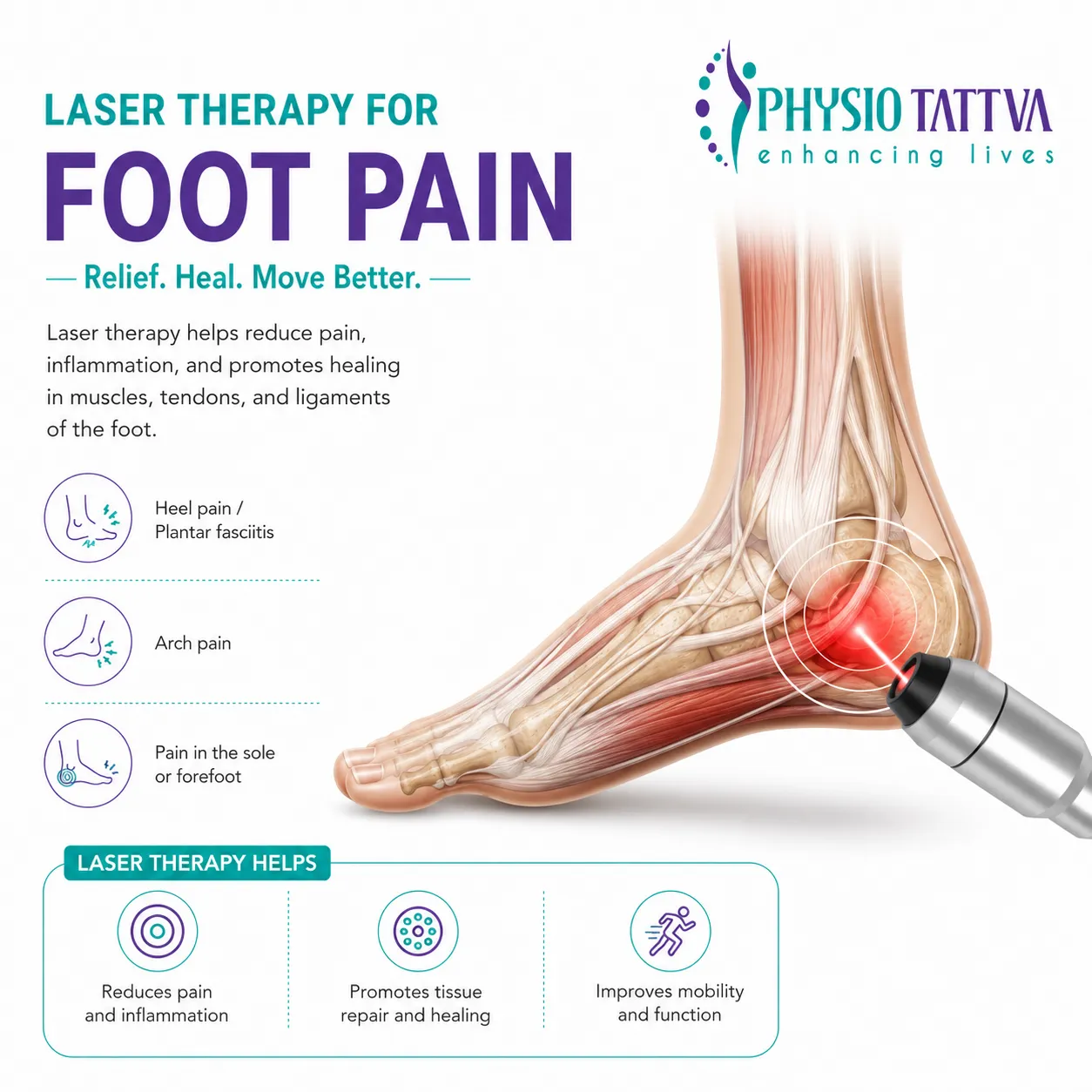
Laser therapy for foot pain is a non-invasive physiotherapy treatment that reduces inflammation and supports tissue healing using targeted light energy. It works through photobiomodulation to improve circulation, stimulate cellular repair, and reduce pain signalling within irritated foot tissues. The therapy is commonly used for plantar fasciitis, Achilles tendinitis, arch strain, and overuse-related foot pain, helping calm discomfort so walking, standing, and rehabilitation exercises become more manageable.
Sessions are typically short, lasting about 5 to 15 minutes, painless, and require no downtime. Improvement develops gradually over multiple sessions rather than immediately. Laser therapy is most effective when combined with stretching, strengthening, gait correction, and appropriate footwear modification. It is safe when performed by a trained physiotherapist following proper assessment, though it does not replace medical care for fractures, severe trauma, or structural injuries requiring further evaluation.
Low-level laser therapy (LLLT) for foot pain is a non-invasive physiotherapy treatment that uses specific light wavelengths to support tissue healing and reduce inflammation in muscles, tendons, ligaments, and soft tissues of the foot.
The treatment works through photobiomodulation, where light energy is absorbed by cells to influence circulation, cellular repair activity, and pain signalling. This process helps irritated tissue tolerate movement and rehabilitation exercises more comfortably.
Because it does not involve heat, injections, or surgical procedures, LLLT is commonly used as part of a structured recovery plan to manage foot pain and restore function gradually.
Laser therapy may be considered when foot pain begins to interfere with walking, standing, exercise, or daily movement despite basic rest and care. Persistent symptoms can indicate soft-tissue irritation, inflammation, or overuse injury that benefits from guided rehabilitation.
Laser therapy may be suitable if you experience:
Medical evaluation may be required first if you have:
A physiotherapy assessment helps identify the cause of pain and determine whether laser therapy is appropriate as part of a structured recovery plan.
Laser therapy influences several biological repair processes inside injured foot tissues. The light energy interacts with cells to improve healing conditions and reduce irritation during movement.
Core mechanisms of action include:
Together, these mechanisms support quicker recovery, better function, and sustainable relief for conditions ranging from Plantar Fasciitis treatment to Achilles Tendonitis relief.
Laser therapy provides a non-invasive way to manage foot pain while supporting tissue recovery during rehabilitation. It is commonly used to improve comfort and help patients continue normal activities safely.
Key benefits of laser therapy for foot pain include:
Laser therapy is generally safe when performed by a trained physiotherapist using proper treatment settings. It is non-invasive and does not harm surrounding tissues, making it suitable for many soft-tissue foot conditions.
Normal temporary effects may include:
Treatment may be delayed or modified if you have:
Laser therapy is suitable for many people, but certain situations require additional caution to ensure safe rehabilitation and proper treatment selection.
Inform your physiotherapist if you have:
Clinical note: Laser therapy supports foot pain recovery but does not replace medical care when structural injury is suspected. A proper assessment helps determine whether physiotherapy, protection, or medical referral is needed first.
Laser therapy is delivered as part of a structured rehabilitation plan rather than a standalone treatment. The goal is to identify the cause of foot pain, improve tissue recovery, and help you return to normal activity safely.
This combined approach aims to reduce irritation, improve movement tolerance, and support gradual functional recovery.
Recovery time varies depending on the cause of foot pain, tissue irritation level, and consistency with rehabilitation exercises. Laser therapy helps reduce pain and support tissue repair, but improvement usually develops gradually over multiple sessions.
Typical timelines may include:
These are general estimates. Recovery speed depends on activity level, footwear habits, and adherence to the prescribed physiotherapy program.
Laser therapy is typically not used as a standalone treatment. It is most effective when combined with a structured rehabilitation programme that addresses the underlying cause of foot pain.
It is usually paired with:
Laser therapy helps reduce pain and irritation, allowing exercises to be performed more comfortably. Long-term improvement generally depends on correcting movement patterns and gradually restoring tissue strength.
Laser therapy supports recovery but may not be the initial treatment when structural injury or medical conditions require priority care.
Laser therapy is usually not recommended or delayed if you have:
In these situations, medical evaluation, imaging, or protective immobilisation may be required before rehabilitation begins.
Foot pain often improves when treatment focuses on both symptom relief and movement restoration. Laser therapy can help reduce irritation and make rehabilitation exercises more comfortable, but long-term recovery depends on a structured physiotherapy plan tailored to the underlying cause. At Physiotattva physiotherapy clinics in Bangalore, Hyderabad, and Visakhapatnam, you receive personalised care tailored to your specific needs, ensuring effective results and comfort throughout your journey to recovery.
Don’t wait to start your recovery! Get in touch with Physiotattva for more details! Contact us at +91 89510 47001.
Laser therapy can be an effective part of a structured foot pain rehabilitation plan when used appropriately after diagnosis.

At Physio Tattva, we are committed to bring access to quality physio care through ultra-modern clinics and high-skilled practitioners to all.
.webp)
At Physio Tattva, we are committed to bring access to quality physio care through ultra-modern clinics and high-skilled practitioners to all.
.webp)
At Physio Tattva, we are committed to bring access to quality physio care through ultra-modern clinics and high-skilled practitioners to all.

.webp)
.jpeg)




%20(1)-p-3200.jpeg)

.jpg)
.webp)
.webp)
.webp)