




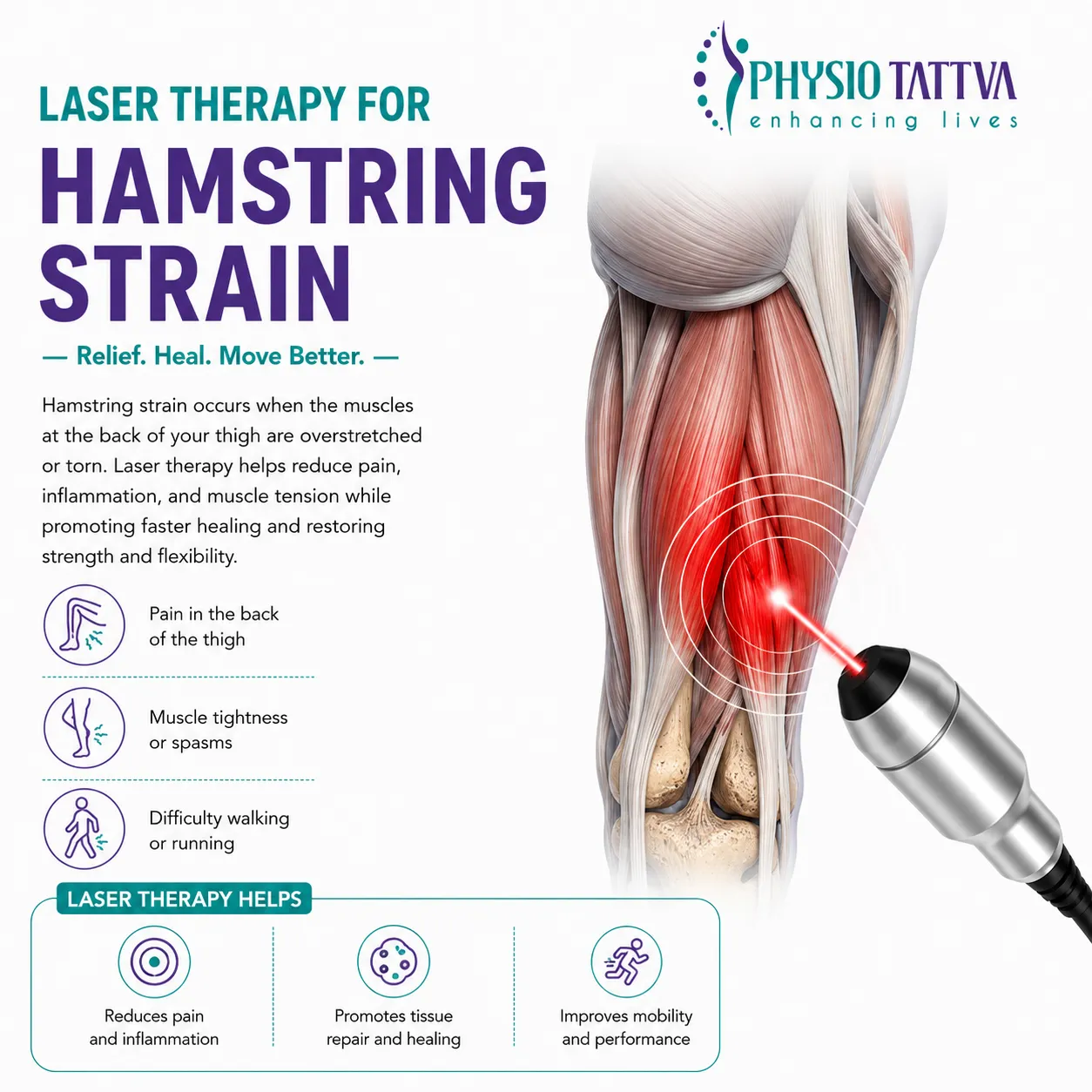
Laser therapy for hamstring strain is a non-invasive physiotherapy treatment that supports muscle healing, reduces inflammation, and improves comfort during rehabilitation. It works through photobiomodulation to stimulate cellular repair and increase energy production in injured muscle fibres, which may reduce swelling and pain. It is commonly used for Grade 1 and Grade 2 hamstring strains, as well as during post-surgical rehabilitation support.
Sessions are typically 5 to 15 minutes, painless, and require no downtime. Most patients need around 6 to 12 sessions depending on strain severity and recovery goals. Improvement is gradual and depends on consistent strengthening and flexibility exercises. It does not replace medical management for complete Grade 3 ruptures, and a physiotherapy assessment is required to determine suitability.
What Is Laser Therapy For Hamstring Strain?
Laser Therapy for Hamstring Strain is a non-invasive physiotherapy treatment using focused light energy to support muscle repair, reduce inflammation, and improve functional recovery after a muscle tear.
It may be delivered using low-level laser therapy (LLLT), often called cold laser therapy, which uses lower-power light to stimulate cellular healing without producing heat. In some cases, higher-power therapeutic lasers are used to reach deeper muscle fibers.
During treatment, therapeutic light penetrates the injured tissue and increases cellular energy production, helping reduce pain and swelling while preparing the muscle to tolerate stretching and strengthening exercises during rehabilitation. to tolerate stretching and strengthening exercises as recovery progresses.
When Is Laser Therapy Recommended For A Hamstring Strain?
Laser therapy may be considered when pain in the back of the thigh begins to interfere with walking, running, sitting, or bending activities. Many people notice these symptoms before a confirmed diagnosis, and they can indicate muscle fibre irritation, reduced flexibility, or early tissue damage.
Laser therapy may be recommended if you experience:
- Pain persisting beyond a few days after injury
- Difficulty returning to walking, jogging, or sport
- Recurrent hamstring tightness during activity
- Grade 1 or Grade 2 hamstring strain
- Ongoing discomfort despite rest and basic care
Medical evaluation may be required first if:
- Suspected complete muscle tear
- Inability to bear weight
- Sudden severe swelling or deformity
- Suspected fracture or tendon rupture
If these symptoms persist, worsen, or limit daily movement, a physiotherapy assessment helps determine the strain grade and whether conservative rehabilitation is appropriate.
How Does Laser Therapy Help A Hamstring Muscle Heal?
Laser therapy works through a biological process called photobiomodulation, where therapeutic light stimulates natural repair activity inside injured muscle tissue. Instead of masking pain, the treatment supports the body’s own healing response.
During recovery, laser therapy may support healing in several ways:
- Supports cellular repair: Light energy is absorbed by mitochondria inside muscle cells, increasing ATP production. This provides energy needed for damaged muscle fibres to repair and regenerate.
- Helps reduce inflammation: The therapy can lower inflammatory activity in the injured area, which may decrease swelling and make movement more comfortable.
- Improves circulation: Laser application encourages vasodilation, allowing more oxygen and nutrients to reach the hamstring while assisting in the removal of metabolic waste.
- Promotes organised tissue healing: The treatment may support collagen formation, helping the recovering muscle develop stronger and more flexible repair tissue.
Together, these effects help prepare the muscle for stretching and strengthening exercises that are essential for a safe return to activity.
What Benefits Can Laser Therapy Provide During Hamstring Recovery
Laser therapy may support recovery by improving comfort and preparing the injured hamstring for progressive rehabilitation. The goal is not only symptom relief but also better tolerance to movement and exercise.
During rehabilitation, patients may notice:
- Faster readiness for movement: By supporting cellular repair processes, the muscle may tolerate gentle stretching and strengthening earlier than with rest alone.
- Reduced pain levels: The therapy can help calm irritated tissue and decrease pain signals, making daily activities and physiotherapy exercises more manageable.
- Comfortable, non-invasive care: Treatment does not involve injections or medication. Most people feel only mild warmth during application.
- Less swelling and bruising: Improved circulation may help clear inflammatory fluids and reduce visible tissue irritation.
- Improved flexibility and motion: As discomfort decreases, bending and extending the leg typically and ROM become easier during guided rehabilitation.
- Healthier tissue repair: Supporting organised healing may help the recovering muscle handle a gradual return to activity with lower reinjury risk when combined with strengthening exercises.
What to Expect During A Laser Therapy Session For Hamstring Strain
A laser therapy session is brief, comfortable, and supervised by a physiotherapist. The treatment focuses on the injured hamstring muscle and is usually combined with activity guidance to support safe recovery.
A typical appointment follows these steps:
- Clinical assessment – The physiotherapist evaluates symptoms, checks movement, and identifies the strain grade to confirm suitability for treatment.
- Positioning – You will lie comfortably so the back of the thigh can be exposed and the muscle can remain relaxed during therapy.
- Protective eyewear – Both you and the therapist wear safety glasses to protect the eyes from therapeutic light.
- Laser application – A handheld probe is gently moved across the injured area to deliver controlled light energy into the muscle tissue.
- Sensation – Most people feel mild warmth or no sensation at all; the procedure is typically painless.
- Duration – Treatment generally lasts 5–15 minutes depending on the size and severity of the strain.
- After-care guidance – You may be advised on walking limits, stretching, or gradual exercises between sessions.
- Treatment plan – A course of around 6–12 sessions is commonly recommended, adjusted according to healing progress and activity goals.
How Long Does Recovery Take With Laser Therapy For A Hamstring Strain?
Recovery time depends on the grade of muscle injury and how consistently rehabilitation exercises are performed. Laser therapy supports tissue repair and pain reduction, but strength and flexibility typically improve gradually rather than immediately.
- Mild strain (Grade 1): Many patients notice improvement within about 2–3 weeks as tightness reduces and walking becomes comfortable.
- Moderate strain (Grade 2): Recovery often takes around 4–8 weeks while the muscle fibres heal and strength returns through progressive rehabilitation.
- Severe strain (Grade 3): Healing may require several months, especially if the muscle is significantly torn and functional training is needed before return to sport.
- After hamstring surgery: Rehabilitation commonly continues for multiple months as tissues repair and movement control is restored safely.
These timelines are general estimates and vary based on activity level, injury history, and adherence to the treatment program.
Is Laser Therapy For Hamstring Strain Safe? Risks And Precautions
Laser therapy is generally considered safe when performed by a trained physiotherapist using appropriate settings and safety protocols. The treatment is non-invasive and aims to support healing without damaging surrounding muscle tissue.
Before beginning therapy, it helps to understand which temporary reactions are normal after treatment.
Common Temporary Effects May Include:
- Mild warmth in the treated area
- Temporary soreness after the session
- Slight skin redness that settles quickly
Some individuals may need to delay or modify treatment depending on their medical condition.
Who Should Avoid Laser Therapy For Hamstring Strain?
Laser therapy is typically safe, but certain situations require additional caution. Always inform your physiotherapist about your medical history so treatment parameters can be adjusted if needed.
- Cancer near the treatment area: Not applied directly over malignant tissue
- Pregnancy: Avoid over the abdomen or pelvis unless medically advised
- Photosensitive conditions or light-reactive medications: Intensity may require adjustment
- Reduced sensation or neuropathy: Treatment modified to prevent unnoticed irritation
- Recent severe muscle rupture: May require medical evaluation before rehabilitation
Precautions During Laser Therapy for Hamstring Strain
Laser therapy supports tissue repair, but proper activity control is essential to avoid re-injury during recovery.
- Avoid sudden sprinting, jumping, or lunging movements in early healing stages
- Do not aggressively stretch the hamstring unless prescribed
- Apply ice if post-session soreness increases beyond mild discomfort
- Follow graded strengthening exercises exactly as instructed
- Avoid prolonged sitting on hard surfaces during acute pain phase
- Inform the therapist if tightness sharply increases after treatment
Clinical caution: A proper assessment is necessary to determine the grade of hamstring strain and ensure therapy fits safely within a structured rehabilitation plan.
Am I a Good Candidate for Laser Therapy for Hamstring Strain?
Laser therapy is commonly recommended when a hamstring injury causes pain, tightness, or reduced movement but the muscle tissue still has healing potential. A clinical assessment helps determine whether conservative rehabilitation is appropriate before considering invasive procedures.
Laser therapy may be suitable if you experience:
- Pain at the back of the thigh while walking or bending
- Tightness during stretching or straightening the knee
- Mild to moderate (Grade 1 or Grade 2) hamstring strain
- Recurrent pulling sensation during sports or running
- Stiffness after prolonged sitting
- Discomfort during sprinting, jumping, or sudden direction changes
Some injuries require medical evaluation first because structural integrity must be restored before rehabilitation begins.
You may need a different treatment approach if you have:
- Complete muscle rupture (Grade 3 tear)
- Inability to bear weight on the leg
- Large swelling or deep bruising immediately after injury
- Suspected fracture or tendon avulsion
- Persistent numbness or neurological symptoms
A physiotherapist will assess flexibility, strength, walking pattern, and injury severity to guide the most appropriate treatment plan.
Is Laser Therapy a Standalone Treatment for Hamstring Strain?
Laser therapy is usually not used as the only treatment for a hamstring strain. While it may help reduce pain and support tissue healing, full recovery typically requires guided rehabilitation to restore strength and flexibility.
- Manual therapy to reduce muscle tightness, improve soft tissue mobility, and decrease discomfort around the injured hamstring.
- Stretching exercises to gradually restore hamstring flexibility and improve tolerance to bending and straightening movements.
- Strengthening exercises to rebuild muscle capacity, improve stability, and lower the risk of future strain during activity.
- Movement retraining to safely return to walking, running, and sport-specific movements with better control and confidence.
This integrated plan not only heals the immediate injury but also addresses underlying weaknesses, strengthening the hamstring and surrounding muscles to prevent recurrence.
Why Choose Physiotattva For Hamstring Rehabilitation?
Hamstring strains need guided recovery to restore strength, flexibility, and safe movement. Treatment focuses on identifying the strain grade and gradually reloading the muscle to prevent stiffness and reduce the chance of reinjury.
Our rehabilitation typically combines detailed assessment, structured physiotherapy exercises, and supportive modalities such as laser therapy when appropriate. The goal is to improve walking comfort, rebuild muscle capacity, and help you return to daily activities or sports with better movement control.
At Physiotattva physiotherapy clinics in Bangalore, Hyderabad, and Visakhapatnam- our latest clinic, you receive personalised care tailored to your specific needs, ensuring effective results and comfort throughout your journey to recovery.
Don’t wait to start your recovery! Get in touch with Physiotattva for more details! Contact us at +91 89510 47001.
Key Takeaways
Laser therapy can support hamstring recovery when integrated into a structured rehabilitation programme.
- Laser therapy helps reduce inflammation and improve circulation in injured hamstring tissue.
- It prepares the muscle for safe stretching and strengthening by lowering pain sensitivity.
- The treatment is non-invasive and allows patients to stay active within prescribed limits.
- Meaningful recovery occurs progressively over weeks, depending on injury grade and exercise adherence.
- Long-term return to sport depends primarily on graded strengthening and movement retraining.
- Severe muscle tears or suspected tendon avulsions require medical evaluation before physiotherapy begins.
- A personalised rehabilitation plan ensures laser therapy is used safely and effectively alongside functional recovery exercises.
Why Physiotattva?
22+
50,000+
95%
200+
25+
4.8
Cities We Serve

Bangalore
At Physio Tattva, we are committed to bring access to quality physio care through ultra-modern clinics and high-skilled practitioners to all.
.webp)
Hyderabad
At Physio Tattva, we are committed to bring access to quality physio care through ultra-modern clinics and high-skilled practitioners to all.
.webp)
Vishakhapatnam
At Physio Tattva, we are committed to bring access to quality physio care through ultra-modern clinics and high-skilled practitioners to all.
Core Treatments
Core Conditions
Core Symptoms
Frequently Asked Questions
How soon will I see results for my hamstring strain?

Are there any side effects of laser therapy?
How many laser therapy sessions will I need for my hamstring?
Is laser therapy for hamstring injuries painful?
Does laser therapy for hamstring strain hurt?
When can I return to running or sports after a hamstring strain?
How effective is cold laser therapy for hamstring strain?






%20(1)-p-3200.jpeg)


.jpg)
.webp)
.webp)
.webp)