Laser therapy for inflammation at Physiotattva offers fast, non-invasive relief from chronic pain and swelling. This advanced treatment accelerates recovery by promoting healing deep within tissues. Schedule your appointment today for laser therapy for inflammation and start your journey to better health.
Laser therapy for inflammation is a non-invasive treatment that uses therapeutic light to support the body’s healing response and reduce pain and swelling. By stimulating cellular activity and improving circulation, it helps manage conditions like arthritis, tendonitis, bursitis, and sports injuries. At Physiotattva, laser therapy is customized to each patient's needs, offering quick, drug-free relief without surgery or medication. The therapy is safe and effective, with minimal side effects, and sessions typically last 5-15 minutes. It accelerates recovery and restores function, making it an excellent choice for both chronic and acute inflammatory conditions.
What Is Laser Therapy for Inflammation?
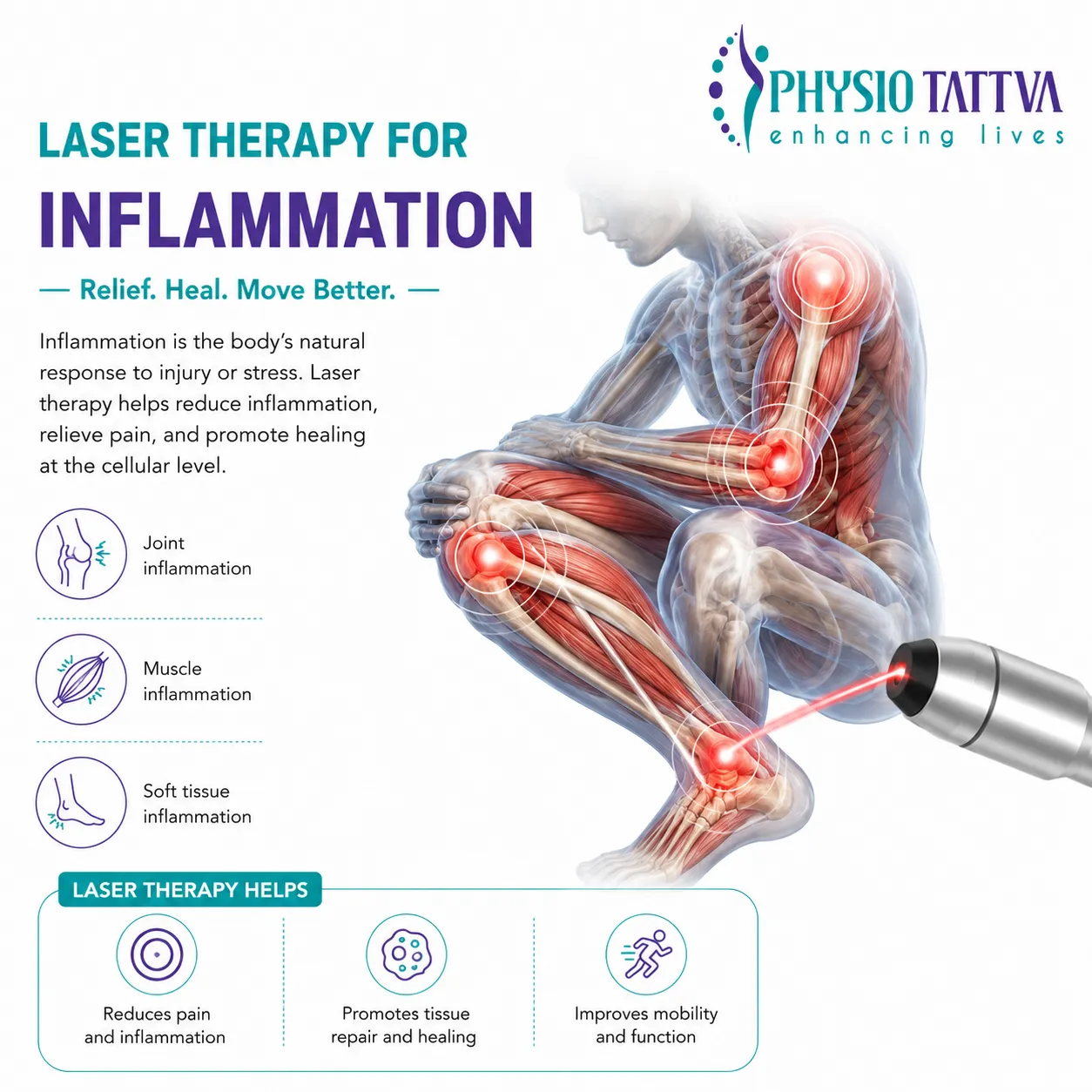
Laser therapy for inflammation is a non-invasive physiotherapy treatment that uses specific therapeutic light wavelengths to support the body’s natural healing response in inflamed or injured tissues. It is commonly used in musculoskeletal care to help manage pain, swelling, and tissue irritation affecting joints, muscles, tendons, and ligaments.
In physiotherapy practice, laser therapy works by delivering controlled light energy through the skin into targeted areas. This light energy interacts with cells and may assist in improving circulation, supporting cellular energy production, and regulating inflammatory activity. The goal is to help reduce discomfort and improve functional movement without surgery or medication.
Inflammatory Conditions That Can Be Treated with Laser Therapy
One of the greatest cold laser therapy benefits is its versatility. Because it targets the fundamental processes of inflammation and healing, it is effective across a wide spectrum of musculoskeletal conditions, both acute and chronic. At Physiotattva, we commonly use laser therapy to treat:
Arthritis: Effective for both Osteoarthritis and Rheumatoid Arthritis, helping to manage joint inflammation, reduce pain, and improve mobility.
Tendonitis and Tendinopathies: Conditions like Achilles Tendonitis, Tennis Elbow, Golfer's Elbow, and Rotator Cuff Tendonitis respond exceptionally well.
Bursitis: Reduces the painful inflammation of the bursa sacs that cushion joints, commonly affecting the shoulder, hip, or knee.
Plantar Fasciitis: A leading treatment for heel pain, targeting the inflammation in the plantar fascia ligament along the bottom of the foot.
Sports Injuries: Accelerates recovery from acute injuries like muscle strains, ligament sprains, and deep tissue contusions (bruises).
Back and Neck Pain: Offers significant relief for pain stemming from inflamed soft tissues, degenerative disc disease, or facet joint inflammation.
Fibromyalgia: Helps to reduce pain and tenderness in the specific trigger points associated with this complex condition.
How Does Laser Therapy Target Inflammation?
Laser therapy influences inflammation through photobiomodulation, a cellular-level response to specific therapeutic light wavelengths. When applied to inflamed tissue, the following biological processes may occur:
Mitochondrial stimulation: Light energy is absorbed by intracellular chromophores, particularly cytochrome c oxidase within mitochondria, leading to increased production of Adenosine Triphosphate (ATP), which supports cellular repair and metabolic regulation.
Regulation of inflammatory mediators: Laser exposure may influence signalling pathways that control prostaglandins, cytokines, and reactive oxygen species, helping modulate excessive inflammatory activity in affected tissues.
Nitric oxide release and vasodilation: Photonic energy can stimulate transient nitric oxide release, promoting vasodilation and improved microcirculation in the treated area.
Microcirculatory enhancement: Improved local blood flow facilitates oxygen delivery and metabolic exchange, which supports tissue recovery processes.
Lymphatic flow support: Laser therapy may assist lymphatic drainage, helping reduce interstitial fluid accumulation associated with swelling.
Neural modulation: Light energy may influence peripheral nerve conduction and nociceptor sensitivity, contributing to altered pain signal transmission from inflamed tissues.
What Are the Benefits of Laser Therapy for Inflammation?
Laser therapy for inflammation may support symptom management and functional recovery in several ways:
Pain reduction: May help decrease discomfort by influencing inflammatory mediators and peripheral nerve sensitivity in the treated area.
Reduced swelling: Can assist in managing localised oedema by supporting circulation and lymphatic flow.
Improved joint mobility: Addressing inflammatory stiffness, it may contribute to better movement in affected joints.
Faster tissue recovery: Enhanced cellular energy production may support the body’s natural repair processes.
Non-invasive approach: Does not require injections, medication, or surgical intervention.
Minimal downtime: Sessions are brief, and patients can typically resume daily activities immediately after treatment.
Adjunct compatibility: Can be integrated with exercise therapy, manual therapy, and other physiotherapy modalities.
Who Should Avoid Laser Therapy for Inflammation?
Laser therapy is generally well-tolerated when administered by a qualified physiotherapist. However, it may not be appropriate in certain situations. Clinical evaluation is necessary before starting treatment.
Laser therapy may be avoided or used with caution in individuals who:
Have active cancer in the treatment area: Direct application over malignant tissue is typically contraindicated unless medically cleared.
Are pregnant: Laser application over the abdomen, pelvis, or lower back is generally avoided during pregnancy.
Have light sensitivity disorders: Conditions such as photosensitivity syndromes may require additional caution.
Are taking photosensitising medications: Certain antibiotics, dermatological medications, or systemic drugs may increase light sensitivity.
Have active bleeding disorders: Laser may not be recommended over areas with uncontrolled bleeding.
Have severe peripheral vascular disease: Circulatory limitations may require medical review before treatment.
Have implanted electronic devices near the treatment area: Although laser therapy does not emit electrical current, precautionary assessment is advised.
A thorough physiotherapy assessment helps determine whether laser therapy for inflammation is safe and appropriate based on individual medical history and diagnosis.
Your Laser Therapy Session at Physiotattva: What to Expect
Embarking on a new treatment can be daunting, but we’re here to ensure a smooth and comfortable recovery process. Here’s what you can expect during your laser therapy session at Physiotattva:
Comprehensive Assessment: Your journey begins with a thorough evaluation by an expert physiotherapist. They will accurately diagnose the root cause of your inflammation and determine if laser therapy is the right modality for you. This is a key step in creating a personalised and effective treatment plan.
Treatment Procedure: During the session, you will be comfortably seated or lying down. The therapist will apply the laser applicator directly to the skin over the affected area. The entire procedure is completely painless, with many patients reporting no sensation or a gentle, soothing warmth.
Session Duration: A typical laser therapy session lasts between 5 and 15 minutes, depending on the area size and the severity of the condition.
Safety Measures: Both you and the therapist will wear protective eyewear during the session as a safety precaution.
State-of-the-Art Equipment: Our clinics in Bangalore and Hyderabad are equipped with advanced Class IV laser systems to provide the most powerful and effective inflammation treatment available.
Unlock Lasting Relief from Inflammation with Laser Therapy at Physiotattva
Chronic inflammation doesn't have to be a life sentence of pain and limitation. Advanced treatments like Laser Therapy (Photobiomodulation) offer a safe, fast, and remarkably effective drug-free solution to break the cycle of inflammation and accelerate your body’s own healing capabilities. We are committed to combining expert, hands-on care with the most advanced technology available to help you achieve long-lasting relief and get back to the life you love.
At Physiotattva physiotherapy clinics in Bangalore and Hyderabad, you receive personalised care tailored to your specific needs, ensuring effective results and comfort throughout your journey to recovery.
Key Takeaways:
Laser therapy is a non-invasive treatment using therapeutic light wavelengths to reduce pain, swelling, and inflammation.
It works by stimulating mitochondrial activity, improving circulation, and regulating inflammatory mediators to support tissue recovery.
Effective for both acute and chronic conditions like arthritis, tendonitis, bursitis, and sports injuries.
Sessions typically last 5–15 minutes and offer significant pain relief with minimal side effects.
Often combined with other physiotherapy treatments, such as manual therapy and exercise, to enhance healing.
A physiotherapy assessment is required to determine if laser therapy is suitable based on individual needs and condition severity.
No, it is a completely painless and non-invasive procedure. It does not burn or cut. Most patients report feeling a gentle and pleasant warmth in the area being treated, if anything at all.
Are there any side effects of laser therapy for inflammation?
Laser therapy has very few side effects and is considered an extremely safe treatment when performed by a trained and certified professional. There are no known long-term or adverse side effects associated with the therapy for inflammation.
How many laser therapy sessions will I need?
The number of sessions varies depending on the severity and chronicity of your condition. While many patients experience relief after just 3-5 sessions, a full course of treatment may involve 6-12 sessions to achieve long-term healing. Your physiotherapist at Physiotattva will create a custom plan for you.
Does laser therapy work for inflammation?
Laser therapy for inflammation may support the body’s natural healing response by influencing cellular energy production and regulating inflammatory mediators. While results vary depending on condition severity and duration, it is commonly used in physiotherapy as part of a structured treatment plan.
Is Laser Treatment for Pain and Inflammation Effective for Chronic Conditions?
Laser treatment for pain and inflammation may be used for chronic conditions such as osteoarthritis, tendon irritation, and bursitis. Its role is typically supportive, aiming to manage symptoms and improve function when combined with exercise therapy and rehabilitation strategies.
Can laser therapy be combined with other treatments?
Absolutely. In fact, photobiomodulation is most effective when used as part of an integrated physiotherapy plan. Combining it with manual therapy, specific exercises to strengthen supporting muscles, and other modalities creates a synergistic effect that enhances overall outcomes and helps prevent future recurrence of pain.





.webp)
.webp)

.jpeg)
.webp)



%20(1)-p-3200.jpeg)

.jpg)
.webp)
.webp)
.webp)
