Laser Therapy for Joint Pain

Laser Therapy for Joint Pain

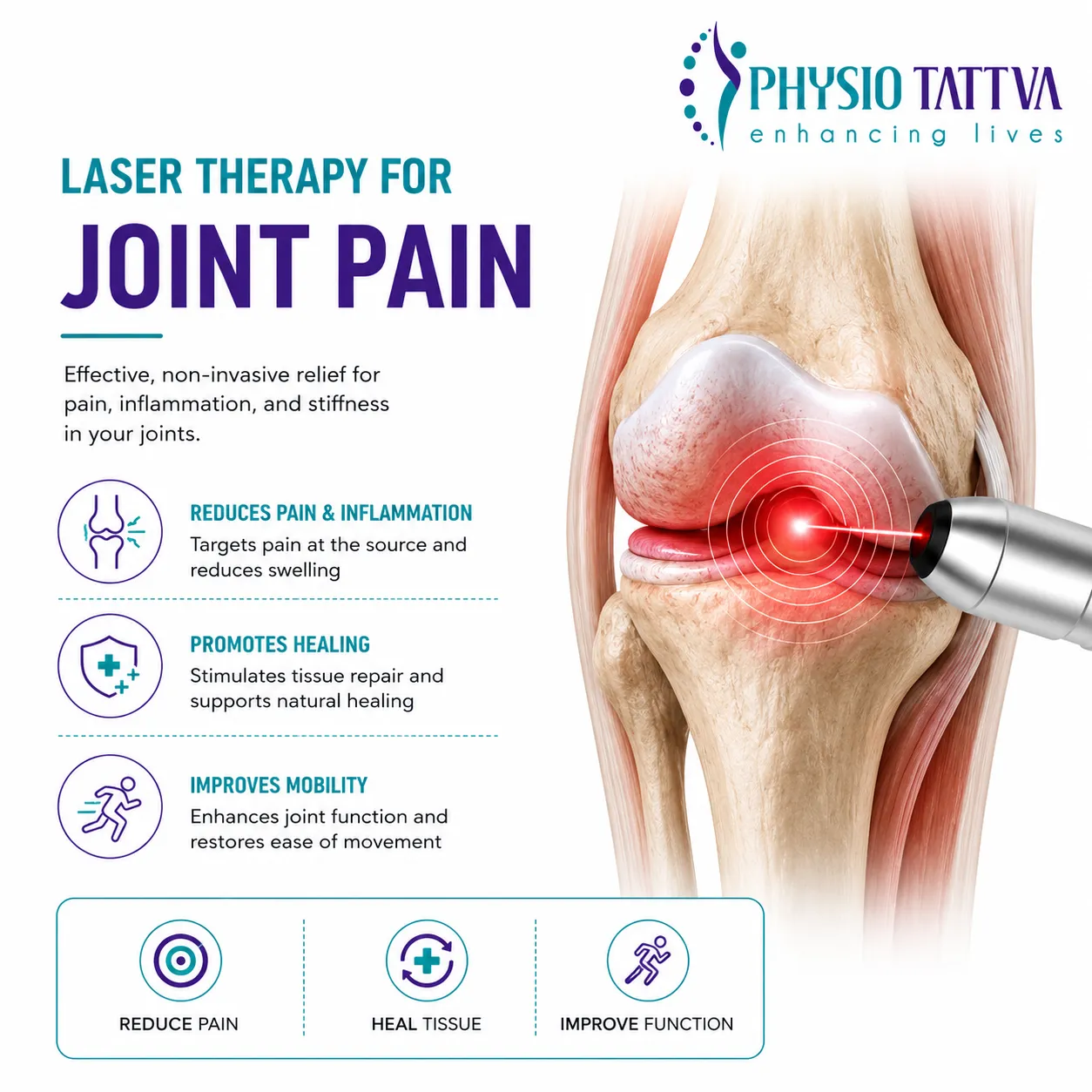
Laser therapy for joint pain is a non-invasive physiotherapy treatment that reduces inflammation, improves mobility, and supports tissue healing using targeted light energy. It works through photobiomodulation, stimulating cellular repair and lowering inflammatory activity within painful joints. The therapy can provide early pain relief while encouraging gradual long-term healing and is commonly used for arthritis, tendon irritation, stiffness, and overuse injuries.

Sessions are typically short, lasting about 5 to 15 minutes, painless, and require no downtime. Most patients need around 6 to 12 sessions depending on the severity and chronicity of the condition. Laser therapy is often combined with rehabilitation exercises to improve joint stability and functional recovery. It is safe when performed by a trained physiotherapist with proper precautions and supports conservative joint care, though it does not replace surgery in advanced degeneration.

What Is Laser Therapy for Joint Pain?

Laser therapy for joint pain is a physiotherapy treatment that uses controlled light energy to reduce inflammation and support tissue healing around painful joints. It is commonly used alongside rehabilitation exercises to improve movement and daily function without relying only on medication.

The treatment works through a process called photobiomodulation, where specific wavelengths of light penetrate the skin and interact with affected tissues. This helps regulate inflammatory activity and supports natural cellular repair processes.

Two main types of therapeutic lasers are used in physiotherapy. Low-level laser therapy targets superficial tissues, while high-intensity laser therapy reaches deeper joints, muscles, and ligaments. The choice depends on the location and depth of the joint condition.
How Does Laser Therapy Reduce Joint Pain?

Laser therapy reduces joint pain by delivering focused light energy deep into the tissues, triggering biological repair processes at the cellular level. This produces both quick symptom relief and gradual healing.

  • Rapid pain relief: The laser decreases nerve sensitivity and temporarily interrupts pain signals travelling to the brain. As a result, patients often feel immediate comfort and reduced tenderness in the treated joint.
  • Inflammation reduction: Laser energy improves local blood flow and lymphatic drainage. This clears inflammatory proteins and excess fluid from the area, lowering swelling, stiffness, and the persistent ache associated with joint inflammation.
  • Boosts cellular energy (ATP production): The light energy is absorbed by mitochondria, increasing ATP production — the fuel cells use to repair damage and regenerate healthy tissue faster.
  • Improves blood circulation: Laser-induced vasodilation widens blood vessels, delivering oxygen and nutrients while removing metabolic waste. This creates an optimal healing environment inside the joint.
  • Enhances mobility and function: As pain and inflammation decrease and tissues heal, stiffness reduces. The joint regains range of motion, allowing comfortable movement and return to daily activities.

When Is Laser Therapy Recommended For Joint Pain?

Laser therapy is typically considered when joint pain interferes with movement, but surgery or invasive treatment is not immediately required. A physiotherapist evaluates the cause and severity before recommending it.

May Help In:
Laser therapy may support symptom relief in conditions such as:

  • Arthritis-related joint pain
  • Movement stiffness
  • Tendon inflammation (tendinitis)
  • Muscle overuse injuries
  • Pain limiting participation in rehabilitation exercises

May Not Be First-Line Treatment In:
Laser therapy may not be the primary option in certain medical situations:

  • Fractures requiring immobilisation
  • Active infection in the treatment area
  • Severe nerve compression
  • Advanced joint degeneration where surgery is advised

Is Laser Therapy for Joint Pain Safe? Risks and Precautions

Laser therapy is considered safe when performed by a qualified physiotherapist using correct dosage and protective protocols. The treatment is non-invasive and designed to stimulate healing without harming surrounding joint structures.

Before starting therapy, it is useful to understand which short-term reactions are normal after a session.

Common Temporary Effects May Include:

  • Mild warmth in the treated joint
  • Temporary soreness for a few hours after treatment
  • Slight redness of the skin that fades quickly
  • Mild tingling as circulation improves

Who Should Avoid Laser Therapy for Joint Pain?

Laser therapy is generally well tolerated, but certain conditions require caution. Always share your medical history so treatment settings can be safely adjusted.

  • Cancer near the treatment site: Not applied directly over malignant tissue
  • Pregnancy: Avoid the abdomen, pelvis, or lower back unless advised by a doctor
  • Photosensitive disorders or light-reactive medications: Dose modification required
  • Severe sensory loss or neuropathy: Requires careful monitoring
  • Active joint infection or unexplained swelling: Needs medical evaluation first

What Precautions Should One Follow During Laser Therapy for Joint Pain?

Laser therapy helps recovery, but joint protection during healing is essential to prevent aggravation.

  • Avoid high-impact activities like running or jumping in the early stages
  • Do not forcefully stretch stiff joints without guidance
  • Apply cold packs if soreness increases beyond mild levels
  • Follow prescribed mobility and strengthening exercises gradually
  • Avoid prolonged weight-bearing on painful joints initially
  • Inform the therapist if swelling or stiffness suddenly worsens

Clinical caution: A proper assessment is necessary to identify the cause of joint pain and ensure laser therapy is integrated safely into a structured rehabilitation plan.

How Long Does Recovery Take With Laser Therapy for Joint Pain?

Laser therapy for joint pain improves symptoms progressively because it stimulates cellular repair, reduces inflammation, and restores movement over time. Recovery depends on diagnosis, tissue damage, activity level, and adherence to physiotherapy exercises.

Typical recovery timeline

  • Early inflammatory joint pain: relief may start within 2–4 sessions as swelling and irritation decrease
  • Mild–moderate joint conditions: functional improvement in 2–3 weeks with better mobility
  • Chronic joint degeneration or arthritis: gradual change over 4–8 weeks as tissue healing develops
  • Post-injury stiffness: range of motion improves alongside guided strengthening

Most patients need 6–12 sessions. Consistent therapy and rehabilitation exercises significantly improve long-term joint stability and reduce recurrence risk.

What to Expect During a Laser Therapy Session for Joint Pain

A laser therapy session for joint pain is quick, non-invasive, and guided by a physiotherapist. It focuses on reducing inflammation, improving movement, and supporting tissue healing. The treatment is painless, requires no downtime, and is usually combined with rehabilitation exercises for better recovery outcomes.

  • Step 1: Clinical Assessment: The physiotherapist evaluates pain location, movement restriction, swelling, and medical history to identify the root cause of joint pain.
  • Step 2: Personalised Treatment Plan: A customised rehab plan is created combining laser therapy with exercises, manual therapy, and movement correction.
  • Step 3: Laser Application: You wear protective eyewear while the therapist applies the laser probe. A gentle warmth is felt, not pain. Sessions last about 5–15 minutes.
  • Step 4: Follow-up and Progress Tracking: Pain relief, mobility, and function are reviewed each visit, and the plan is adjusted for safe and lasting recovery.

Start Your Recovery From Joint Pain With Laser Therapy

Joint pain doesn’t just limit your mobility—it affects every part of your daily life, from simple routines to the activities you enjoy most. High-Intensity Laser Therapy offers a powerful, science-backed solution that not only eases pain but promotes true healing deep within your tissues. By reducing inflammation, accelerating cellular repair, and restoring joint function, this advanced treatment provides a safe, non-invasive alternative to long-term medication or surgery. If persistent joint pain is holding you back, now is the time to take control of your recovery.

At Physiotattva physiotherapy clinics in Bangalore and Hyderabad, and Visakhapatnam, you receive personalised care tailored to your specific needs, ensuring effective results and comfort throughout your journey to recovery. 

Don’t wait to start your recovery! Get in touch with Physiotattva for more details! Contact us at +91 89510 47001.

Key Takeaways

Laser therapy can be an effective part of a structured joint pain management plan when selected appropriately after assessment.

  • Laser therapy reduces joint pain by improving circulation, lowering inflammation, and increasing cellular energy production.
  • It is most suitable for inflammatory joint conditions, early degeneration, tendon-related pain, and stiffness limiting movement.
  • Improvement usually develops progressively over weeks rather than instantly resolving chronic pain.
  • The treatment is non-invasive, comfortable, and allows continuation of daily activities.
  • It works best when combined with strengthening, joint mobilisation, and guided physiotherapy exercises.
  • Certain conditions, such as fractures, active infections, or advanced structural damage, require medical evaluation before starting therapy.
  • A proper clinical assessment is essential to confirm the diagnosis and integrate laser therapy safely into a rehabilitation program.

Frequently Asked Questions

Is laser therapy painful or safe?

FAQ Icon
It is completely non-invasive and painless. The most common sensation reported by patients is a mild, soothing warmth over the treated area. When performed by a trained and certified physiotherapist, HILT is an extremely safe procedure with virtually no side effects.

How many laser therapy sessions will I need for treating joint pain?

FAQ Icon
This varies depending on the nature of your condition. Acute issues, like a recent muscle strain or ligament sprain, may see significant improvement in just 4-6 sessions. Chronic conditions, such as osteoarthritis, often require 8-12 sessions to achieve optimal, long-lasting results. Your physiotherapist will outline a clear and personalized schedule during your assessment.

How soon will I see results from laser therapy?

FAQ Icon
Many patients experience some degree of pain relief and reduced stiffness after the very first session. However, the true benefits of laser therapy are cumulative. The real magic happens at the cellular level, and this healing process continues to accelerate with each subsequent treatment, leading to more profound and lasting improvement over time.

Can laser therapy be combined with other treatments?

FAQ Icon
Absolutely. In fact, photobiomodulation is most effective when used as part of an integrated physiotherapy plan. Combining it with manual therapy, specific exercises to strengthen supporting muscles, and other modalities creates a synergistic effect that enhances overall outcomes and helps prevent future recurrence of pain.

How do I know if I am a good candidate for laser therapy for joint pain?

FAQ Icon
Laser therapy for joint pain may be suitable if you have persistent pain, stiffness, or inflammation that limits daily movement but still allows controlled activity. It is commonly used for arthritis, tendon irritation, or overuse injuries. A physiotherapy assessment confirms suitability and rules out fractures, severe instability, infection, or conditions requiring medical intervention first.

Where can I get laser therapy for joint pain?

FAQ Icon
Laser therapy should be performed by qualified physiotherapists who assess joint mobility, inflammation level, and functional limitations before treatment. Physiotattva provides laser therapy for joint pain at its clinics in Bangalore, Hyderabad, and Visakhapatnam after a clinical evaluation. You can contact Physiotattva at +91 89510 47001 to schedule an assessment and confirm suitability for treatment.

Related Therapies

Our Professionals

Dr. Anup Brahmbhatt (PT)

Chief Chiropractor and Physiotherapist

Read MoreBook an appointment

Dr ANTONY GILSON.B (PT)

Senior Clinical Physiotherapist

Read MoreBook an appointment

Dr A.S.BEENA (PT)

Senior Clinical Physiotherapist

Read MoreBook an appointment

ABHIJIT BHOWMIK

Clinical Physiotherapist

Read MoreBook an appointment

CHITRA A PRABHU

Homecare Physiotherapist

Read MoreBook an appointment

Get In Touch

Valid number
Thank you! Your submission has been received!
Oops! Something went wrong while submitting the form.