

Physiotherapy Treatment Shoulder Pain
Shoulder pain is noted to be the most common form of joint problems, caused by a number of things.
Laser therapy for shoulder pain is a non-surgical physiotherapy treatment that reduces inflammation and supports tissue healing using therapeutic light energy. It works through photobiomodulation to stimulate cellular repair and decrease inflammatory activity in shoulder tissues. The treatment is commonly used for rotator cuff tendinopathy, bursitis, frozen shoulder, and overuse injuries, and it helps reduce pain sensitivity so patients can participate more comfortably in rehabilitation exercises.
Sessions are typically short, lasting about 5 to 15 minutes, painless, and require no downtime. Improvement develops gradually over multiple sessions rather than instantly. Laser therapy is most effective when combined with strengthening exercises, mobility work, and posture correction. It is safe when performed by a trained physiotherapist following proper safety protocols and supports conservative shoulder rehabilitation, though it does not replace surgery for severe structural tears.
Laser therapy treatment for shoulder pain is a non-invasive physiotherapy modality that uses focused therapeutic light energy to reduce inflammation and support natural tissue repair in the shoulder structures.
The light penetrates skin and soft tissues and may improve local circulation, cellular activity, and collagen response. This helps calm irritated tendons and muscles so movement becomes more comfortable during rehabilitation.
It is commonly recommended for conditions such as rotator cuff tendinopathy, shoulder impingement, frozen shoulder stiffness, bursitis, and repetitive strain injuries. The goal is not instant recovery, but improved pain tolerance and safer participation in guided exercises that restore mobility and strength over time.
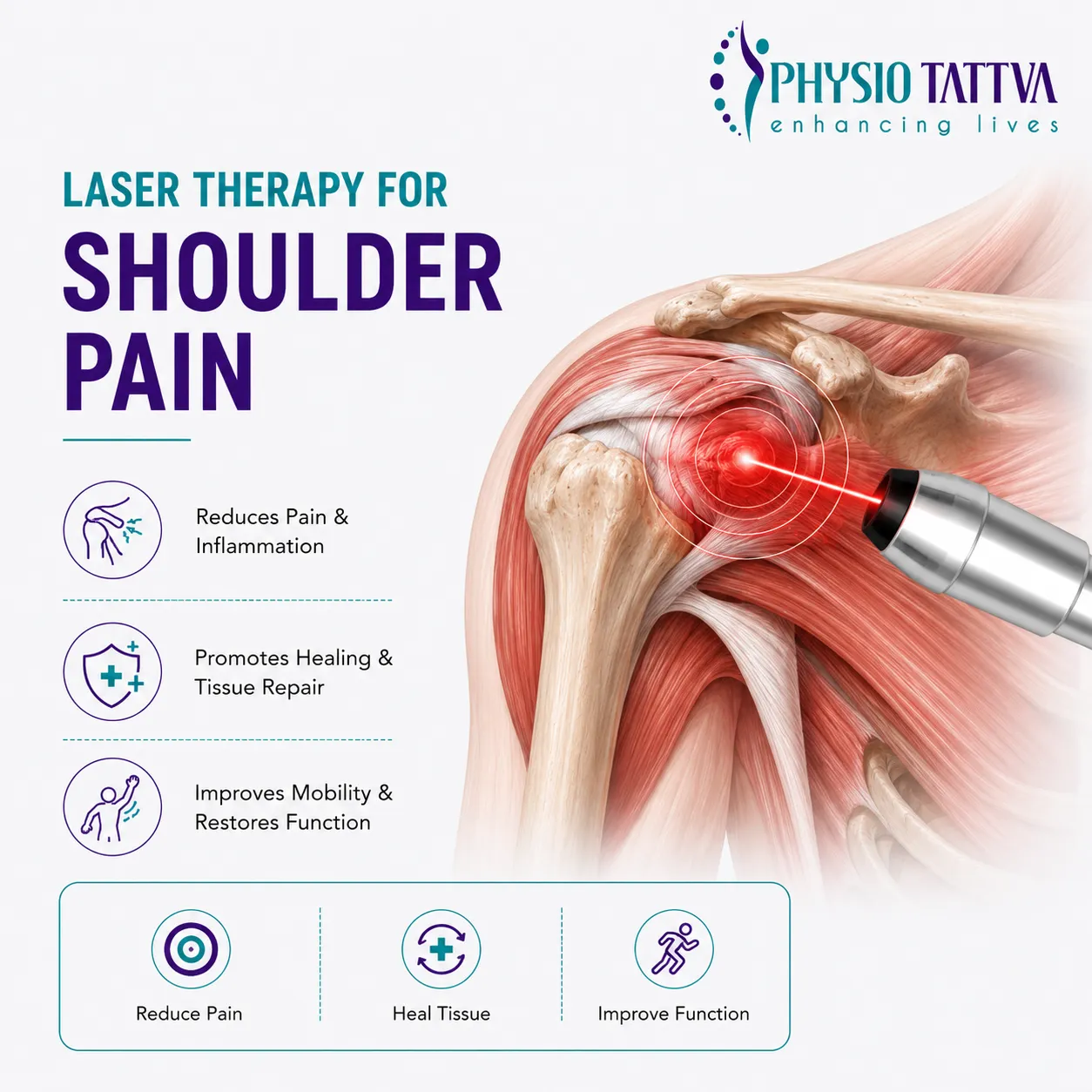
Laser therapy works by delivering controlled light energy into painful shoulder tissues to stimulate cellular repair and reduce inflammation. The process, called photobiomodulation, improves how injured cells produce energy and recover during rehabilitation.
When the light reaches the cells, it interacts with mitochondria and increases ATP (cellular energy) production. This improves the tissue’s ability to repair and tolerate movement.
Key Biological Effects:
These cellular responses work together to reduce irritation and help the shoulder handle movement during guided physiotherapy:
Laser therapy is chosen when patients need pain relief without injections or prolonged rest. The treatment supports rehabilitation by improving comfort and allowing earlier participation in movement-based recovery programs.
Laser therapy for shoulder pain is typically used alongside physiotherapy rather than as a standalone treatment. Improvements usually occur gradually as pain reduces and shoulder movement becomes easier during guided rehabilitation.
Laser therapy supports recovery by improving comfort and enabling active rehabilitation rather than replacing exercise-based treatment.
Laser therapy is generally considered safe when performed by a trained physiotherapist using appropriate treatment settings. The therapy is non-invasive and designed to support healing without damaging surrounding tissues.
Some mild reactions may occur after treatment and usually settle quickly:
Laser therapy is generally safe, but certain conditions require caution or prior medical advice. Always inform your physiotherapist about your medical history so treatment settings can be adjusted appropriately.
Certain situations do not always prevent treatment but may require adjusted settings or additional supervision. Sharing complete medical details helps ensure safe and effective rehabilitation.
Clinical note: Treatment intensity and frequency are modified based on tissue healing stage, pain level, and individual tolerance to ensure safe progression of rehabilitation.
Laser therapy may be suitable for individuals experiencing shoulder pain related to inflammatory or degenerative conditions. It is often considered as part of a broader physiotherapy plan aimed at reducing pain and improving functional movement.
You may benefit from laser therapy if you have:
A clinical assessment is recommended to determine whether laser therapy is appropriate based on your specific diagnosis and symptom severity.
Shoulder pain can be managed using multiple rehabilitation approaches depending on the cause, severity, and movement limitation. Laser therapy is often combined with therapeutic exercises, hot and cold therapy, manual therapy, ultrasound therapy, Kinesio taping, and electrical modalities such as TENS or PEMF to improve comfort, mobility, and participation in active rehabilitation during recovery.
Effective shoulder pain management requires more than a single modality. At Physiotattva, laser therapy is used as part of a structured rehabilitation plan designed around the exact cause of your pain, movement limitations, and functional goals.
Your care begins with a clinical assessment to identify the source of shoulder pain. Based on this, physiotherapists design a personalised plan combining pain relief with functional recovery.
Treatment may include:
Our goal is to restore safe movement, strength, and confidence in daily activities.
At Physiotattva physiotherapy clinics in Bangalore, Hyderabad, and Visakhapatnam- our latest clinic- you receive personalised care tailored to your specific needs, ensuring effective results and comfort throughout your journey to recovery.
Don’t wait to start your recovery! Get in touch with Physiotattva for more details! Contact us at +91 89510 47001.
Laser therapy can be a valuable part of a structured shoulder rehabilitation program when selected after proper assessment.

At Physio Tattva, we are committed to bring access to quality physio care through ultra-modern clinics and high-skilled practitioners to all.
.webp)
At Physio Tattva, we are committed to bring access to quality physio care through ultra-modern clinics and high-skilled practitioners to all.
.webp)
At Physio Tattva, we are committed to bring access to quality physio care through ultra-modern clinics and high-skilled practitioners to all.


.webp)




%20(1)-p-3200.jpeg)


.jpg)
.webp)
.webp)
.webp)