




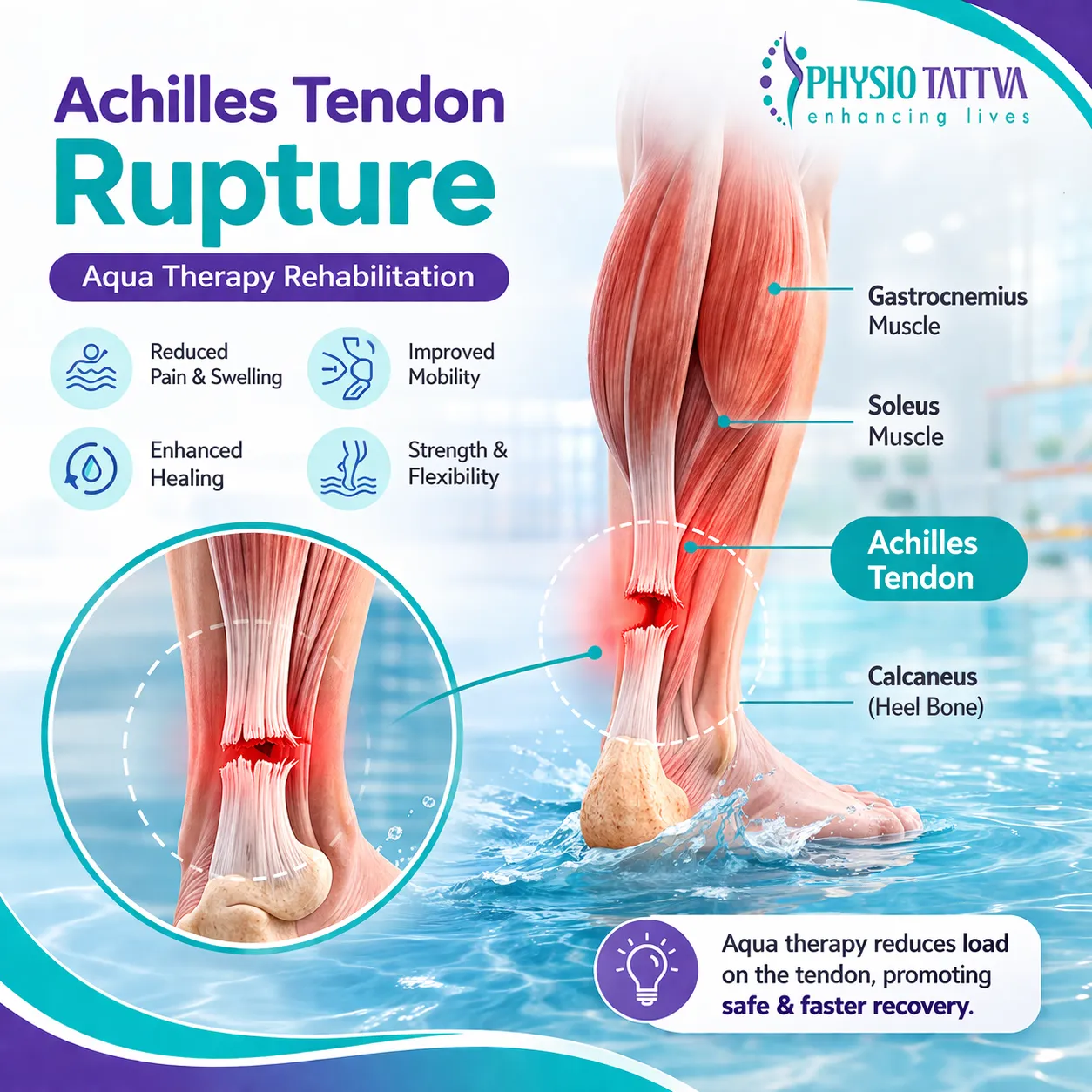
Aqua therapy is a specialised form of physical rehabilitation conducted in a temperature-controlled pool to help you recover from an Achilles tendon rupture. Following surgery or conservative management for a partial or complete tear of the tendon connecting your calf to your heel, this low-impact approach uses water's natural properties to restore mobility, reduce pain, and rebuild strength safely. It provides a supportive environment for early movement without overloading the healing tendon.
What is an Achilles Tendon Rupture? Causes, Symptoms and Recovery Timeline
Before diving into the solution, it’s important to understand the injury. The Achilles tendon is the powerful, fibrous cord that connects your calf muscles to your heel bone, enabling you to walk, run, and jump. A rupture is a partial or complete tear of this tendon. Healing it properly presents several significant hurdles for patients and therapists alike:
- Weight-Bearing Restrictions: The healing tendon is extremely fragile. You must stay off the foot for a significant period, making simple mobility a major challenge.
- Muscle Atrophy: The calf muscles weaken and waste away rapidly due to disuse, making it difficult to regain strength and power later on.
- Stiffness and Reduced Range of Motion: Immobilization leads to a stiff ankle joint, limiting your ability to flex and point your foot.
- Pain and Persistent Swelling: Inflammation is a natural part of healing but can be a constant source of discomfort and a barrier to performing rehabilitation exercises.
How Achilles Tendon Rupture Affects Walking and Strength
An Achilles tendon rupture directly impacts your gait and mobility. The injury causes significant calf muscle weakness, making it difficult to push off the ground while walking, which leads to a noticeable limp. Balance is also compromised, increasing the risk of falls and instability.
What is Aqua Therapy? Clinical Hydrotherapy for Tendon Rehabilitation
Many people hear "aqua therapy" and picture a casual swim or a lively water aerobics class. However, clinical aqua therapy, also known as hydrotherapy, is a specialized form of physiotherapy. It involves performing evidence-based therapeutic exercises in a warm, temperature-controlled, shallow pool under the guidance of a trained physiotherapist.
It isn’t the swimming itself but the unique properties of water that make it such a powerful rehabilitation tool. The effectiveness of aqua therapy is rooted in three core scientific principles:
- Buoyancy: This is the upward force of water that counteracts gravity. When you’re submerged to your chest, water supports up to 80-90% of your body weight, making you feel lighter and reducing stress on joints and healing tissues.
- Hydrostatic Pressure: This is the pressure exerted by the water on your immersed body. It acts like a gentle, full-body compression wrap, providing constant support.
- Viscosity & Resistance: This refers to the natural "drag" you feel when moving through water. Water provides gentle, 360-degree resistance to movement, perfect for controlled strengthening.
How Aqua Therapy Supports Safe Achilles Tendon Healing
Harnessing these principles of water offers a clear advantage for Achilles rehab. Here are the five key benefits you’ll experience.
Allows Early Mobility with Reduced Tendon Strain
The biggest paradox of Achilles recovery is that you need to move to heal, but movement can risk re-injury. Buoyancy solves this. By offloading the majority of your body weight, aqua therapy allows you to start walking (gait training), performing gentle movements, and bearing weight on your injured leg far earlier than you could on land. This early, protected movement stimulates the tendon to heal correctly without subjecting it to damaging stress.
Reduces Pain and Swelling Naturally
Imagine a compression sock that covers your entire leg. That’s the effect of hydrostatic pressure. This constant, gentle squeeze helps to push excess fluid and swelling (edema) away from the ankle and back into the circulatory system. This not only visibly reduces swelling but also decreases pain by relieving pressure on sensitive nerve endings, making your therapy sessions more comfortable and productive.
Rebuilds Calf Strength and Tendon Stability Gradually
The rapid loss of calf muscle (atrophy) is a major concern after an Achilles rupture. Water’s viscosity provides the perfect environment to fight this. Unlike lifting weights, the resistance is accommodating, the faster and harder you push, the more the water pushes back. This allows you to strengthen your calf, shin, and thigh muscles in a controlled, safe manner without the jarring impact of land-based exercises, protecting the tendon as it gains tensile strength.
Restores Ankle Range of Motion and Flexibility
Therapeutic pools at facilities like Physiotattva are typically kept at a warm, comfortable temperature (around 33-36°C or 92-96°F). This warmth is incredibly therapeutic. It helps to relax tight, guarded muscles and soothe stiff, immobilized joints. In this warm, supportive environment, performing stretches and range-of-motion exercises for the ankle becomes easier, less painful, and significantly more effective.
Improves Confidence During Recovery Phase
The physical injury is only half the battle; the psychological impact can be just as debilitating. The fear of falling, re-tearing the tendon, or experiencing sharp pain can make patients hesitant and fearful. The supportive, "low-consequence" environment of the water helps dissolve this fear. Being able to walk and move with less pain builds immense confidence, creating a positive feedback loop that accelerates both physical and mental recovery.
What to Expect During an Aqua Therapy Session at Physiotattva
Wondering what to expect? At Physiotattva, your journey is structured, safe, and entirely personalised. A typical session follows a clear process:
- Initial Assessment: Your program begins on land with a comprehensive evaluation by one of our certified physiotherapists. We assess your current range of motion, strength, pain levels and review your surgeon’s protocol.
- Personalised Plan: Based on this assessment, we design a one-on-one aqua therapy plan tailored to your specific stage of recovery (whether post-surgical or non-operative) and your personal goals.
- In-Pool Session: Once in the pool, your therapist will guide you through your routine. This typically includes a gentle warm-up, followed by specific exercises like underwater walking and running, controlled calf raises, balance drills on submerged steps, and gentle stretching.
- Expert Supervision: Your dedicated physiotherapist is in or beside the pool with you at all times. They ensure your form is correct, progress the exercises appropriately, and guarantee your complete safety throughout the session.
Who is an Ideal Candidate for Aqua Therapy for Achilles Tendon Rupture?
While highly effective, it's important to know when aqua therapy is appropriate. You are an ideal candidate if you are:
- A Post-Surgical Patient: Once your surgical incision has fully healed and you are cleared by your surgeon to get the wound wet (typically 4-6 weeks post-op).
- A Non-Operative Patient: As a primary rehabilitation method to encourage healing while maintaining cardiovascular fitness and muscle strength.
- A Patient Finding Land-Based Therapy Too Painful: If weight-bearing on land is too difficult, water provides the perfect bridge.
- An Athlete: Aiming for an accelerated and high-quality return to sport while minimizing the risk of re-injury.
A consultation with a Physiotattva physiotherapist is essential to determine if and when aqua therapy is right for you.
Who Should Avoid Aqua Therapy? Safety and Contraindications
While generally safe, aqua therapy is not suitable for everyone. You should avoid it if you have:
- Open wounds or unhealed surgical incisions.
- Active infections, skin conditions, or a fever.
- Serious, uncontrolled heart conditions.
- Known allergies to pool-sanitizing chemicals like chlorine.
Why Choose Physiotattva for Achilles Tendon Rehabilitation?
Recovering from an Achilles tendon rupture requires patience, but the right rehabilitation approach can make the journey smoother and more effective. Aqua therapy provides the perfect balance of support, resistance, and pain relief to help you regain mobility faster and more safely. Whether you're struggling with stiffness, weakness, or fear of re-injury, water-based rehab creates a controlled environment for steady progress. Our physiotherapists bring expertise, precision, and personalised guidance to every session. Rebuild your strength, stability, and confidence with our advanced aquatic rehab programs.
At Physiotattva physiotherapy clinics in Bangalore and Hyderabad, you receive personalised care tailored to your specific needs, ensuring effective results and comfort throughout your journey to recovery.
Don’t wait to start your recovery! Get in touch with Physiotattva for more details! Contact us at +91 89510 47001.
Why Physiotattva?
22+
50,000+
95%
200+
25+
4.8
Cities We Serve

Bangalore
At Physio Tattva, we are committed to bring access to quality physio care through ultra-modern clinics and high-skilled practitioners to all.
.webp)
Hyderabad
At Physio Tattva, we are committed to bring access to quality physio care through ultra-modern clinics and high-skilled practitioners to all.
.webp)
Vishakhapatnam
At Physio Tattva, we are committed to bring access to quality physio care through ultra-modern clinics and high-skilled practitioners to all.
Core Treatments
Core Conditions
Core Symptoms
Frequently Asked Questions
Do I Need Swimming Skills for Aqua Therapy?

When Can I Begin Aqua Therapy After Achilles Surgery?
How is Aqua Therapy Different from Pool Exercise?
Is Aqua Therapy for Achilles Tendon Rupture Covered by Insurance?






%20(1)-p-3200.jpeg)

.jpg)
.webp)
.webp)
.webp)