




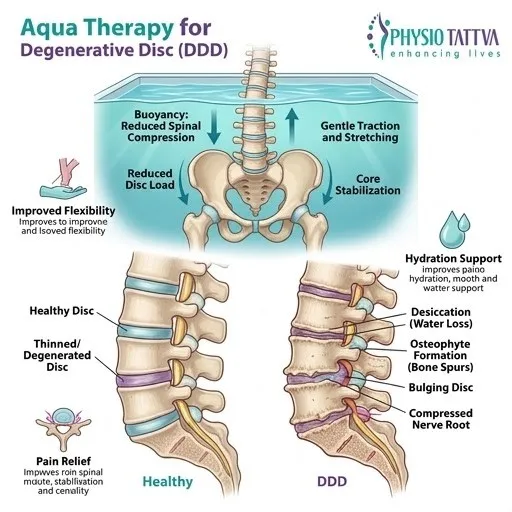
Aqua therapy is a specialized form of physiotherapy that uses the physical properties of water to facilitate healing and exercise with minimal impact. For individuals with degenerative disc disease, a common age-related condition causing wear and tear on spinal discs, this therapy offers a gentle yet effective way to manage chronic back pain, stiffness, and nerve irritation affecting the lumbar (lower back) or cervical (neck) spine. It serves as a low-impact method for spinal rehabilitation, improving strength and mobility without stressing damaged discs.
What is Degenerative Disc Disease? Causes, Symptoms and Risk Factors Explained
Degenerative Disc Disease (DDD) isn't a disease but a condition where spinal discs gradually break down. This natural process involves disc height loss, reduced flexibility, and can lead to nerve compression or irritation.
- Primary Cause: Age-related wear and tear is the most common factor.
- Contributing Factors: Repetitive strain from work or sports, injuries, and a sedentary lifestyle can accelerate degeneration.
- Common Symptoms: Chronic low-grade pain, sharp pain flare-ups, stiffness, and radiating pain or numbness.
How Degenerative Disc Disease Affects Mobility and Daily Activities
The persistent pain and stiffness from DDD can significantly impact your life, making simple movements difficult and painful.
- Difficulty sitting for long periods.
- Pain while bending, twisting, or lifting.
- Trouble standing for extended durations.
- Reduced ability to participate in sports or hobbies.
What is Aqua Therapy? Clinical Hydrotherapy for Spinal Rehabilitation
Aqua therapy, or hydrotherapy, is a clinically supervised rehabilitation method performed in a specialized therapeutic pool. It utilizes the principles of buoyancy, hydrostatic pressure, and water resistance to create an ideal environment for healing the spine. Sessions are always guided by a trained physiotherapist to ensure safety and effectiveness.
How Aqua Therapy Reduces Spinal Load and Disc Related Pain
The unique properties of water work together to decompress the spine, reduce inflammation, and build supportive muscle strength, providing significant pain relief for disc-related issues.
How Buoyancy Reduces Disc Compression
- Water's buoyancy counteracts gravity, effectively "unloading" your spine.
- This reduces the compressive force on vertebral discs, alleviating pressure and pain.
- It allows for pain-free movement and exercise that might be impossible on land.
How Hydrostatic Pressure Improves Circulation and Reduces Inflammation
- The water exerts gentle, consistent pressure on your body.
- This hydrostatic pressure helps reduce swelling and inflammation around the spinal tissues.
- It also improves blood circulation, delivering more oxygen and nutrients to aid healing.
How Warm Water and Resistance Improve Core Strength
- The warmth of the therapeutic pool helps relax tight, painful muscles in the back and neck.
- Water provides 360-degree resistance, which gently strengthens the core muscles (abdominal and back) that support and stabilize the spine.
Evidence-Based Aqua Therapy Exercises for Degenerative Disc Disease
Our physiotherapists design a gradual program focused on restoring mobility and building core stability in a controlled, supportive environment.
Water Walking and Gait Training
- Improves walking endurance and posture.
- Reduces spinal stress compared to walking on hard surfaces.
- Enhances cardiovascular fitness without jarring impacts.
Lumbar Mobility Exercises in Water
- Safely performs controlled flexion, extension, and rotation movements.
- Restores the spine's natural range of motion.
- Buoyancy supports the back, preventing painful overextension.
Core Stabilization and Balance Drills
- Activates and strengthens deep abdominal and paraspinal muscles.
- Improves balance to prevent falls and further injury.
- Builds a strong "natural brace" to protect the spine during daily activities.
What to Expect During an Aqua Therapy Session at Physiotattva
- Initial Assessment: Your physiotherapist evaluates your condition, pain levels, and mobility.
- Personalized Plan: A custom exercise program is created based on your specific needs for DDD.
- Warm-Up: Gentle movements to prepare your body in the warm therapeutic pool.
- Guided Exercises: Your therapist guides you through each targeted exercise, ensuring proper form.
- Cool-Down: Light stretches to relax muscles and complete the session.
- Progress Tracking: Your progress is monitored to adjust the program as you get stronger.
Our advanced aquatic facilities are available at select Physiotattva clinics in Bangalore and Hyderabad.
Who is an Ideal Candidate for Aqua Therapy for Degenerative Disc Disease?
- Individuals with chronic disc-related back or neck pain.
- Patients with mild nerve irritation (sciatica or radiculopathy).
- Those who find land-based exercise too painful.
- Post-operative patients cleared for low-impact rehabilitation.
Who Should Avoid Aqua Therapy? Safety and Contraindications
While generally safe, aqua therapy may not be suitable for everyone. You should avoid it if you have:
- Severe or worsening neurological deficits.
- Unstable medical conditions (e.g., uncontrolled heart failure).
- Open wounds, skin infections, or fever.
- Incontinence.
Why Choose Physiotattva for Degenerative Disc Disease Rehabilitation?
- Expert Care: Our team consists of highly experienced physiotherapists specializing in spinal rehabilitation.
- Structured Programs: We create evidence-based, goal-oriented programs tailored to your recovery.
- Advanced Facilities: We utilize state-of-the-art therapeutic pools for optimal results.
- Integrated Approach: We combine aqua therapy with other physiotherapy modalities for comprehensive care.
Why Physiotattva?
22+
50,000+
95%
200+
25+
4.8
Cities We Serve

Bangalore
At Physio Tattva, we are committed to bring access to quality physio care through ultra-modern clinics and high-skilled practitioners to all.
.webp)
Hyderabad
At Physio Tattva, we are committed to bring access to quality physio care through ultra-modern clinics and high-skilled practitioners to all.
.webp)
Vishakhapatnam
At Physio Tattva, we are committed to bring access to quality physio care through ultra-modern clinics and high-skilled practitioners to all.
Core Treatments
Core Conditions
Core Symptoms
Frequently Asked Questions
Do I need to be a good swimmer to do aqua therapy?

How is Aqua Therapy Different from Recreational Swimming?
How many aqua therapy sessions will I need?






%20(1)-p-3200.jpeg)

.jpg)
.webp)
.webp)
.webp)