




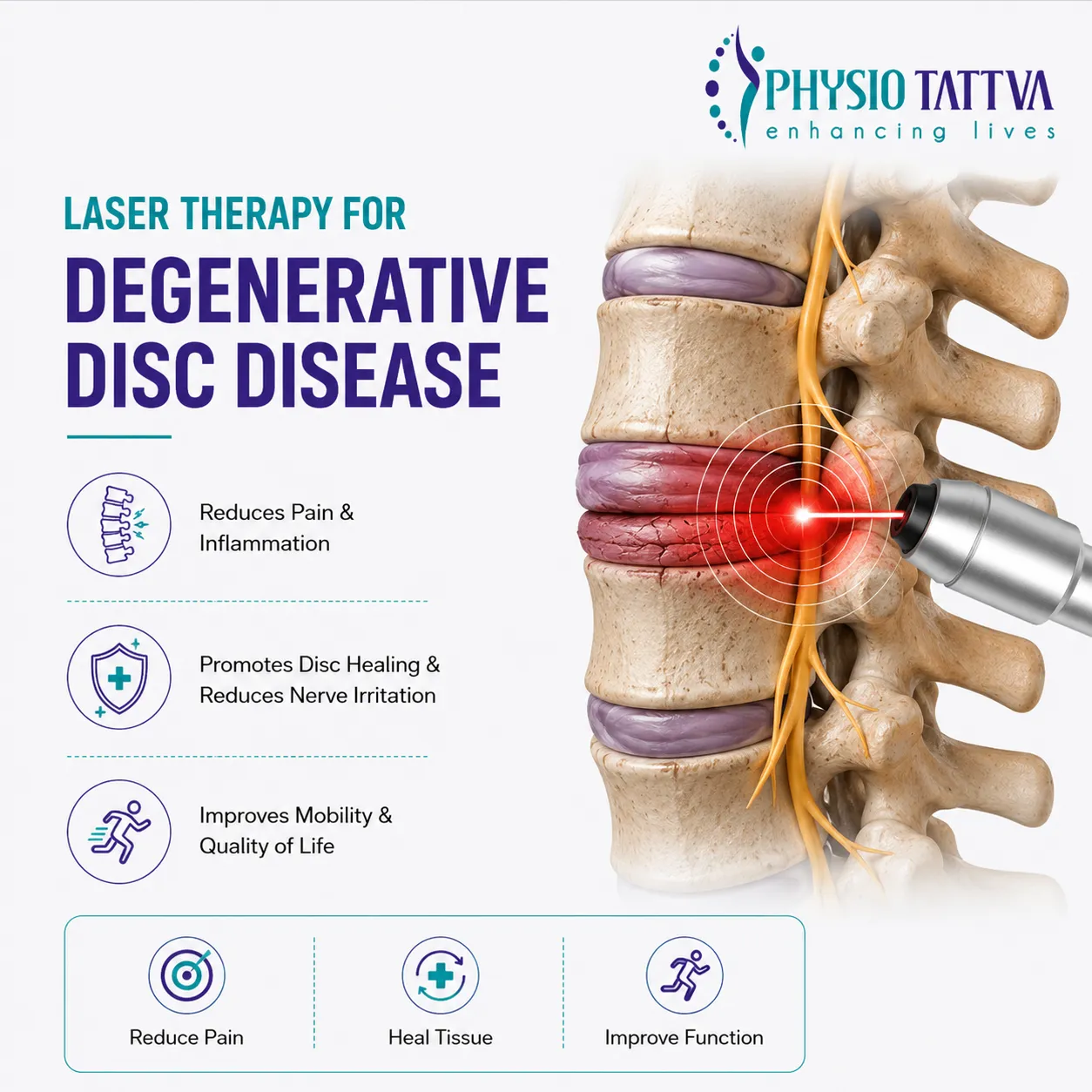
Laser therapy for Degenerative Disc Disease (DDD) is a non-invasive treatment that uses high-intensity light energy to reduce pain, inflammation, and promote healing in spinal tissues. It works through photobiomodulation, stimulating cellular processes, improving circulation, and supporting tissue repair. While it doesn't reverse disc degeneration, laser therapy helps manage symptoms and improve mobility. Sessions are short (5-15 minutes), painless, and require no downtime, making it a safe and effective option for long-term recovery. Integrated with physiotherapy, laser therapy can significantly improve quality of life by addressing pain and functional limitations.
What Is Laser Therapy for Degenerative Disc Disease?
High-Intensity Laser Therapy, also known as Class IV Laser Therapy, is a non-invasive physiotherapy modality used in the management of spinal disc disorders, including degenerative disc disease. It involves the application of focused light energy to targeted spinal regions to stimulate biological processes within affected tissues.
In clinical physiotherapy settings, laser therapy for degenerative disc disease may be delivered using:
- Class IV High-Intensity Lasers: Designed to penetrate deeper tissues such as spinal discs, nerve roots, and surrounding musculature.
- Pulsed or Continuous Modes: Depending on tissue sensitivity and treatment goals, therapists may adjust the laser output to optimise tissue response.
- Targeted Regional Application: The device is applied externally over the affected cervical or lumbar spine segments.
This form of degenerative disc disease laser treatment works through photobiomodulation, a process in which specific light wavelengths interact with cells and may enhance metabolic activity.
Performed by our certified physiotherapists at Physiotattva, this FDA-approved procedure is painless, safe, and offers a powerful alternative for chronic pain sufferers.
How Does Laser Therapy Work for Degenerative Disc Disease?
High-Intensity Laser Therapy works through a biological process known as photobiomodulation. When applied over affected spinal segments, specific wavelengths of light penetrate soft tissues and interact with cellular structures.
At a physiological level, the process involves:
- Light absorption by mitochondria: Laser energy is absorbed by chromophores within cells, particularly in the mitochondria.
- Increased ATP synthesis: This absorption may stimulate production of adenosine triphosphate, the primary energy source required for cellular activity and repair.
- Modulation of inflammatory mediators: Laser exposure can influence cytokine activity and inflammatory signalling pathways in surrounding tissues.
- Alteration of nerve conduction velocity: Certain wavelengths may affect the peripheral nerve transmission involved in pain signalling.
- Microvascular response: The therapy may promote local vasodilation, increasing blood flow within the treated region.
These cellular and microcirculatory effects form the biological basis for using laser therapy in disc-related spine conditions.
What Are the Clinical Benefits of Laser Therapy for Degenerative Disc Disease?
While laser therapy does not reverse disc degeneration, its biological effects may translate into measurable clinical improvements when used within a structured rehabilitation plan.
Commonly observed outcomes include:
- Reduction in localised pain: Modulation of inflammatory pathways and nerve signalling may help decrease pain intensity.
- Improved spinal mobility: Decreased muscular guarding and inflammation can support improved range of motion.
- Reduced muscle spasm: Neuromodulatory effects may assist in relieving paraspinal muscle tension.
- Enhanced tissue recovery: Improved cellular energy production may support healing in surrounding ligaments and soft tissues.
- Support for long-term rehabilitation: When combined with strengthening and postural correction, laser therapy can complement conservative spine care strategies.
Laser therapy for degenerative disc disease is typically integrated into a broader long-term treatment plan rather than used as an isolated solution.
Is Laser Therapy Safe for Everyone?
Laser therapy is generally considered safe when delivered by trained physiotherapists. However, certain individuals may require caution, modification of treatment parameters, or prior medical clearance before undergoing therapy.
Laser therapy may be avoided or carefully considered in the following situations:
- Active cancer in the treatment area: Direct application over known or suspected malignant tissue is typically avoided.
- Pregnancy involving the lumbar spine region: Treatment over the lower back during pregnancy is generally avoided unless cleared by a healthcare provider.
- Application directly over the thyroid gland: Exposure to the endocrine glands is commonly avoided.
- Photosensitivity conditions or medications: Individuals with light sensitivity disorders or those taking photosensitising drugs may require evaluation before treatment.
- Active infection at the treatment site: Laser therapy is usually postponed until the infection is resolved.
- Recent spinal surgery: Patients who have recently undergone spinal procedures should seek clearance from their surgeon before beginning laser therapy.
Suitability for laser therapy for degenerative disc disease should always be determined after a clinical assessment. Treatment settings are adjusted based on individual medical history and rehabilitation goals.
The Physiotattva Approach: Laser Therapy in a Holistic Plan
While HILT is a cornerstone of modern physiotherapy for back pain, we at Physiotattva know that the most durable results come from a comprehensive, integrated approach. True, long-term relief from DDD requires addressing not just the symptoms, but also the underlying biomechanical issues.
That’s why we integrate laser therapy into a holistic treatment plan. It is a powerful catalyst for healing, but it works best when combined with other proven techniques, such as:
- Manual Therapy: Hands-on techniques to gently mobilise stiff spinal joints and soft tissues.
- Spinal Decompression: A non-surgical method to gently stretch the spine and relieve pressure on the damaged discs.
- Core Strengthening Exercises: To build a natural "corset" of muscle support around your spine, reducing strain and preventing future injury.
- Postural Education: Teaching you how to move, sit, and stand in ways that protect your spine.
Every treatment plan is personalised to your specific condition, pain levels, and lifestyle goals, ensuring you receive the most effective care possible.
What to Expect During Your Laser Therapy Session at Physiotattva
Laser therapy for degenerative disc disease follows a structured clinical process. A typical session is brief and straightforward.
During the appointment, the following steps are usually involved:
- Assessment: The physiotherapist reviews your symptoms, medical history, and available imaging to confirm suitability.
- Positioning: You will be positioned comfortably to allow access to the affected spinal region.
- Laser application: A handheld device is applied externally over the targeted area using controlled, methodical movements.
- Sensation: Most individuals experience mild warmth. The procedure is non-invasive and does not require anaesthesia.
- Duration: Sessions typically last between 5 and 15 minutes.
- Frequency: Treatment is usually delivered over multiple sessions across several weeks.
- Aftercare: There is generally no required downtime, and normal daily activities can be resumed unless advised otherwise.
Laser therapy is commonly integrated with exercise-based rehabilitation as part of structured spine care.
Move Better, Live Better: Your Healing Begins at Physiotattva
Degenerative Disc Disease can impact every part of your daily life, but it doesn’t have to define your future. High-Intensity Laser Therapy offers a safe, research-backed, and highly effective path to reducing pain, calming inflammation, and supporting deep tissue repair without surgery or medication dependence. When combined with personalised physiotherapy, spinal strengthening, and postural training, laser therapy becomes a powerful tool in restoring long-term spinal health. Our experts ensure your treatment journey is tailored, comfortable, and focused on meaningful recovery. With the right guidance and a comprehensive care plan, you can regain mobility, reduce flare-ups, and return to living with confidence and ease.
At Physiotattva physiotherapy clinics in Bangalore and Hyderabad, you receive personalised care tailored to your specific needs, ensuring effective results and comfort throughout your journey to recovery.
Key Takeaways
- Degenerative Disc Disease (DDD) involves age-related or wear-related disc changes that may lead to spinal pain, stiffness, and nerve irritation.
- High-Intensity Laser Therapy (HILT) uses photobiomodulation to influence cellular metabolism, inflammatory signalling, and nerve activity in affected spinal tissues.
- Laser therapy does not reverse disc degeneration but may help manage pain and support surrounding soft tissue recovery.
- Treatment is typically delivered over multiple sessions and integrated into a structured rehabilitation programme.
- Laser therapy is non-invasive and externally applied, but clinical assessment is required to determine suitability.
- It is most effective when combined with strengthening, posture correction, and movement-based physiotherapy strategies.
Suitability depends on individual medical history, symptom severity, and stage of degeneration.
Don’t wait to start your recovery! Get in touch with Physiotattva for more details! Contact us at +91 89510 47001.
Why Physiotattva?
22+
50,000+
95%
200+
25+
4.8
Cities We Serve

Bangalore
At Physio Tattva, we are committed to bring access to quality physio care through ultra-modern clinics and high-skilled practitioners to all.
.webp)
Hyderabad
At Physio Tattva, we are committed to bring access to quality physio care through ultra-modern clinics and high-skilled practitioners to all.
.webp)
Vishakhapatnam
At Physio Tattva, we are committed to bring access to quality physio care through ultra-modern clinics and high-skilled practitioners to all.
Core Treatments
Core Conditions
Core Symptoms
Frequently Asked Questions
Is laser therapy for Degenerative Disc Disease painful?

Are there any side effects of laser therapy for DDD?
How soon will I see results for my back pain?
How Does Laser Therapy Work for Degenerative Disc Disease?
How Many Laser Therapy Sessions Are Needed for Degenerative Disc Disease?




%20(1)-p-3200.jpeg)

.jpg)
.webp)
.webp)
.webp)