





Aqua therapy is a specialized form of physiotherapy conducted in a temperature-controlled pool to aid recovery from injury and manage chronic conditions. For knee bursitis—an inflammation of the fluid-filled sacs (bursae) around your knee joint—this water-based rehabilitation offers a safe, low-impact environment to reduce pain, decrease swelling, and restore movement without straining the sensitive area. Caused by factors like overuse, direct injury, or prolonged kneeling, knee bursitis can be effectively managed with conservative treatments like aqua therapy.
What is Knee Bursitis? Causes, Symptoms and Risk Factors Explained
To understand the solution, we must first understand the problem.
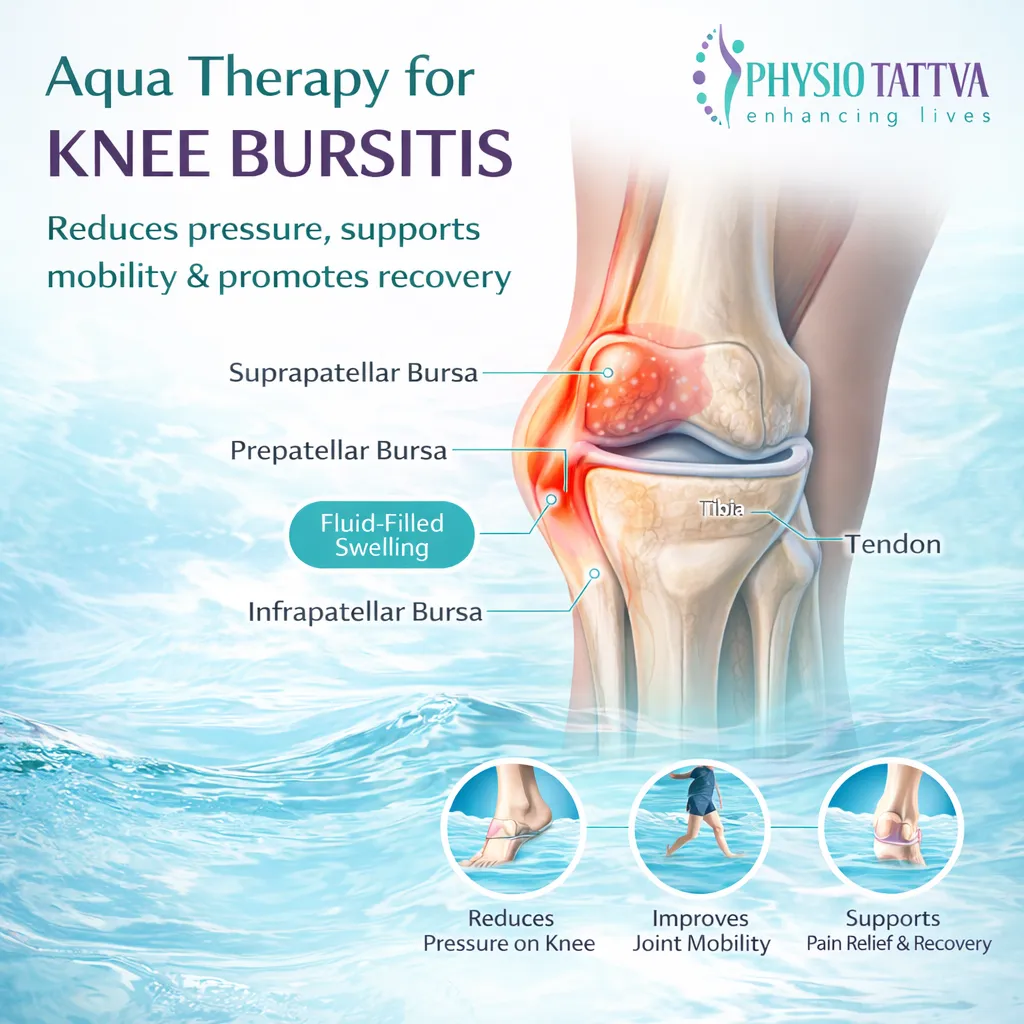
Your knee joint is surrounded by small, fluid-filled sacs called bursae (singular: bursa). These sacs act as cushions, reducing friction between your bones, tendons, and muscles. Knee bursitis occurs when one or more of these bursae become inflamed.
Common Causes:
- Repetitive Pressure: Frequent kneeling on hard surfaces (common in professions like gardening, plumbing, or carpet laying).
- Direct Trauma: A sharp blow to the knee.
- Overuse: Repetitive motions in sports or activities.
- Underlying Conditions: Complications from osteoarthritis, rheumatoid arthritis, or infection.
Symptoms include sharp or aching pain, visible swelling, warmth to the touch, and stiffness in the knee joint.
How Knee Bursitis Affects Walking, Bending and Daily Activities?
The pain and swelling from knee bursitis can significantly impact your daily life, making simple movements challenging. You may experience difficulty with:
- Kneeling down.
- Climbing stairs.
- Squatting or bending the knee deeply.
- Walking for extended periods.
- Standing up after sitting for a long time.
How Aqua Therapy Helps Reduce Knee Bursitis Pain and Inflammation?
Performing physical therapy in a pool isn't just about getting wet; it's about leveraging the physics of water to create an ideal healing environment. For individuals with knee bursitis, the water’s supportive and therapeutic qualities make movement easier, reduce irritation, and allow the knee to function without added strain. Here’s how it directly benefits an inflamed knee:
How Buoyancy Reduces Knee Joint Load?
When you're submerged in chest-deep water, your body bears only about 10-20% of its actual weight. This reduced weight-bearing environment makes movement feel noticeably easier and smoother, even for people experiencing significant discomfort. It allows the knee to move through its natural range without excess pressure, helping you stay active and preventing further irritation.
Benefit for Bursitis: This buoyancy dramatically offloads the knee joint. The pressure on the inflamed bursa is significantly reduced, allowing you to move and exercise with little to no pain. This is often the biggest hurdle in land-based therapy: movement hurts, so you avoid it, leading to more stiffness and weakness. Water breaks this cycle.
How Hydrostatic Pressure Reduces Swelling and Edema?
Water exerts constant, gentle pressure on your body from all sides. This uniform pressure supports the knee during movement and helps create a sense of stability in the joint. It also encourages better fluid movement throughout the leg, making exercises more comfortable and controlled.
Benefit for Bursitis: This hydrostatic pressure acts like a full-leg compression wrap. It helps push swelling (edema) away from the inflamed knee, reducing pain and improving circulation. This process delivers more oxygen-rich blood to the area, accelerating healing.
How Water Resistance Builds Strength Without Irritation?
Water provides natural resistance to movement. The faster you move, the greater the resistance. This built-in resistance slows down every motion, helping you maintain proper form without sudden impact or strain. It encourages smooth, controlled movements that build strength safely while keeping the knee comfortable throughout the exercise.
Benefit for Bursitis: This allows you to strengthen the crucial muscles that support your knee, quadriceps, hamstrings, glutes, and hips, without needing weights. You are in complete control of the intensity. This gentle strengthening stabilizes the knee joint, reducing the strain on the bursa and helping to prevent future flare-ups.
How Warm Water Relaxes Muscles and Reduces Stiffness?
Therapy pools are typically heated to a comfortable 90-94°F (32-34°C). The gentle warmth helps your body ease into movement by reducing stiffness and calming surrounding tissues. This soothing environment makes it easier to start exercising without discomfort and prepares the knee for more effective therapy.
Benefit for Bursitis: The warm water helps to relax tight muscles, increase blood flow, and soothe aching joints. It decreases pain perception and significantly improves flexibility, making stretching more effective and comfortable.
Evidence Based Aqua Therapy Exercises for Knee Bursitis Rehabilitation
Under the guidance of a physical therapist, your program will be tailored to your specific needs. However, a typical session might include the following exercises.
Important Note: Always consult with your doctor or physical therapist before starting any new exercise program. Stop immediately if you feel sharp pain.
Phase 1: Gentle Range of Motion and Mobility Drills
- Water Walking: Simply walk forward, backward, and sideways in chest-deep water. This is a low-impact way to warm up the muscles and gently move the knee joint.
- High-Knee Marches: Stand straight and march in place, lifting your knees as high as is comfortable. The water's buoyancy will assist the movement.
Phase 2: Strengthening Exercises for Knee Stability
- Standing Knee Flexion (Hamstring Curls): Holding onto the pool wall for support, slowly bend one knee, bringing your heel up toward your glute. Slowly lower it back down. The water provides resistance on the way up.
- Standing Knee Extension (Leg Kicks): Holding the wall, slowly straighten your knee against the water’s resistance. Avoid locking the knee. Focus on a smooth, controlled motion.
- Shallow Water Squats: With your feet shoulder-width apart, slowly lower yourself into a shallow squat, as if sitting in a chair. The water will support you, making this movement much more manageable than on land. Do not go deeper than is comfortable.
- Hip Abduction/Adduction: Stand on one leg while holding the pool wall. Keeping your other leg straight, move it out to the side and then back to the center. Strong hips provide better knee stability.
Phase 3: Cool Down and Flexibility Exercises
- Hamstring Stretch: Place your heel on the side of the pool (or on a submerged step) with your knee slightly bent. Gently lean forward until you feel a light stretch in the back of your thigh.
- Quad Stretch: Hold onto the pool wall for balance. Gently bring one heel up toward your glute, holding your ankle. You'll feel a stretch in the front of your thigh.
Who is an Ideal Candidate for Aqua Therapy for Knee Bursitis?
Aqua therapy is particularly beneficial for:
- Individuals with chronic or recurrent knee bursitis.
- Older adults seeking a low-impact exercise option.
- Patients who experience significant pain with weight-bearing activities.
- Post-operative patients cleared for water-based rehabilitation.
Who Should Avoid Aqua Therapy? Safety and Contraindications
Aqua therapy is an excellent option for most people with knee bursitis, especially those who require a gentler, low-impact environment for movement and rehabilitation, and those who:
- Find land-based exercise too painful.
- Are overweight and need to reduce joint stress.
- Are recovering from knee surgery.
- Suffer from chronic knee pain or arthritis in addition to bursitis.
However, it may not be suitable for individuals with open wounds, infections, fever, serious heart conditions, or incontinence.
What to Expect During an Aqua Therapy Session at Physiotattva
Knee bursitis doesn't have to put your life on hold. Aqua therapy for knee bursitis offers a unique combination of pain relief, swelling reduction, and gentle strengthening that is difficult to replicate on land. By embracing the healing properties of water, you can take a significant, proactive step toward reducing inflammation, rebuilding strength, and reclaiming your mobility.
At Physiotattva physiotherapy clinics in Bangalore and Hyderabad, you receive personalised care tailored to your specific needs, ensuring effective results and comfort throughout your journey to recovery.
Don’t wait to start your recovery! Get in touch with Physiotattva for more details! Contact us at +91 89510 47001.
Why Choose Physiotattva for Aqua Therapy for Knee Bursitis?
- Expert Therapists Our team consists of highly experienced physiotherapists specialized in aquatic rehabilitation.
- Advanced Facilities: We offer state-of-the-art, temperature-controlled pools for optimal comfort and therapeutic benefit.
- Customized Programs: We believe in personalized care, tailoring every rehab program to the individual’s unique condition and goals.
Why Physiotattva?
22+
50,000+
95%
200+
25+
4.8
Cities We Serve

Bangalore
At Physio Tattva, we are committed to bring access to quality physio care through ultra-modern clinics and high-skilled practitioners to all.
.webp)
Hyderabad
At Physio Tattva, we are committed to bring access to quality physio care through ultra-modern clinics and high-skilled practitioners to all.
.webp)
Vishakhapatnam
At Physio Tattva, we are committed to bring access to quality physio care through ultra-modern clinics and high-skilled practitioners to all.
Core Treatments
Core Conditions
Core Symptoms
Frequently Asked Questions
Is Aqua Therapy for Knee Bursitis Painful?

How Many Sessions Are Needed for Improvement?
Are There Any Side Effects of Aqua Therapy?
Can Aqua Therapy Be Combined with Medication or Physiotherapy?
Is Aqua Therapy Suitable for All Knee Bursitis Patients?






%20(1)-p-3200.jpeg)

.jpg)
.webp)
.webp)
.webp)