




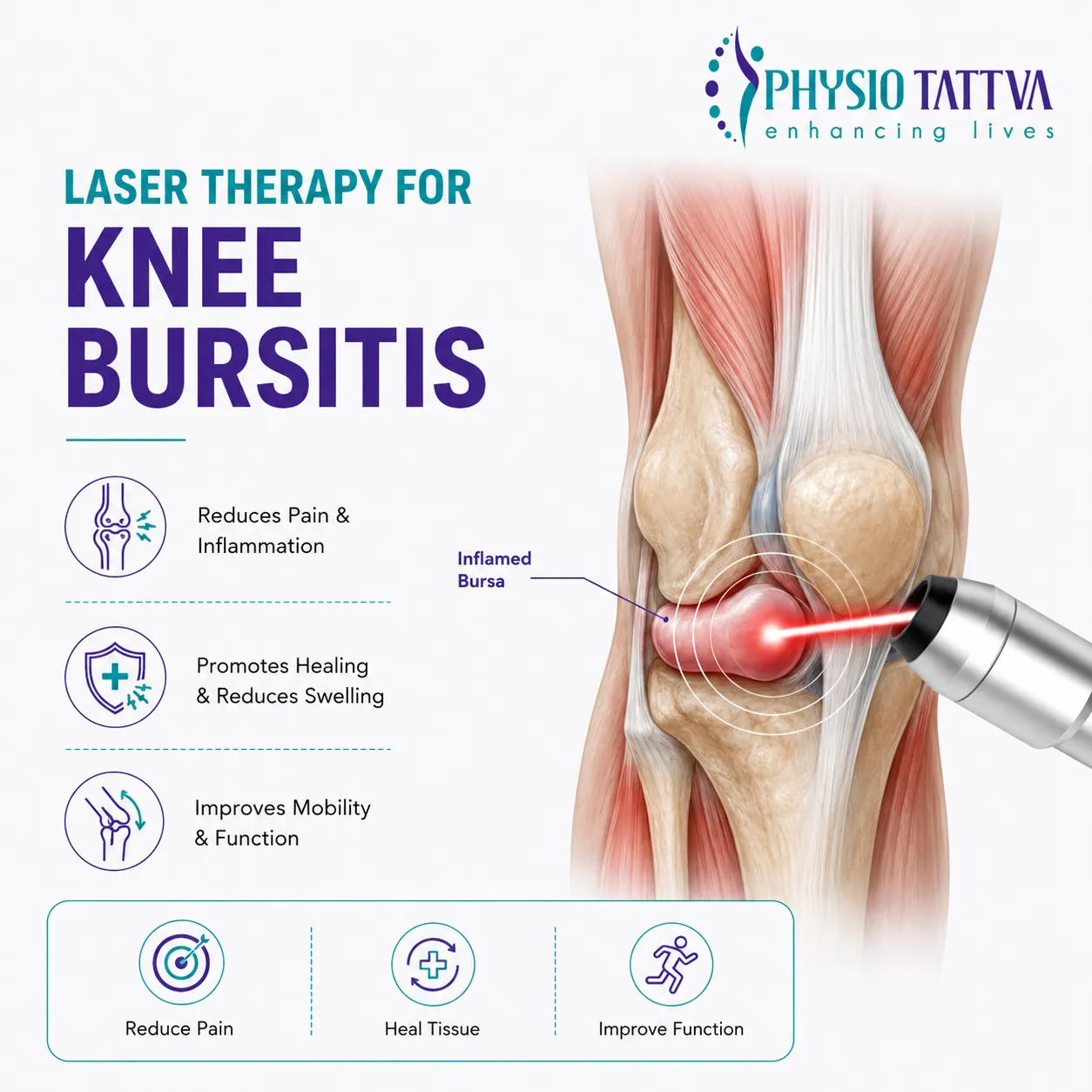
Laser therapy for knee bursitis is a non-invasive physiotherapy treatment that helps reduce inflammation in the knee bursa and improve movement without injections or surgery. It uses controlled light energy through photobiomodulation to calm inflammatory activity and support tissue repair. The therapy may reduce swelling, tenderness, and stiffness around the kneecap, while decreasing pain sensitivity so walking, stair climbing, and kneeling become more comfortable during rehabilitation.
Sessions are typically short, lasting about 5 to 15 minutes, painless, and require no downtime. Most patients require around 6 to 12 sessions depending on severity and symptom duration. Laser therapy works best when combined with strengthening, mobility exercises, and activity modification. It does not replace drainage, antibiotics, or surgery in cases of septic or severe bursitis, and a proper knee assessment is necessary to confirm suitability before beginning treatment.
What Is Laser Therapy (LLLT) for Knee Bursitis?
Laser therapy, also known as Low-Level Laser Therapy (LLLT), is a non-invasive physiotherapy treatment that uses specific light wavelengths to target the inflamed bursa around the knee. The light penetrates the soft tissues without cutting or heating them, stimulating cellular activity involved in repair.
This process may help calm inflammation, improve local circulation, and reduce pain sensitivity. As discomfort decreases, patients can move the knee more comfortably and participate more effectively in guided rehabilitation exercises.
What Symptoms of Knee Bursitis Can Laser Therapy Help Treat?
Laser therapy may be considered when knee discomfort begins to interfere with walking, bending, or daily activities. People often notice early warning signs before a formal diagnosis, which may indicate irritation of the knee bursa.
- Pain while kneeling or climbing stairs
- Tenderness when pressing over the front or side of the knee
- Swelling around the kneecap
- Stiffness after sitting for long periods
- Discomfort during running, squatting, or exercise
- Warmth or sensitivity around the joint
If these symptoms persist or gradually worsen, a clinical assessment helps determine whether conservative rehabilitation is appropriate.
How Does Laser Therapy Work for Knee Bursitis?
Laser therapy works by delivering controlled light energy into the inflamed knee tissue. During treatment, a physiotherapist places a handheld device over the affected area so the light can reach the irritated bursa beneath the skin.
Inside the cells, mitochondria absorb this energy and increase cellular activity (ATP production). This additional energy supports tissue repair processes, improves local circulation, and helps reduce inflammatory chemicals responsible for swelling and tenderness.
The therapy may also influence nerve sensitivity, which can decrease pain perception and make knee movement more comfortable during physiotherapy and daily activities.
What Are the Benefits of Laser Therapy for Knee Bursitis?
Laser therapy (low-level laser therapy/photobiomodulation) supports recovery in knee bursitis by calming inflammation, improving bursal tissue healing, and restoring comfortable knee movement without injections or surgery. It is typically combined with physiotherapy exercises for safer and faster rehabilitation.
Pain Reduction Without Medication
Laser energy interacts with irritated pain receptors and inflammatory chemicals surrounding the bursa, helping reduce sensitivity rather than temporarily numbing it.
Patients often notice:
- Less pain while walking or climbing stairs
- Reduced tenderness when touching the knee
- Improved comfort during sitting or kneeling
- Easier daily activities
Faster Bursal Tissue Healing
Knee bursitis involves irritation of the fluid-filled sac that cushions joint movement. Laser therapy supports cellular repair by improving ATP production and circulation.
Healing improvements include:
- Faster recovery from repetitive strain
- Reduced post-activity soreness
- Improved tissue resilience
- Better tolerance to movement
Reduction in Knee Inflammation
Swelling around the bursa restricts motion and causes pressure pain. Laser therapy regulates inflammatory mediators instead of only masking symptoms.
Common outcomes:
- Reduced visible swelling
- Less pressure while bending the knee
- Improved joint comfort
- Smoother knee motion
Improved Range of Motion
As irritation settles, movement becomes easier and physiotherapy exercises become more effective.
Functional gains:
- Easier stair climbing
- Comfortable squatting or sitting
- Better knee bending
- Improved walking pattern
Non-Invasive Alternative to Injections
Laser therapy offers conservative management before considering aspiration, steroid injections, or surgical procedures.
Key advantages:
- No needles or medication side effects
- No downtime after treatment
- Suitable for acute and chronic bursitis
- Safe for repeated sessions
Better Rehabilitation Outcomes
By calming pain early, laser therapy helps patients participate more effectively in strengthening and mobility exercises.
During physiotherapy it helps:
- Earlier movement confidence
- Exercises feel less painful
- Reduced protective limping
- Lower recurrence risk
What Happens During Laser Therapy for Knee Bursitis?
Laser therapy for knee bursitis is delivered through a structured and comfortable treatment process. The session begins with a physiotherapy assessment to confirm the diagnosis and identify the exact area of bursal inflammation.
During treatment, you are positioned comfortably while a handheld laser device is applied over the affected region. Each session typically lasts 5–15 minutes and is painless, with most people feeling nothing or only mild warmth.
This targeted treatment approach may provide:
- Early pain relief: Reduced inflammation and decreased pain signalling can make discomfort noticeably lower within the first few sessions.
- Reduction in swelling: The therapy helps calm irritated bursal tissue without medication-related side effects.
- Support for tissue repair: Increased cellular activity assists the natural healing process of the affected tissue.
- Non-invasive care: No needles, incisions, or downtime are required, and side effects are minimal.
- Improved knee movement: As irritation settles, the knee can move more comfortably during daily activity and rehabilitation.
What Is The Recovery Time For Knee Bursitis Using Laser Therapy?
Recovery time depends on the level of inflammation, how long symptoms have been present, and how consistently rehabilitation exercises are followed. Laser therapy helps calm the irritated bursa and supports tissue healing, but best results occur when combined with guided physiotherapy.
Mild Bursal Irritation (Early Stage)
When treated early, swelling is limited and movement restriction is minimal.
Expected timeline: 1–3 weeks
What improves first:
- Pain while walking or climbing stairs
- Tenderness when touching the knee
- Comfort during sitting or kneeling
Many patients feel relief within the first few treatment sessions.
Moderate Inflammation or Repetitive Strain
At this stage, the bursa remains irritated and movement becomes guarded.
Expected timeline: 3–6 weeks
Progress usually includes:
- Gradual reduction in swelling
- Improved knee bending comfort
- Easier weight-bearing activities
Laser therapy helps settle inflammation while physiotherapy restores normal movement patterns.
Chronic Knee Bursitis
Long-standing bursitis leads to persistent irritation and stiffness.
Expected timeline: 6–10 weeks (sometimes longer)
Recovery focuses on:
- Restoring joint mobility
- Preventing repeated friction or pressure
- Strengthening surrounding muscles
Laser therapy reduces pain sensitivity so rehabilitation exercises can progress safely.
When Do Patients Usually Feel Better?
Most individuals notice symptom relief within 2–5 sessions, but complete recovery requires finishing the strengthening phase to prevent recurrence.
Laser therapy speeds recovery, though healing time ultimately depends on severity and adherence to physiotherapy guidance.
Is Laser Therapy For Knee Bursitis Safe? Risks And Precautions
Laser therapy is considered safe when performed by a qualified physiotherapist using appropriate clinical settings. The treatment is non-invasive and aims to calm inflammation and support bursal healing without damaging surrounding knee structures.
Before beginning therapy, patients should understand which short-term reactions are normal after treatment.
Common Temporary Effects May Include:
- Mild warmth around the knee after treatment
- Temporary soreness following the session
- Light skin redness that settles within minutes
Some individuals may need treatment adjustments depending on their medical history.
Who Should Avoid Laser Therapy For Knee Bursitis?
Laser therapy is generally safe, but certain situations require additional caution. Always inform your physiotherapist about your medical history so treatment intensity and positioning can be modified appropriately.
- Cancer near the knee: Not applied directly over malignant tissue
- Pregnancy: Avoid over lower abdomen/pelvic region unless medically advised
- Photosensitive conditions or medications: Dose settings adjusted
- Reduced sensation or neuropathy: Modified to prevent unnoticed irritation
- Suspected infection or septic bursitis: Requires medical treatment before physiotherapy
Clinical caution: A proper knee assessment is necessary to confirm bursitis type and ensure laser therapy fits safely within a structured rehabilitation plan.
Am I a Good Candidate for Laser Therapy for Knee Bursitis?
Laser therapy is commonly recommended when knee bursitis causes pain, swelling, or restricted movement but the surrounding tissues still have healing potential. A clinical assessment helps determine whether conservative rehabilitation is appropriate before considering injections or surgical procedures.
Laser therapy may be suitable if you experience:
- Localised swelling around the kneecap or inner knee
- Pain while kneeling, climbing stairs, or getting up from sitting
- Tenderness when touching the affected area
- Mild to moderate inflammatory bursitis
- Stiffness after rest or prolonged sitting
- Discomfort after sports, repetitive bending, or prolonged kneeling
Some conditions require medical evaluation first because infection or structural damage must be treated before rehabilitation begins.
You may need a different treatment approach if you have:
- Septic (infected) bursitis with fever or warmth
- Large fluid accumulation requiring drainage
- Fracture around the knee joint
- Severe ligament injury or instability
- Persistent numbness or nerve-related symptoms
A physiotherapist will assess swelling, joint movement, walking pattern, and inflammation severity to guide the safest and most effective treatment plan.
How Does Combining Laser Therapy And Physiotherapy Help Treat Knee Bursitis?
Laser therapy for knee bursitis is usually most helpful when combined with structured physiotherapy. While laser therapy can help reduce inflammation and discomfort, long-term improvement depends on restoring joint movement, muscle balance, and activity tolerance.
At Physiotattva, treatment focuses on both symptom control and functional recovery. Your rehabilitation plan may include:
- Manual Therapy: Gentle, hands-on techniques to release tight muscles around the knee, improve joint mobility, and reduce tissue stiffness.
- Therapeutic Exercises: A customized program of stretching and strengthening exercises to correct muscle imbalances, improve flexibility, and provide better support for the knee joint.
- Kinesiology Taping: Application of elastic tape to support the knee, reduce strain on the bursa, and facilitate lymphatic drainage to decrease swelling.
- Patient Education: Crucial guidance on modifying activities, improving your posture and ergonomics, and performing self-management techniques to keep your knees healthy long-term.
When Laser Therapy May Not Be Enough for Knee Bursitis?
Laser therapy is used to manage inflammation and support recovery, but it may not fully resolve symptoms in certain situations. Additional medical treatment may be required if:
• An infection is present in the bursa
• Excess fluid needs medical drainage
• Structural knee injury or significant tissue damage exists
A proper clinical evaluation is important to determine whether laser therapy alone is appropriate or should be combined with other medical care.
Why Choose Physiotattva for Laser Therapy for Knee Bursitis Treatment?
When seeking treatment, you deserve expert care and the best available technology. The Physiotattva knee treatment approach is built on these principles.
- Expert Physiotherapists: Our team consists of highly skilled professionals trained in accurately diagnosing musculoskeletal conditions and administering advanced modalities like laser therapy.
- State-of-the-Art Technology: We invest in premium, high-power (Class IV) laser equipment. This allows for deeper penetration into the tissue, leading to more effective and faster results compared to standard low-level lasers.
- Personalised Care Plans: We reject the one-size-fits-all model. Your treatment plan is meticulously crafted to fit your specific condition, lifestyle, and recovery goals.
- Convenient Locations: With a network of modern clinics across Bangalore and Hyderabad, expert care for your knee pain is always within reach.
Don't let knee bursitis control your life. Take the first step towards a pain-free future today.
Start Your Recovery with Safe and Effective Laser Therapy
Knee bursitis can be a painful and frustrating condition, but you don't have to simply live with it. Effective, non-invasive, and modern treatment is available. Advanced laser therapy, as part of a comprehensive physiotherapy plan, offers a powerful way to reduce pain, resolve inflammation, and heal the underlying issue for good.
At Physiotattva physiotherapy clinics in Bangalore, Hyderabad, and Visakhapatnam- our latest clinic, you receive personalised care tailored to your specific needs, ensuring effective results and comfort throughout your journey to recovery.
Don’t wait to start your recovery! Get in touch with Physiotattva for more details! Contact us at +91 89510 47001.
Key Takeaways
Laser therapy can be an effective conservative option for managing knee bursitis when integrated into a structured rehabilitation plan.
- Laser therapy helps reduce inflammatory activity in the bursa while supporting natural tissue healing.
- It is most suitable for mild to moderate inflammatory bursitis that limits walking, bending, or kneeling.
- The treatment is non-invasive and allows patients to remain active during recovery.
- Symptom improvement usually develops gradually over multiple sessions rather than instantly.
- Long-term recovery depends on correcting movement patterns, strengthening surrounding muscles, and reducing repetitive stress.
- Conditions such as septic bursitis, significant fluid accumulation, or structural injury require medical evaluation before physiotherapy.
- A clinical physiotherapy assessment ensures laser therapy is applied safely and effectively within a comprehensive knee rehabilitation program.
Why Physiotattva?
22+
50,000+
95%
200+
25+
4.8
Cities We Serve

Bangalore
At Physio Tattva, we are committed to bring access to quality physio care through ultra-modern clinics and high-skilled practitioners to all.
.webp)
Hyderabad
At Physio Tattva, we are committed to bring access to quality physio care through ultra-modern clinics and high-skilled practitioners to all.
.webp)
Vishakhapatnam
At Physio Tattva, we are committed to bring access to quality physio care through ultra-modern clinics and high-skilled practitioners to all.
Core Treatments
Core Conditions
Core Symptoms
Frequently Asked Questions
Is laser therapy for knee bursitis painful?

How many laser therapy sessions will I need?
Are there any side effects of laser therapy?
How quickly will I see results with laser therapy for knee bursitis?
Can I walk after laser therapy for knee bursitis?
Is laser therapy better than a steroid injection for knee bursitis?
How effective is laser therapy for knee bursitis?
Where can I get laser therapy for knee bursitis?


%20(1)-p-3200.jpeg)
.jpg)
.webp)
.webp)
.webp)