





Aqua therapy is a specialized form of physiotherapy performed in a temperature-controlled pool to aid recovery from a rotator cuff injury. This injury, a strain or tear of the tendons stabilizing your shoulder, often causes pain during lifting and overhead movements. Aqua therapy utilizes the unique properties of water to provide a low-impact environment for gentle rehabilitation, reducing pain and safely restoring shoulder function
What is a Rotator Cuff Injury? Causes, Symptoms and Types Explained
Before we dive into the solution, it's crucial to understand the problem. The rotator cuff isn't a single part but a group of four distinct muscles and their connecting tendons that surround your shoulder joint. Think of them as a "cuff" that holds the top of your upper arm bone securely in the shoulder socket.
Their primary job is to stabilise the shoulder while allowing you to lift and rotate your arm with precision and strength. An injury occurs when one or more of these tendons become inflamed (tendinitis) or torn. This can happen from acute trauma like a fall, repetitive overuse common in sports or manual labour, or simply from degenerative wear-and-tear over time. Key symptoms include:
- Pain at rest, especially at night
- Pain when lifting or lowering your arm
- Noticeable weakness in the shoulder
- A crackling sensation (crepitus) during movement
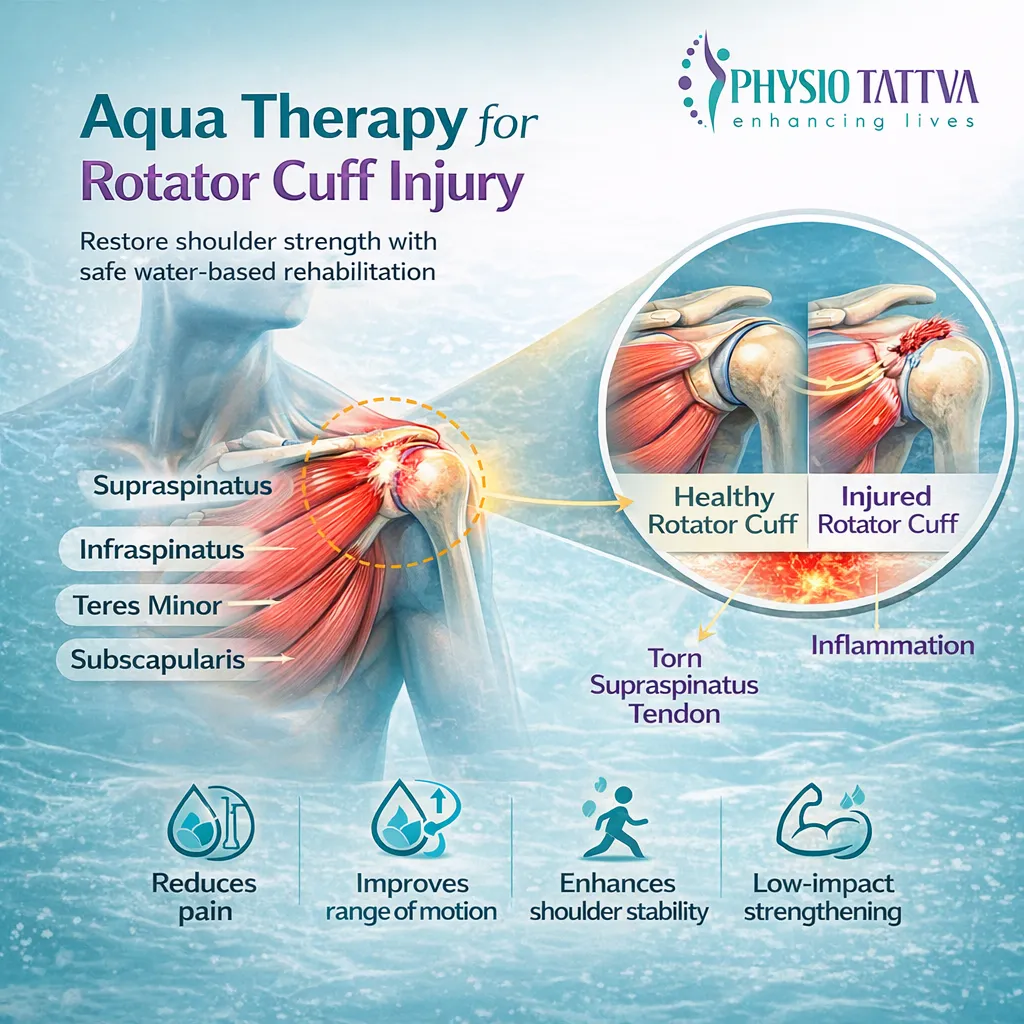
How Rotator Cuff Injury Affects Shoulder Strength and Mobility?
A rotator cuff injury can significantly limit your daily activities by causing:
- Difficulty lifting your arm to the side or overhead.
- Pain when trying to sleep on the affected shoulder
- Noticeable weakness in the shoulder during pushing or lifting.
- Reduced ability to perform simple tasks like combing hair or reaching behind your back.
Why Early Land Based Exercises May Increase Shoulder Pain?
Let's be clear: traditional, land-based physiotherapy is essential for a full rotator cuff recovery. However, in the initial, acute stages of injury, it can present challenges. When your shoulder is severely inflamed and painful, the force of gravity alone can place significant stress on the joint. This can make exercises difficult to perform correctly and without pain. This discomfort often leads to "guarding"—the natural tensing of muscles to protect the injured area—which can limit movement and slow down initial progress in restoring your range of motion.
What is Aqua Therapy? Clinical Hydrotherapy for Shoulder Rehabilitation
Here, we introduce the hero of our story: aqua therapy. Also known as hydrotherapy for shoulder pain, it is a specialized form of physiotherapy performed in a warm, temperature-controlled pool under the guidance of a trained therapist. The magic of aquatic physical therapy lies in the three unique properties of water that create the perfect environment for healing.
- Buoyancy: The upward force of water supports your body, counteracting gravity. When you're submerged to your chest, your shoulder joint bears only a fraction of its normal weight. This offloading effect allows for pain-free movement much earlier than would be possible on land.
- Hydrostatic Pressure: Water exerts gentle, consistent pressure on your entire body. This natural compression helps to reduce swelling (edema) in the injured shoulder and improves blood circulation, delivering vital oxygen and nutrients to the healing tissues.
- Viscosity & Resistance: Water provides 360-degree resistance to movement. This means you can gently strengthen your rotator cuff and supporting muscles simply by moving your arm through the water, without the need for jarring weights or bands.
How Aqua Therapy Reduces Shoulder Pain and Restores Function?
This is the core of why aqua therapy is so transformative for rotator cuff recovery. The properties of water translate into tangible, powerful advantages for patients.
Reduces Shoulder Pain in Early Recovery Phase
The warmth of the therapy pool (typically 33-36°C) helps to relax tight muscles and soothe aching joints. Combined with buoyancy offloading the joint, patients often experience immediate and significant pain relief, which also helps to reduce protective muscle spasms.
Restores Shoulder Range of Motion Safely
With pain and gravity minimised, you can begin moving your shoulder through a greater range of motion far sooner and more comfortably. This is crucial for preventing a "frozen shoulder," a common complication after a rotator cuff injury.
Builds Rotator Cuff Strength Without Overloading
The water's natural resistance is the perfect tool for early-stage strengthening. By simply changing the speed of your movements, your therapist can precisely control the level of resistance. This allows you to safely rebuild muscle strength without overloading the healing tendons.
Improves Shoulder Proprioception and Movement Confidence
Proprioception is your body's awareness of its position in space. Injury can disrupt this. The supportive aquatic environment helps retrain this brain-body connection, improving your joint control and, just as importantly, building your confidence to move without fear.
Reduces Swelling and Inflammation Naturally
As mentioned, hydrostatic pressure acts like a full-body compression wrap. It helps to naturally push fluid and inflammation away from the injured shoulder, reducing swelling and promoting a healthier environment for tissue repair.
Evidence Based Aqua Therapy Exercises for Rotator Cuff Injury
So, what does a session of aqua therapy for rotator cuff injury actually look like? Under the expert guidance of a physiotherapist, you'll perform movements designed to restore mobility and strength.
Disclaimer: These exercises are examples and should only be performed under the direct supervision of a qualified physiotherapist as part of a personalised treatment plan.
- Pendulum Swings: A classic rotator cuff exercise, but in the water, the buoyancy supports the arm, making the movement even gentler and more controlled.
- Wall Push-ups (in water): Standing in the pool and facing the wall, you'll place your hands on the wall and gently push away. This strengthens the crucial stabilizing muscles around your shoulder blades (scapula).
- Shoulder Abduction/Adduction: You'll slowly raise and lower your arm out to the side, using the water's natural resistance to build strength through the full range of motion.
- Gentle Rotations: With your elbow bent at 90 degrees and kept close to your side, you will slowly rotate your forearm inwards and outwards against the water's gentle drag.
Why Choose Physiotattva for Rotator Cuff Rehabilitation?
At Physiotattva, we are proud to offer this specialised shoulder pain treatment in Bangalore and physiotherapy for shoulder injury in Hyderabad. Our advantage lies in a commitment to expert, personalised care supported by:
- State-of-the-art aquatic therapy pools designed specifically for rehabilitation and safe shoulder-focused therapy.
- One-on-one sessions are conducted by certified physiotherapists who are specially trained in hydrotherapy techniques.
- Precise, real-time guidance to ensure correct movement, reduced discomfort, and safer shoulder engagement.
- Fully personalised treatment plans that integrate aqua therapy with land-based physiotherapy for a seamless, holistic recovery.
- A comprehensive healing approach that improves mobility, restores strength, and supports long-term shoulder stability.
This combined, expert-led approach helps patients heal faster and regain confidence in their shoulder movement.
Who is an Ideal Candidate for Aqua Therapy for Rotator Cuff Injury?
Aqua therapy is often recommended for individuals who are:
- Recovering from partial rotator cuff tears.
- Undergoing post-surgical rehabilitation for a rotator cuff repair.
- Experiencing chronic shoulder pain or tendinitis.
- Finding land-based therapy too painful in the initial stages.
Who Should Avoid Aqua Therapy? Safety and Contraindications
While generally safe, aqua therapy may not be suitable for everyone. You should avoid it if you have:
- Unhealed surgical incisions or open wounds.
- Active infections or fever.
- Severe shoulder instability.
- Certain skin conditions.
- Incontinence.
Start Your Rotator Cuff Recovery with Physiotattva
A rotator cuff injury doesn't have to mean a long, painful, and frustrating recovery. The unique, healing environment of water provides a powerful tool to overcome the initial hurdles of pain and gravity. Aqua therapy offers a faster, gentler, and more effective path back to a pain-free, active life, allowing you to return to the activities you love sooner.
At Physiotattva physiotherapy clinics in Bangalore and Hyderabad, you receive personalised care tailored to your specific needs, ensuring effective results and comfort throughout your journey to recovery.
Don’t wait to start your recovery! Get in touch with Physiotattva for more details! Contact us at +91 89510 47001.
Why Physiotattva?
22+
50,000+
95%
200+
25+
4.8
Cities We Serve

Bangalore
At Physio Tattva, we are committed to bring access to quality physio care through ultra-modern clinics and high-skilled practitioners to all.
.webp)
Hyderabad
At Physio Tattva, we are committed to bring access to quality physio care through ultra-modern clinics and high-skilled practitioners to all.
.webp)
Vishakhapatnam
At Physio Tattva, we are committed to bring access to quality physio care through ultra-modern clinics and high-skilled practitioners to all.
Core Treatments
Core Conditions
Core Symptoms
Frequently Asked Questions
Do I Need Swimming Skills for Aqua Therapy?

When Can I Begin Aqua Therapy After Rotator Cuff Injury?
How is Aqua Therapy Different from Recreational Swimming?






%20(1)-p-3200.jpeg)

.jpg)
.webp)
.webp)
.webp)