




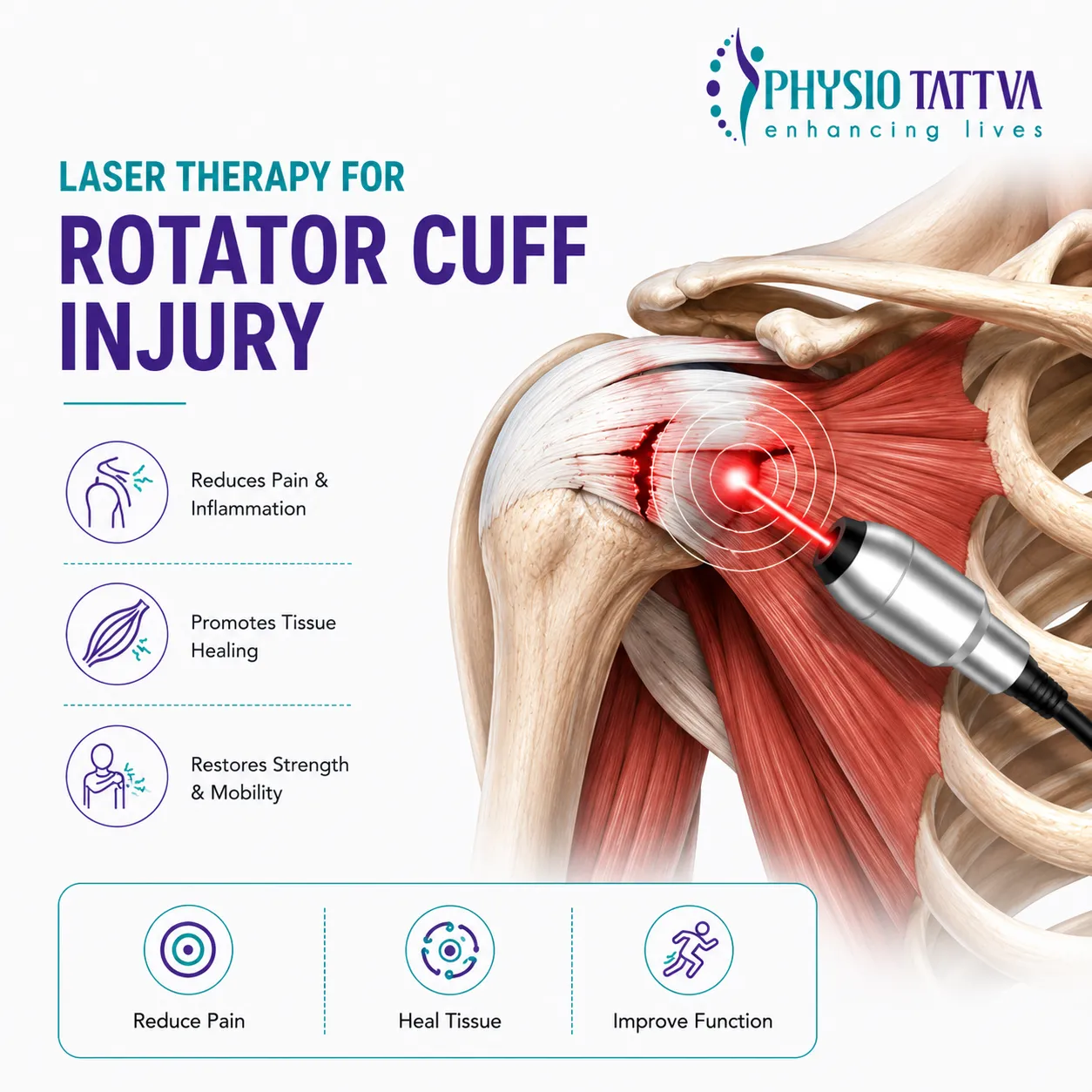
Laser therapy for rotator cuff injury is a non-invasive physiotherapy treatment that supports tendon healing, reduces inflammation, and improves shoulder movement when combined with rehabilitation exercises. It works through photobiomodulation to stimulate cellular repair in injured tendons and muscles, which may reduce shoulder pain, night discomfort, and movement restriction. It is commonly used for tendinitis, impingement, and partial rotator cuff tears.
Sessions are typically short, lasting about 5 to 10 minutes, painless, and require no downtime. Most patients need around 6 to 12 sessions, depending on injury severity and chronicity. Recovery develops gradually and relies on strengthening and mobility exercises. It does not replace surgery for complete tendon ruptures, and a physiotherapy assessment is required to confirm suitability.
What Is Laser Therapy For Rotator Cuff Injury?
Laser therapy for rotator cuff injury is a non-invasive physiotherapy treatment that uses focused therapeutic light energy to stimulate healing inside damaged shoulder tendons and surrounding tissues. The light penetrates the skin without cutting or injections and triggers a biological response known as photobiomodulation.
This process helps reduce inflammation, support cellular repair, and improve blood circulation in the affected area. As a result, patients may experience decreased pain and improved shoulder movement when the therapy is combined with appropriate rehabilitation exercises and manual physiotherapy care.
What Symptoms of Rotator Cuff Injury Can Laser Therapy Help Treat?
Laser therapy may be considered when shoulder pain begins to affect routine movements or physical activity. Patients often recognise symptoms before receiving a diagnosis, and these signs can indicate tendon irritation or reduced shoulder stability.
- Pain while combing or washing hair overhead
- Difficulty reaching behind the back during dressing
- Shoulder weakness while lifting objects
- Clicking or catching sensation during arm movement
- Pain during pushing or pressing exercises at the gym
If these symptoms persist or gradually worsen, a clinical assessment helps determine whether conservative rehabilitation is appropriate.
How Does Laser Therapy Work for Rotator Cuff Injury?
Laser therapy works through photobiomodulation, where therapeutic light energy interacts with injured shoulder tissues and activates natural repair processes. Instead of only reducing symptoms, it supports the biological healing environment of the tendon and surrounding muscles.
Key healing effects include:
Laser therapy for rotator cuff injury supports recovery through the following physiological processes:
1. Supports tissue repair: Light energy stimulates the mitochondria to produce more cellular energy (ATP). This helps damaged tendon and muscle fibres repair more efficiently and supports non-surgical recovery in suitable injuries.
2. Reduces pain and inflammation: The therapy helps calm inflammatory activity around the rotator cuff. Lower inflammation may ease discomfort and allow earlier participation in rehabilitation exercises.
3. Improves local circulation: Laser therapy encourages better blood flow in the injured region. Increased oxygen and nutrient delivery support healing while helping remove metabolic waste products.
4. Helps limit excessive scar tissue: By guiding a more organised healing response, treatment may reduce stiff scar formation, which supports smoother shoulder movement and flexibility during recovery.
Best results typically occur when laser therapy is combined with strengthening and mobility exercises as part of a structured physiotherapy plan.
When Should You Consider Laser Therapy Instead Of Surgery For Rotator Cuff Injury?
Laser therapy is often considered when the tendon structure can still heal and shoulder stability is preserved. Conservative treatment is usually attempted before surgical intervention unless a major structural injury is present.
Laser therapy may be appropriate if you have:
- Mild to moderate injury without full tendon rupture
- Tendinitis, inflammation, or impingement
- Partial tendon tear with preserved strength
- Pain limits movement, but daily activities remain possible
- Early-stage or gradual wear-and-tear injury
- Preference to try non-surgical care first
- Pre- or post-surgical rehabilitation support
Surgical consultation is usually recommended if a complete tear, marked weakness, or failure to improve after structured rehabilitation is observed.
How Does A Personalised Physiotherapy Plan Help Rotator Cuff Healing?
At Physiotattva, advanced technology is only one part of the equation. We believe that a tool is only as good as the expert wielding it, which is why laser therapy is integrated into a holistic and personalised physiotherapy plan for shoulder pain. Our comprehensive approach ensures you not only heal but also build resilience against future problems.
Your personalised recovery plan at Physiotattva Bangalore or Hyderabad will include:
- Accurate Diagnosis: We begin with a thorough physical assessment by our expert physiotherapists to pinpoint the precise nature and severity of your rotator cuff injury.
- Manual Therapy: We use skilled, hands-on techniques to improve joint mobility, release muscle tension, and alleviate pain directly at the source.
- Targeted Laser Therapy: We apply Class IV laser therapy to the specific injured tissues to reduce inflammation and accelerate cellular repair.
- Corrective Exercises: You’ll receive a tailored exercise program designed to strengthen the rotator cuff and surrounding muscles, restoring stability, improving posture, and ensuring a full return to function.
What To Expect During A Laser Therapy Session For Rotator Cuff Injury
A laser therapy session is short, non-invasive, and designed to be comfortable. The treatment delivers therapeutic light energy to the injured shoulder tissues to create a healing environment, and is usually followed by guided rehabilitation exercises during the same visit.
During a typical session, the process usually follows these steps:
- A clinical assessment confirms the injury type and treatment area
- You are positioned comfortably, so the shoulder muscles remain relaxed
- Protective eyewear is provided as a routine safety precaution
- The physiotherapist moves a handheld laser probe over the injured tendon
- You may feel mild warmth, though many patients feel nothing at all
- The application lasts about 5–10 minutes
- Mobility or strengthening exercises are performed afterwards to reinforce recovery
Laser therapy prepares the tissues for movement, while exercises restore strength and shoulder function.
What Improvements Can You Expect After Laser Therapy For A Rotator Cuff Injury?
Laser therapy aims to support tissue healing and reduce irritation so the shoulder can move more comfortably during rehabilitation. Improvements usually develop gradually as pain settles and strength is restored through guided exercises.
Patients often report functional changes such as:
- Easier overhead arm lifting during daily activities
- Improved sleep comfort on the affected side
- Better shoulder strength during lifting tasks
- Reduced hesitation or guarding during movement
The extent of improvement varies depending on injury severity and participation in the rehabilitation program.
How Long Does Recovery Take With Laser Therapy For A Rotator Cuff Injury?
Recovery time varies depending on the severity of tendon damage and how consistently rehabilitation exercises are performed. Laser therapy supports tissue healing and pain reduction, but strength and movement typically improve gradually over weeks rather than instantly.
- Mild inflammation: Many patients notice improvement within about 2–3 weeks as irritation settles and movement becomes easier.
- Tendinitis: Recovery often takes around 3–6 weeks while the tendon heals and shoulder function improves.
- Partial rotator cuff tear: Healing may require approximately 6–10 weeks, along with strengthening exercises to restore stability.
- After rotator cuff surgery: Rehabilitation commonly continues for several months as tissues recover and shoulder mechanics are retrained.
These timelines are general estimates and can vary based on activity level, injury chronicity, and adherence to the treatment program.
Am I a Good Candidate for Laser Therapy for Rotator Cuff Injury?
Laser therapy is typically recommended for shoulder conditions where pain and inflammation limit movement, but the tendon structure is still capable of healing. A clinical assessment helps determine whether conservative rehabilitation is appropriate before considering more invasive options.
Laser therapy may be suitable if you experience:
- Shoulder pain while lifting the arm overhead
- Night pain or discomfort when lying on the affected shoulder
- Partial rotator cuff tear
- Tendinitis or impingement syndrome
- Frozen shoulder stiffness
- Pain after sports, gym activity, or repetitive use
Some conditions require medical evaluation first because structural stability must be restored before rehabilitation begins.
You may need a different treatment approach if you have:
- Complete tendon rupture
- Shoulder dislocation
- Fracture around the shoulder joint
- Severe joint instability
A physiotherapist will assess movement, strength, and injury severity to guide the most appropriate treatment plan.
Is Laser Therapy for Rotator Cuff Injury Safe? Risks and Precautions
Laser therapy is generally considered safe when performed by a trained physiotherapist using appropriate settings and safety protocols. The treatment is non-invasive and designed to support healing without damaging surrounding tissues.
Before starting therapy, it helps to understand what temporary reactions are normal after treatment.
Common temporary effects may include:
- Mild warmth in the treated area
- Temporary soreness after the session
- Slight skin redness that settles quickly
Some individuals may need to delay or avoid treatment depending on their medical condition.
Who Should Avoid or Delay Laser Therapy for Rotator Cuff Injuries?
Laser therapy is generally safe, but certain medical situations require additional caution. Always inform your physiotherapist about your medical history so the treatment can be modified or postponed if necessary.
- Cancer near the treatment area: Not applied directly over malignant tissue.
- Pregnancy: Usually postponed over the shoulder or upper trunk as a precaution unless medically advised.
- Photosensitive conditions or light-reactive medications: Intensity may need adjustment or alternative therapy considered.
- Reduced sensation or neuropathy: Treatment may be modified to avoid unnoticed irritation.
- Metal implants in the shoulder: Typically safe, but requires clinical assessment before application.
Clinical caution: A proper clinical evaluation is required to determine tear severity and ensure the therapy is suitable within an overall rehabilitation plan.
Next Steps For Managing Rotator Cuff Pain Safely
A rotator cuff injury doesn't have to mean accepting a life of pain or facing invasive surgery. Persistent shoulder pain should be evaluated early to prevent worsening injury and prolonged stiffness. A structured approach that combines clinical assessment, appropriate therapy, and guided exercises can help restore movement and daily function. As part of a comprehensive physiotherapy plan at Physiotattva, High-Intensity Laser Therapy offers a safe, scientifically-backed, and fast-acting solution to reduce pain and accelerate your body's own healing powers.
At Physiotattva physiotherapy clinics in Bangalore, Hyderabad, and Visakhapatnam- our latest clinic, you receive personalised care tailored to your specific needs, ensuring effective results and comfort throughout your journey to recovery.
Don’t wait to start your recovery! Get in touch with Physiotattva for more details! Contact us at +91 89510 47001.
Key Takeaways
Laser therapy can support recovery from rotator cuff injuries when integrated into a structured physiotherapy program.
- Laser therapy helps create a favourable healing environment by improving circulation and reducing inflammatory activity.
- It prepares the shoulder for safe strengthening and mobility exercises by lowering pain sensitivity.
- The treatment is non-invasive and allows patients to remain active within guided limits.
- Functional improvements typically develop over several weeks rather than immediately.
- Long-term shoulder stability depends on progressive strengthening and movement retraining.
- Severe structural tears require surgical evaluation before conservative care is considered.
- A personalised rehabilitation plan ensures laser therapy is used safely and effectively for sustained recovery.
Why Physiotattva?
22+
50,000+
95%
200+
25+
4.8
Cities We Serve

Bangalore
At Physio Tattva, we are committed to bring access to quality physio care through ultra-modern clinics and high-skilled practitioners to all.
.webp)
Hyderabad
At Physio Tattva, we are committed to bring access to quality physio care through ultra-modern clinics and high-skilled practitioners to all.
.webp)
Vishakhapatnam
At Physio Tattva, we are committed to bring access to quality physio care through ultra-modern clinics and high-skilled practitioners to all.
Core Treatments
Core Conditions
Core Symptoms
Frequently Asked Questions
Does laser therapy for a rotator cuff injury hurt?

How many laser therapy sessions will I need for a rotator cuff injury?
How effective is laser therapy for rotator cuff injuries?
Can laser therapy repair a rotator cuff tear without surgery?
Can laser therapy treat different types of shoulder pain?
Are there any side effects of laser therapy for rotator cuff injury?
Where can I get laser therapy for a rotator cuff injury?




%20(1)-p-3200.jpeg)

.jpg)
.webp)
.webp)
.webp)