Aqua therapy, also known as hydrotherapy, involves performing controlled exercises in water to support physical rehabilitation and recovery. While it may seem modern, its roots trace back to ancient Greek and Roman practices where hot springs were used to relieve pain and improve health. Today, aqua therapy is widely used in hospitals, sports rehab clinics, and outpatient centres as a safe, non-invasive treatment guided by trained professionals. Unlike general aquatic fitness, aqua therapy is grounded in physical medicine and focuses on therapeutic outcomes.
An Introduction to Aqua Therapy
Aqua therapy or hydrotherapy is any exercise performed in water to facilitate recovery. Although it seems like a new concept, the principles of aqua therapy have been practiced since the Greek and Roman civilizations. People would bathe in hot springs to reduce chronic pain, menstrual issues, skin problems, and more. Aqua therapy has now grown in popularity as a safe and non-invasive approach to treatment. The treatment occurs with a trained professional in a pool or other aquatic environments. Such services are often administered in hospitals, sports rehabilitation clinics, and outpatient rehabilitation centers. Further, aqua therapy is different from aquatic therapy exercises and aquatic fitness as it involves physical medicine and rehabilitation.
Benefits of Aqua Therapy
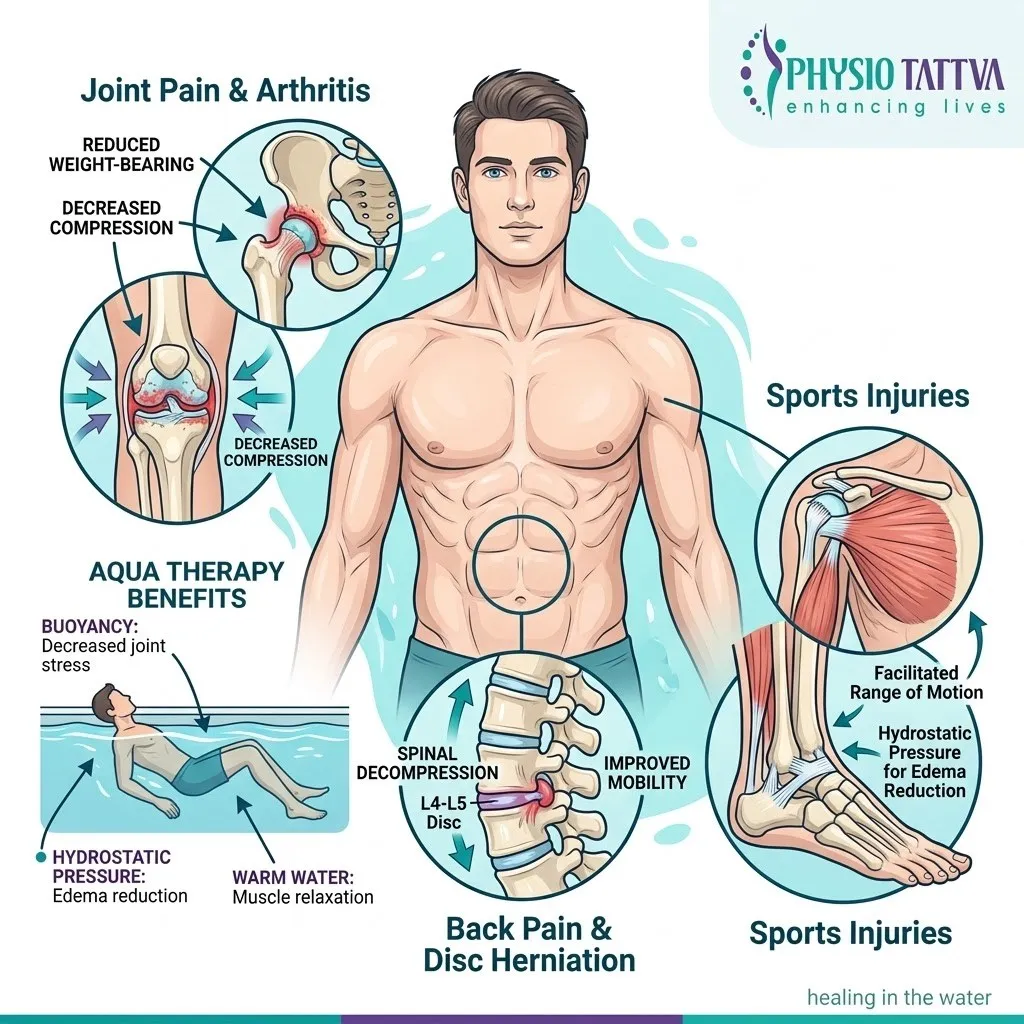
Physical therapists specialized in aqua therapy are trained in utilizing various equipment that function on the properties of water. The techniques used have several benefits, including
Improving flexibility
Reducing pain and compression in joints
Enhancing muscle strength and stability
Improving balance and coordination
Reducing stress by promoting muscle relaxation
Correcting gait posture
Enhancing aerobic capacity
Increasing range of motion
Improving respiration and circulation
Compared to conventional physiotherapy, aqua therapy results in less pain during the recovery process. Further, water-based treatment facilitates healing as quickly as possible.
Who Can Benefit from Aqua Therapy
Aqua therapy can be administered across age groups and for different physiological conditions. Based on the nature of the illness or injury, seeking expert advice before starting the treatment is essential. Keeping this in mind, remember that certain conditions cannot be treated with this therapeutic technique as it may worsen the condition. If you are struggling with the following techniques, choose an alternative treatment.
Skin infection or wound
Stomach upset or viral infection
Breathing difficulties
Heart problems
Kidney issues that require dialysis
Chlorine allergy
Diabetes, epilepsy, asthma
Loss of bladder control
Higher body temperature
Types of Aqua Therapy
Aquatic Therapy Exercises
There are various aquatic therapy exercises, including warm-up exercises, fitness and strength training, core training, and cool-down exercises, are conducted in an aquatic environment. Warm-ups involve low-resistance exercises (stretches, jogging, extensions) that target the lower and upper extremities of the body. Post-warm-up, fitness, and strength training exercises are administered. This involves cardiovascular activities, plyometrics, or multi-planar activities. The final stage of core training and cool-down exercises works on muscles to prevent lactic acid build-up.
Spas
Spa therapy or balneotherapy refers to hydrotherapy without exercise. It uses natural hot springs, mineral or seawater, and mud to reduce pain and soreness. In addition, the thermal mineral water helps promote circulation and relaxation and stimulates the immune system. The treatment is administered through various techniques, including alternating between cold and hot and partial baths.
Hydro-massage
The use of pressurized jets to massage muscles and soft tissues in the body is hydro-massage. With traditional techniques, you have to sit or lie down in warm water. As you do so, machines will release pressurized water that can be adjusted based on personal preferences. Another alternative is dry hydro-massage, where you avoid direct contact with water and lay down on a water-filled mattress with jets. In addition to regulating pressure, these mattresses have the added benefit of controlling temperature.
Kneipp System
The Kneipp system, also known as Kneipping, is named after Father Sebastian Kneipp. It involves using herbal and mineral baths of varying temperatures. The technique promotes circulation, strengthens the immune system, and improves the nervous system. Along with basic water-based therapy, barefoot walking and walking on pebbles, wraps, rinses, and baths are also administered.
Conditions Treated with Aqua Therapy
Research suggests that pressurized jets and other equipment help release tension, soreness, and pain. Keeping this in mind, several conditions can be treated through aqua therapy. Some of them include
In addition to pressurized jets, various other equipment can effectively treat these conditions.
Aquatic Therapy Equipment
For rehabilitation or outpatient consultation, various equipment can be used, including
Underwater treadmills
Stationary bicycles
Buoyant belts
Flotation rings
Dumbbells or barbells
Wrist weights
Ankle weights
Resistance bands and tubing
Short-tipped flippers and fins
Resistance handbells and paddles
Aquatic paddles
Noodle
Kickboards
Resistance gloves
Foam collars
Water current
Jets
Aquatic paddles
Stairs and steps
These equipment are used in combination with other treatment modalities to facilitate a smooth recovery.
Customized Treatment Plans
Since aqua therapy treats diverse physiological conditions, it is important to ensure its application is customized to suit your clinical needs. Based on the severity of the condition, the physiotherapist is likely to combine aqua therapy with other physiotherapy modalities (joint mobilization exercises, passive relaxation techniques, etc.). This suggests that aqua therapy is most beneficial as part of a holistic recovery program that ensures complete healing. Remember, regardless of the techniques used, our priority is to create a customizable care plan that improves your quality of life.
Revitalize Your Body and Mind with Aqua Therapy
While aqua therapy is effective at treating different physiological conditions, it also provides a feeling of rejuvenation and calmness. Our advanced treatment plans and specialization in the latest modalities allow us to make the recovery process smooth and secure for our clients. Physiotattva’s efforts to improve your well-being do not stop here. Along with aqua therapy, our experts educate you on simple yet effective lifestyle changes that can protect your body from future injuries.
From Struggle to Strength: Nirmala’s Recovery Journey
Nirmala didn’t think she could recover. But she did. If you need a sign to keep going—this is it.
Frequently Asked Questions
What is aqua therapy?
Aqua therapy, also known as hydrotherapy, involves aquatic therapy exercises performed in water. It uses the properties of water to help relax muscles, improve joint pain, and reduce pain.
What are the benefits of aqua therapy?
There are several benefits of aqua therapy, including Improving balance issues Reducing pain and stiffness Enhancing muscle strength and stability Increasing range of motion
What types of activities does aquatic therapy involve?
Experts specialized in aquatic therapy administer different types of activities that include Core training Warm-up exercises Strengthen training exercises Resistance exercises Hydro-massage
How Long are Aqua Therapy Sessions?
Based on the severity of the condition, aqua therapy can take five to six sessions. These sessions last from 45 minutes to one hour. Further, the duration of your sessions is also determined by your individual needs.





.webp)
.webp)


.webp)


.webp)

.jpeg)

.webp)

.webp)
.webp)












.webp)
.webp)

.webp)









%20(1)-p-3200.jpeg)


.jpg)
.webp)
.webp)
.webp)