




Physiotherapy Treatment for Inflammation
Inflammation is targeted as the body’s defense mechanism and will play a major role in the healing procedure.
Cupping therapy is a physiotherapy technique that uses suction cups to help reduce inflammation, improve blood circulation, and support tissue recovery. This therapy may assist in reducing muscle tension, promoting lymphatic drainage, and relieving pain associated with inflammatory conditions affecting your muscles and joints, helping you return to your daily activities faster.
Inflammation is the body's natural response to injury or infection. While acute inflammation is crucial for healing, chronic inflammation can lead to persistent pain, swelling, and reduced mobility.
Common symptoms and causes of inflammation in muscles and joints include:
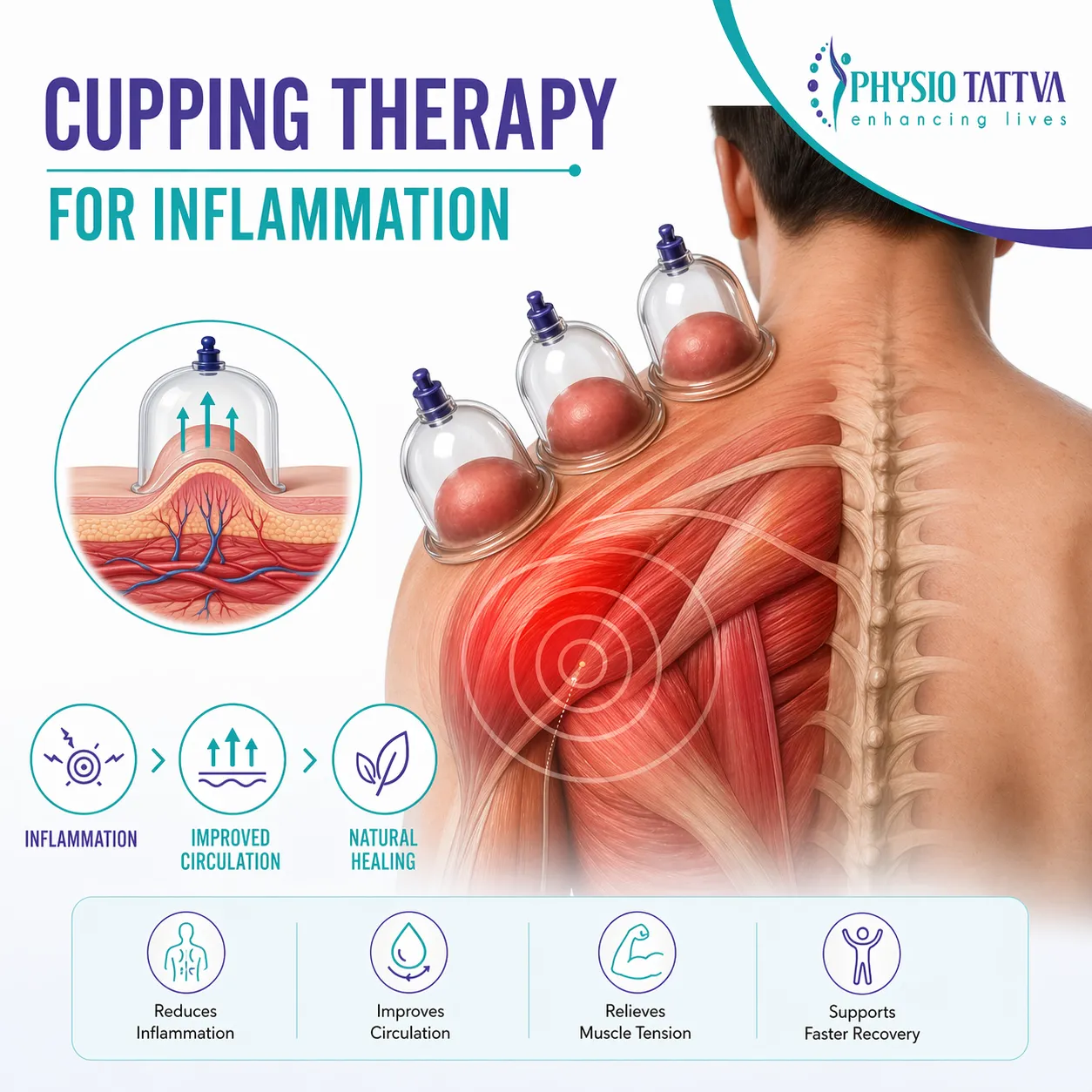
Cupping therapy is a non-invasive physiotherapy technique where special cups are placed on the skin to create suction. This process is used to decompress underlying tissue, increase blood flow, and relieve tension in areas affected by inflammation and pain.
Cupping therapy helps manage inflammation and promote healing through several key mechanisms:
Cupping therapy can be beneficial for managing inflammation associated with various musculoskeletal conditions, including:
Integrating cupping therapy into your treatment can offer targeted relief from inflammation-related symptoms and improve overall function.
At Physiotattva, cupping therapy is not a standalone treatment but a component of a personalised care plan designed to achieve long-term results.
To maximize the benefits of your session, follow these simple aftercare tips:
Physiotattva offers expert-led cupping therapy integrated within a holistic physiotherapy framework for effective pain management and recovery.
Cupping therapy is generally not painful, though you may feel a tight, pulling sensation from the suction during treatment. Our physiotherapists ensure the pressure level is comfortable and effective for you.
No, the circular marks are not permanent bruises and do not cause lasting damage. They are temporary discolorations from increased blood flow and typically fade within a few days to a week.
A typical cupping therapy session lasts between 15 to 30 minutes, depending on your condition and treatment plan. Your physiotherapist will determine the appropriate duration and frequency for you.
Cupping therapy should be avoided by individuals with bleeding disorders, skin infections, open wounds, or severe medical conditions. It is also not recommended for pregnant women over certain areas.
Many people report feeling relaxed and experiencing immediate relief from muscle tension after a session. You may notice temporary skin marks, but the primary sensation is often one of improved mobility and reduced pain.

At Physio Tattva, we are committed to bring access to quality physio care through ultra-modern clinics and high-skilled practitioners to all.
.webp)
At Physio Tattva, we are committed to bring access to quality physio care through ultra-modern clinics and high-skilled practitioners to all.
.webp)
At Physio Tattva, we are committed to bring access to quality physio care through ultra-modern clinics and high-skilled practitioners to all.

.webp)
.webp)








%20(1)-p-3200.jpeg)


.jpg)
.webp)
.webp)
.webp)

