




Laser therapy for carpal tunnel syndrome is a non-invasive treatment that helps reduce inflammation around the compressed median nerve and supports hand function during rehabilitation. It uses Low-Level Laser Therapy (LLLT) to stimulate tissue repair without heat or skin damage and works through photobiomodulation to improve circulation and nerve recovery. This may help reduce numbness, tingling, burning pain, and night discomfort.
Sessions are usually short, about 5 to 10 minutes, painless, and require no downtime. Most patients need multiple sessions over several weeks depending on symptom severity. The treatment works best when combined with splinting, nerve-gliding exercises, and ergonomic correction. It does not replace surgery in cases of severe nerve compression or muscle wasting, and a physiotherapy assessment is required to confirm suitability.
What Is Laser Therapy for Carpal Tunnel Syndrome (CTS)
Laser therapy for carpal tunnel syndrome is a non-invasive treatment that delivers low-intensity light energy to the wrist to help reduce inflammation around the compressed median nerve and support tissue recovery.
Also called Low-Level Laser Therapy (LLLT) or cold laser therapy, it uses specific wavelengths of light that do not generate heat or damage the skin. Instead of masking symptoms, the therapy aims to improve local circulation, calm irritated tissues, and improve tolerance to hand and wrist movement during rehabilitation.
It is commonly used alongside physiotherapy exercises to manage pain, tingling, and stiffness associated with CTS.
How Does Laser Therapy Work for Carpal Tunnel Syndrome?
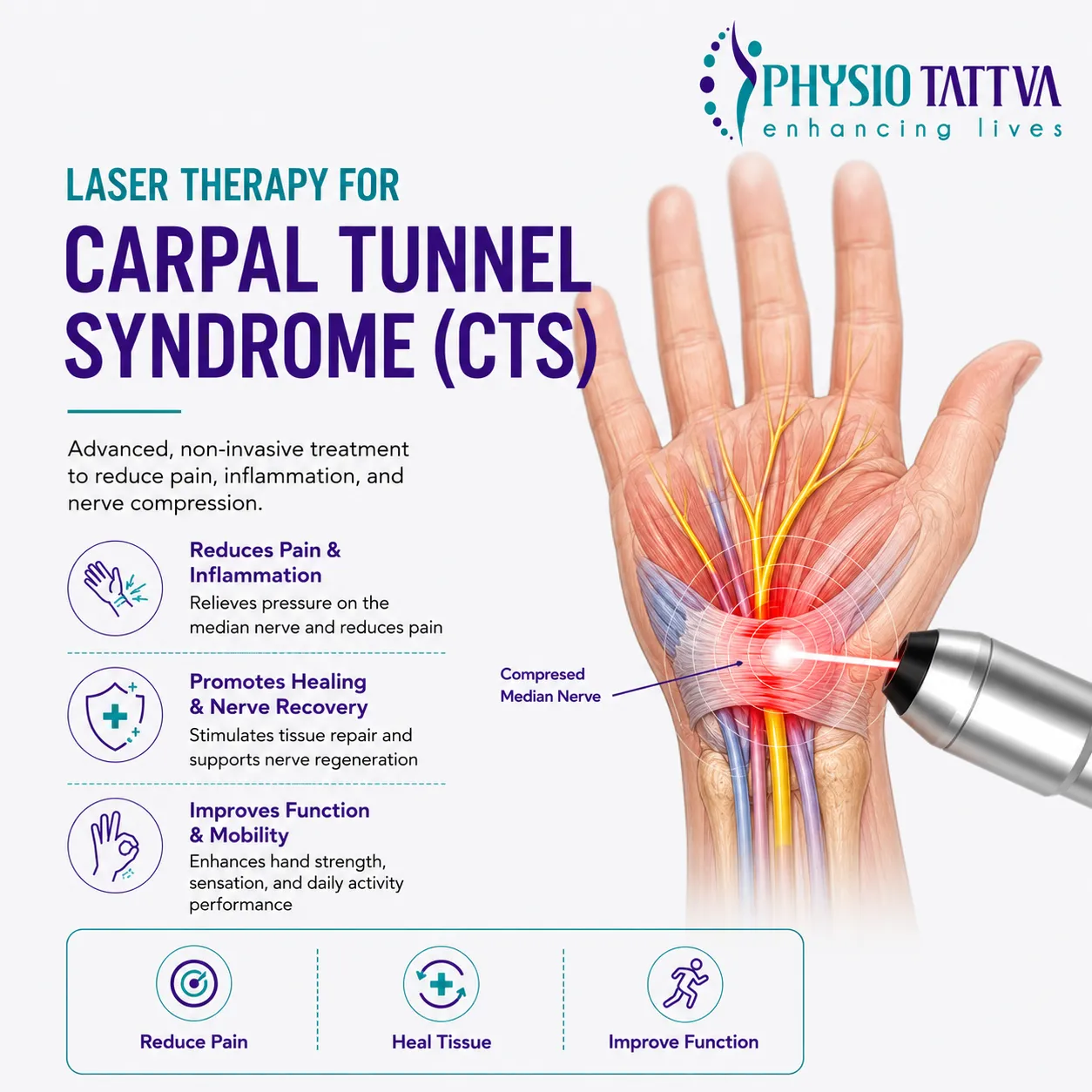
Laser therapy for Carpal Tunnel Syndrome uses low-level light energy to stimulate healing through a process called photobiomodulation. The light penetrates the wrist and reaches tissues surrounding the compressed median nerve, supporting recovery rather than only masking symptoms.
Key therapeutic effects include:
- Reduces inflammation: Helps calm irritated tissues inside the carpal tunnel, decreasing pressure on the median nerve and easing tingling or numbness.
- Stimulates tissue repair: Increases cellular energy (ATP), allowing damaged structures to recover more efficiently during rehabilitation.
- Improves circulation: Enhances local blood flow so oxygen and nutrients reach the affected nerve and surrounding tissues.
- Supports pain relief: Modulates nerve signals and may promote natural endorphin release, making hand movement more comfortable.
Together, these effects help patients better tolerate physiotherapy exercises and gradually restore hand function.
How Can Laser Therapy Improve Symptoms in Carpal Tunnel Syndrome?
Laser therapy helps relieve carpal tunnel syndrome (CTS) symptoms by reducing irritation around the median nerve and improving tissue recovery. The goal is not just temporary comfort but better hand function during daily activities and rehabilitation.
During treatment, patients may notice:
- Pain-free, non-invasive care: The procedure does not involve injections, incisions, or medication. Most people feel only mild warmth while the therapy is applied over the wrist.
- Reduced nerve irritation: By calming local inflammation inside the carpal tunnel, pressure on the median nerve may decrease, helping reduce tingling, burning, and night discomfort.
- Improved hand movement and grip comfort: As tissue irritation settles, patients often tolerate gripping, typing, and wrist movements more comfortably during physiotherapy exercises.
- No activity downtime: Sessions are short, and daily activities can usually continue immediately after treatment unless activity modification is advised.
- Supports natural healing processes: Laser therapy may enhance circulation and cellular repair, helping recovery progress alongside splinting, exercises, and ergonomic correction.
- May reduce reliance on invasive options: For mild to moderate CTS, conservative rehabilitation including laser therapy may help improve symptoms before surgical options are considered.
Who Can Benefit From Laser Therapy for Carpal Tunnel Syndrome?
Laser therapy is commonly considered when wrist and hand symptoms begin affecting daily activities but nerve function still has recovery potential. A clinical assessment helps determine whether conservative treatment is appropriate before invasive procedures are explored.
Laser therapy may be suitable if you experience:
- Tingling or numbness in the thumb, index, or middle fingers
- Night symptoms disturbing sleep
- Hand weakness during gripping or holding objects
- Mild to moderate carpal tunnel syndrome
- Symptoms aggravated by typing, mouse use, or repetitive wrist movement
- Persistent discomfort despite rest, splinting, or ergonomic changes
Medical evaluation may be required first if:
- Constant numbness or loss of sensation
- Noticeable muscle wasting at the base of the thumb
- Severe nerve compression diagnosed in nerve conduction tests
- Loss of hand coordination or dropping objects frequently
- Symptoms following fracture or major wrist trauma
A physiotherapist will assess nerve sensitivity, wrist movement, grip strength, and activity patterns to decide whether laser therapy fits safely within a structured rehabilitation plan.
Is Laser Therapy Safe for Carpal Tunnel Syndrome?
Low-level laser therapy is generally considered safe when performed by trained clinicians using appropriate treatment parameters. The treatment is non-invasive and designed to support nerve recovery without damaging surrounding tissues when applied correctly.
Are There Any Side Effects After Laser Therapy for Carpal Tunnel Syndrome?
After laser therapy for carpal tunnel syndrome, some people may notice mild, short-term reactions as the wrist tissues and median nerve respond to treatment:
- Mild redness at the treatment area
- Gentle warmth during or shortly after therapy
- Temporary soreness in sensitive tissues
- Slight tingling as irritated nerves begin settling
These reactions are usually mild and resolve on their own within a short period.
Who Should Avoid Laser Therapy for Carpal Tunnel Syndrome?
Laser therapy is usually safe, but certain medical situations require caution. Inform your physiotherapist about your medical history so treatment can be adapted appropriately for median nerve compression conditions and the healing tolerance of the wrist tissues.
- Cancer near the treatment area: Not applied directly over known or suspected malignant tissue
- Pregnancy: Wrist treatment only if clinically appropriate and medically advised
- Photosensitive conditions or light-reactive medications: Treatment intensity may require modification to avoid skin irritation
- Reduced sensation or severe nerve damage: Settings adjusted to prevent unnoticed irritation or discomfort
- Recent wrist fracture or post-surgical healing phase: Medical clearance recommended before starting therapy
A clinical assessment helps confirm that laser therapy fits safely within a structured carpal tunnel rehabilitation plan and complements other conservative treatments.
What Precautions Should Be Taken Before Laser Therapy for Carpal Tunnel Syndrome?
Before starting laser therapy for carpal tunnel syndrome, certain safety measures help ensure the treatment is applied appropriately and comfortably for nerve-related wrist conditions:
- Protective eyewear is used to avoid direct eye exposure
- Inform your therapist if you are pregnant
- Tell your clinician about photosensitivity conditions or medications
- Avoid applying to open wounds unless advised
- Treatment intensity may be adjusted for reduced sensation or nerve sensitivity
A proper clinical assessment is always recommended to confirm the diagnosis and ensure the therapy is appropriate within a structured rehabilitation plan.
What Happens During Laser Therapy for Carpal Tunnel Syndrome?
Your treatment follows a structured clinical process designed to reduce nerve irritation and support recovery safely.
- Wrist Assessment and Nerve Testing: The physiotherapist evaluates your symptoms, hand strength, sensation, and wrist movement to confirm median nerve involvement.
- Identify Compression Severity: Based on examination findings, the clinician determines whether the condition is mild, moderate, or advanced to plan appropriate care.
- Targeted Laser Application (5–10 minutes): A handheld laser probe is applied over the carpal tunnel area to help reduce inflammation and support tissue healing.
- Nerve Gliding Exercises Prescribed: Specific exercises are taught to improve nerve mobility and reduce irritation during daily hand movements.
- Ergonomic Correction to Prevent Recurrence: You receive guidance on workstation setup, wrist positioning, and activity modification to minimise future nerve compression.
How Long Does It Take to Recover From Carpal Tunnel Syndrome With Laser Therapy?
Recovery time varies depending on symptom severity, nerve irritation level, and how consistently rehabilitation advice is followed. Laser therapy mainly helps reduce inflammation and improve nerve comfort, while functional recovery develops gradually with activity modification and exercises.
Typical timelines may include:
- Mild symptoms: Improvement often noticed within 2–4 weeks as night discomfort and tingling reduce
- Moderate compression: Recovery may take about 4–8 weeks alongside splinting and physiotherapy exercises
- Long-standing symptoms: Progress is slower and may require several months of structured rehabilitation
These are general estimates. Factors such as repetitive work habits, ergonomics, and adherence to treatment recommendations influence recovery speed.
Can Laser Therapy Alone Treat Carpal Tunnel Syndrome?
Laser therapy can help reduce inflammation and calm irritation around the compressed median nerve, but it is usually not sufficient as a standalone treatment. Carpal tunnel syndrome commonly develops due to repetitive wrist loading, posture habits, and tissue tightness that continue to stress the nerve.
For more stable and longer-lasting improvement, laser therapy is typically combined with:
- Wrist splinting: Keeps the wrist in a neutral position to reduce night-time nerve pressure
- Nerve-gliding exercises: Help the median nerve move freely within the tunnel
- Ergonomic correction: Adjusts typing, mouse, and hand positioning during daily activities
- Strengthening exercises: Improves forearm and hand muscle support
- Activity modification: Prevents repeated irritation during recovery
Laser therapy supports symptom relief, while rehabilitation and habit correction address the mechanical causes contributing to carpal tunnel syndrome.
Why Trust Physiotattva for Laser Therapy for Carpal Tunnel Syndrome?
Effective management of carpal tunnel syndrome requires more than symptom relief. It needs accurate assessment, safe therapy application, and structured rehabilitation that addresses the cause of median nerve compression. At Physiotattva, laser therapy is used as part of a clinically guided treatment plan rather than a standalone procedure.
- Clinical Assessment First: Detailed evaluation of wrist movement, nerve sensitivity, grip strength, and activity habits to confirm suitability for laser therapy.
- Individualised Treatment Settings: Laser intensity and session frequency adjusted according to symptom severity and tissue tolerance for comfortable application.
- Combined Rehabilitation Approach: Therapy paired with nerve-gliding exercises, strengthening, mobility training, and ergonomic correction to address the underlying cause.
- Functional Recovery Focus: Guidance aimed at improving daily activities such as typing, gripping, and lifting without repeated irritation.
- Supervised Safety Monitoring: Treatment delivered by trained physiotherapists with progressive adjustments based on recovery response.
This approach allows laser therapy to support symptom reduction while rehabilitation helps restore long-term wrist function and reduce recurrence risk.
Take the First Step Towards a Pain-Free Wrist at Physiotattva
Carpal Tunnel Syndrome doesn't have to mean living with chronic pain or resorting to surgery. Modern physiotherapy offers innovative solutions that are safe, effective, and non-invasive. Laser therapy for Carpal Tunnel Syndrome (CTS) stands out as a powerful tool to reduce inflammation, promote healing, and help you reclaim your life from pain.
At Physiotattva physiotherapy clinics in Bangalore and Hyderabad, you receive personalised care tailored to your specific needs, ensuring effective results and comfort throughout your journey to recovery.
Don’t wait to start your recovery! Get in touch with Physiotattva for more details! Contact us at +91 89510 47001.
Key Takeaways
Laser therapy can support symptom relief in carpal tunnel syndrome when integrated into a structured rehabilitation plan.
- The therapy helps calm inflammation inside the carpal tunnel and reduce pressure on the median nerve.
- It prepares the wrist and hand for movement by improving comfort during exercises and daily tasks.
- The treatment is non-invasive and allows continuation of most daily activities.
- Functional improvement develops gradually over weeks alongside activity modification.
- Long-term relief depends on ergonomic correction, strengthening, and nerve mobility exercises.
- Severe or progressive nerve compression requires medical evaluation before conservative treatment.
- A personalised physiotherapy program ensures laser therapy is used safely and effectively for sustained wrist function.
Why Physiotattva?
22+
50,000+
95%
200+
25+
4.8
Cities We Serve

Bangalore
At Physio Tattva, we are committed to bring access to quality physio care through ultra-modern clinics and high-skilled practitioners to all.
.webp)
Hyderabad
At Physio Tattva, we are committed to bring access to quality physio care through ultra-modern clinics and high-skilled practitioners to all.
.webp)
Vishakhapatnam
At Physio Tattva, we are committed to bring access to quality physio care through ultra-modern clinics and high-skilled practitioners to all.
Core Treatments
Core Conditions
Core Symptoms
Frequently Asked Questions
Does laser therapy cure carpal tunnel syndrome?

Should I choose laser therapy or splinting for CTS symptoms?
Can laser therapy help avoid carpal tunnel surgery?
How long do laser therapy results last for carpal tunnel syndrome?
How many laser therapy sessions are needed for carpal tunnel syndrome?
How effective is cold laser therapy for carpal tunnel syndrome?
Where can I get laser therapy for carpal tunnel syndrome?






%20(1)-p-3200.jpeg)


.jpg)
.webp)
.webp)
.webp)