





Carpal Tunnel Syndrome (CTS) can cause persistent pain, numbness, and tingling that interfere with daily activities and work. While professional medical care is important for long-term management, simple home-based approaches like hot and cold therapy can offer quick, supportive relief when used correctly. Choosing the right therapy matters, using heat or ice at the wrong time may worsen symptoms.
This article explores when and how to use hot and cold therapy safely to manage CTS symptoms more effectively at home.
Understanding the Purpose of Hot and Cold Therapy for Carpal Tunnel Syndrome
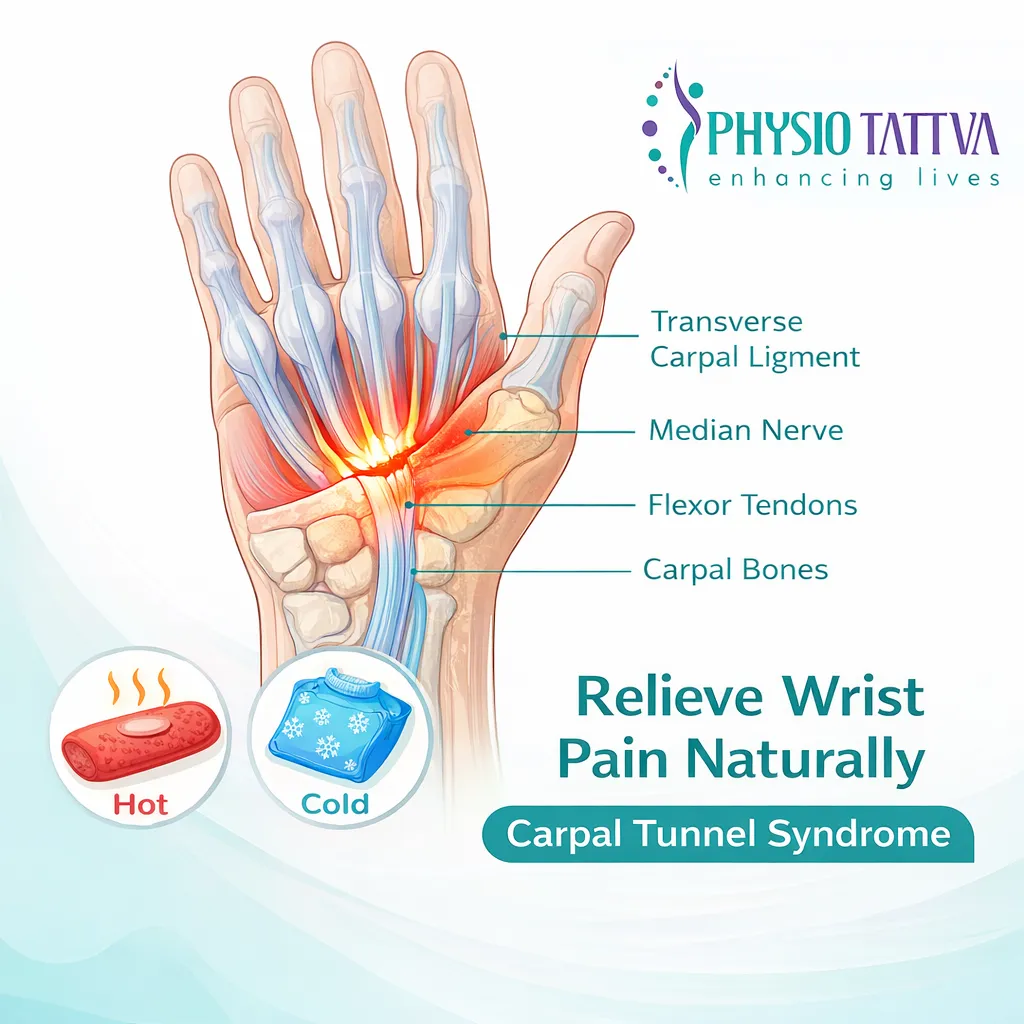
Using hot and cold therapy effectively for Carpal Tunnel Syndrome depends on being clear about your immediate goal, whether you need to reduce inflammation and pain or relieve stiffness and improve mobility.
- Cold Therapy (Cryotherapy) is primarily used to reduce inflammation, swelling, and sharp pain. It works best during an active flare-up, especially after activities that strain the wrist. Think of cold therapy as your first line of defense when symptoms suddenly worsen.
- Hot Therapy (Thermotherapy) focuses on improving blood circulation, relaxing tight muscles and tendons, and reducing stiffness. It is most helpful for chronic, dull aches or morning stiffness and is often used to prepare the wrist for movement, stretching, or exercises.
When and How Cold Therapy Helps Carpal Tunnel Syndrome?
Cold therapy is most effective when Carpal Tunnel Syndrome symptoms are driven by active inflammation. During flare-ups, swelling around the median nerve increases pressure inside the carpal tunnel, leading to sharp pain, tenderness, and worsening numbness. Applying cold helps settle this inflammatory response and provides fast symptom relief.
How Cold Therapy Works for CTS?
Cold exposure causes the blood vessels in the wrist to constrict, a process known as vasoconstriction. This physiological response slows down inflammatory activity and reduces nerve irritation.
- Reduces Swelling: Less blood flow to the area means less fluid buildup and inflammation around the median nerve.
- Numbs Pain: The cold temporarily desensitizes nerve endings, providing a powerful analgesic (pain-numbing) effect.
- Slows Inflammation: It helps to halt the inflammatory processes that cause a carpal tunnel flare-up.
When to Use Cold Therapy for CTS?
Cold therapy should be used when symptoms are sharp, sudden, or activity-related rather than long-standing stiffness.
- During or immediately after a CTS flare-up with sharp or burning pain
- After repetitive wrist activities such as typing, gripping tools, or prolonged phone use
- When swelling, tightness, or a feeling of pressure is present in the wrist
How to Apply Cold Therapy Safely?
Correct application is essential to avoid skin irritation or nerve sensitivity while still achieving pain relief.
- Get Your Pack: Use an ice pack, a gel pack, or even a bag of frozen vegetables (peas work great as they conform to your wrist).
- Create a Barrier: Never apply ice directly to your skin. Wrap the cold pack in a thin towel or cloth to prevent frostbite.
- Position and Time: Place the wrapped pack over the inside of your wrist (the carpal tunnel area). Apply for 15-20 minutes at a time.
- Frequency: You can repeat this several times a day, allowing your skin to return to normal temperature between sessions (at least one hour apart).
When and How Heat Therapy Helps Carpal Tunnel Syndrome?
Hot therapy is most useful when Carpal Tunnel Syndrome symptoms are related to muscle tightness, reduced circulation, and joint stiffness rather than active inflammation. It is commonly used for chronic or long-standing discomfort, especially in the morning or after prolonged periods of inactivity, to help the wrist move more freely and comfortably.
How Hot Therapy Works for CTS?
Applying warmth to the wrist causes blood vessels to widen, a process known as vasodilation. This physiological effect supports tissue relaxation and improved circulation.
- Increases Blood Flow: It boosts circulation, bringing more oxygen and nutrients to the tissues in your wrist.
- Relaxes Muscles: The warmth helps to soothe tight muscles and tendons, reducing stiffness.
- Promotes Healing: Increased circulation can help flush out metabolic waste and aid in long-term tissue repair.
When to Use Hot Therapy?
Heat therapy should be used when symptoms are dull and stiff rather than sharp or swollen.
- To relieve morning stiffness in your hands and wrist.
- Before doing gentle stretches or exercises to warm up the muscles.
- For a persistent, dull, aching pain (without significant swelling or sharp pain).
Important: Do NOT use heat during an acute flare-up or when your wrist is swollen. It will increase blood flow and can make inflammation and pain significantly worse.
How to Apply Hot Therapy Safely?
Proper temperature control and timing are essential to prevent burns or irritation.
- Choose Your Method: Use a heating pad (on a low setting), a warm, damp cloth, or a warm water soak.
- Check the Temperature: The heat should be comfortably warm, not scalding or hot, to avoid burns.
- Position and Time: Apply the heat source to your wrist for 15-20 minutes.
- Moist Heat: A warm, damp towel or a warm bath is often more effective than dry heat for penetrating deep into the muscle tissue.
Contrast Therapy: The Best of Both Worlds
Contrast therapy can be helpful when Carpal Tunnel Syndrome symptoms include a mix of stiffness and mild, lingering inflammation. By alternating between heat and cold, this approach aims to improve circulation while also calming irritation around the median nerve. It is often used during the recovery phase rather than during severe flare-ups.
How Contrast Therapy Works for CTS?
Switching rapidly between warm and cold temperatures causes blood vessels to repeatedly expand and contract. This creates a natural “pumping” effect that supports circulation and tissue recovery.
- Improves blood flow to the wrist and surrounding tissues
- Helps flush out inflammatory byproducts
- Reduces stiffness while easing mild swelling
- Supports overall wrist recovery and mobility
How to Perform a Contrast Bath for Your Wrist?
A contrast bath is simple to perform at home but should be done carefully to avoid temperature-related discomfort.
- Prepare Two Basins: Fill one basin with comfortably warm water (not hot) and another with cool water (add a few ice cubes to keep it cold).
- Start with Warmth: Submerge your hand and wrist in the warm water for 3 minutes.
- Switch to Cold: Immediately move your hand and wrist into the cold water for 1 minute.
- Repeat: Continue alternating between warm (3 min) and cold (1 min) for 3-4 cycles.
- Always End on Cold: Finishing with cold water helps to minimise any residual inflammation.
Important Precautions When Using Hot and Cold Therapy for CTS
While hot and cold therapy can be highly effective for managing Carpal Tunnel Syndrome symptoms, improper use may worsen discomfort or cause skin irritation. Keeping the following precautions in mind helps ensure safe and effective application.
- Pay Attention to Your Body’s Response: If heat or cold increases pain, numbness, or discomfort, stop the therapy immediately.
- Protect Your Skin: Always place a thin towel or cloth between the heat or cold source and your skin to prevent burns, frostbite, or irritation.
- Follow Time Limits: Do not apply heat or cold for more than 15–20 minutes in one session to avoid skin or nerve damage.
- Consider Medical Conditions: Consult a healthcare professional before using these therapies if you have diabetes, nerve damage (neuropathy), Raynaud’s syndrome, or circulation issues, as temperature sensitivity may be reduced.
Your Next Step Toward Carpal Tunnel Relief with Physiotattva
Hot and cold therapy for Carpal Tunnel Syndrome is a simple, inexpensive, and effective way to manage symptoms at home. By understanding that cold is for calming flare-ups and heat is for soothing stiffness, you can take control of your pain.
Combine this therapy with other recommended treatments like wrist splinting, ergonomic adjustments, and prescribed exercises for a comprehensive approach to managing your CTS. Always consult with your doctor or a physical therapist for a proper diagnosis and personalised treatment plan.
At Physiotattva physiotherapy clinics in Bangalore, Hyderabad and Vizag you receive personalised care tailored to your specific needs, ensuring effective results and comfort throughout your journey to recovery.
Don’t wait to start your recovery! Get in touch with Physiotattva for more details! Contact us at +91 89510 47001.
Why Physiotattva?
22+
50,000+
95%
200+
25+
4.8
Cities We Serve

Bangalore
At Physio Tattva, we are committed to bring access to quality physio care through ultra-modern clinics and high-skilled practitioners to all.
.webp)
Hyderabad
At Physio Tattva, we are committed to bring access to quality physio care through ultra-modern clinics and high-skilled practitioners to all.
.webp)
Vishakhapatnam
At Physio Tattva, we are committed to bring access to quality physio care through ultra-modern clinics and high-skilled practitioners to all.
Core Treatments
Core Conditions
Core Symptoms
Frequently Asked Questions
Can heat make carpal tunnel worse?

How often can I use ice on my wrist for CTS?
Is hot or cold better for numbness in my fingers from CTS?
Can physiotherapy at Physiotattva cure Carpal Tunnel Syndrome?






%20(1)-p-3200.jpeg)


.jpg)
.webp)
.webp)
.webp)