




Sciatica pain can significantly affect mobility, comfort, and daily functioning. Kinesio Taping Therapy is a supportive physiotherapy technique used to help manage sciatic nerve pain by reducing tissue pressure, improving circulation, and supporting affected muscles without restricting movement. When applied correctly, it complements physiotherapy exercises and rehabilitation plans by easing discomfort and promoting active recovery. This guide explains what sciatica is, how Kinesio taping works, common application techniques, and the benefits and limitations of taping, helping you understand whether it may be a suitable part of your sciatica treatment journey.
What Is Sciatica?
Sciatica is not a medical condition on its own but a result of an underlying issue affecting the lower spine or surrounding structures. It involves pain that travels along the path of the sciatic nerve, the longest and thickest nerve in the body, extending from the lower back through the hips, buttocks, and down the leg.
Common Causes of Sciatica: Sciatica usually develops when the sciatic nerve becomes compressed or irritated due to underlying spinal or muscular issues. Some of the most common causes include:
- Herniated or Slipped Disc: The most frequent cause, where a spinal disc bulges and presses on the nerve root.
- Spinal Stenosis: A narrowing of the spinal canal that puts pressure on the nerves.
- Piriformis Syndrome: The piriformis muscle, located in the buttock, spasms or tightens and irritates the nearby sciatic nerve.
- Spondylolisthesis: A condition where one vertebra slips forward over another one.
Symptoms include sharp pain, burning, numbness, tingling, or weakness, typically on one side of the body.
What is Kinesio Taping (Kinesiology Tape)?
Developed by Dr. Kenzo Kase in the 1970s, Kinesiology tape is a flexible, elastic therapeutic tape designed to mimic the elasticity of human skin. Unlike rigid athletic tape that restricts movement, Kinesio tape is designed to be worn for several days to support tissues and joints without limiting the body's natural range of motion.
It works through several proposed mechanisms:
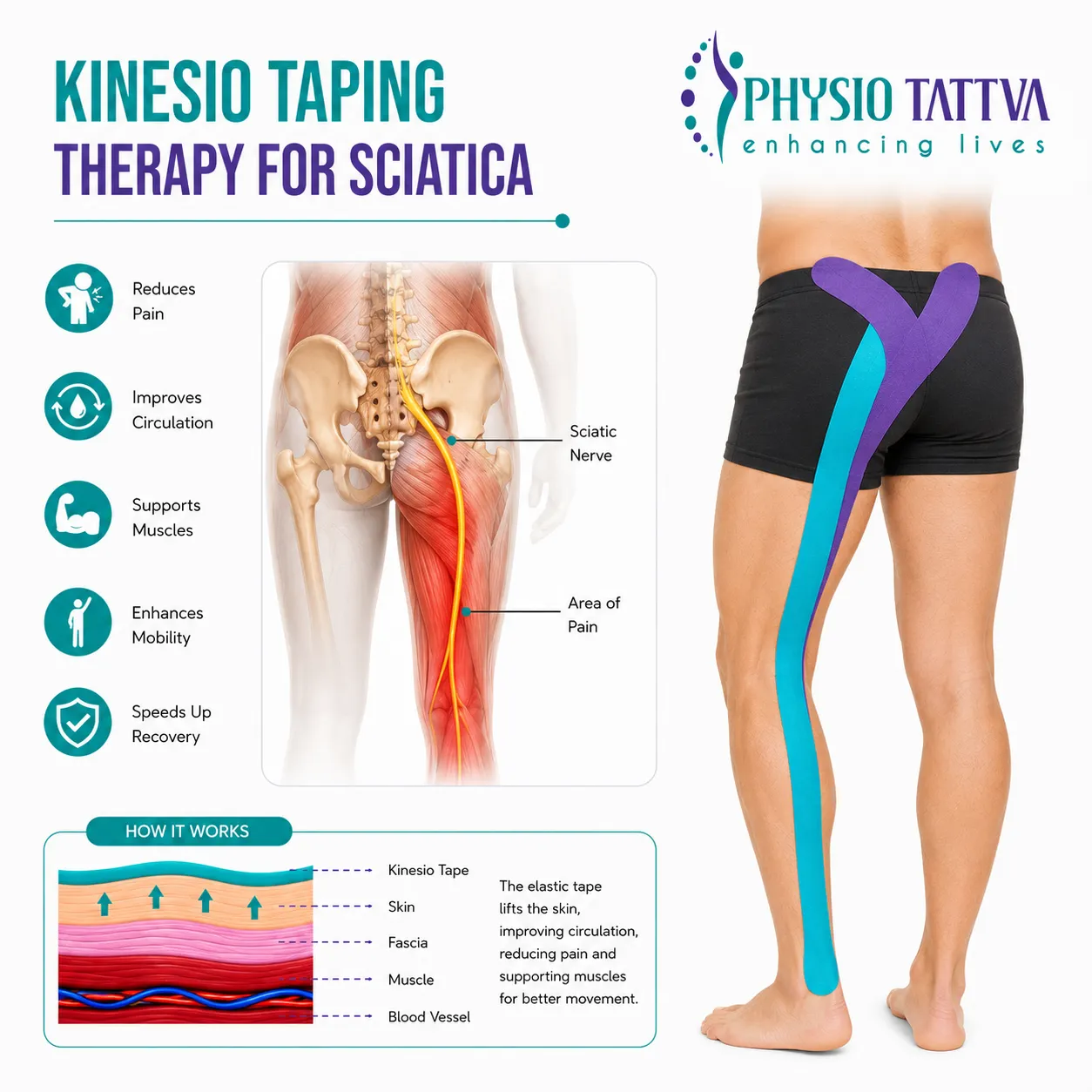
- Decompression and Space Creation: When applied correctly, the tape gently lifts the skin. This lifting effect creates a microscopic space between the skin and the underlying tissues, which can reduce pressure on pain receptors, blood vessels, and lymphatic channels.
- Pain Signal Interruption (Gate Control Theory): The sensation of the tape on your skin provides new sensory input to the brain. This can "distract" the brain from the deeper pain signals coming from the sciatic nerve, effectively "closing the gate" on pain.
- Improved Circulation & Lymphatic Drainage: By reducing pressure, the tape can enhance blood flow and the removal of inflammatory byproducts from the affected area, which helps reduce swelling and pain.
- Muscle Support and Re-education: The tape provides subtle cues that can help inhibit overactive, tight muscles (like the piriformis) or facilitate the function of weak or underused muscles, helping to correct imbalances that contribute to sciatica.
How Kinesio Taping Therapy Specifically Helps Sciatica
When applied for sciatica, Kinesio taping works by supporting affected tissues, easing nerve irritation, and reducing discomfort at the source. Depending on the underlying cause, taping may be used in different ways, including:
- For Lumbar Disc Issues: Taping can decompress the skin and fascia over the lower back, potentially reducing pressure on the affected nerve root.
- For Piriformis Syndrome: The tape can be applied to inhibit the tight piriformis muscle, relieving the pressure it exerts on the sciatic nerve.
- For General Pain and Inflammation: Taping along the path of the pain down the leg can help interrupt pain signals and reduce inflammation along the entire nerve pathway.
Common Kinesio Taping Techniques for Sciatica Pain Relief
Kinesio taping for sciatica involves specific application methods designed to reduce nerve irritation, support muscles, and ease pain. While these techniques are commonly used in physiotherapy, they should be tailored to the individual based on the underlying cause of sciatica.
General Application Tips: To ensure proper adhesion, comfort, and effectiveness of Kinesio taping, the following basic guidelines are usually followed:
- The skin must be clean, dry, and free of oils or lotions.
- Round the corners of the tape to prevent them from catching on clothing and peeling.
- Anchor the first and last inch of tape with zero stretch.
- Rub the tape after application to activate the heat-sensitive adhesive.
Technique 1: Lumbar Spine Decompression
- Purpose: To create space and reduce pressure over the lumbar vertebrae where the nerve roots exit.
- Application:
- Have the person bend forward to stretch the skin on their lower back.
- Cut two "I" strips, each about 6-8 inches long.
- Apply the strips vertically on either side of the spine, with about a 25% stretch in the middle of each strip.
- (Optional) Apply a third strip horizontally across the most painful area of the lower back, again with a 25-50% stretch in the middle.
Technique 2: Piriformis and Gluteal Support
- Purpose: To inhibit the tight piriformis muscle and provide support to the gluteal region.
- Application:
- Locate the piriformis muscle deep in the buttock (your therapist can help you find it).
- Lie on your stomach or side-lying with the top knee bent forward to stretch the glute.
- Apply a single "I" strip with a 25-50% stretch directly over the piriformis muscle, running from the sacrum (tailbone) toward the hip bone.
- An alternative is a "star" pattern over the point of maximum tenderness in the glute for decompression.
Technique 3: Following the Pain Pathway
- Purpose: To calm the nerve and reduce radiating symptoms down the leg.
- Application:
- Use a long "I" strip.
- Anchor the tape at the source of the pain (e.g., the lower back or glute) with no stretch.
- With a very light stretch (10-15%), run the tape down the back of the thigh and calf, following the path of your specific pain.
- Anchor the end of the tape near the ankle or foot with no stretch.
Benefits and Considerations of Kinesio Taping for Sciatica
Benefits: When applied correctly as part of a physiotherapy plan, Kinesio taping offers several supportive benefits for people managing sciatica pain:
- Drug-Free Pain Relief: A great option for those trying to reduce reliance on pain medication.
- Supports Active Recovery: You can continue to move, stretch, and exercise while wearing the tape.
- Improves Proprioception: Increases your awareness of your body's position, which can help you maintain better posture.
- Wearable for Days: A single application can provide relief for 3-5 days, even through showers and daily activities.
- Targets Inflammation: Helps reduce swelling and bruising.
Considerations: While Kinesio taping can be helpful, it is important to understand its limitations and use it appropriately:
- It's Not a Cure: Kinesio taping is a therapeutic tool that manages symptoms and supports healing; it does not "cure" the underlying cause (like a herniated disc).
- Proper Application is Key: Incorrect application can be ineffective or even worsen symptoms.
- Skin Sensitivity: Although rare, some people may experience skin irritation or an allergic reaction to the adhesive.
- Diagnosis is Essential: Never use tape to mask a serious pain. Always get an accurate diagnosis from a healthcare provider first.
Moving Towards Comfort and Recovery from Sciatica Pain with Physiotattva
Kinesio taping therapy offers a safe, non-invasive way to manage sciatica pain while supporting natural movement and recovery. By reducing nerve irritation, improving circulation, and supporting affected muscles, it can enhance comfort and mobility when used as part of a structured physiotherapy programme. While it is not a standalone solution, Kinesio taping works best alongside targeted exercises and professional guidance. If you are experiencing sciatica pain, consulting a qualified physiotherapist can help determine whether Kinesio taping is the right addition to your personalised treatment plan.
At Physiotattva physiotherapy clinics in Bangalore and Hyderabad, you receive personalised care tailored to your specific needs, ensuring effective results and comfort throughout your journey to recovery.
Don’t wait to start your recovery! Get in touch with Physiotattva for more details! Contact us at +91 89510 47001.
Why Physiotattva?
22+
50,000+
95%
200+
25+
4.8
Cities We Serve

Bangalore
At Physio Tattva, we are committed to bring access to quality physio care through ultra-modern clinics and high-skilled practitioners to all.
.webp)
Hyderabad
At Physio Tattva, we are committed to bring access to quality physio care through ultra-modern clinics and high-skilled practitioners to all.
.webp)
Vishakhapatnam
At Physio Tattva, we are committed to bring access to quality physio care through ultra-modern clinics and high-skilled practitioners to all.
Core Treatments
Core Conditions
Core Symptoms
Frequently Asked Questions
How long do I wear Kinesio tape for sciatica?

Can I apply the tape myself?
Does it really work? What does the evidence say?






%20(1)-p-3200.jpeg)


.jpg)
.webp)
.webp)
.webp)