




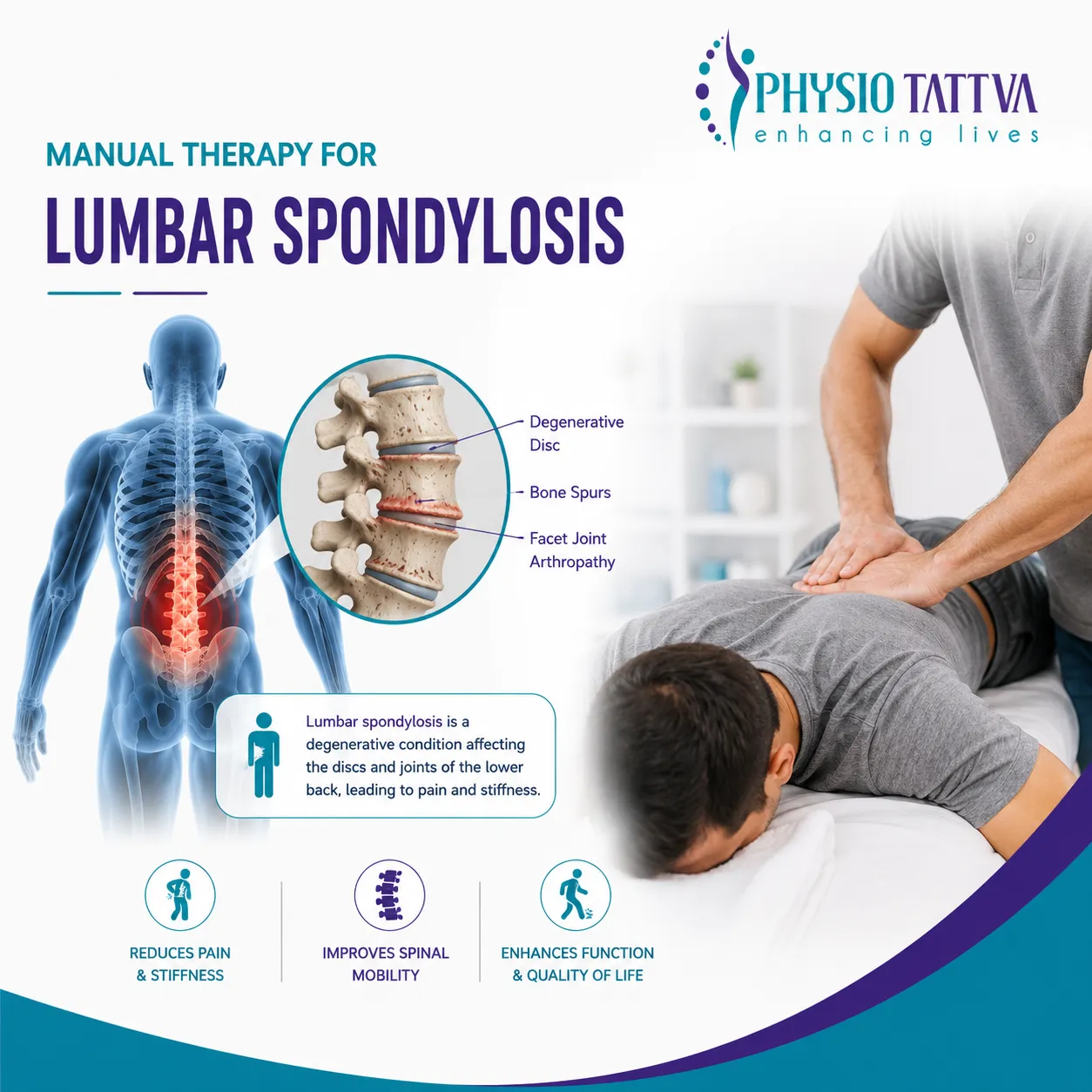
Lumbar spondylosis is a common, age-related condition characterized by the "wear and tear" of the discs, joints, and bones of the lower back. It can lead to chronic pain, stiffness, and reduced mobility, significantly impacting daily life. While there is no "cure" for these degenerative changes, many effective treatments can manage symptoms and improve function. Among the most effective conservative treatments is manual therapy for Lumbar spondylosis.
This article will explore what manual therapy is, the specific techniques used for this condition, its benefits, and what you should expect from treatment.
What is Lumbar Spondylosis?
Before exploring the treatment approach, it’s important to understand the condition itself. Lumbar spondylosis is not a single disease but a broad term describing degenerative changes in the lumbar spine, which may include:
- Degenerative Disc Disease (DDD): Spinal discs lose height, water content, and shock-absorbing capacity.
- Osteoarthritis (OA) of Facet Joints: The small, stabilising joints in the back of the spine become arthritic, leading to pain and stiffness.
- Osteophytes (Bone Spurs): The body forms extra bone to try to stabilise the degenerating spine, which can sometimes narrow nerve pathways.
- Spinal Stenosis: A narrowing of the spinal canal, which can put pressure on the spinal cord and nerves.
These changes result in symptoms like dull, aching lower back pain, stiffness (especially in the morning), reduced range of motion, and sometimes radiating pain or numbness into the legs (sciatica).
What is Manual Therapy?
Manual therapy is a specialised form of physical therapy where clinicians use their hands to diagnose and treat musculoskeletal conditions. Rather than relying on machines or devices, the therapist uses skilled, hands-on techniques to manipulate joints, muscles, and soft tissues.
The primary goals of manual therapy for Lumbar spondylosis are to:
- Reduce pain.
- Improve the range of motion in the lumbar spine.
- Decrease muscle tension and spasms.
- Enhance overall function and mobility.
Key Manual Therapy Techniques for Lumbar Spondylosis
A qualified physical therapist, chiropractor, or osteopathic physician may use a combination of hands-on techniques tailored to your symptoms and spinal condition. The most common and effective manual therapy techniques include:
Joint Mobilisation
This technique focuses on restoring normal joint movement and reducing stiffness.
What it is
The therapist applies gentle, rhythmic, passive movements to the spinal joints (vertebrae). The speed, depth, and direction of these movements are carefully controlled.
How it helps
This technique works by restoring natural movement to stiff spinal joints and reducing discomfort.
- Reduces stiffness: Mobilises arthritic facet joints to restore smoother movement.
- Pain relief: Stimulates mechanoreceptors, helping block pain signals.
- Improves joint nutrition: Enhances synovial fluid flow to nourish cartilage.
Spinal Manipulation (High-Velocity, Low-Amplitude Thrust)
This method aims to produce quick improvements in pain and spinal mobility.
What it is
A quick, controlled thrust is applied to a specific joint, sometimes producing a “popping” sound (cavitation). Common in chiropractic care but also used by trained physical therapists.
How it helps
This technique provides immediate relief by creating space within the joint and resetting neural reflexes.
- Provides rapid pain relief.
- Temporarily increases the range of motion.
- Helps “gap” the facet joints and improve movement patterns.
Note:
Used cautiously in patients with advanced spondylosis, osteoporosis, or spinal instability.
Soft Tissue Mobilisation
This approach focuses on reducing muscle tension and improving blood flow.
What it is
A combination of techniques, including kneading, sustained pressure, deep stroking, and myofascial release, is applied to muscles, ligaments, and fascia around the lumbar spine.
How it helps
This approach targets muscle tension and improves circulation to support healing.
- Reduces muscle spasms: Relaxes tight muscles like the quadratus lumborum and paraspinals.
- Improves blood flow: Enhances tissue nutrition and repair.
- Decreases pain: Relieves tension and encourages the release of endorphins.
Muscle Energy Techniques (METs)
This technique uses gentle muscle contractions to improve flexibility and mobility.
What it is
A gentle technique where the patient contracts muscles against resistance applied by the therapist. After contraction, the muscle relaxes and is stretched further.
How it helps
This method uses your own controlled effort to improve flexibility and joint motion.
- Lengthens tight or shortened muscles.
- Improves joint mobility in stiff spinal segments.
- Safe for degenerative conditions due to its low-force nature.
Stretching (Passive and Active-Assisted)
This technique aims to lengthen tight muscles that may be contributing to back pain.
What it is
The therapist stretches tight muscles such as the hamstrings, hip flexors, and lower back extensors to reduce strain on the lumbar spine.
How it helps
Stretching reduces muscular tension and supports proper alignment of the spine.
- Improves overall flexibility.
- Reduces strain on the lumbar spine.
- Prevents surrounding muscle groups from pulling the spine out of alignment.
Manual Therapy is Part of a Comprehensive Plan
It is crucial to understand that manual therapy is not a standalone cure. For the best long-term outcomes, it is integrated into a broader physical therapy program that includes:
- Therapeutic Exercise: This is the most critical component for long-term management. Your therapist will prescribe specific exercises to strengthen your core muscles (transverse abdominis, multifidus), which act as a "natural brace" for your spine.
- Patient Education: You will learn about proper posture, body mechanics for lifting and bending, and strategies to manage flare-ups.
- Pain Management Modalities: Therapists may use heat, ice, or electrical stimulation to help control pain and inflammation, especially in the initial stages.
Benefits of Manual Therapy for Lumbar Spondylosis
Manual therapy offers a range of meaningful benefits for individuals experiencing chronic lower back pain and stiffness due to lumbar spondylosis. By addressing both joint and soft-tissue restrictions, it plays a key role in improving daily comfort and long-term function.
- Non-invasive pain relief: Provides a drug-free alternative to medication and injections by easing joint tension and calming irritated nerves through gentle, hands-on techniques.
- Improved mobility and function: Loosens stiff joints and tight muscles, helping restore normal movement patterns and making daily activities like bending, walking, and lifting easier.
- Reduced muscle guarding: Breaks the pain–spasm–pain cycle common in chronic back conditions by relaxing overactive muscles and reducing protective tightening around painful areas.
- Personalised treatment approach: Allows the therapist to feel tissue quality, detect restrictions, and adjust pressure and techniques in real time for safer, more effective care.
- Supports long-term rehabilitation: Prepares the spine and surrounding muscles for strengthening exercises, enhancing posture, stability, and long-term symptom control.
- Enhanced circulation and healing: Boosts blood flow to the affected tissues, improving oxygen delivery, reducing inflammation, and promoting natural healing responses.
Is Manual Therapy Safe for Spondylosis?
When performed by a licensed and experienced professional, manual therapy is generally considered very safe for individuals with lumbar spondylosis. A trained therapist will always carry out a detailed assessment to understand your symptoms, movement patterns, and overall spinal health before beginning treatment. This helps ensure that the techniques used are both appropriate and effective for your specific condition.
However, manual therapy may not be suitable in certain situations. Your therapist will screen for contraindications, such as:
- Severe osteoporosis
- Spinal fracture
- Malignancy (cancer) in the area
- Active infection
- Cauda equina syndrome (a medical emergency)
- Significant spinal instability
These precautions help ensure your safety and guide the therapist in modifying or avoiding certain techniques. When applied correctly, manual therapy can be a highly beneficial and low-risk component of a comprehensive lumbar spondylosis treatment plan.
Managing Lumbar Spondylosis Safely with Physiotattva
Manual therapy for Lumbar spondylosis is a highly effective, evidence-based approach for managing the pain and stiffness associated with age-related spinal changes. By using skilled, hands-on techniques to improve joint mobility and reduce muscle tension, a qualified therapist can significantly improve your quality of life.
If you are struggling with lower back pain from spondylosis, consult a physical therapist or another qualified healthcare provider to see if a treatment plan incorporating manual therapy is right for you. Paired with a dedicated exercise program, it can be your most powerful tool for regaining function and controlling your symptoms.
At Physiotattva physiotherapy clinics in Bangalore and Hyderabad, you receive personalised care tailored to your specific needs, ensuring effective results and comfort throughout your journey to recovery.
Don’t wait to start your recovery! Get in touch with Physiotattva for more details! Contact us at +91 89510 47001.
Why Physiotattva?
22+
50,000+
95%
200+
25+
4.8
Cities We Serve

Bangalore
At Physio Tattva, we are committed to bring access to quality physio care through ultra-modern clinics and high-skilled practitioners to all.
.webp)
Hyderabad
At Physio Tattva, we are committed to bring access to quality physio care through ultra-modern clinics and high-skilled practitioners to all.
.webp)
Vishakhapatnam
At Physio Tattva, we are committed to bring access to quality physio care through ultra-modern clinics and high-skilled practitioners to all.
Core Treatments
Core Conditions
Core Symptoms
Frequently Asked Questions
Is manual therapy for lumbar spondylosis painful?

How many sessions will I need?
Are there any side effects of manual therapy for lumbar spondylosis?





%20(1)-p-3200.jpeg)


.jpg)
.webp)
.webp)
.webp)