




Living with lumbar spondylosis can mean a daily battle with stiffness, limited mobility, and persistent lower back pain. While traditional treatments like medication and physical therapy are essential, many are searching for complementary, non-invasive options to manage their symptoms. Enter Pulsed Electromagnetic Fields (PEMF) therapy, a cutting-edge approach that is gaining attention for its potential to address the root causes of pain and dysfunction in degenerative spinal conditions.
This article will explore how PEMF therapy works, the specific benefits for lumbar spondylosis, and what the science says about this promising treatment.
What is Lumbar Spondylosis?
Lumbar spondylosis is not a single disease but rather an umbrella term for age-related wear and tear affecting the vertebrae and discs of the lower back (lumbar spine). It's a form of spinal osteoarthritis. Key characteristics include:
- Degenerative Disc Disease: The cushions between your vertebrae lose hydration and height, reducing their shock-absorbing capacity.
- Bone Spurs (Osteophytes): The body tries to stabilize the spine by growing extra bone, which can press on nerves.
- Facet Joint Osteoarthritis: The small joints that allow your spine to bend and twist become worn and inflamed.
Common symptoms are chronic lower back pain, stiffness (especially in the morning), radiating pain into the legs (sciatica), and reduced flexibility.
Understanding Pulsed Electromagnetic Fields (PEMF) Therapy
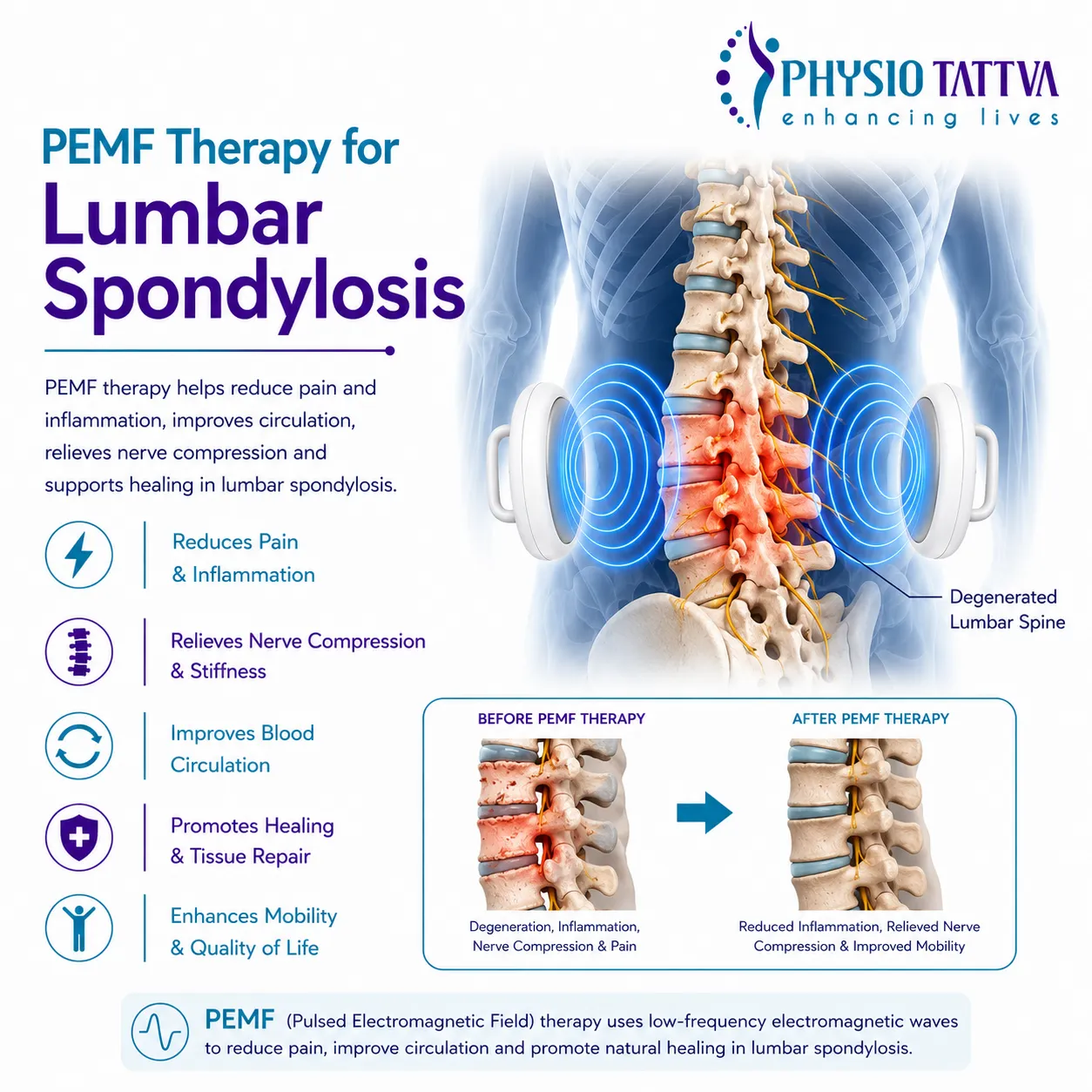
Imagine "recharging" the cells in your spine. That’s the simplest way to think about PEMF therapy. It is a non-invasive treatment that uses devices to emit low-frequency electromagnetic fields in short bursts or pulses. These fields penetrate deep into the body's tissues, including muscle, bone, and cartilage—to stimulate cellular activity and promote natural healing.
Unlike a simple magnet, PEMF devices are dynamic, creating a pulsing field that is more effective at influencing cell behaviour.
How PEMF Therapy Specifically Helps with Lumbar Spondylosis
The pain and stiffness of lumbar spondylosis are primarily driven by inflammation, poor circulation, and cellular damage. Pulsed electromagnetic fields therapy targets these exact issues.
Reduces Pain and Inflammation
This is the most immediate benefit for many users. The electromagnetic pulses help to increase the production of anti-inflammatory compounds while decreasing pro-inflammatory ones. This can lead to a significant reduction in the chronic inflammation associated with facet joint arthritis and degenerative discs, thereby alleviating pain.
Enhances Circulation and Oxygenation
Healthy spinal discs and tissues rely on good blood flow to receive oxygen and nutrients and to remove metabolic waste. In lumbar spondylosis, this process is often impaired. PEMF therapy improves circulation by causing blood vessels to dilate and making red blood cells less "sticky," allowing them to flow more freely. Better circulation means more healing resources can reach the damaged areas of your spine.
Stimulates Cellular Repair and Regeneration
At its core, PEMF therapy energises your cells. It helps to restore the optimal electrical charge across the cell membrane, which is crucial for healthy function. For lumbar spondylosis, this can mean:
- Stimulating cartilage-producing cells (chondrocytes).
- Promoting bone-healing activity (osteoblast function).
- Slowing down the degenerative process at a cellular level.
Relieves Muscle Spasms and Stiffness
Chronic pain from spondylosis often leads to protective muscle guarding and spasms in the lower back. These tight muscles can worsen pain and limit mobility. PEMF therapy acts as a muscle relaxant, helping to release tension and improve flexibility, which is a key goal in any lumbar spondylosis treatment plan.
What Research Reveals About PEMF Therapy
While more large-scale research is needed, emerging evidence for PEMF for back pain is highly encouraging. Several studies have demonstrated that PEMF therapy can:
- Significantly reduce pain scores in patients with chronic lower back pain and lumbar osteoarthritis.
- Improve functional mobility and reduce the need for pain medication.
- Show positive changes in MRI scans related to disc hydration after long-term use.
It's often studied as a powerful adjunct therapy, meaning it works best when combined with other treatments like physical therapy and exercise.
Is PEMF Therapy Safe? Side Effects and Contraindications of PEMF Therapy
PEMF therapy is widely regarded as a very safe, non-invasive treatment with minimal side effects for most individuals. The most commonly reported experience is a slight increase in discomfort or warmth during the initial sessions as the body’s natural healing responses become activated. This usually settles quickly as the tissues adapt to the therapy. Some people may also notice mild fatigue or temporary muscle soreness, which is considered a normal part of the recovery process.
However, PEMF therapy is not recommended for individuals with the following conditions:
- Implanted electronic devices such as pacemakers, defibrillators, cochlear implants, or other electrical implants, as electromagnetic fields may interfere with device function.
- Pregnancy, due to the lack of safety research in this group.
- Active cancer or tumours, unless used strictly under palliative or medical supervision, as the effects of electromagnetic stimulation on cancer cells remain uncertain.
It is always important to consult with your doctor or physiotherapist before starting any new therapy, especially if you have underlying health conditions or are undergoing other treatments. A professional assessment ensures PEMF therapy is both safe and suitable for your specific needs.
Managing Lumbar Spondylosis Effectively with Physiotattva
Living with lumbar spondylosis can be challenging, especially when pain, stiffness, and limited mobility begin to affect your everyday routine. Pulsed Electromagnetic Fields (PEMF) therapy offers a promising, non-invasive option that supports your body’s natural ability to heal. By reducing inflammation, improving circulation, energising cells, and easing muscle tension, PEMF therapy complements traditional treatments and can enhance long-term spinal health.
While it is not a cure for lumbar spondylosis, PEMF can play a valuable role when combined with physiotherapy, exercise, posture correction, and lifestyle adjustments. As with any treatment, consulting a healthcare professional ensures that PEMF therapy fits your specific needs and health conditions.
At Physiotattva physiotherapy clinics in Bangalore and Hyderabad, you receive personalised care tailored to your specific needs, ensuring effective results and comfort throughout your journey to recovery.
Don’t wait to start your recovery! Get in touch with Physiotattva for more details! Contact us at +91 89510 47001.
Why Physiotattva?
22+
50,000+
95%
200+
25+
4.8
Cities We Serve

Bangalore
At Physio Tattva, we are committed to bring access to quality physio care through ultra-modern clinics and high-skilled practitioners to all.
.webp)
Hyderabad
At Physio Tattva, we are committed to bring access to quality physio care through ultra-modern clinics and high-skilled practitioners to all.
.webp)
Vishakhapatnam
At Physio Tattva, we are committed to bring access to quality physio care through ultra-modern clinics and high-skilled practitioners to all.
Core Treatments
Core Conditions
Core Symptoms
Frequently Asked Questions
Can PEMF therapy cure lumbar spondylosis?

How long does a PEMF session last?
How long does it take to see results with PEMF for back pain?






%20(1)-p-3200.jpeg)


.jpg)
.webp)
.webp)
.webp)