




Start with a relatable hook. "Debilitating back or neck pain from a herniated disc can bring your life to a standstill. The sharp, shooting pain down your leg (sciatica) or arm can make even simple tasks feel impossible. While surgery may seem like the only option, a powerful, conservative treatment is proving highly effective for many: manual therapy for a herniated disc. This hands-on approach, delivered by skilled professionals like physical therapists and chiropractors, can offer significant relief and help you reclaim your life.
What Is a Herniated Disc?
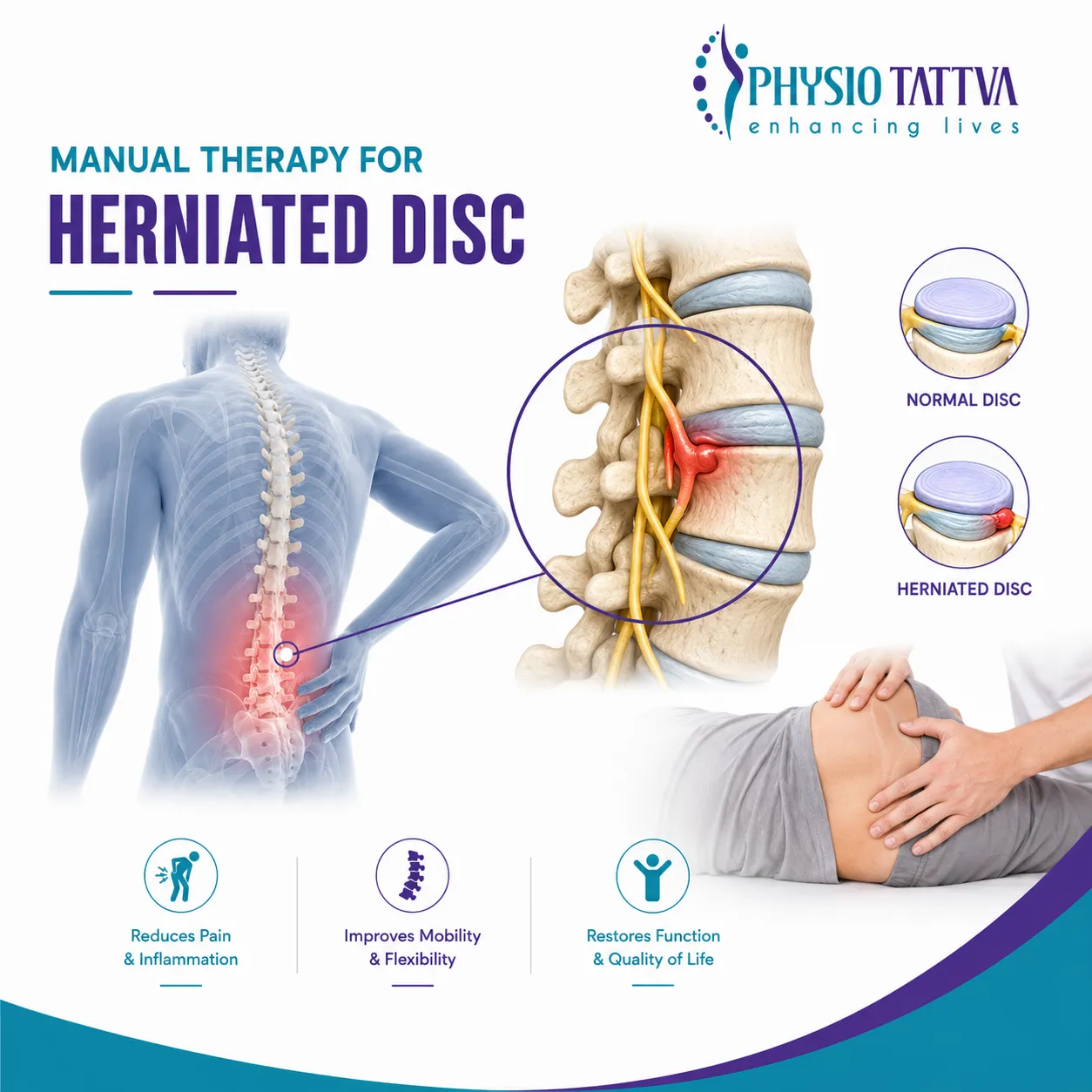
To understand the solution, you must first understand the problem. Imagine the discs between your vertebrae are like small jelly donuts. They have a tough outer layer (annulus fibrosus) and a soft, gel-like center (nucleus pulposus).
- Bulging Disc: The "jelly" pushes against the outer layer, causing it to bulge outwards, much like a tire with a weak spot.
- Herniated Disc: The outer layer tears, allowing some of the inner "jelly" to leak out. This material can press on nearby spinal nerves, causing inflammation, pain, numbness, tingling, or weakness. This nerve pressure is what leads to conditions like sciatica (in the lower back) or cervical radiculopathy (in the neck).
What is Manual Therapy?
Manual therapy is not just a massage. It is a specialised, evidence-based form of hands-on physical treatment used to assess, diagnose, and treat musculoskeletal pain, stiffness, and functional limitations. Skilled practitioners use precise, controlled movements and pressure to mobilise joints, relax muscles, and restore normal tissue function.
How Manual Therapy Works to Relieve Herniated Disc Pain?
Manual therapy for a herniated disc is often misunderstood. Its purpose is not to forcibly correct the disc displacement, but to relieve mechanical strain, restore healthy movement patterns, and reduce nerve compression, allowing the body to recover safely and naturally.
- Reducing Intradiscal Pressure: Techniques like gentle traction and specific mobilization movements can "decompress" the spine, creating negative pressure that helps draw the herniated material away from the nerve root.
- Improving Spinal Mobility: A herniated disc often causes surrounding spinal segments to become stiff and guarded. Manual therapy restores proper movement to these adjacent joints, which takes the stress off the injured disc.
- Decreasing Muscle Spasm and Guarding: Pain from a herniated disc triggers protective muscle spasms. These spasms increase compression on the spine, creating a vicious cycle of pain. Manual therapy techniques like soft tissue mobilization and myofascial release relax these muscles, breaking the cycle.
- Promoting Pain Centralization: A key goal for herniated disc treatment is "centralization", moving the pain from the leg or arm back towards the spine. This is a strong indicator of recovery. Certain manual techniques, like repeated movements (McKenzie Method), are designed to achieve this.
- Improving Blood Flow and Reducing Inflammation: By mobilizing stiff tissues and reducing muscle tension, manual therapy enhances local circulation. This helps flush out inflammatory chemicals and delivers oxygen and nutrients needed for healing.
Key Manual Therapy Techniques for a Herniated Disc
Practitioners use a combination of techniques based on your specific condition, location of the herniation (lumbar vs. cervical), and symptom severity.
Spinal Mobilization
This technique focuses on restoring gentle movement to stiff or restricted spinal joints, especially when pain or sensitivity is high.
What it is: Gentle, rhythmic, passive movements applied to individual spinal joints. The practitioner moves the joint within a comfortable range of motion.
Why it helps: It's a less aggressive approach than manipulation, making it ideal for acute or highly sensitive herniated discs. It improves joint nutrition, reduces stiffness, and modulates pain signals.
Spinal Manipulation (The "Adjustment")
Spinal manipulation is a more specific technique used selectively to restore normal joint motion in carefully chosen spinal segments.
What it is: A high-velocity, low-amplitude (HVLA) thrust applied to a specific joint, often resulting in an audible "pop" or "crack."
Why it helps: When used appropriately (often on adjacent stiff segments, not directly on the herniated level at first), it can rapidly restore joint motion, reset nerve reflexes, and provide immediate pain relief by releasing endorphins. Proper screening is essential before this technique is used.
Flexion-Distraction / Decompression
This method is designed to gently unload the spine and reduce pressure on irritated discs and nerve roots.
What it is: A technique, often performed on a specialized table, that gently flexes and "distracts" (stretches) the spine. The practitioner applies pressure to specific spinal levels as the table moves.
Why it helps: This is one of the most effective techniques for reducing pressure on the disc and nerve root. It effectively "pumps" the disc, which can help retract the herniation and improve nutrient flow.
Myofascial Release & Soft Tissue Mobilization
These techniques target the muscles and connective tissues that commonly tighten and guard around a herniated disc.
What it is: Sustained pressure and stretching applied to the fascia (the connective tissue surrounding muscles) and muscles themselves.
Why it helps: This directly addresses the painful muscle guarding and tension that accompany a herniated disc, reducing overall compressive forces on the spine and improving flexibility.
Muscle Energy Techniques (MET)
MET is an active, patient-involved technique that uses gentle muscle contractions to restore balance and alignment.
What it is: You, the patient, will actively contract a specific muscle against a counterforce applied by the therapist. This is followed by a gentle stretch.
Why it helps: MET is excellent for realigning joints (like the sacroiliac joint, often involved in low back pain) and releasing tight muscles without aggressive force.
Who Provides Manual Therapy for a Herniated Disc?
Manual therapy for a herniated disc should always be performed by a licensed healthcare professional with specialised training in spinal and musculoskeletal conditions. Proper clinical expertise is essential to ensure both safety and effectiveness, especially when nerve involvement is present.
The most qualified professionals include:
Physical Therapists (PTs)
Physiotherapists trained in manual therapy play a central role in conservative herniated disc management. Those with advanced credentials such as OCS (Orthopaedic Clinical Specialist) or FAAOMPT (Fellow of the American Academy of Orthopaedic Manual Physical Therapists) have extensive expertise in spinal assessment, mobilisation, decompression techniques, and rehabilitation planning.
Chiropractors (DCs)
Chiropractors specialise in spinal mechanics and manual spinal manipulation. When appropriately indicated and following thorough screening, they use targeted adjustments and mobilisation techniques to restore joint movement, reduce nerve irritation, and relieve disc-related pain.
Osteopathic Physicians (DOs)
Osteopathic doctors are fully licensed medical physicians who integrate conventional medicine with hands-on care. Through Osteopathic Manipulative Treatment (OMT), they address spinal restrictions, muscle tension, and biomechanical imbalances that contribute to herniated disc symptoms.
Choosing the right professional depends on the severity of symptoms, neurological involvement, and individual clinical findings, which is why a comprehensive assessment is always the first step in effective treatment.
Is Manual Therapy Safe for a Herniated Disc?
When performed by a trained professional after a thorough clinical evaluation, manual therapy is considered very safe. Key safety aspects include:
- A proper assessment is conducted to rule out “red flag” conditions where manual techniques may be inappropriate, such as cauda equina syndrome, spinal fractures, severe osteoporosis, infections, or progressive neurological deficits.
- Treatment always begins with gentle, low-force techniques, especially in acute or highly sensitive disc conditions.
- The therapist progresses techniques gradually, based on your pain levels, movement tolerance, and neurological response.
- Care is individualised to your condition, ensuring that only safe and appropriate manual therapy methods are used for your specific type and stage of disc herniation.
What to Expect from Manual Therapy Within a Complete Recovery Programme
Manual therapy works best when it is integrated into a structured and holistic rehabilitation plan rather than used in isolation. To achieve long-term relief and prevent recurrence, your treatment programme typically includes:
- Therapeutic Exercise: Targeted exercises such as core stabilisation, directional preference movements (including McKenzie-based exercises), and nerve gliding techniques help support the spine, improve movement control, and reduce stress on the affected disc.
- Patient Education: Guidance on correct posture, safe lifting techniques, and daily ergonomic habits empowers you to protect your spine during work, rest, and physical activity.
- Supportive Modalities: Heat or ice therapy may be used alongside manual therapy to manage pain, reduce inflammation, and promote tissue relaxation during different stages of recovery.
Take Control of Herniated Disc Recovery Without Surgery at Physiotattva
If you're struggling with pain from a herniated disc, don't assume surgery is your only path. Manual therapy for a herniated disc offers a powerful, evidence-based, and non-invasive approach to reduce pain, restore function, and activate your body's natural healing process. By improving joint mechanics, releasing muscle tension, and decompressing the spine, it addresses the root causes of your symptoms.
At Physiotattva physiotherapy clinics in Bangalore and Hyderabad, you receive personalised care tailored to your specific needs, ensuring effective results and comfort throughout your journey to recovery.
Don’t wait to start your recovery! Get in touch with Physiotattva for more details! Contact us at +91 89510 47001.
Why Physiotattva?
22+
50,000+
95%
200+
25+
4.8
Cities We Serve

Bangalore
At Physio Tattva, we are committed to bring access to quality physio care through ultra-modern clinics and high-skilled practitioners to all.
.webp)
Hyderabad
At Physio Tattva, we are committed to bring access to quality physio care through ultra-modern clinics and high-skilled practitioners to all.
.webp)
Vishakhapatnam
At Physio Tattva, we are committed to bring access to quality physio care through ultra-modern clinics and high-skilled practitioners to all.
Core Treatments
Core Conditions
Core Symptoms
Frequently Asked Questions
Is manual therapy safe for a herniated disc?

Can manual therapy make a herniated disc worse?
How many manual therapy sessions will I need for a herniated disc?
Is manual therapy painful?




%20(1)-p-3200.jpeg)

.jpg)
.webp)
.webp)
.webp)