




Scoliosis, a condition characterized by an abnormal sideways curvature of the spine, requires a multifaceted management approach. While traditional treatments like bracing and physical therapy remain cornerstones of care, Kinesio taping has emerged as a valuable, non-invasive adjunctive therapy.
This article explores how Kinesio taping therapy is used for scoliosis, its mechanisms, benefits, and limitations.
What is Scoliosis?
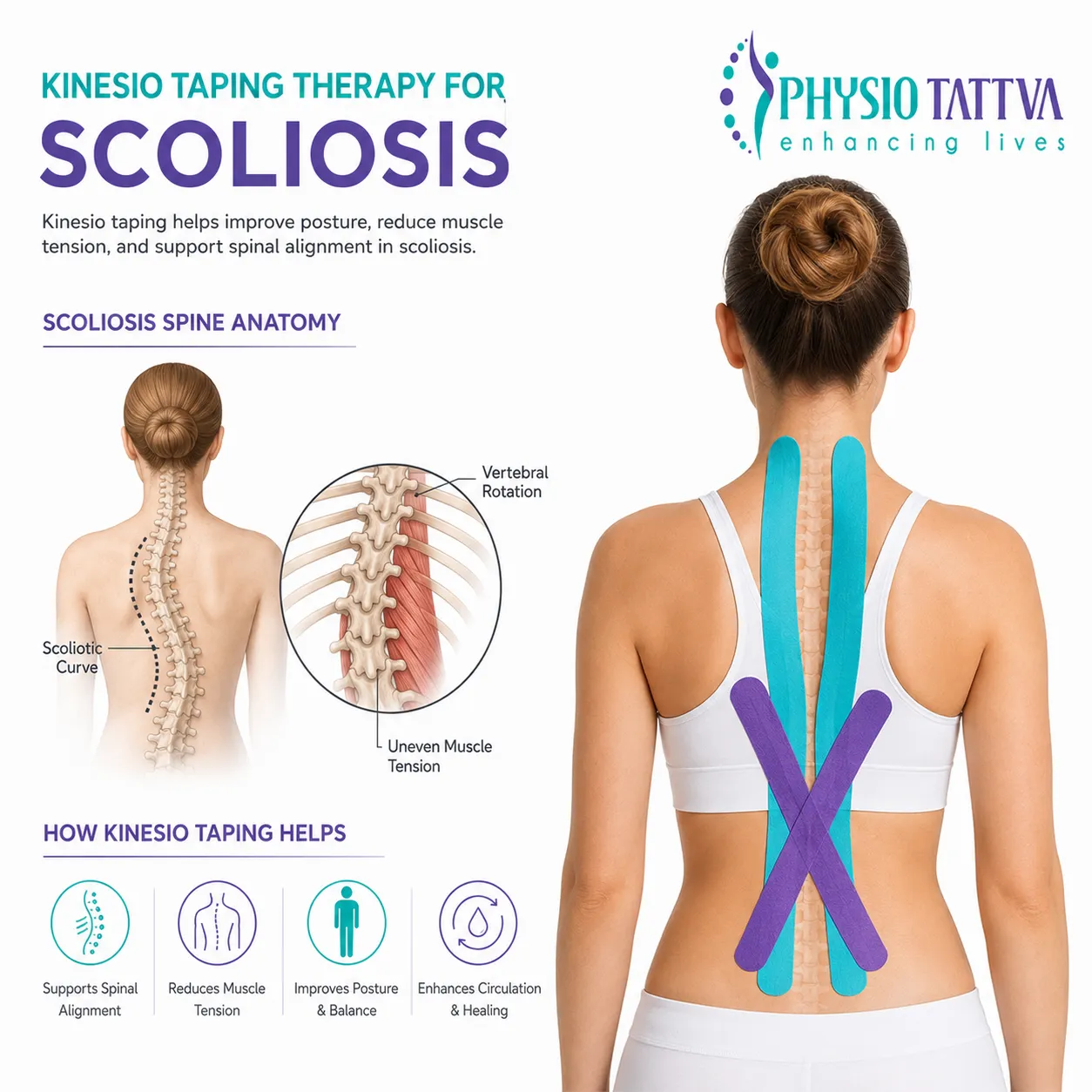
Scoliosis causes the spine to curve into a "C" or "S" shape. This curvature creates an imbalance in the back's musculature:
- On the convex side (the outside of the curve): Muscles become overstretched, weak, and fatigued.
- On the concave side (the inside of the curve): Muscles become tight, shortened, and overactive.
This imbalance can lead to pain, postural asymmetry, reduced respiratory function, and a feeling of muscular fatigue.
What is Kinesio Taping?
Kinesio Taping (or Kinesiology Taping) is a therapeutic technique that uses a specialized elastic tape to support muscles and joints without restricting the body's range of motion. Unlike rigid athletic tape, Kinesio tape is designed to mimic the elasticity of human skin.
Its proposed mechanisms of action include:
- Sensory Input (Proprioception): The tape on the skin provides continuous sensory feedback to the brain, increasing awareness of posture and muscle position.
- Decompression: The tape gently lifts the skin, creating space between the skin and underlying tissues. This can reduce pressure on pain receptors and improve blood and lymphatic flow.
- Muscle Facilitation or Inhibition: Depending on the direction and tension of the application, the tape can be used to either stimulate (facilitate) weak muscles or relax (inhibit) overactive muscles.
How Kinesio Taping is Used Specifically for Scoliosis
For scoliosis, Kinesio taping is not a cure but a tool to manage symptoms and support other therapies. The primary goal is to re-educate the neuromuscular system to create a more balanced and functional posture.
A trained therapist, such as a physical therapist or chiropractor certified in Kinesio taping, will apply the tape based on the individual's specific spinal curve. The strategy typically involves a "push-pull" approach:
Correcting Muscle Imbalance
One of the primary ways Kinesio taping supports scoliosis management is by addressing muscle imbalance on both sides of the spinal curve.
- Facilitating Weak Muscles: Tape is applied over the overstretched muscles on the convex side of the curve. This application is designed to "wake up" these muscles, encouraging them to contract and provide better support to the spine.
- Inhibiting Tight Muscles: Tape is applied over the tight, shortened muscles on the concave side. This application aims to relax these muscles, reducing their constant pull on the spine and allowing for greater flexibility.
Providing Postural Cues (Proprioceptive Feedback)
The tape acts as a constant, gentle reminder. When the patient slumps or deviates from a more corrected posture, the stretch on the tape changes, sending a sensory signal to the brain to self-correct. This is especially valuable for adolescents with idiopathic scoliosis, helping them maintain the corrections learned during physical therapy.
Reducing Pain and Fatigue
By lifting the skin and decompressing the tissues on the painful, convex side, the tape can help alleviate muscle pain and discomfort. By supporting the weak muscles, it can also reduce the feeling of fatigue that often accompanies scoliosis.
Kinesio Taping Application Process for Scoliosis: What to Expect
Understanding what happens during a Kinesio taping session can help patients feel more prepared and comfortable. The application process is methodical and personalised, ensuring the tape is applied safely, effectively, and in alignment with the individual’s specific spinal curve and therapy goals.
- Assessment: A therapist will perform a thorough physical assessment, including a postural analysis and possibly X-rays, to identify the exact location and direction of the spinal curve(s).
- Preparation: The skin must be clean, dry, and free of oils or lotions.
- Application: The patient is usually positioned in a way that maximally corrects the curve (e.g., bending forward and sideways). The therapist then applies strips of Kinesio tape with specific degrees of tension and in precise directions to facilitate and inhibit the target muscles.
- Duration: The tape is water-resistant and can be worn for 3-5 days, even during showering and exercise.
- Frequency: Taping is typically reapplied once or twice a week as part of an ongoing physical therapy program.
Evidence and Effectiveness of Kinesio Taping for Scoliosis
Research into Kinesio taping for scoliosis shows promising results, particularly when it is used as part of a comprehensive treatment plan.
- Key Findings: Studies suggest that Kinesio taping, when combined with corrective exercises (like the Schroth Method), can be more effective at reducing pain, improving posture, and increasing trunk muscle endurance than exercises alone.
- Important Caveat: Kinesio taping is not a standalone treatment to reverse or halt scoliosis progression. It does not physically pull the spine into alignment in the way a rigid brace does. Its effect is primarily sensory and muscular. It is most effective for mild to moderate curves and for managing symptoms.
Benefits and Limitations of Kinesio Taping for Scoliosis
Kinesio taping can be a helpful, supportive tool in scoliosis management, particularly when used alongside physiotherapy and corrective exercises. Understanding both its benefits and limitations is essential for setting realistic expectations and making informed treatment decisions.
Benefits of Kinesio Taping
Kinesio taping offers several supportive advantages when used as part of a structured scoliosis management program.
- Non-invasive and generally low risk when applied correctly
- Helps reduce pain, muscle fatigue, and discomfort
- Enhances postural awareness and encourages self-correction
- Complements other treatments such as physiotherapy and corrective exercises
- Can be worn continuously (24/7) for ongoing sensory support
- Does not restrict range of motion or daily activities
Limitations of Kinesio Taping
Despite its benefits, it is important to understand the limitations of Kinesio taping to set realistic expectations.
- Not a cure and does not reverse structural spinal curves
- Effectiveness depends heavily on correct application by a trained professional
- Benefits are temporary and require regular reapplication
- May cause mild skin irritation or allergic reactions in rare cases
- Limited high-quality, long-term research when used alone
- Not a replacement for bracing or surgery in moderate to severe scoliosis
Who Is a Good Candidate for Kinesio Taping for Scoliosis?
Kinesio taping can be a beneficial supportive intervention for individuals with scoliosis, particularly when used alongside a structured rehabilitation program. It is commonly recommended for the following groups:
- Individuals with mild to moderate scoliosis: Especially those with idiopathic or functional scoliosis who experience postural imbalance, muscle asymmetry, or discomfort but do not require surgical intervention.
- Patients with scoliosis-related muscle pain or fatigue: Those experiencing muscle soreness, tightness, or early fatigue due to uneven muscle loading around the spinal curve may benefit from the sensory and supportive effects of taping.
- Adolescents and adults undergoing scoliosis-specific physiotherapy: Kinesio taping can enhance the effectiveness of corrective exercise programs such as the Schroth Method or SEAS by reinforcing postural awareness and muscle activation between therapy sessions.
- Athletes with scoliosis: Active individuals who participate in sports may use Kinesio taping to support spinal muscles, manage pain, and maintain movement without restricting performance during training or competition.
Supporting Long-Term Scoliosis Management with Kinesio Taping at Physiotattva
Kinesio taping therapy for scoliosis is a powerful supportive tool, not a miracle cure. Its primary strength lies in its ability to manage pain, re-educate muscles, and provide constant proprioceptive feedback to improve posture.
When used by a trained professional as part of a comprehensive management plan that includes specific corrective exercises, it can significantly improve a patient's quality of life, reduce symptoms, and empower them to take an active role in managing their condition. If you are considering this therapy, it is crucial to consult a physical therapist or other qualified healthcare provider with expertise in both scoliosis and Kinesiology taping.
At Physiotattva physiotherapy clinics in Bangalore and Hyderabad, you receive personalised care tailored to your specific needs, ensuring effective results and comfort throughout your journey to recovery.
Don’t wait to start your recovery! Get in touch with Physiotattva for more details! Contact us at +91 89510 47001.
Why Physiotattva?
22+
50,000+
95%
200+
25+
4.8
Cities We Serve

Bangalore
At Physio Tattva, we are committed to bring access to quality physio care through ultra-modern clinics and high-skilled practitioners to all.
.webp)
Hyderabad
At Physio Tattva, we are committed to bring access to quality physio care through ultra-modern clinics and high-skilled practitioners to all.
.webp)
Vishakhapatnam
At Physio Tattva, we are committed to bring access to quality physio care through ultra-modern clinics and high-skilled practitioners to all.
Core Treatments
Core Conditions
Core Symptoms
Frequently Asked Questions
Can Kinesio tape cure or reverse scoliosis?

How long does the Kinesio tape stay on?
Is Kinesio taping for scoliosis safe for children and adolescents?
Can I apply the tape myself at home for scoliosis?





%20(1)-p-3200.jpeg)


.jpg)
.webp)
.webp)
.webp)