




Kinesio taping is often used as a supportive physiotherapy technique for people with Distal Muscular Dystrophy, a condition marked by progressive muscle weakness. Although it is not a cure, Kinesio taping can assist with symptom control, functional support, and overall comfort.
This article explores the role of Kinesio taping, its benefits, and how it supports quality of life in Distal Muscular Dystrophy.
What is Distal Muscular Dystrophy (DMD)?
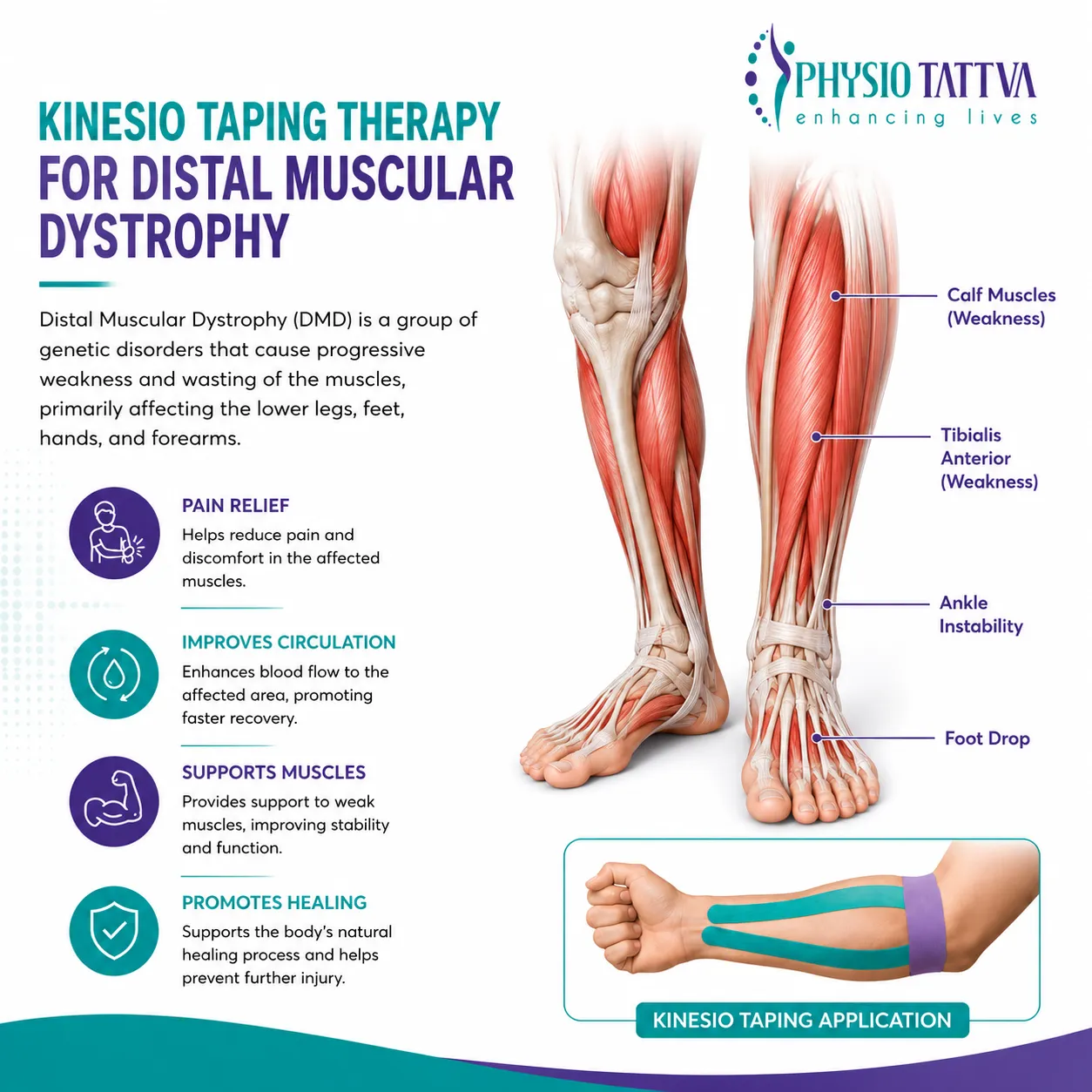
First, it's important to clarify the condition. Distal Muscular Dystrophy (DMD) is not a single disease but a group of rare muscular dystrophies. Their defining characteristic is that muscle weakness and atrophy (wasting) begin in the distal muscles—those furthest from the center of the body.
- Affected Areas: Feet, lower legs, hands, and lower arms.
- Common Symptoms: Individuals with Distal Muscular Dystrophy may experience a range of movement- and coordination-related challenges, including:
- Foot Drop: Difficulty lifting the front part of the foot, leading to tripping or a "steppage" gait.
- Wrist Drop: Difficulty extending the wrist, affecting hand function.
- Weakness in grip and fine motor control of the fingers.
- Stumbling and difficulty with balance.
- Progression: The weakness is progressive and may eventually spread to more proximal muscles (thighs, upper arms) over many years.
What is Kinesio Taping?
Kinesio Taping (or KT) is a therapeutic technique using a specific type of elastic, adhesive tape. Unlike rigid athletic tape that immobilizes a joint, Kinesio tape is designed to be flexible and mimic the elasticity of human skin.
How it is thought to work: When applied correctly, Kinesio taping works in several ways to support the body’s natural movement and pain-relief processes, including:
- Lifts the Skin: When applied correctly, the tape gently lifts the superficial layers of skin. This creates a microscopic space between the skin and the underlying tissues.
- Reduces Pressure: This space is believed to reduce pressure on pain receptors, blood vessels, and lymphatic channels.
- Improves Circulation: By reducing pressure, it can enhance blood and lymphatic fluid flow, which may help reduce swelling and muscle fatigue.
- Provides Proprioceptive Feedback: The tape on the skin provides continuous sensory input to the brain about the position and movement of that body part. This can improve body awareness and help the brain better activate weak muscles.
How Kinesio Taping Supports Function in Distal Muscular Dystrophy
For individuals living with Distal Muscular Dystrophy, Kinesio taping is used as a supportive, non-invasive physiotherapy tool to manage functional challenges caused by progressive muscle weakness. While it does not alter the underlying genetic condition, taping can assist in improving movement efficiency, stability, and comfort during daily activities.
Kinesio taping works best as an adjunct to a comprehensive physical and occupational therapy programme, complementing exercises, gait training, and assistive strategies. When applied by trained professionals, it can help support weakened muscles, enhance body awareness, reduce fatigue, and improve overall functional confidence without restricting natural movement.
Key Applications and Potential Benefits
When applied by a trained physiotherapist, Kinesio taping can be used in several targeted ways to support individuals with Distal Muscular Dystrophy. The following applications focus on improving functional support, movement control, and overall comfort:
Support for Weak Muscles and Joint Instability
In cases where muscle weakness affects joint control and safety, Kinesio taping may be applied in the following ways:
- Application for Foot Drop: A common application is to tape the tibialis anterior muscle on the front of the shin. The tape can be applied to provide a light, elastic "lift" that assists with dorsiflexion (lifting the foot up), potentially reducing the severity of foot drop and improving gait safety.
- Application for Wrist Drop: Taping the wrist extensor muscles on the back of the forearm can provide gentle support to keep the wrist in a more neutral, functional position. This can make tasks like typing, writing, or holding objects easier.
Enhancing Proprioception and Motor Control
By providing constant sensory feedback, the tape can "remind" the brain where the foot or hand is in space. This heightened awareness can lead to more controlled, deliberate movements and improved balance, even if the muscle itself remains weak.
Pain and Fatigue Management
As muscles affected by dystrophy tend to fatigue quickly, Kinesio taping may assist with symptom relief in several supportive ways, including:
- Supporting the primary weak muscle, reducing its strain.
- Improving circulation to reduce the buildup of metabolic waste that contributes to soreness.
- Decompressing tissue to alleviate secondary pain.
Management of Edema (Swelling)
In situations where reduced activity or poor circulation contributes to fluid build-up, Kinesio taping may be used as a supportive technique. If swelling develops in the feet or hands, a specialised “fan cut” taping technique can help guide lymphatic fluid away from the affected area, supporting a reduction in edema and improving comfort.
Important Considerations and Clinical Limitations of Kinesio Taping
Before using Kinesio taping as part of a management plan for Distal Muscular Dystrophy, it is important to understand the following considerations and limitations:
Professional Guidance Is Essential
For neuromuscular conditions such as distal MD, Kinesio taping must be applied under the supervision of a qualified physical or occupational therapist. The therapist should have expertise in both Kinesio taping principles and the pathology of muscular dystrophy, as incorrect application may be ineffective or even counterproductive.
Not a Cure or a Replacement for Bracing
It is important to recognise that Kinesio tape does not slow or stop disease progression. It is a supportive tool for symptom management only. In cases of significant foot drop, it cannot replace an Ankle-Foot Orthosis (AFO), which provides stronger mechanical support. Taping may be used alongside bracing or independently in cases of very mild weakness.
Skin Sensitivity and Care
Some individuals may experience skin irritation, redness, or allergic reactions to the tape adhesive. A small test patch is recommended before the full application. Proper skin preparation, clean, dry, and free of lotions, is essential, and tape should be removed gently using oil or water to avoid skin damage.
Limited Condition-Specific Evidence
Although Kinesio taping is supported by growing evidence in orthopaedic and sports rehabilitation, large-scale studies focusing specifically on Distal Muscular Dystrophy are limited due to the rarity of the condition. As a result, its use is primarily guided by clinical reasoning, practitioner experience, and principles adapted from other neuromuscular conditions.
Disclaimer: This information is for educational purposes only and should not be considered medical advice. Always consult with a qualified healthcare professional, such as a neurologist and a physical/occupational therapist, for diagnosis and a personalized treatment plan for Distal Muscular Dystrophy.
Supporting Function and Quality of Life with Kinesio Taping at Physiotattva
Kinesio taping therapy plays a valuable supportive role in the management of Distal Muscular Dystrophy by helping address functional challenges such as muscle weakness, balance difficulties, fatigue, and mild swelling. While it does not alter the progression of the condition, it can enhance comfort, movement awareness, and daily function when used as part of a structured rehabilitation programme.
At Physiotattva physiotherapy clinics in Bangalore and Hyderabad, you receive personalised care tailored to your specific needs, ensuring effective results and comfort throughout your journey to recovery.
Don’t wait to start your recovery! Get in touch with Physiotattva for more details! Contact us at +91 89510 47001.
Why Physiotattva?
22+
50,000+
95%
200+
25+
4.8
Cities We Serve

Bangalore
At Physio Tattva, we are committed to bring access to quality physio care through ultra-modern clinics and high-skilled practitioners to all.
.webp)
Hyderabad
At Physio Tattva, we are committed to bring access to quality physio care through ultra-modern clinics and high-skilled practitioners to all.
.webp)
Vishakhapatnam
At Physio Tattva, we are committed to bring access to quality physio care through ultra-modern clinics and high-skilled practitioners to all.
Core Treatments
Core Conditions
Core Symptoms
Frequently Asked Questions
Is Kinesio taping a cure for muscular dystrophy?

Is the taping process painful?
How long can I wear the tape?
Can I apply the tape myself at home?






%20(1)-p-3200.jpeg)


.jpg)
.webp)
.webp)
.webp)