




A herniated disc can cause debilitating pain, numbness, and weakness that significantly impacts quality of life. While traditional treatments range from physical therapy and medication to surgery, many individuals seek non-invasive, complementary options. Pulsed Electromagnetic Field (PEMF) therapy is an emerging modality that is gaining attention for its potential to manage pain and support the body's natural healing processes.
This article breaks down everything you need to know about using PEMF therapy for a herniated disc.
What is a Herniated Disc?
Your spine is made of vertebrae stacked on top of each other. Between these bones are soft, rubbery cushions called intervertebral discs. Each disc has a tough outer layer (annulus fibrosus) and a soft, gel-like center (nucleus pulposus).
A herniated disc (also called a slipped or ruptured disc) occurs when the soft center pushes out through a tear in the tough exterior. This displaced material can press on nearby spinal nerves, causing symptoms like:
- Localised Pain: Sharp pain in the lower back or neck.
- Radiating Pain (Sciatica): Pain that travels down the leg (for a lumbar herniation) or arm (for a cervical herniation).
- Numbness or Tingling: A "pins-and-needles" sensation in the area served by the affected nerve.
- Muscle Weakness: Difficulty lifting objects, walking, or standing on your toes.
The root causes of the pain are inflammation around the nerve root and the physical compression of the nerve itself.
What is PEMF Therapy?
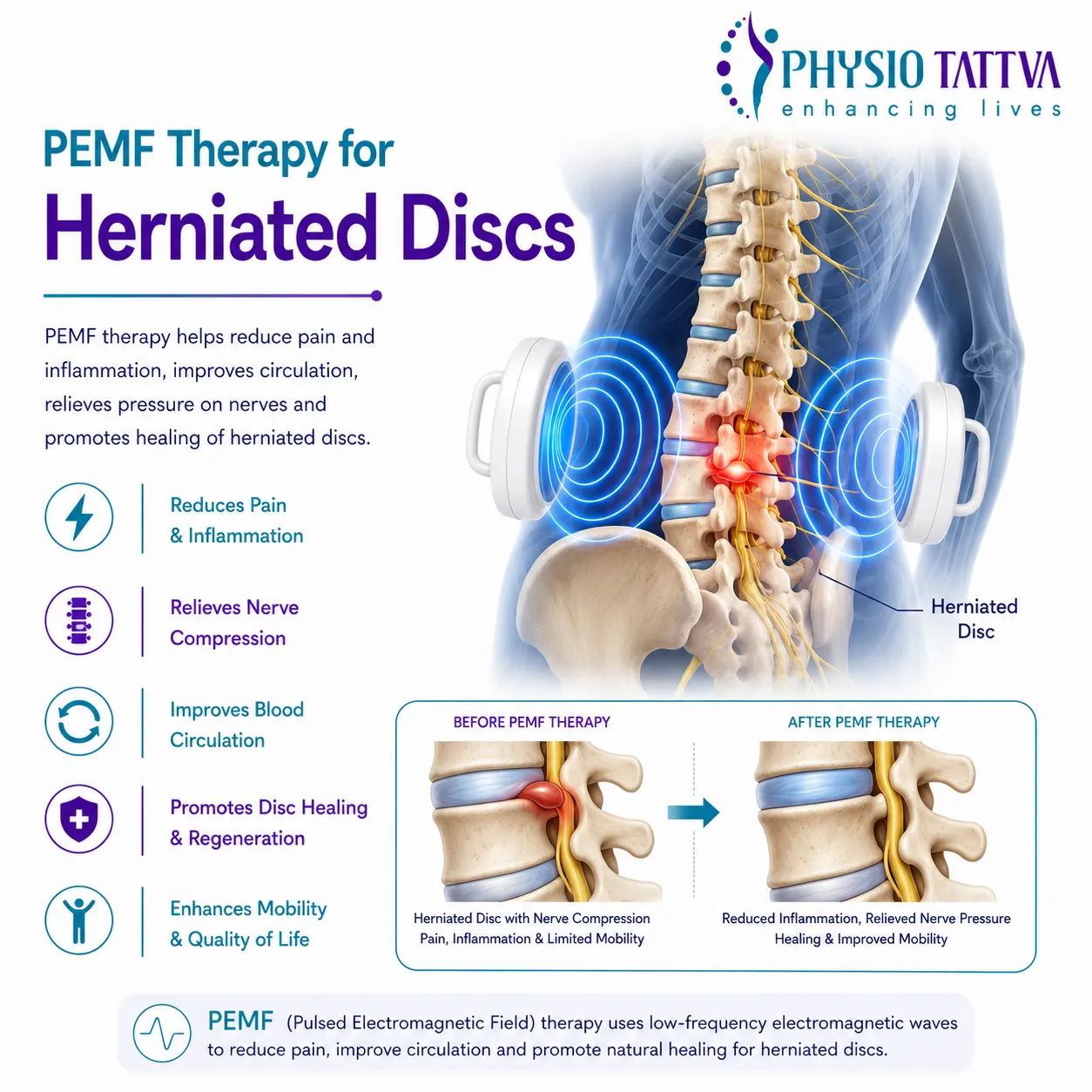
Pulsed Electromagnetic Field (PEMF) therapy uses devices that emit low-frequency electromagnetic fields in short bursts or "pulses." It is not the same as a simple magnet. These energy waves pass through the body, penetrating deeply into tissues like muscle, bone, and nerves.
The core principle is that these pulses stimulate electrical and chemical processes at a cellular level. Think of it like "recharging" the batteries of your cells (the mitochondria). This cellular optimization can help kickstart the body's natural repair mechanisms.
How Does PEMF Therapy Specifically Help a Herniated Disc?
PEMF therapy doesn't "push" the disc back into place. Instead, it addresses the physiological consequences of the herniation, primarily the pain and inflammation.
Key Mechanisms of Action: PEMF therapy supports recovery from a herniated disc by working through several complementary physiological processes, including:
- Reduces Inflammation: This is the most significant benefit. PEMF has been shown to modulate the inflammatory response by decreasing pro-inflammatory molecules and increasing anti-inflammatory ones. Reducing inflammation around the compressed nerve root can lead to a dramatic decrease in pain.
- Alleviates Pain: PEMF can influence nerve cells by lowering their "excitability," making them less likely to transmit pain signals to the brain. It may also stimulate the release of endorphins, the body's natural painkillers.
- Improves Circulation: The therapy enhances blood flow and microcirculation. Increased circulation delivers more oxygen and nutrients to the damaged disc and surrounding tissues while more efficiently removing metabolic waste products, which is crucial for healing.
- Accelerates Cellular Repair: By stimulating ATP production (the energy currency of the cell), PEMF can energize damaged cells, helping them repair and regenerate more effectively. This can apply to the torn disc annulus and inflamed nerve tissue.
- Relaxes Muscles: Muscle spasms in the back are a common and painful secondary effect of a herniated disc. PEMF has a relaxing effect on tense muscles, helping to break the pain-spasm cycle.
Key Benefits of Using PEMF for a Herniated Disc
When used as part of a structured rehabilitation plan, PEMF therapy offers several important benefits for individuals managing herniated disc pain, including:
- Non-Invasive: It does not require any needles, medication, or surgery.
- Safe with Few Side Effects: When used correctly, PEMF is considered very safe for most people. Reported side effects are rare and mild (e.g., a temporary increase in sensation or slight dizziness).
- Targets the Source: Unlike pain medication that works systemically, PEMF can be applied directly to the affected area of the spine.
- Complementary: It can be safely used alongside other standard treatments like physical therapy, chiropractic care, and stretching to enhance their effectiveness.
- May Reduce Reliance on Medication: By effectively managing pain and inflammation, some users find they can reduce their intake of NSAIDs or other pain relievers.
Safety Considerations and When PEMF Therapy Should Be Avoided
While PEMF therapy is generally safe and well-tolerated, it may not be suitable for everyone. A medical consultation is essential before beginning treatment to ensure it is appropriate for your condition.
PEMF therapy should not be used in the following situations:
- During pregnancy, as the effects on fetal development are not yet fully understood
- With implanted electronic devices, such as pacemakers, cochlear implants, or neurostimulators, due to potential interference
- In individuals with epilepsy, unless cleared by a neurologist, as certain frequencies may increase seizure risk
- During active cancer treatment, particularly when electromagnetic exposure may interfere with ongoing care
In addition to personal health considerations, the quality of the PEMF device is critical. Devices should meet recognised regulatory standards, such as FDA registration. Treatment effectiveness depends on appropriate field intensity (Gauss), frequency (Hz), waveform, and application protocol, all of which should be guided by a trained healthcare professional.
Incorporating PEMF Therapy into a Herniated Disc Recovery Plan
PEMF therapy delivers the best results when it is integrated into a structured and holistic treatment approach rather than used as a standalone solution. Key steps in this process typically include:
- Diagnosis: Get a proper diagnosis from a healthcare professional (e.g., an orthopedist or neurosurgeon) to confirm the herniation and rule out other conditions.
- Consultation: Discuss PEMF with your doctor or physical therapist to ensure it's a safe option for you.
- Application: Therapy can be done in a clinical setting (with a physical therapist or chiropractor) or at home using a portable PEMF device (such as a mat, pad, or ring). Sessions typically last 15-60 minutes, once or twice a day.
- Combine with Other Therapies: For optimal outcomes, PEMF should be used alongside complementary strategies, including:
- Physical Therapy: Continue with prescribed exercises to strengthen core muscles and improve flexibility.
- Proper Posture: Be mindful of your posture when sitting, standing, and lifting.
- Anti-Inflammatory Diet: Reduce foods that promote inflammation (sugar, processed foods) and increase anti-inflammatory foods (omega-3s, leafy greens).
Advanced PEMF Therapy for Herniated Disc Care at Physiotattva
Pulsed Electromagnetic Field (PEMF) therapy presents a promising, non-invasive option for managing the pain, inflammation, and muscle spasms associated with a herniated disc. By stimulating the body's own healing mechanisms at a cellular level, it can serve as a powerful tool for pain relief and improved function.
While not a "cure," it can significantly improve quality of life and work synergistically with other treatments. Always prioritize a professional medical diagnosis and consult your doctor before beginning any new therapy regimen.
At Physiotattva physiotherapy clinics in Bangalore and Hyderabad, you receive personalised care tailored to your specific needs, ensuring effective results and comfort throughout your journey to recovery.
Don’t wait to start your recovery! Get in touch with Physiotattva for more details! Contact us at +91 89510 47001.
Why Physiotattva?
22+
50,000+
95%
200+
25+
4.8
Cities We Serve

Bangalore
At Physio Tattva, we are committed to bring access to quality physio care through ultra-modern clinics and high-skilled practitioners to all.
.webp)
Hyderabad
At Physio Tattva, we are committed to bring access to quality physio care through ultra-modern clinics and high-skilled practitioners to all.
.webp)
Vishakhapatnam
At Physio Tattva, we are committed to bring access to quality physio care through ultra-modern clinics and high-skilled practitioners to all.
Core Treatments
Core Conditions
Core Symptoms
Frequently Asked Questions
Is PEMF therapy painful? What does it feel like?

How many PEMF sessions will I need for my herniated disc?
Can PEMF be used if I have sciatica from my herniated disc?
Is PEMF therapy safe? Are there any contraindications?






%20(1)-p-3200.jpeg)


.jpg)
.webp)
.webp)
.webp)