




Osteoarthritis (OA) is a degenerative joint disease characterized by the breakdown of cartilage, leading to pain, stiffness, and reduced mobility. While there is no cure for OA, managing its symptoms is key to maintaining quality of life. Alongside traditional treatments like exercise and medication, Kinesio taping therapy for Osteoarthritis has emerged as a popular, non-invasive tool to help alleviate pain and improve function.
This article will explore what Kinesio taping is, how it works for OA, its benefits, and what the research says about its effectiveness.
What is Kinesio Taping?
Kinesio tape (or kinesiology tape) is an elastic therapeutic tape made from a blend of cotton and nylon. It was developed by Dr. Kenzo Kase in the 1970s with a unique design intended to mimic the elasticity of human skin.
Unlike rigid athletic tape that immobilizes a joint, Kinesio tape is designed to be flexible and move with your body. Its key features include:
- Elasticity: It can be stretched to 120-140% of its original length.
- Breathability: The porous material allows for comfort over several days.
- Water-Resistant: It can withstand showers and sweat.
- Latex-Free: Most brands are hypoallergenic.
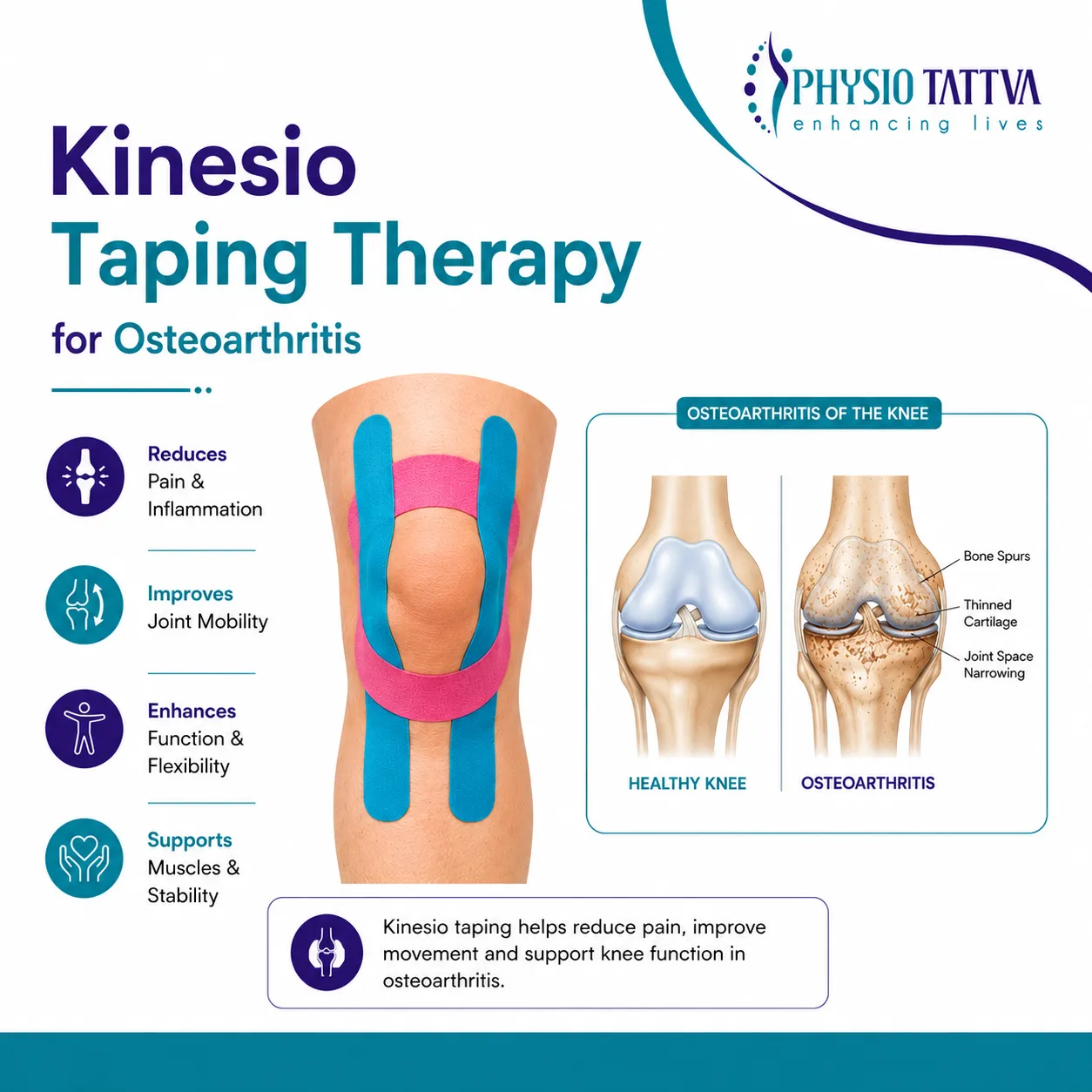
How Does Kinesio Taping Therapy for Osteoarthritis Work?
When applied correctly over a joint affected by osteoarthritis, Kinesio tape works through several proposed mechanisms to provide symptom relief.
- Pain Relief (Neurological Modulation): The tape's light pressure and sensory input on the skin can interfere with pain signals sent to the brain. This is based on the "Gate Control Theory of Pain," where the sensation of the tape "closes the gate" on pain receptors, reducing the perception of discomfort.
- Decompression and Improved Fluid Dynamics: This is perhaps the most critical mechanism for OA. The tape is applied with a slight stretch, which gently lifts the skin. This microscopic lifting creates space between the skin and the underlying tissues.
- Reduces Pressure: Decreases pressure on pain-sensitive nerve endings.
- Enhances Circulation: Improves blood flow to the area, bringing oxygen and nutrients.
- Promotes Lymphatic Drainage: Helps clear out inflammatory byproducts and reduces swelling (edema), a common symptom in OA flare-ups.
- Proprioceptive Support: The tape provides continuous sensory feedback from your skin to your brain about the joint's position (proprioception). This enhanced awareness can lead to improved joint stability, better movement patterns, and reduced feelings of "giving way," especially in KT tape for OA knee applications.
- Mechanical and Functional Assistance: Depending on the application technique, the tape can be used to:
- Support Weak Muscles: Provide light support to muscles around the joint that may have weakened due to pain and disuse.
- Inhibit Overactive Muscles: Help relax muscles that are spasming or tense from compensating for joint instability.
- Unload Specific Areas: Strategically applied tape can help shift pressure away from the most degenerated part of a joint (e.g., the medial or inner side of an OA knee).
Common Applications of Kinesio Taping for Osteoarthritis
Kinesio taping can be applied to many joints affected by osteoarthritis, but it is most commonly used in areas where pain, swelling, and movement limitations significantly affect daily activities. Research and clinical practice have shown particularly good results for the following osteoarthritis sites:
- Knee Osteoarthritis: This is the most widely studied and frequently treated area. Kinesio taping may be used to support the patella (kneecap), reduce excessive stress on the medial or lateral compartments of the knee, and improve joint alignment during movement. It also helps reduce swelling and provides pain relief during walking, stair climbing, and standing.
- Hand and Thumb Osteoarthritis: Taping the carpometacarpal (CMC) joint at the base of the thumb is especially beneficial for individuals who experience pain during gripping, pinching, or fine motor tasks. Kinesio taping can improve joint stability, reduce strain, and make everyday activities such as writing or opening jars more comfortable.
- Hip Osteoarthritis: Although hip taping can be challenging to apply independently, a trained physiotherapist can use Kinesio tape to support the hip joint and encourage proper muscle activation, particularly of the gluteal muscles. This can improve walking mechanics, reduce compensatory strain, and ease hip-related discomfort.
- Spinal Osteoarthritis: Kinesio taping is often applied to the lower back or neck to reduce muscle tension and discomfort associated with facet joint arthritis. The tape provides sensory feedback that supports posture, improves movement awareness, and helps manage pain during daily activities.
Evidence and Effectiveness: What Does the Research Say?
The body of evidence for Kinesio taping therapy for Osteoarthritis is growing, with most research focused on knee OA.
- Positive Findings: Many studies show that Kinesio taping provides short-term improvements in pain, mobility (like walking speed and stair climbing), and joint function for individuals with knee OA.
- Adjunctive Therapy: Research consistently shows that Kinesio tape is most effective when used as part of a comprehensive treatment plan that includes therapeutic exercise and physical therapy. It is a tool to facilitate movement and exercise, not replace it.
- Modest but Meaningful Effects: While not a "miracle cure," the effects on pain and function are often statistically significant and can make a meaningful difference in a person's daily activities.
The consensus is that Kinesio taping is a low-risk, valuable adjunct for osteoarthritis pain relief.
Best Practices and Important Considerations for Kinesio Taping for Osteoarthritis
To achieve safe, effective, and lasting results with Kinesio taping therapy for osteoarthritis, proper technique and professional guidance are essential. Following best practices helps maximise pain relief, improve joint support, and reduce the risk of skin irritation or ineffective application. Key considerations include:
- Consult a Professional First: For the best results, have a physical therapist, chiropractor, or certified Kinesio Taping Practitioner (CKTP) diagnose your condition and perform the initial application. They can teach you how to apply it yourself correctly. Incorrect application is ineffective and may cause skin irritation.
- Skin Preparation: The skin should be clean, dry, and free of lotions, oils, or hair for the best adhesion.
- Application Technique: The "anchor" ends of the tape are always applied with zero stretch. The middle section is stretched to the appropriate degree (usually 15-50%) depending on the therapeutic goal.
- Monitor for Irritation: While rare, skin irritation can occur. If you experience significant itching, redness, or a rash, remove the tape immediately.
- Duration: Kinesio tape can typically be worn for 3–5 days. It should be removed gently by pressing the skin down while slowly lifting the tape, ideally in the direction of hair growth.
Personalised Osteoarthritis Care Through Kinesio Taping at Physiotattva
Kinesio taping therapy for Osteoarthritis offers a safe, drug-free method for managing pain, reducing swelling, and improving joint function. By providing neurological feedback, decompressing tissue, and supporting movement, it serves as an excellent complementary treatment to a primary rehabilitation program of exercise and activity modification.
If you suffer from osteoarthritis, speak to a qualified healthcare professional to see if this versatile joint support taping method can be integrated into your pain management plan.
At Physiotattva physiotherapy clinics in Bangalore and Hyderabad, you receive personalised care tailored to your specific needs, ensuring effective results and comfort throughout your journey to recovery.
Don’t wait to start your recovery! Get in touch with Physiotattva for more details! Contact us at +91 89510 47001.
Why Physiotattva?
22+
50,000+
95%
200+
25+
4.8
Cities We Serve

Bangalore
At Physio Tattva, we are committed to bring access to quality physio care through ultra-modern clinics and high-skilled practitioners to all.
.webp)
Hyderabad
At Physio Tattva, we are committed to bring access to quality physio care through ultra-modern clinics and high-skilled practitioners to all.
.webp)
Vishakhapatnam
At Physio Tattva, we are committed to bring access to quality physio care through ultra-modern clinics and high-skilled practitioners to all.
Core Treatments
Core Conditions
Core Symptoms
Frequently Asked Questions
How long does Kinesio tape stay on?

Is Kinesio taping painful to apply or remove?
Can anyone use Kinesio tape?






%20(1)-p-3200.jpeg)


.jpg)
.webp)
.webp)
.webp)