





Piriformis syndrome can cause persistent buttock pain, often radiating down the leg due to irritation of the sciatic nerve, making routine activities such as sitting, walking, and sleeping uncomfortable. While the condition can be disruptive, simple at-home strategies can play an important role in early pain management. Hot and cold therapy is one of the most accessible and effective first-line approaches to reducing discomfort. Understanding when to use ice to calm inflammation and when to apply heat to relax tight muscles can significantly improve symptom control.
This article outlines how heat and cold therapy work, when each should be used, and how they fit into a broader recovery and rehabilitation plan.
The Science Behind Hot and Cold Therapy for Piriformis Syndrome
Hot and cold therapy is more than a simple comfort measure, it works by triggering specific physiological responses in the body that help control pain, inflammation, and muscle tension. Understanding how each modality affects tissues and nerves can help you use them more effectively and at the right time during recovery.
Cold Therapy (Cryotherapy)
Think of cold as the inflammation fighter. It works by constricting blood vessels (vasoconstriction), which reduces blood flow to the area. This leads to:
- Reduced Swelling and Inflammation: Less fluid and inflammatory cells reach the irritated piriformis muscle and sciatic nerve.
- Numbing Effect: Cold temporarily desensitises nerve endings, providing immediate, localised pain relief.
- Decreased Muscle Spasms: Cold can help calm an acutely spasming muscle.
Heat Therapy (Thermotherapy)
Think of heat as a muscle relaxer. It works by dilating blood vessels (vasodilation), which increases blood flow to the area. This leads to:
- Muscle Relaxation: Increased blood flow delivers oxygen and nutrients that help tight, stiff muscles relax.
- Increased Flexibility: Warm muscles are more pliable and less prone to injury, making heat ideal before stretching.
- Pain Relief: Heat stimulates sensory receptors in the skin, which can block pain signals from reaching the brain.
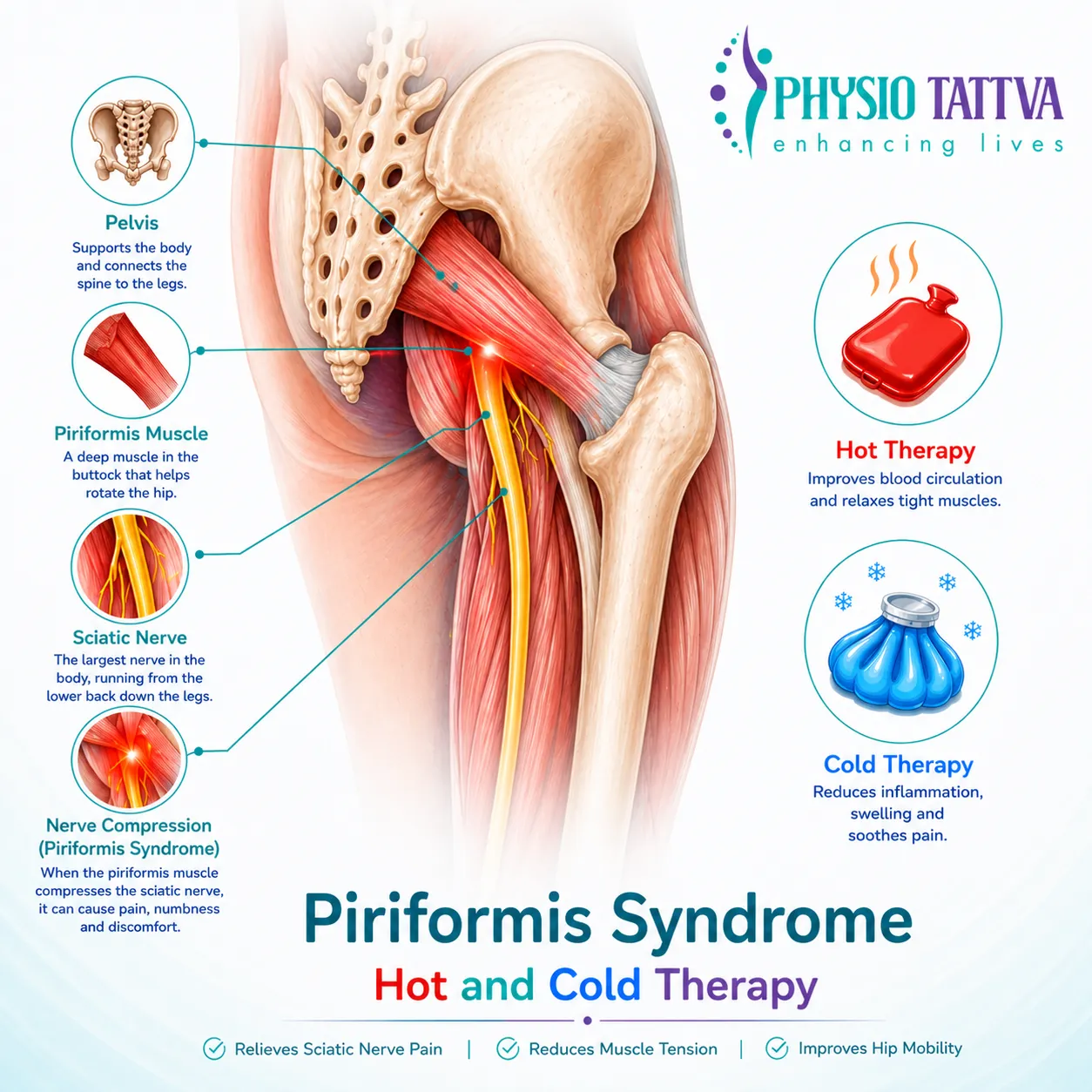
When to Use Cold Therapy for Piriformis Syndrome?
Cold therapy is most effective during phases of acute pain and inflammation. It helps calm irritated tissues, reduce swelling, and temporarily numb pain signals, making it especially useful when symptoms flare up suddenly or feel sharp and intense.
Apply Ice During
Cold therapy is most effective when piriformis pain is sharp, inflamed, or nerve-related. By reducing blood flow to the affected area, ice helps calm irritation and provide quick pain relief. Apply cold therapy in the following situations:
- The First 48-72 Hours of a Flare-Up: When the pain first starts or suddenly worsens, cold is your best choice to reduce initial inflammation.
- After Activity: Following exercise, a long walk, or prolonged sitting that aggravates your symptoms.
- When You Feel Sharp, Shooting Pain: If the pain is acute and nerve-related, cold can help numb the area and calm the irritation.
How to Apply Cold Therapy
To apply cold therapy safely and effectively, follow these guidelines:
- Choose Your Tool: An ice pack, frozen gel pack, or even a bag of frozen peas will work.
- Protect Your Skin: Never apply ice directly to your skin. Wrap your cold pack in a thin towel or pillowcase.
- Positioning: Lie on your stomach or side and place the pack directly over the most painful spot in your buttock.
- Duration: Apply for 15-20 minutes at a time.
- Frequency: You can repeat every 2-3 hours during an acute flare-up.
When to Use Heat Therapy for Piriformis Syndrome?
Heat therapy is most beneficial when piriformis pain is related to muscle tightness, stiffness, or long-standing discomfort rather than acute inflammation. By increasing blood flow and relaxing the muscle, heat helps ease tension and improve flexibility.
Apply Heat During
Times when pain is chronic or related to muscle tension rather than acute inflammation.
- Before Stretching: Warming the piriformis muscle for 10-15 minutes will make it more flexible and allow for a deeper, safer stretch.
- To Relieve General Stiffness: Use heat in the morning to loosen up stiffness or after a long day of being sedentary.
- For Chronic, Dull Aches: If the sharp, inflammatory phase has passed, heat can provide significant comfort and promote healing.
How to Apply Heat Therapy?
Follow these simple guidelines to ensure heat is used safely and effectively for piriformis muscle relief:
- Choose Your Tool: A heating pad, warm compress, hot water bottle, or a warm bath/shower works well.
- Protect Your Skin: Use a moderate temperature to avoid burns. If using a heating pad, place a layer of clothing or a towel between the pad and your skin.
- Positioning: Place the heat source over the tight muscle in your glute. A warm bath is excellent for overall muscle relaxation.
- Duration: Apply for 15-20 minutes. Do not fall asleep with a heating pad on.
- Frequency: Use as needed for stiffness, especially before physical therapy or stretching exercises.
The Best of Both Worlds: Contrast Therapy
When piriformis pain includes both stiffness and inflammation, combining heat and cold through contrast therapy can be especially effective. This method creates a gentle “pumping” effect that helps flush out inflammation with cold while drawing fresh, oxygen-rich blood into the area with heat.
How to Apply Contrast Therapy:
- Start with 3-4 minutes of heat.
- Immediately switch to 1 minute of cold.
- Repeat this cycle 3-4 times, always ending with cold.
This is particularly effective for sub-acute pain, an injury that is a few days old but still has some lingering inflammation and stiffness.
Integrating Therapy into a Broader Treatment Plan
Hot and cold therapy is a powerful tool for symptom management, but it's not a cure. For long-term relief from Piriformis Syndrome, you must address the root cause—usually a tight and/or weak piriformis muscle.
Combine your hot and cold routine with these essential components:
- Stretching: After warming up the muscle, perform gentle piriformis stretches (like the supine piriformis stretch or pigeon pose) to lengthen the muscle and relieve pressure on the sciatic nerve.
- Strengthening: Work with a physical therapist to strengthen the surrounding gluteal muscles (like the gluteus medius) with exercises like clamshells and bridges. Stronger supporting muscles reduce the strain on the piriformis.
- Foam Rolling: Use a foam roller or lacrosse ball to perform self-myofascial release on the piriformis and surrounding glute muscles. (Note: Avoid this if it causes sharp, shooting pain).
- Professional Guidance: Always consult with a doctor or physical therapist to get an accurate diagnosis and a personalised treatment plan.
Helping You Move Comfortably Again with the Right Therapy | Physiotattva
Hot and cold therapy can be highly effective first-line tools for managing piriformis syndrome when used correctly and at the right time. Ice helps control acute inflammation and nerve irritation, while heat supports muscle relaxation, flexibility, and recovery from chronic stiffness. Understanding when to use each—and how to integrate them with stretching, strengthening, and professional physiotherapy guidance- can significantly reduce pain, prevent flare-ups, and support long-term recovery. For persistent or worsening symptoms, a personalised assessment from a healthcare professional ensures that underlying causes are addressed and recovery stays on track.
At Physiotattva physiotherapy clinics in Bangalore and Hyderabad, you receive personalised care tailored to your specific needs, ensuring effective results and comfort throughout your journey to recovery.
Don’t wait to start your recovery! Get in touch with Physiotattva for more details! Contact us at +91 89510 47001.
Why Physiotattva?
22+
50,000+
95%
200+
25+
4.8
Cities We Serve

Bangalore
At Physio Tattva, we are committed to bring access to quality physio care through ultra-modern clinics and high-skilled practitioners to all.
.webp)
Hyderabad
At Physio Tattva, we are committed to bring access to quality physio care through ultra-modern clinics and high-skilled practitioners to all.
.webp)
Vishakhapatnam
At Physio Tattva, we are committed to bring access to quality physio care through ultra-modern clinics and high-skilled practitioners to all.
Core Treatments
Core Conditions
Core Symptoms
Frequently Asked Questions
Is it better to use heat or ice for sciatica pain from piriformis syndrome?

Can I use pain-relief gels with hot or cold packs?
How long should I wait between hot or cold therapy sessions?
What should I do if the pain gets worse after applying heat or cold?
What other home remedies complement heat and cold therapy?






%20(1)-p-3200.jpeg)


.jpg)
.webp)
.webp)
.webp)