





Plantar fasciitis often reveals itself through intense heel pain, especially during the first steps after rest, making everyday movement uncomfortable and limiting. Although approaches such as stretching, icing, and orthotic support can ease symptoms temporarily, they may not fully address the underlying tissue damage and inflammation. Pulsed Electromagnetic Fields (PEMF) therapy for plantar fasciitis offers a modern, non-invasive approach that works at a cellular level to reduce inflammation, support tissue repair, and promote lasting healing rather than short-term relief.
What is Plantar Fasciitis?
Before diving into the solution, let's understand the problem. The plantar fascia is a thick band of tissue that runs across the bottom of your foot, connecting your heel bone to your toes. When this ligament becomes inflamed and strained due to overuse, improper footwear, or biomechanical issues, it results in plantar fasciitis. The condition is characterised by:
- Stabbing pain near the heel, especially in the morning.
- Pain that worsens after long periods of standing or activity.
- Dull, aching foot pain that can last all day.
- Inflammation and micro-tears in the fascia ligament.
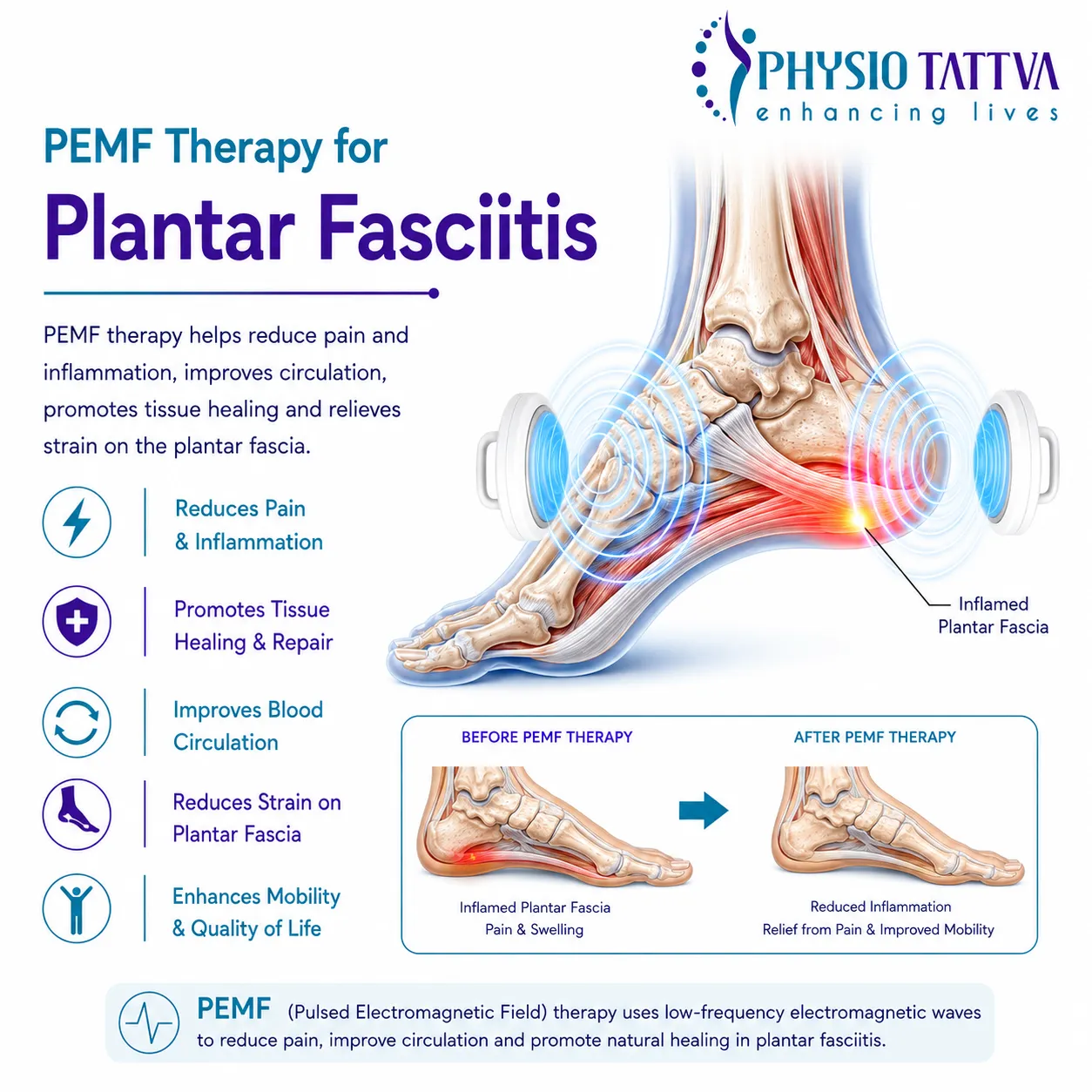
What is Pulsed Electromagnetic Fields (PEMF) Therapy?
Pulsed Electromagnetic Fields (PEMF) therapy is a safe, non-invasive treatment that uses targeted energy waves to stimulate and encourage the body's natural recovery processes. Think of it like a "battery charger" for your cells. When cells are injured or inflamed, they lose some of their electrical charge, slowing down their function. PEMF therapy delivers low-frequency electromagnetic pulses directly to the affected area, recharging these cells and optimising their ability to repair themselves, reduce inflammation, and function properly.
How Does PEMF Therapy for Plantar Fasciitis Work?
When you apply pulsed electromagnetic fields therapy for plantar fasciitis, you are initiating a cascade of healing effects directly where you need them most. Here’s how it helps your foot pain:
1. Reduces Inflammation: Inflammation is the primary source of pain in plantar fasciitis. PEMF therapy has been shown to influence the body’s inflammatory response, reducing swelling and the production of inflammatory molecules. By calming the inflammation in the plantar fascia, PEMF provides rapid and effective pain relief.
2. Enhances Blood Circulation: Healing requires a steady supply of oxygen and nutrients, which are delivered by your blood. PEMF therapy improves circulation and microcirculation in the foot, ensuring that the damaged plantar fascia tissue receives the resources it needs to repair itself. Better blood flow also helps flush out metabolic waste and toxins, further reducing pain and swelling.
3. Accelerates Cellular Repair and Regeneration: This is where PEMF truly shines. The therapy stimulates the production of Adenosine Triphosphate (ATP), the primary energy source for all cellular activity. With more ATP, the cells in your plantar fascia can work more efficiently to repair the micro-tears that cause chronic pain, leading to faster and more complete tissue regeneration.
4. Provides Natural, Drug-Free Pain Relief: PEMF therapy can influence nerve cells to reduce the transmission of pain signals to the brain. It also stimulates the production of endorphins, the body’s natural painkillers. This makes it an excellent drug-free alternative to NSAIDs or cortisone injections, which can have unwanted side effects.
The Benefits of Using PEMF Therapy for Heel Pain
PEMF therapy stands out as an effective and patient-friendly option for managing plantar fasciitis, especially when conventional treatments have provided only limited relief. By supporting the body’s natural healing processes at a cellular level, PEMF offers several clear advantages that make it a valuable addition to a comprehensive heel pain management plan:
- Non-Invasive and Safe: PEMF therapy does not involve needles, injections, surgery, or medication. It is a gentle, well-tolerated treatment with a strong safety profile, suitable for long-term use under professional guidance.
- Addresses the Root Cause: Unlike treatments that only mask the pain, PEMF promotes actual healing of the damaged ligament.
- Convenient At-Home Treatment: Many high-quality PEMF devices are available for home use, allowing you to perform treatments on your own schedule.
- Complements Other Therapies: PEMF works synergistically with other treatments like stretching, physical therapy, and proper footwear to enhance overall results.
- Reduces Recovery Time: By accelerating the body's natural healing mechanisms, PEMF can help you get back on your feet and return to your favourite activities sooner.
PEMF vs. Traditional Plantar Fasciitis Treatments
Plantar fasciitis can be managed through several treatment approaches, each offering varying levels of relief and recovery. While conventional methods often focus on symptom control, newer therapies like PEMF aim to support deeper tissue healing. Understanding how these options compare can help in choosing the most effective path for long-term heel pain relief.
- Icing and Rest: Commonly used to manage acute flare-ups, icing and rest help calm inflammation and ease pain temporarily. However, they do not repair the underlying tissue damage, whereas PEMF therapy promotes cellular repair and sustained healing.
- Stretching Exercises: Stretching targets tight calf and foot muscles to reduce strain on the plantar fascia. Results can be slow and may cause discomfort initially. PEMF therapy reduces pain and inflammation, making stretching easier and more effective.
- Cortisone Injections: These injections suppress inflammation quickly but may weaken the plantar fascia and increase the risk of recurring pain. PEMF offers a non-invasive alternative that supports tissue strength and recovery without steroid-related side effects.
- Surgical Treatment: Surgery is usually reserved for severe cases and involves cutting part of the plantar fascia to relieve tension. It carries risks, requires recovery time, and may lead to complications. PEMF therapy provides a non-surgical option that can be explored before surgery is considered.
- PEMF Therapy: By reducing inflammation and stimulating cellular regeneration, PEMF addresses the root cause of plantar fasciitis. Although it requires consistent use, it offers a long-term, drug-free solution focused on healing rather than temporary relief.
Helping You Return to Pain-Free Movement with Confidence| Physiotattva
Plantar fasciitis can significantly impact comfort, mobility, and quality of life when left unresolved. While conventional treatments may ease symptoms temporarily, they often fall short of addressing the underlying inflammation and tissue damage. Pulsed Electromagnetic Fields (PEMF) therapy for plantar fasciitis offers a safe, non-invasive approach that works at a cellular level to reduce inflammation, support tissue repair, and promote long-term healing. When used consistently and, where appropriate, alongside physiotherapy and lifestyle adjustments, PEMF therapy can help restore pain-free movement and allow you to return confidently to everyday activities.
At Physiotattva physiotherapy clinics in Bangalore and Hyderabad, you receive personalised care tailored to your specific needs, ensuring effective results and comfort throughout your journey to recovery.
Don’t wait to start your recovery! Get in touch with Physiotattva for more details! Contact us at +91 89510 47001.
Why Physiotattva?
22+
50,000+
95%
200+
25+
4.8
Cities We Serve

Bangalore
At Physio Tattva, we are committed to bring access to quality physio care through ultra-modern clinics and high-skilled practitioners to all.
.webp)
Hyderabad
At Physio Tattva, we are committed to bring access to quality physio care through ultra-modern clinics and high-skilled practitioners to all.
.webp)
Vishakhapatnam
At Physio Tattva, we are committed to bring access to quality physio care through ultra-modern clinics and high-skilled practitioners to all.
Core Treatments
Core Conditions
Core Symptoms
Frequently Asked Questions
Is PEMF therapy safe for plantar fasciitis?

How long until I see results from PEMF therapy?
How do I use a PEMF device on my foot?
Can I use PEMF for other conditions?






%20(1)-p-3200.jpeg)


.jpg)
.webp)
.webp)
.webp)