




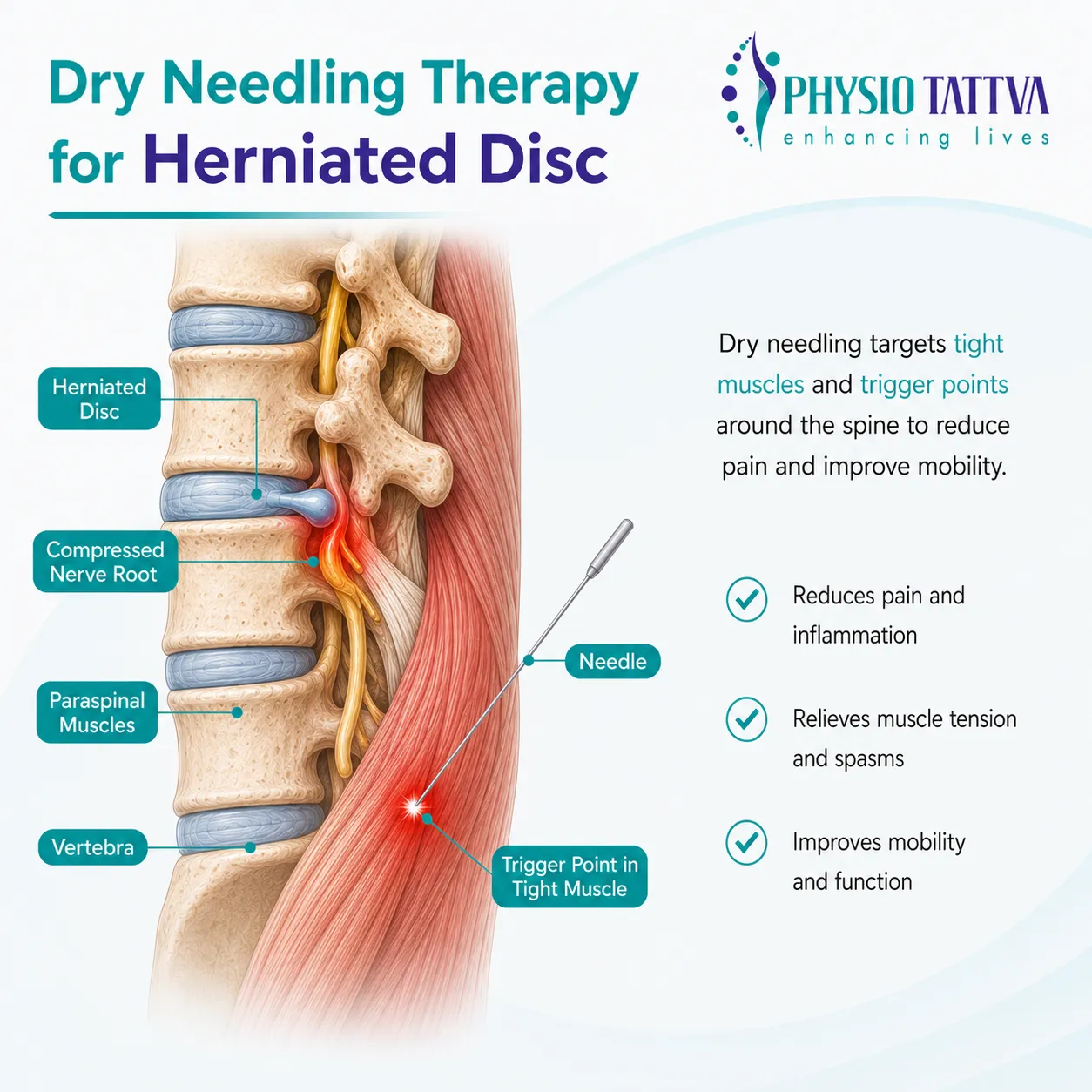
Dry needling therapy is used to manage symptoms associated with a herniated disc by targeting tight muscles and trigger points that develop around the spine. While the treatment does not repair the disc itself, it may help reduce muscle spasms, stiffness, and nerve-related discomfort. By relaxing surrounding muscles and improving circulation, dry needling can make it easier for patients to move comfortably and participate in physiotherapy exercises that support spinal rehabilitation and recovery.
What Is Dry Needling Therapy for Herniated Disc?
Dry needling therapy for herniated disc is a physiotherapy technique used to relieve tight muscles and trigger points that develop around the spine due to disc irritation. During the procedure, a physiotherapist inserts very thin, sterile needles into specific muscle knots to help reduce spasms, improve circulation, and ease pain.
Although dry needling does not repair the herniated disc itself, it can help manage related symptoms such as muscle stiffness, protective muscle guarding, and referred nerve pain. By relaxing these surrounding muscles, the therapy may improve movement and make it easier for patients to participate in rehabilitation exercises that support spinal recovery.
How Does Dry Needling Therapy Work for a Herniated Disc?
Dry needling therapy helps manage symptoms related to a herniated disc by targeting tight muscles and trigger points that develop around the spine due to nerve irritation.
- Targets muscle trigger points: Thin sterile needles are inserted into tight muscle knots around the spine that develop in response to disc irritation.
- Triggers a local twitch response: The needle stimulation causes a brief involuntary muscle contraction that helps the tight muscle fibres relax.
- Improves blood circulation: Needle insertion can increase blood flow to the affected muscles, helping deliver oxygen and nutrients.
- Reduces chemical irritation: Improved circulation may help flush out inflammatory by-products that contribute to muscle pain and sensitivity.
- Modulates pain signals: The stimulation from dry needling can influence how the nervous system processes pain signals.
- Supports rehabilitation: By relaxing tight muscles and reducing discomfort, dry needling may help patients participate more effectively in physiotherapy exercises.
What Herniated Disc Symptoms Can Dry Needling Help Manage?
Dry needling therapy may help manage several symptoms associated with a herniated disc by targeting tight muscles and trigger points around the spine. While it does not treat the disc itself, it can reduce muscle tension and nerve-related discomfort that often accompany disc injuries.
Dry needling may help relieve symptoms such as:
- Lower back or neck muscle pain caused by protective muscle spasms
- Sciatica-like pain that radiates down the leg due to tight gluteal or piriformis muscles
- Muscle stiffness and limited mobility around the spine
- Trigger point pain in muscles surrounding the injured disc
- Referred pain patterns caused by tight spinal or gluteal muscles
- Muscle guarding that develops as the body protects the injured disc
By relaxing these muscles and improving circulation, dry needling may help reduce discomfort and allow patients to move more comfortably during physiotherapy rehabilitation.
What Dry Needling Techniques Are Used for Herniated Disc Symptoms?
Physiotherapists may use different dry needling techniques to address muscle tension and trigger points associated with herniated disc symptoms. The goal is to relax tight muscles, reduce nerve irritation, and improve movement around the affected spinal area.
Common dry needling techniques used include:
- Trigger point needling: Targets tight muscle knots in areas such as the lower back, glutes, or piriformis that may contribute to pain or sciatica-like symptoms.
- Deep dry needling: Inserts the needle deeper into larger muscles to release persistent trigger points and reduce muscle guarding.
- Superficial dry needling: Uses shallow needle insertion to stimulate pain-relieving responses in sensitive or highly irritated muscles.
- Segmental needling: Focuses on muscles connected to specific spinal nerve segments affected by the herniated disc.
- Electrical dry needling (when used): In some cases, mild electrical stimulation may be applied through needles to enhance muscle relaxation and pain modulation.
The specific technique chosen depends on the patient’s symptoms, muscle involvement, and the physiotherapist’s clinical assessment.
What Are the Benefits of Dry Needling for Herniated Disc Pain?
Dry needling therapy may provide several benefits for people experiencing herniated disc–related pain, particularly when muscle spasms and trigger points develop around the affected spinal area. When used alongside physiotherapy exercises, it can help reduce muscle tension and improve movement.
Potential benefits of dry needling for herniated disc symptoms include:
- Targeted muscle pain relief: Helps release tight trigger points in muscles surrounding the spine that may contribute to persistent pain.
- Improved range of motion: Relaxing muscle spasms can allow smoother spinal movement and better flexibility.
- Reduced muscle guarding: Eases protective muscle tightening that often develops around an injured disc.
- Better participation in rehabilitation: With reduced pain and stiffness, patients may perform physiotherapy exercises more comfortably.
- Lower reliance on pain medication: Symptom relief may reduce the need for frequent use of anti-inflammatory or pain-relief medicines.
When integrated into a structured physiotherapy plan, dry needling can support symptom management and help patients progress more effectively through rehabilitation.
What Are the Risks and Side Effects of Dry Needling Therapy for Herniated Disc Symptoms?
Dry needling therapy for herniated disc symptoms is generally considered safe when performed by a trained healthcare professional using sterile, single-use needles. Most reactions are mild and temporary, although some patients may experience minor side effects shortly after treatment.
Common Side Effects May Include
Most side effects of dry needling therapy for herniated disc–related muscle tension are temporary and usually occur in the treated muscles around the spine or lower back. These reactions are typically mild and tend to resolve within a short period after the session.
- Temporary muscle soreness similar to post-exercise discomfort
- Minor bruising around the needle insertion site
- Mild bleeding immediately after needle removal
- Local tenderness or fatigue in the treated muscles
These effects usually settle within 24–48 hours and may improve with gentle movement, hydration, and heat application.
Less Common Risks May Include
Although rare, certain complications may occur if dry needling therapy for herniated disc symptoms is performed incorrectly or in sensitive anatomical areas. These risks are uncommon when the procedure is carried out by a trained and qualified healthcare professional.
- Infection if proper sterile technique is not followed
- Nerve irritation in sensitive areas
- Pneumothorax (collapsed lung), a very rare complication when needling near the chest wall
Precautions and Safety Considerations for Dry Needling Therapy for Herniated Disc Symptoms
Dry needling therapy for herniated disc symptoms is generally considered safe when performed by a qualified physiotherapist using sterile, single-use needles. However, certain precautions should be taken because the treatment targets muscles surrounding the spine and areas close to irritated nerves.
Who Should Consider Dry Needling Therapy for Herniated Disc Symptoms?
Dry needling may be considered for individuals experiencing muscle-related symptoms that often develop alongside a herniated disc. The therapy is typically used when muscle spasms, trigger points, or nerve irritation contribute to persistent pain and restricted movement.
People who may benefit include:
- Individuals with muscle spasms around the lower back or neck caused by a herniated disc
- Patients experiencing trigger point pain in spinal or gluteal muscles linked to disc irritation
- People with sciatica-like symptoms caused by tight piriformis or gluteal muscles
- Individuals who need muscle relaxation to perform physiotherapy exercises for disc rehabilitation
- Patients seeking non-surgical options to manage herniated disc–related muscle pain
Who Should Avoid Dry Needling Therapy for Herniated Disc Symptoms?
Dry needling may not be suitable for everyone with a herniated disc. Certain individuals should avoid the treatment or consult a healthcare professional before undergoing the procedure.
These may include:
- People with bleeding disorders or clotting conditions
- Individuals taking blood-thinning medications
- Patients with severe needle phobia or anxiety related to injections
- Individuals with active infections or skin conditions near the lower back or neck treatment area
- People with certain medical conditions that may affect healing or nerve sensitivity
When Extra Precautions May Be Needed
In some cases, dry needling may still be used for herniated disc symptoms but with additional clinical caution and assessment.
Extra care may be required for:
- Older adults with degenerative spinal conditions or reduced tissue healing capacity
- Patients with chronic lumbar disc herniation accompanied by nerve compression
- Individuals recovering from recent spinal injury, disc flare-ups, or spinal procedures
A qualified physiotherapist will evaluate the severity of the herniated disc, nerve involvement, and surrounding muscle tension before recommending dry needling therapy as part of a physiotherapy treatment plan.
What to Expect During a Dry Needling Session for Herniated Disc Symptoms?
A dry needling session is usually short and performed by a trained physiotherapist. The goal is to relax tight muscles around the spine that may worsen herniated disc symptoms.
- Assessment: The physiotherapist checks your posture, movement, and muscle tension.
- Needle Insertion: Thin, sterile needles are placed into tight muscle trigger points.
- Sensation: You may feel a small prick, a deep ache, or a brief muscle twitch.
- After the Session: Some mild soreness may occur for 24–48 hours. Light movement and heat may help reduce discomfort.
How Soon Can Dry Needling Relieve Herniated Disc Symptoms?
Some people may notice reduced muscle tension or improved movement soon after a dry needling session. However, the time it takes to feel relief can vary depending on the severity of the herniated disc, muscle tightness, and individual response to treatment.
Typical response timeline may include:
- Short-term changes: Some patients feel mild muscle relaxation or better mobility shortly after the session.
- Within 24–48 hours: Mild soreness may occur before the muscles begin to feel more relaxed.
- After 1–3 sessions: Many people start noticing clearer improvement in pain and movement.
- With ongoing treatment: When combined with physiotherapy exercises, dry needling may help support better symptom management over time.
How to Find a Qualified Practitioner for Dry Needling Therapy for a Herniated Disc
A qualified dry needling practitioner should be a licensed healthcare professional with specialised training in dry needling and experience treating spinal and musculoskeletal conditions such as herniated discs. Choosing a trained practitioner helps ensure the treatment is performed safely and appropriately as part of a physiotherapy rehabilitation plan.
When selecting a dry needling practitioner, consider the following:
- Licensed physiotherapist or physical therapist (PT, DPT) with certified training in dry needling techniques
- Chiropractor (DC) trained in trigger point therapy and musculoskeletal treatment
- Medical doctor (MD) experienced in pain management or spinal conditions
- Documented training or certification in dry needling therapy from recognised clinical programmes
- Experience treating spinal conditions such as herniated discs, sciatica, or myofascial pain syndrome
- Ability to integrate dry needling with physiotherapy rehabilitation, including exercises and movement correction
Before starting treatment, it is advisable to ask about the practitioner’s training, certification, and experience with dry needling therapy for herniated disc symptoms. A proper clinical assessment and personalised treatment plan are important indicators of safe and professional care.
How Can Physiotattva Help Manage Herniated Disc Symptoms With Dry Needling Therapy?
Physiotattva offers dry needling therapy as part of a structured physiotherapy programme to help manage muscle spasms, trigger points, and movement restrictions associated with herniated disc symptoms. The treatment focuses on relaxing tight muscles around the spine and supporting rehabilitation.
At Physiotattva, treatment typically includes:
- Detailed physiotherapy assessment: Evaluating spinal movement, muscle tension, and nerve-related symptoms linked to the herniated disc.
- Targeted dry needling therapy: Releasing trigger points in muscles such as the lower back, glutes, and surrounding spinal muscles.
- Pain and muscle tension management: Helping reduce muscle guarding and stiffness around the affected disc area.
- Guided physiotherapy exercises: Supporting spinal stability, posture correction, and long-term rehabilitation.
- Personalised treatment plans: Tailoring therapy based on symptom severity, mobility limitations, and recovery goals.
By combining dry needling with physiotherapy rehabilitation, Physiotattva aims to help patients improve movement, manage pain, and support recovery from herniated disc–related symptoms.
Supporting Recovery from Herniated Disc Symptoms With Dry Needling Therapy
Dry needling therapy can play a valuable supportive role in managing herniated disc–related pain by addressing muscle spasms, trigger points, and secondary nerve irritation. While it does not treat the disc itself, it helps reduce pain and stiffness, allowing patients to move better and participate more effectively in rehabilitation. When combined with corrective exercises and guided physiotherapy, dry needling can support long-term recovery, improved function, and a safer return to daily activities.
At Physiotattva physiotherapy clinics in Bangalore, Hyderabad, and Visakhapatnam- our latest clinic, you receive personalised care tailored to your specific needs, ensuring effective results and comfort throughout your journey to recovery.
Don’t wait to start your recovery! Get in touch with Physiotattva for more details! Contact us at +91 89510 47001.
Key Takeaways:
- Dry needling therapy targets muscle trigger points, helping reduce spasms and tension that develop around the spine due to a herniated disc.
- The treatment does not repair the herniated disc itself but may help manage related symptoms such as muscle stiffness, guarding, and referred nerve pain.
- Thin sterile needles stimulate tight muscles, encouraging them to relax and improving blood circulation in the affected area.
- By reducing muscle tension, dry needling may improve mobility and make physiotherapy exercises easier to perform during rehabilitation.
- Mild soreness after treatment is common and usually resolves within 24–48 hours.
- Dry needling is typically used as part of a structured physiotherapy programme to support recovery from herniated disc–related symptoms.
Why Physiotattva?
22+
50,000+
95%
200+
25+
4.8
Cities We Serve

Bangalore
At Physio Tattva, we are committed to bring access to quality physio care through ultra-modern clinics and high-skilled practitioners to all.
.webp)
Hyderabad
At Physio Tattva, we are committed to bring access to quality physio care through ultra-modern clinics and high-skilled practitioners to all.
.webp)
Vishakhapatnam
At Physio Tattva, we are committed to bring access to quality physio care through ultra-modern clinics and high-skilled practitioners to all.
Core Treatments
Core Conditions
Core Symptoms
Frequently Asked Questions
Is dry needling safe for a herniated disc?

Is dry needling for herniated disc painful?
How many dry needling sessions will I need for herniated disc?
When will I see results after dry needling for a herniated disc?
How effective is dry needling for lumbar herniation relief?
What is the average cost of dry needling sessions for herniated disc pain in India?






%20(1)-p-3200.jpeg)


.jpg)
.webp)
.webp)
.webp)