




Living with lumbar spondylosis can feel like a constant battle. The persistent ache, stiffness, and radiating pain in your lower back can limit your daily activities and significantly impact your quality of life. While this age-related "wear and tear" of the spine is a chronic condition, the pain it causes doesn't have to be your new normal.
If you're searching for an effective, non-surgical treatment to manage your symptoms, it's time to learn about dry needling therapy for lumbar spondylosis. This innovative technique is helping countless individuals find meaningful relief and get back to the lives they love.
What is Lumbar Spondylosis?
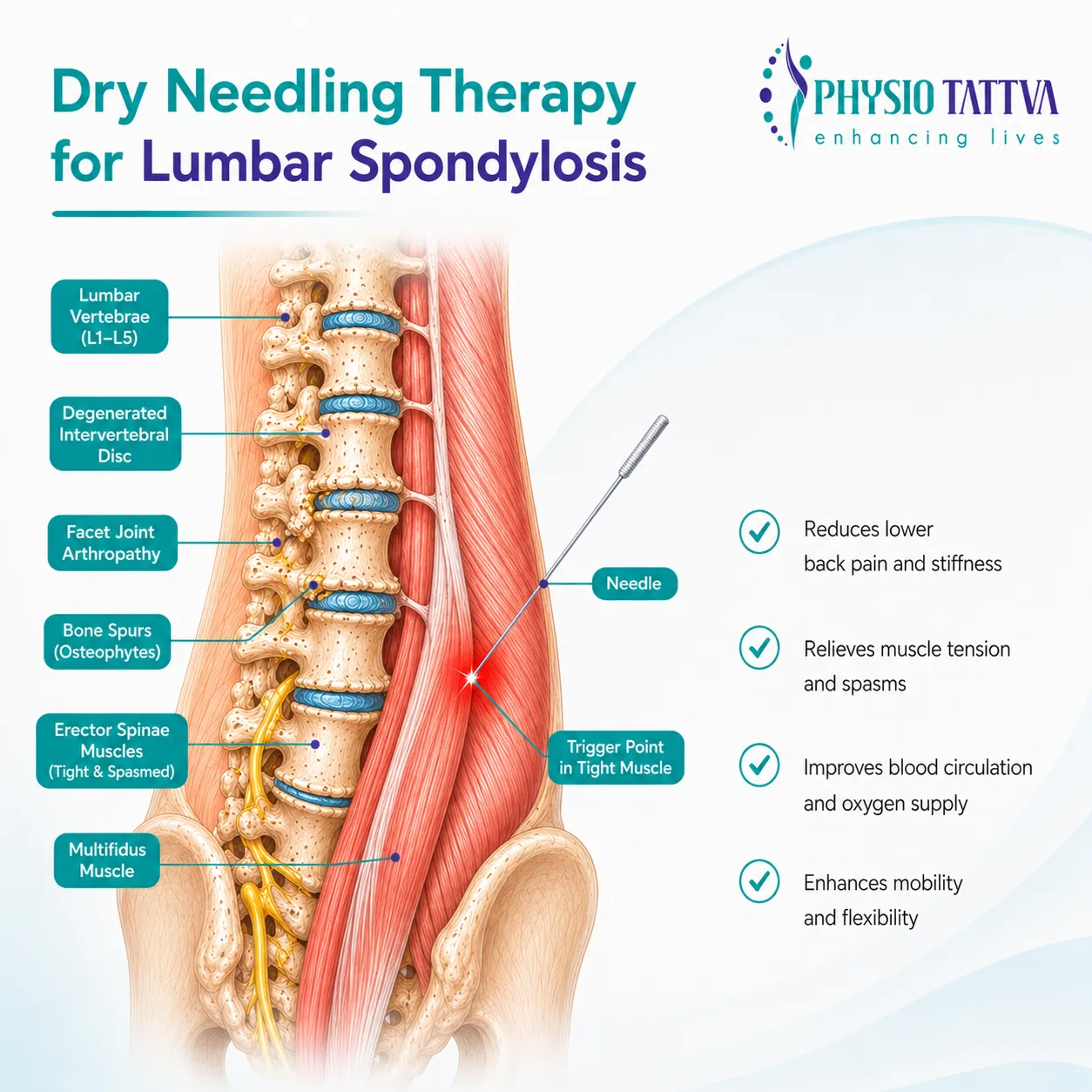
Before we learn about the treatment, let's quickly understand the condition. Lumbar spondylosis is a broad term for degenerative changes in the lower spine, often called spinal osteoarthritis or "back arthritis." It involves:
- Degeneration of spinal discs: The cushions between your vertebrae lose height and hydration.
- Formation of bone spurs: The body's attempt to stabilise the spine can create bony growths.
- Stiffening of ligaments: The tissues connecting the vertebrae become less flexible.
These changes can lead to chronic lower back pain, muscle stiffness, and sometimes, compression of spinal nerves (causing sciatica-like symptoms).
Understanding Dry Needling
Many people confuse dry needling with acupuncture, but they are very different. Acupuncture is based on Traditional Chinese Medicine principles of energy flow (Qi).
Dry needling is a modern, science-based intervention used by physical therapists and other trained practitioners. It involves inserting a very thin, sterile "dry" needle (one without medication) directly into a myofascial trigger point.
A trigger point is essentially a hyper-irritable "knot" within a tense band of muscle. These knots are often a major source of the pain associated with lumbar spondylosis, as muscles surrounding the spine work overtime to compensate for instability.
How Does Dry Needling Specifically Help with Lumbar Spondylosis?
The degenerative nature of spondylosis isn't reversible, but the muscular pain and dysfunction it creates can be treated. Here’s how dry needling provides relief:
- Releases Muscle Knots (Trigger Points): When the needle is inserted into a trigger point, it often elicits a "local twitch response." This is an involuntary muscle contraction followed by immediate relaxation. This process effectively "resets" the muscle, releasing the knot, and alleviating the deep, aching pain it causes. For spondylosis, this is crucial for muscles like the quadratus lumborum (QL), glutes, and spinal erectors.
- Reduces Local Inflammation: The needle insertion creates a micro-lesion that triggers a natural healing response. This increases blood flow to the area, which helps flush out inflammatory chemicals and deliver oxygen and nutrients needed for tissue repair.
- Alleviates Nerve Irritation: Tight, spasming muscles in the lower back and glutes can put pressure on nearby nerves, like the sciatic nerve. By releasing these deep muscles, dry needling can reduce this compression, easing radiating pain, tingling, or numbness in the leg.
- Improves Mobility and Function: When your muscles are no longer in a state of constant tension, your range of motion improves. This makes it easier (and less painful) to perform daily activities and engage in the therapeutic exercises prescribed by your physical therapist.
What to Expect During a Dry Needling Session
If you're considering this therapy, it's helpful to know what the process looks like so you feel confident and prepared. A typical dry needling session is simple, structured, and designed to ensure your comfort at every step. Here’s how it usually looks like:
- Assessment: Your therapist will first assess your movement and palpate your lower back muscles to identify the exact trigger points contributing to your pain.
- Procedure: You will be positioned comfortably, and the therapist will clean the skin. They will then gently insert the sterile needle into the targeted muscle. You may feel a slight prick, but the primary sensation is often a deep ache or the muscle twitching.
- Aftercare: After the session, you might feel a bit of soreness, similar to post-workout muscle fatigue. Your therapist will likely recommend gentle stretching, applying heat, and staying hydrated.
Is Dry Needling a Standalone Cure?
It's important to have realistic expectations. Dry needling is not a cure for the underlying degenerative changes of spondylosis. However, it is an incredibly powerful tool for managing the muscular pain that is a huge component of the condition.
The most effective approach combines dry needling therapy with a comprehensive physical therapy program. Dry needling creates a window of opportunity where pain is reduced and mobility is increased, making it the perfect time to work on:
- Strengthening your deep core and back muscles.
- Improving your posture and body mechanics.
- Increasing your overall flexibility.
Take the Next Step Toward a Pain-Free Back With Physiotattva
If you're tired of lumbar spondylosis dictating what you can and can't do, it may be time to explore smarter, more effective treatment options. Dry needling therapy offers a safe, targeted, and evidence-based way to break the cycle of muscle pain, stiffness, and dysfunction. By releasing deep trigger points and restoring mobility, it creates the foundation you need to move more comfortably and return to the activities you enjoy. With the right physiotherapy plan, this approach can significantly improve your quality of life and support long-term pain management.
At Physiotattva physiotherapy clinics in Bangalore and Hyderabad, you receive personalised care tailored to your specific needs, ensuring effective results and comfort throughout your journey to recovery.
Don’t wait to start your recovery! Get in touch with Physiotattva for more details! Contact us at +91 89510 47001.
Why Physiotattva?
22+
50,000+
95%
200+
25+
4.8
Cities We Serve

Bangalore
At Physio Tattva, we are committed to bring access to quality physio care through ultra-modern clinics and high-skilled practitioners to all.
.webp)
Hyderabad
At Physio Tattva, we are committed to bring access to quality physio care through ultra-modern clinics and high-skilled practitioners to all.
.webp)
Vishakhapatnam
At Physio Tattva, we are committed to bring access to quality physio care through ultra-modern clinics and high-skilled practitioners to all.
Core Treatments
Core Conditions
Core Symptoms
Frequently Asked Questions
Is dry needling for lower back pain painful?

How many sessions will I need?
Are there any side effects of dry needling for lumbar spondylosis?






%20(1)-p-3200.jpeg)


.jpg)
.webp)
.webp)
.webp)