





If you’ve ever experienced the deep, nagging ache in the buttock that radiates down your leg, you may be familiar with the frustration of piriformis syndrome. This elusive condition, often mistaken for other forms of sciatica, occurs when the piriformis muscle—a small muscle located deep in the buttock—spasms or becomes inflamed and compresses the nearby sciatic nerve.
While traditional treatments like stretching, physical therapy, and medication are cornerstones of management, many sufferers seek alternative, non-invasive options for lasting relief. Enter Pulsed Electromagnetic Fields (PEMF) therapy, an innovative technology showing significant promise in addressing the root causes of piriformis syndrome pain.
This article will explore exactly what PEMF therapy is, how it works, and why it may be the missing piece in your piriformis syndrome recovery plan.
What Is Piriformis Syndrome?
Before diving into the solution, let's clarify the problem.
The piriformis muscle is a small but mighty muscle that runs from your lower spine to the top of your thighbone. The sciatic nerve, the largest nerve in the body, typically runs directly beneath or, in some people, through this muscle.
Piriformis Syndrome occurs when the piriformis muscle:
- Becomes tight or spasms, putting direct pressure on the sciatic nerve.
- Becomes inflamed due to injury or overuse, causing swelling that irritates the nerve.
- Develops scar tissue from a previous injury, entrapping the nerve.
This compression leads to the hallmark symptoms:
- A deep ache or pain in the buttock.
- Pain, tingling, or numbness radiating down the back of the leg (sciatica).
- Increased pain after sitting for long periods, climbing stairs, or running.
What is Pulsed Electromagnetic Fields (PEMF) Therapy?
PEMF therapy is a non-invasive, drug-free treatment that uses low-frequency electromagnetic fields pulsed into the body. Think of it as "recharging" your body's cells. These gentle energy waves pass through the skin and penetrate deep into muscle, bone, and soft tissue, stimulating the body's natural healing and repair mechanisms at a cellular level.
Unlike the harmful electromagnetic fields from power lines or microwaves, the fields used in PEMF therapy are safe, low-frequency, and specifically designed to be therapeutic.
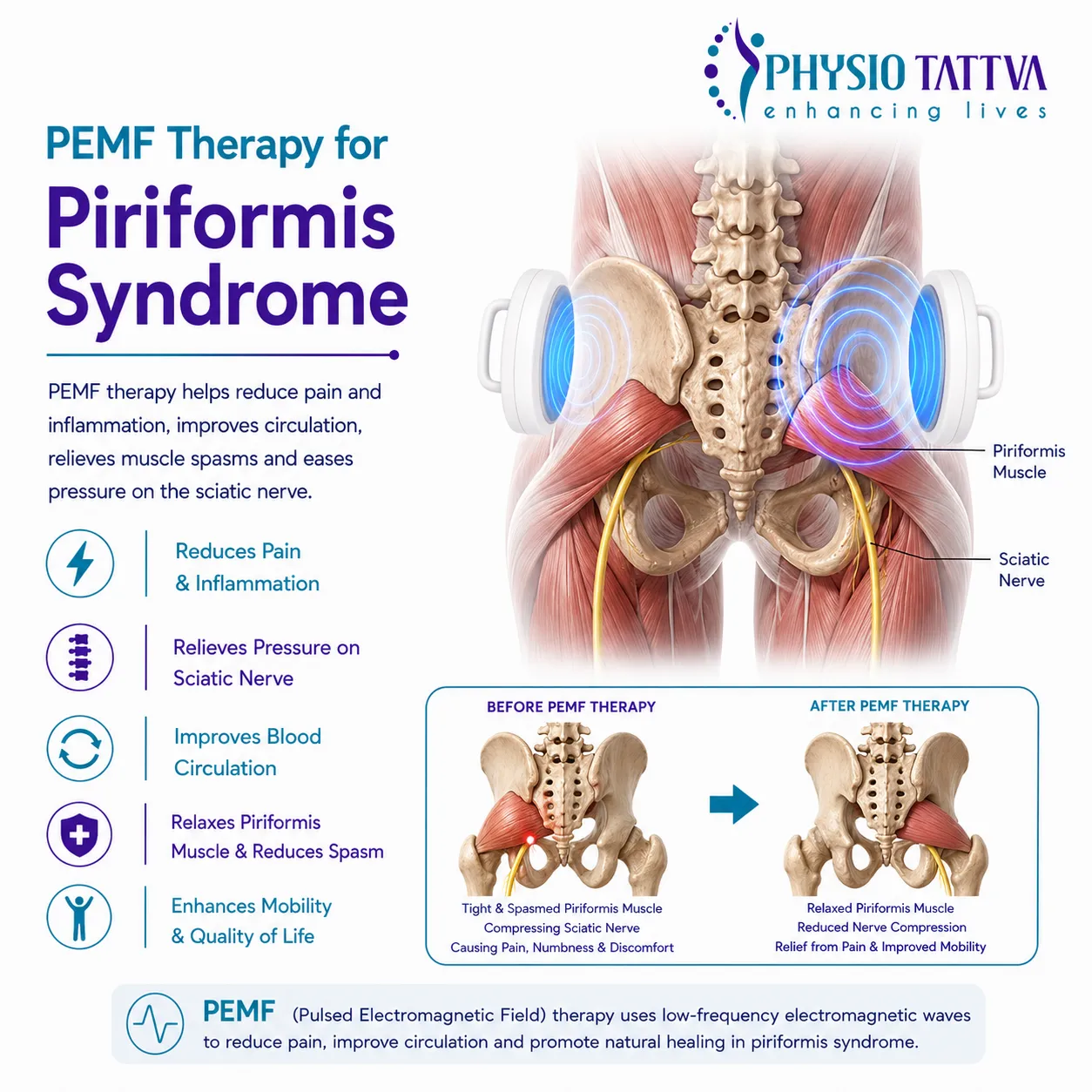
How PEMF Therapy Directly Addresses Piriformis Syndrome?
The reason PEMF is so effective for a condition like piriformis syndrome is that its mechanisms of action target the exact underlying issues: muscle spasm, inflammation, and nerve pain.
Reduces Inflammation and Swelling
Inflammation is a primary driver of pain in piriformis syndrome. PEMF therapy has been shown to 'upregulate' anti-inflammatory mediators and 'downregulate' pro-inflammatory ones. By improving circulation and lymphatic drainage in the affected area, PEMF helps flush out inflammatory byproducts, reducing the swelling around the piriformis muscle and sciatic nerve, thereby relieving pressure.
Relaxes Muscle Spasms
A tight, spasming piriformis muscle is the root cause of the nerve compression. PEMF therapy can influence the flow of ions like calcium across the cell membrane. This helps restore normal membrane potential in muscle cells, encouraging them to release from a contracted, spastic state and return to a relaxed one. This direct muscle-relaxing effect is key to decompressing the sciatic nerve.
Alleviates Nerve Pain (Neuropathy)
Sciatic pain is a form of nerve pain. PEMF therapy has a beneficial effect on nerve cells. It can help reduce nerve irritation and may even promote the repair of the myelin sheath (the protective covering around nerves). Additionally, PEMF can help block pain signals from reaching the brain by stimulating the production of endorphins, the body’s natural painkillers.
Enhances Circulation and Oxygenation
Healing requires oxygen and nutrients. PEMF therapy improves blood flow by causing blood vessels to dilate and preventing red blood cells from clumping together. This enhanced microcirculation delivers more oxygen-rich blood to the piriformis muscle and surrounding tissues, accelerating repair and helping to wash away pain-causing metabolic waste.
The Research and Evidence
While large-scale clinical trials specifically on "PEMF for Piriformis Syndrome" are still emerging, a vast body of research supports its use for the components of the condition:
- Chronic Pain: Numerous studies have demonstrated PEMF's efficacy in managing chronic musculoskeletal pain, including low back pain.
- Inflammation: Research confirms PEMF's role in modulating the inflammatory response, making it beneficial for conditions like arthritis and soft tissue injuries.
- Nerve Repair: The FDA has approved PEMF therapy for several conditions, including healing non-union bone fractures, and research is actively exploring its potential in nerve regeneration and neuropathic pain management.
The collective evidence strongly suggests that by targeting inflammation, muscle spasm, and nerve pain, PEMF is a highly relevant therapy for piriformis syndrome sufferers.
How to Use PEMF for Piriformis Syndrome: A Practical Guide
PEMF therapy can be administered in a clinical setting or with a home-use device. For piriformis syndrome, a local applicator is often the most effective.
- Placement: The applicator (a pad, paddle, or loop) should be placed directly over the site of pain—deep in the center of the buttock on the affected side. You can lie on your side or stomach for easy access.
- Frequency and Intensity: Most modern PEMF devices offer various programs. For piriformis syndrome, programs designed for muscle relaxation, inflammation reduction, and pain relief are ideal. It's generally recommended to start with a lower intensity and gradually increase as your body adapts.
- Duration and Consistency: A typical session may last from 15 to 30 minutes. The key to success with PEMF is consistency. Using the device 1-2 times daily will yield far better results than sporadic use. Healing at a cellular level takes time and repetition.
Is PEMF a Standalone Solution?
PEMF therapy is a valuable and effective tool for managing piriformis syndrome, but it is not intended to be used in isolation. For the best and most lasting results, PEMF works as a complementary therapy that enhances the benefits of other proven treatments within a structured rehabilitation programme. It helps create an environment where muscles relax, inflammation settles, and recovery efforts become more effective.
- Physical Therapy and Stretching: PEMF helps relax the piriformis muscle, allowing it to respond better to targeted stretches such as the Figure-4 stretch and improving overall flexibility.
- Foam Rolling: Using a foam roller or lacrosse ball after a PEMF session can be more comfortable and effective, as reduced muscle tension allows deeper release with less discomfort.
- Activity Modification: Adjusting habits such as prolonged sitting, poor posture, or repetitive movements helps prevent ongoing irritation of the piriformis muscle and supports long-term recovery.
When combined with these approaches, PEMF therapy plays an important role in a comprehensive, physiotherapy-led treatment plan rather than acting as a standalone solution.
Benefits and Considerations
When used appropriately as part of a comprehensive treatment plan, PEMF therapy offers several potential benefits, along with a few important considerations to keep in mind:
Potential Benefits:
- Non-invasive and drug-free.
- Very few reported side effects.
- Can be performed at home, offering convenience.
- Targets the root causes of pain, not just the symptoms.
- May reduce the need for pain medications or more invasive procedures.
Important Considerations:
- Contraindications: PEMF therapy should not be used by individuals who are pregnant, have a pacemaker or other implanted electronic device, or have a history of epilepsy.
- Cost: High-quality PEMF devices can be an investment, though clinics may offer sessions at a per-visit cost.
- Not a Quick Fix: It requires consistent use to achieve lasting results.
Integrated Care for Sustainable Piriformis Relief | Physiotattva
Living with piriformis syndrome often means dealing with ongoing discomfort that limits movement and daily activities. Addressing this condition effectively requires more than symptom relief—it requires targeting inflammation, muscle tension, and nerve irritation together. By supporting the body’s natural healing processes at a cellular level, PEMF therapy can play a meaningful role in easing pain and restoring function. When integrated into a physiotherapy-led treatment plan and used consistently, it offers a practical, non-invasive option for individuals seeking long-term improvement and a return to more comfortable, active living.
At Physiotattva physiotherapy clinics in Bangalore and Hyderabad, you receive personalised care tailored to your specific needs, ensuring effective results and comfort throughout your journey to recovery.
Don’t wait to start your recovery! Get in touch with Physiotattva for more details! Contact us at +91 89510 47001.
Why Physiotattva?
22+
50,000+
95%
200+
25+
4.8
Cities We Serve

Bangalore
At Physio Tattva, we are committed to bring access to quality physio care through ultra-modern clinics and high-skilled practitioners to all.
.webp)
Hyderabad
At Physio Tattva, we are committed to bring access to quality physio care through ultra-modern clinics and high-skilled practitioners to all.
.webp)
Vishakhapatnam
At Physio Tattva, we are committed to bring access to quality physio care through ultra-modern clinics and high-skilled practitioners to all.
Core Treatments
Core Conditions
Core Symptoms
Frequently Asked Questions
What is piriformis syndrome in simple terms?

How does PEMF therapy specifically help with piriformis syndrome?
Is PEMF therapy painful? What does a session feel like?
How long will it take to see results for my piriformis pain?
How do I use a PEMF device for piriformis syndrome?






%20(1)-p-3200.jpeg)


.jpg)
.webp)
.webp)
.webp)