





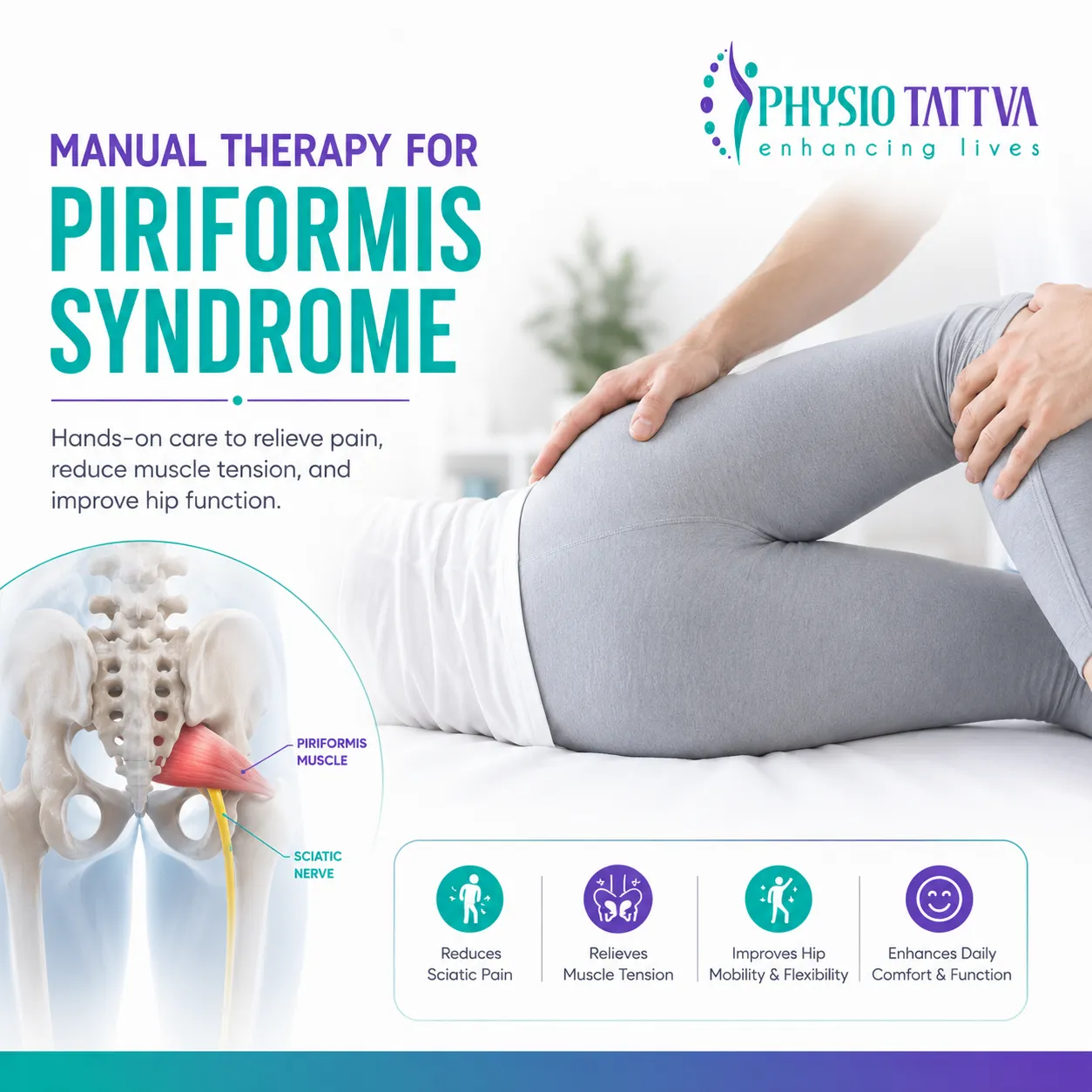
Manual therapy is a cornerstone of effective treatment for Piriformis Syndrome. It involves skilled, hands-on techniques performed by a trained practitioner to diagnose and treat musculoskeletal issues. For Piriformis Syndrome, manual therapy directly addresses the primary source of the problem: a tight, spasming, or dysfunctional piriformis muscle that is compressing the sciatic nerve.
What is Piriformis Syndrome?
Piriformis Syndrome is a neuromuscular condition characterized by pain in the buttock region. It occurs when the piriformis muscle—a small, deep muscle in the gluteal region that runs from the sacrum to the top of the femur—spasms and irritates or compresses the nearby sciatic nerve. This can cause pain not only in the buttock but also radiating down the back of the leg, mimicking symptoms of sciatica.
Why Manual Therapy is a Primary Treatment?
Manual therapy is particularly effective for Piriformis Syndrome because the condition is fundamentally a soft-tissue and biomechanical problem. Unlike treatments that only mask pain, manual therapy aims to:
- Directly release muscle tension in the piriformis and surrounding muscles.
- Improve local blood flow to promote healing and reduce inflammation.
- Restore normal muscle length and flexibility.
- Correct underlying joint dysfunctions (e.g., in the sacroiliac joint or hip) that may contribute to piriformis tightness.
- Decrease nerve irritation by creating more space around the sciatic nerve.
Core Manual Therapy Techniques for Piriformis Syndrome
A therapist will typically use a combination of the following techniques, tailored to the individual patient's needs.
1. Soft Tissue Mobilization / Deep Tissue Massage
This is often the first technique used to address the piriformis muscle directly.
- What it is: The application of specific, often deep, pressure and strokes to the piriformis and other gluteal muscles (like the gluteus medius and minimus).
- How it works: It works to break down adhesions (knots), release general muscle tightness, and increase circulation to the area. Techniques can range from broad, flushing strokes to more specific, deep friction.
2. Trigger Point Therapy (Ischemic Compression)
The piriformis muscle is notorious for developing trigger points—hyperirritable knots of muscle that refer pain in predictable patterns.
- What it is: The application of sustained, direct pressure onto a specific trigger point within the piriformis muscle.
- How it works: The pressure temporarily restricts blood flow (ischemia). Upon release, there is a rush of fresh, oxygenated blood to the area, which helps to flush out pain-causing metabolic waste and "reset" the knotted muscle fibers, breaking the pain-spasm cycle.
3. Myofascial Release (MFR)
This technique addresses the fascia, the web of connective tissue that surrounds muscles and organs.
- What it is: A gentle, sustained pressure and stretch applied to the fascial tissues around the gluteal region, lower back, and hip.
- How it works: Restrictions in the fascia can pull on the piriformis muscle, contributing to its tightness. MFR techniques aim to "melt" or release these restrictions, allowing the muscle to move more freely and reducing overall tension.
4. Muscle Energy Techniques (MET)
MET is an active technique that uses the patient’s own muscle contractions to achieve relaxation and lengthening.
- What it is: The therapist positions the patient's leg to place a gentle stretch on the piriformis. The patient is then asked to gently contract the piriformis muscle against the therapist's resistance for a few seconds, and then relax.
- How it works: This technique, specifically a method called Post-Isometric Relaxation (PIR), leverages a neurological principle. After an isometric contraction, the muscle is in a temporarily relaxed state, allowing the therapist to guide it into a deeper stretch than would otherwise be comfortable.
5. Strain-Counterstrain (Positional Release)
This is a very gentle, indirect technique.
- What it is: The therapist locates a tender point in the piriformis and then moves the patient's leg into a "position of ease"—the specific position where the pain from the tender point disappears. This position is held for about 90 seconds.
- How it works: By holding the muscle in its most relaxed, shortened state, the a-neurological "panic" signal causing the spasm is interrupted. This allows the muscle to reset to its normal resting tone.
6. Joint Mobilization/Manipulation
Sometimes, piriformis tightness is a secondary reaction to a stiff or misaligned joint.
- What it is: Skilled, passive movements applied to the sacroiliac (SI) joint, hip joint, or lumbar vertebrae.
- How it works: If the SI joint or hip joint isn't moving correctly, the piriformis can overwork and tighten to compensate. Restoring normal joint mechanics with mobilization can relieve the abnormal strain on the piriformis, allowing it to relax.
Who Performs Manual Therapy for Piriformis Syndrome?
These techniques should be performed by licensed professionals with specific training in musculoskeletal care, including:
- Physical Therapists (PTs)
- Chiropractors
- Osteopathic Physicians (DOs)
- Licensed/Registered Massage Therapists (with advanced training in clinical or orthopedic massage)
The Bigger Picture: Manual Therapy is Part of a Comprehensive Plan
Manual therapy for piriformis syndrome is a highly effective intervention on its own, but its true strength lies in how well it integrates into a structured, full-body rehabilitation programme. Addressing pain without correcting the underlying movement patterns and muscle imbalances can limit long-term results. For this reason, physiotherapists typically combine hands-on treatment with the following supportive strategies:
- Targeted Stretching: Alongside manual therapy, patients are guided through specific stretches for the piriformis, hamstrings, and hip rotators. These stretches help maintain muscle flexibility, reduce tension between sessions, and prevent recurrence when performed consistently at home.
- Progressive Strengthening: Manual therapy is complemented with strengthening exercises to correct muscle imbalances. This often focuses on activating and strengthening weaker muscles such as the gluteus medius, deep hip stabilisers, and core muscles, which reduces overload on the piriformis muscle.
- Education and Activity Modification: Patients receive practical guidance on posture, sitting ergonomics (such as avoiding prolonged sitting or sitting on a wallet), and movement habits that may aggravate symptoms. Small changes in daily activities can significantly reduce strain on the piriformis.
In summary, manual therapy is a core, evidence-based treatment for piriformis syndrome, but it is most effective when delivered as part of a comprehensive physiotherapy approach. By combining hands-on techniques with stretching, strengthening, and education, this integrated plan not only relieves pain but also restores function and supports long-term recovery.
Guiding You Towards Long-Term Piriformis Health | Physiotattva
Piriformis syndrome can be challenging to manage when deep muscle tension and biomechanical imbalances continue to irritate the sciatic nerve. Manual therapy plays a critical role in addressing these underlying issues by directly releasing tight muscles, restoring joint mobility, and improving tissue function. When delivered by skilled practitioners and integrated with targeted stretching, strengthening, and movement education, manual therapy not only relieves pain but also helps prevent recurrence. A comprehensive, physiotherapy-led approach ensures that recovery is sustainable—supporting better movement, long-term relief, and a return to daily activities with confidence.
At Physiotattva physiotherapy clinics in Bangalore and Hyderabad, you receive personalised care tailored to your specific needs, ensuring effective results and comfort throughout your journey to recovery.
Don’t wait to start your recovery! Get in touch with Physiotattva for more details! Contact us at +91 89510 47001.
Why Physiotattva?
22+
50,000+
95%
200+
25+
4.8
Cities We Serve

Bangalore
At Physio Tattva, we are committed to bring access to quality physio care through ultra-modern clinics and high-skilled practitioners to all.
.webp)
Hyderabad
At Physio Tattva, we are committed to bring access to quality physio care through ultra-modern clinics and high-skilled practitioners to all.
.webp)
Vishakhapatnam
At Physio Tattva, we are committed to bring access to quality physio care through ultra-modern clinics and high-skilled practitioners to all.
Core Treatments
Core Conditions
Core Symptoms
Frequently Asked Questions
How many sessions of manual therapy will I need for piriformis syndrome?

Is manual therapy for piriformis syndrome painful?
Can I just stretch the piriformis muscle at home?
How does Physiotattva diagnose piriformis syndrome?
What makes Physiotattva the right choice for my treatment?






%20(1)-p-3200.jpeg)


.jpg)
.webp)
.webp)
.webp)