




Living with lumbar spondylosis means navigating the daily challenges of lower back pain, stiffness, and discomfort. While medical treatments are essential, simple, at-home strategies can make a significant difference in your quality of life. Among the most effective and accessible of these are hot and cold therapy.
But knowing which to use—and when—is key to unlocking their benefits. This article will break down the science behind hot and cold therapy for lumbar spondylosis, helping you make the right choice to soothe your symptoms and get back to your day.
What is Lumbar Spondylosis?
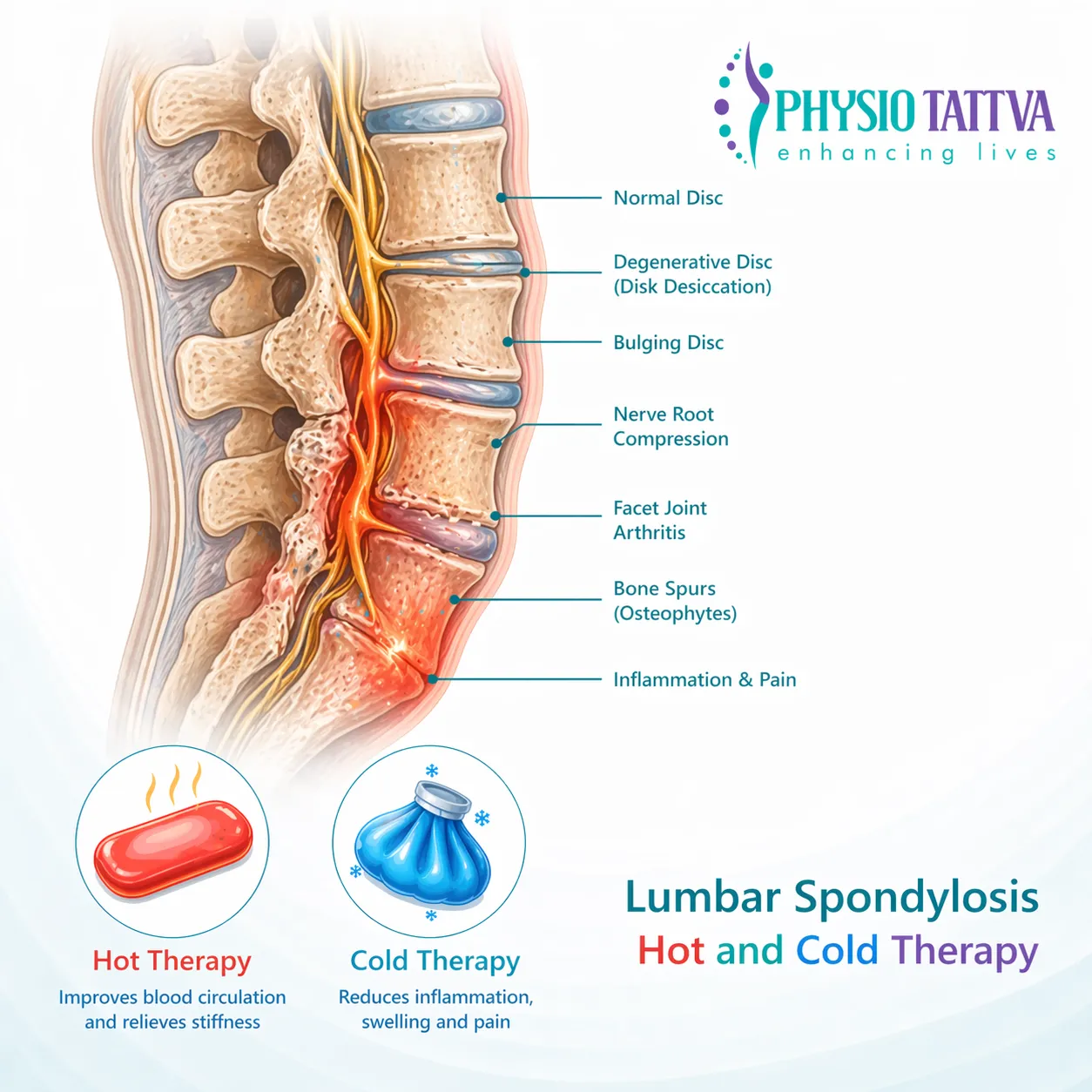
Before we dive into the remedies, let's quickly understand the condition. Lumbar spondylosis is not a single disease but an umbrella term for age-related "wear and tear" of the spine's lower (lumbar) region. It often involves:
- Degenerative Disc Disease: The cushioning discs between your vertebrae lose water and shrink.
- Osteophytes (Bone Spurs): The body grows extra bone to try to stabilize the spine.
- Facet Joint Osteoarthritis: The small joints that allow your spine to bend and twist become arthritic.
These changes can lead to the hallmark symptoms of lumbar spondylosis: chronic lower back pain, morning stiffness, muscle spasms, and reduced flexibility. This is where hot and cold therapy can play a vital role.
Cold Therapy (Cryotherapy): The Inflammation Fighter
Think of cold therapy as your emergency response team. Its primary job is to reduce inflammation and numb acute pain.
How Cold Therapy Works?
When you apply cold to your lower back, it causes vasoconstriction- the narrowing of your blood vessels. This process:
- Reduces Blood Flow: Less blood to the area means a reduction in swelling and inflammation.
- Numbs the Nerves: Cold slows down nerve activity, acting as a natural, local anesthetic to provide immediate pain relief.
- Decreases Muscle Spasms: It can help calm the rapid firing of nerves that causes muscles to spasm during an acute flare-up.
When to Use Cold Therapy for Lumbar Spondylosis?
Use an ice pack or cold gel pack for:
- Acute Flare-Ups: When you experience a sudden, sharp increase in lower back pain.
- After Activity: If you've just done yard work, exercised, or engaged in an activity that you know aggravates your back.
- Sharp, Shooting Pain: Cold is generally better for intense, "hot" pain sensations associated with inflammation.
Pro-Tip: Remember the acronym ICE: Ice, Compression, Elevation. While compression and elevation are more for limb injuries, the principle of using ice for acute pain remains the same.
Hot Therapy (Thermotherapy): The Muscle Relaxer
Think of hot therapy as a comforting, therapeutic hug for your back. Its main goal is to promote blood flow and relax stiff, aching muscles.
How Hot Therapy Works?
When you apply heat, it causes vasodilation- the widening of your blood vessels. This:
- Increases Blood Flow: Enhanced circulation brings more oxygen and nutrients to the damaged tissues, promoting healing.
- Soothes Muscle Stiffness: Heat helps relax tight muscles and increases the elasticity of connective tissues, making it easier to move.
- Reduces Chronic Pain Signals: The warmth can stimulate sensory receptors in the skin, which helps block the transmission of pain signals to the brain.
When to Use Hot Therapy for Lumbar Spondylosis?
Use a heating pad, warm bath, or hot water bottle for:
- Chronic, Dull, Aching Pain: This is the persistent, nagging pain that is characteristic of spondylosis.
- Morning Stiffness: Applying heat first thing in the morning can help loosen up your back and make it easier to start your day.
- Before Stretching or Light Exercise: Warming up your muscles with heat can make them more pliable and reduce the risk of injury.
- General Muscle Soreness and Spasms: Heat is excellent for relieving the deep-seated muscle tension common with this condition.
How to Apply Hot and Cold Therapy Safely?
Improper application can lead to skin damage like ice burn or heat burn. Follow these guidelines:
For Cold Therapy
When applying cold therapy for lumbar spondylosis, it’s important to follow safe and effective practices to prevent skin injury and maximise relief:
- Method: Use a commercial cold pack, a bag of frozen peas, or ice cubes in a sealed bag.
- Protect Your Skin: Always wrap the cold pack in a thin, dry towel. Never apply ice directly to the skin.
- Duration: Apply for 15-20 minutes at a time.
- Frequency: You can reapply every 1-2 hours as needed for an acute flare-up.
For Hot Therapy
Heat therapy can ease stiffness and relax muscles, but it must be used carefully to avoid burns while ensuring therapeutic benefit:
- Method: Use an electric heating pad, a microwavable gel pack, a hot water bottle, or take a warm bath/shower.
- Protect Your Skin: Place a layer of toweling between a heating pad and your skin. Use a moderate temperature—it should be comfortably warm, not painfully hot.
- Duration: Apply for 15-20 minutes. If using low-level continuous heat (like adhesive wraps), you can wear them for several hours as directed.
- Safety Warning: Never fall asleep with an electric heating pad turned on.
Contrast Therapy
Some people find relief by alternating between hot and cold therapy. This creates a "pumping" action in the blood vessels that may help reduce swelling while increasing blood flow. A commonly recommended sequence is 15 minutes of heat followed by 15 minutes of cold, allowing the tissues to relax and then calm inflammation. Always finish with cold if significant swelling or acute inflammation is present, as this helps settle the area and prevent symptoms from worsening.
Integrating Hot and Cold Therapy into a Holistic Treatment Plan
Hot and cold therapy for lumbar spondylosis is highly effective, but it delivers the best results when combined with a well-rounded management plan. Alongside heat and cold applications, your recovery should also include:
- Physical Therapy: Helps you learn targeted stretches and core-strengthening exercises that stabilise the spine and improve mobility.
- Proper Posture and Ergonomics: Reduces daily strain on your lower back, especially during work, driving, and household activities.
- Maintaining a Healthy Weight: Lessens the load on your lumbar spine, easing pressure on joints and discs.
- Medication: Prescribed by your doctor to manage inflammation, pain, and muscle stiffness when necessary.
Together, these strategies create a balanced, long-term approach to reducing pain, improving function, and supporting overall spinal health.
When to See a Professional for Lumbar Spondylosis?
While hot and cold therapy is generally safe and helpful, it’s important to speak with your doctor before starting any new treatment routine—especially if your symptoms are persistent or changing. Seek immediate medical attention if you experience:
- Numbness or weakness in your legs, which may signal nerve involvement.
- Loss of bladder or bowel control, a serious red flag requiring urgent evaluation.
- Pain that is severe, constant, or progressively worsening, despite rest and home care.
- Underlying medical conditions such as diabetes, deep vein thrombosis, or multiple sclerosis, as reduced sensation can increase your risk of injury from temperature-based therapies.
By understanding when professional help is needed and understanding the distinct benefits of heat and cold therapy, you can use these simple techniques more safely and effectively. This empowers you to better manage your lumbar spondylosis symptoms and regain control over your daily comfort.
Move Toward Pain-Free Living with Physiotattva
Managing lumbar spondylosis doesn’t have to feel overwhelming. Hot and cold therapy offers simple, effective ways to reduce pain, ease stiffness, and calm inflammation, helping you stay active and comfortable. When used correctly and consistently, these methods can significantly support your overall spine health. Still, they work best when combined with a holistic approach that includes physiotherapy, proper posture, weight management, and medical guidance. By understanding when to use heat and when to use cold, you gain more control over your symptoms and can make smarter choices for long-term relief, recovery, and improved daily movement.
At Physiotattva physiotherapy clinics in Bangalore and Hyderabad, you receive personalised care tailored to your specific needs, ensuring effective results and comfort throughout your journey to recovery.
Don’t wait to start your recovery! Get in touch with Physiotattva for more details! Contact us at +91 89510 47001.
Why Physiotattva?
22+
50,000+
95%
200+
25+
4.8
Cities We Serve

Bangalore
At Physio Tattva, we are committed to bring access to quality physio care through ultra-modern clinics and high-skilled practitioners to all.
.webp)
Hyderabad
At Physio Tattva, we are committed to bring access to quality physio care through ultra-modern clinics and high-skilled practitioners to all.
.webp)
Vishakhapatnam
At Physio Tattva, we are committed to bring access to quality physio care through ultra-modern clinics and high-skilled practitioners to all.
Core Treatments
Core Conditions
Core Symptoms
Frequently Asked Questions
Which is better for lumbar spondylosis, heat or cold?

How long should I apply heat or cold packs, and how often?
My back is always stiff and achy when I wake up. Should I use heat or cold?
I overdid it with an activity and now my lower back has a sharp, intense pain. What should I do?
Is it safe to use a heating pad overnight for my back pain?





%20(1)-p-3200.jpeg)


.jpg)
.webp)
.webp)
.webp)