




If you're struggling with the debilitating pain and stiffness of a frozen shoulder, you know how much it can impact your daily life. Simple tasks like reaching for a cup or combing your hair can become nearly impossible. While a comprehensive treatment plan from a healthcare professional is essential, Kinesio taping therapy for frozen shoulder has emerged as a powerful, non-invasive tool to help manage symptoms and support your recovery.
This article will explore how this colorful elastic tape can be a game-changer in your rehabilitation journey.
What is Frozen Shoulder (Adhesive Capsulitis)?
Frozen shoulder, medically known as adhesive capsulitis, is a condition characterized by significant pain and stiffness in your shoulder joint. It occurs when the strong connective tissue surrounding the shoulder joint (the joint capsule) becomes thick, tight, and inflamed.
The condition typically progresses through three stages:
- Freezing Stage: A gradual onset of pain. As the pain worsens, your shoulder's range of motion becomes more limited. This stage can last from 6 weeks to 9 months.
- Frozen Stage: Pain may begin to diminish during this stage, but the shoulder becomes increasingly stiff. Daily activities are very difficult. This stage can last from 4 to 6 months.
- Thawing Stage: The shoulder's range of motion slowly begins to improve. A full return to normal strength and motion can take from 6 months to 2 years.
What is Kinesio Taping?
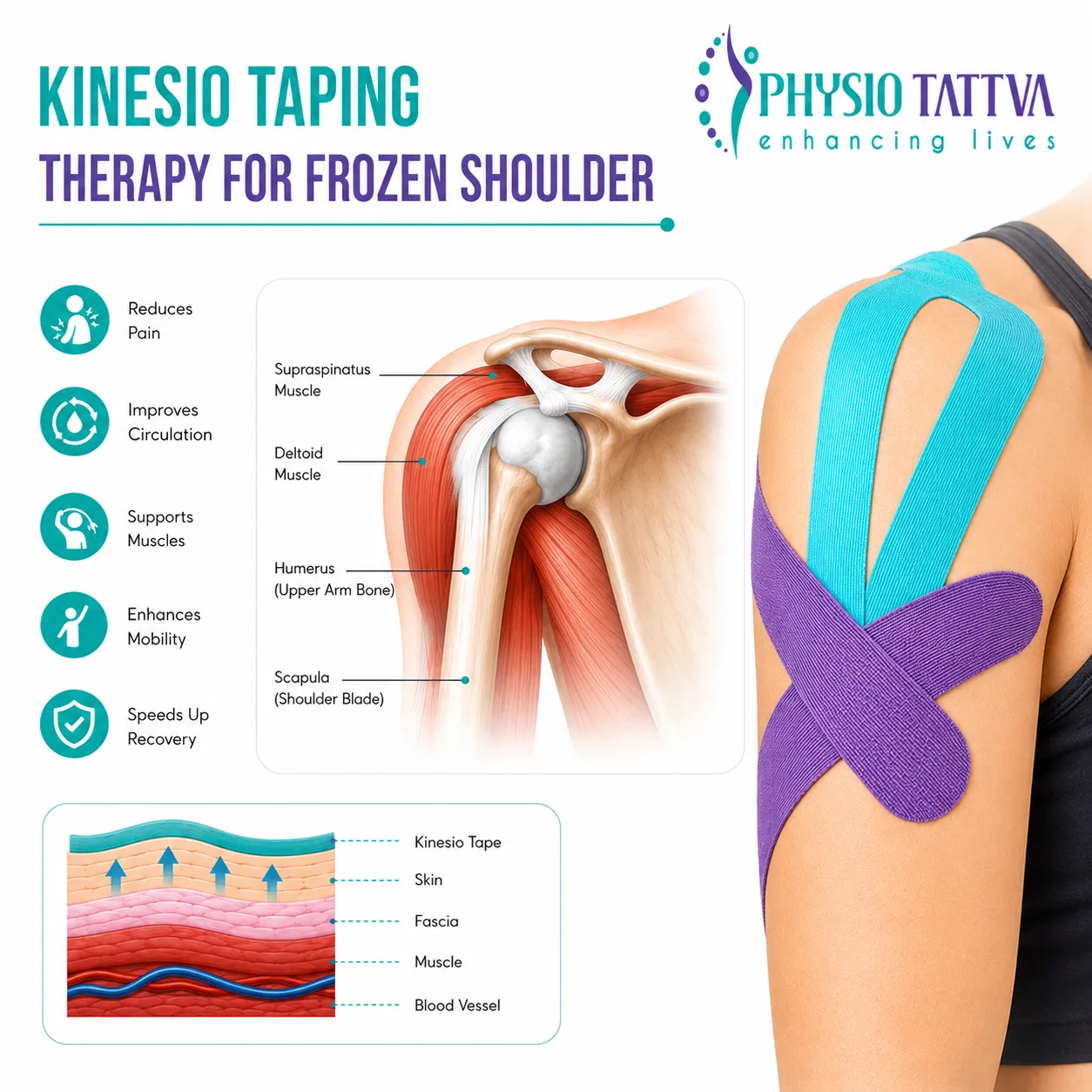
Kinesio tape (or KT tape) is a therapeutic elastic tape designed to mimic the skin's elasticity. Unlike rigid athletic tape that restricts movement, Kinesio tape is flexible and moves with your body. When applied correctly by a trained professional, it works through several proposed mechanisms:
- Decompression and Space Correction: The tape gently lifts the skin, creating a microscopic space between the skin and the underlying tissues. This is thought to reduce pressure on pain receptors and improve the flow of blood and lymphatic fluid.
- Pain Gate Theory: The sensation of the tape on your skin can interfere with pain signals traveling to the brain, providing immediate, albeit temporary, pain relief.
- Proprioceptive Feedback: The tape enhances your brain's awareness of your shoulder's position in space (proprioception). This can help you move with more confidence and control, reducing muscle guarding.
How Kinesio Taping Specifically Helps with Frozen Shoulder
When used as part of a complete physical therapy program, Kinesio taping provides targeted support for the symptoms of adhesive capsulitis.
- Significant Pain Relief: This is often the most immediate benefit. By decompressing the painful area over the deltoid and shoulder joint, the tape can reduce pressure on sensitive nerve endings, offering much-needed relief, especially during the painful "freezing" stage.
- Improved Range of Motion: While Kinesio tape doesn't magically "unfreeze" the joint, it makes movement more tolerable. With less pain, you can more effectively engage in the crucial stretching and range-of-motion exercises prescribed by your physical therapist.
- Reduced Muscle Guarding and Spasms: Chronic shoulder pain often causes surrounding muscles (like the deltoid, rotator cuff, and upper trapezius) to tense up in a protective response called "muscle guarding." Kinesio tape can be applied to inhibit these overactive muscles, encouraging them to relax.
- Decreased Inflammation and Swelling: In the early, inflammatory stage of frozen shoulder, a lymphatic taping application (a "fan cut") can help encourage the drainage of inflammatory fluid away from the joint, potentially reducing swelling and pain.
Common Kinesio Taping Techniques for Frozen Shoulder
For best results and to ensure safety, Kinesio taping should be applied by a physical therapist, chiropractor, or athletic trainer who is certified in its use. The following are examples of common applications.
The Deltoid Decompression "Fan"
This method is widely used to ease pain and reduce strain around the shoulder joint.
- Purpose: To relieve pain directly over the shoulder joint.
- Application: An anchor strip is placed above the painful area. Several thin strips ("tails") are then fanned out over the front, side, and back of the deltoid muscle with a light (15-25%) stretch. This creates a "lifting" effect.
Mechanical Correction for Shoulder Position
This taping method helps improve shoulder alignment and encourages better movement patterns.
- Purpose: To gently guide the shoulder joint into a more optimal position and inhibit postural muscles that contribute to poor mechanics.
- Application: A strip might be applied from the front of the shoulder and pulled back with moderate tension to discourage a forward-rounded posture.
Muscle Inhibition/Facilitation
These techniques are designed to balance muscle activity by calming overactive muscles or helping weaker ones engage properly.
- Purpose: To relax tight, overactive muscles or activate weak ones.
- Application: To inhibit a tight upper trapezius muscle, the tape is applied from the neck towards the shoulder with very light tension. To facilitate a weak deltoid, it might be applied from the shoulder down the arm.
The Role of Kinesio Tape in a Holistic Frozen Shoulder Treatment Approach
Kinesio tape is not a standalone cure for frozen shoulder. Its greatest value lies in its role as a supportive tool within a comprehensive treatment plan that must include:
- Physical Therapy: Targeted stretching and strengthening exercises are non-negotiable for restoring mobility.
- Pain Management: As advised by your doctor, this may include NSAIDs or corticosteroid injections.
- Manual Therapy: Hands-on techniques from a therapist to mobilize the joint.
- Patience: The "thawing" process takes time and consistent effort.
By making exercises less painful and improving your body's awareness, Kinesio tape empowers you to be an active participant in your own recovery, helping you move one step closer to a pain-free, mobile shoulder.
Your Path Forward with Kinesio Taping for Frozen Shoulder
Kinesio taping therapy for frozen shoulder can be a valuable addition to your recovery plan, offering gentle support, pain relief, and improved comfort during daily movement. While it cannot cure adhesive capsulitis on its own, it plays an important role in making stretching, strengthening, and physical therapy more effective and tolerable. The tape enhances body awareness, reduces muscle tension, and helps you perform essential exercises with greater confidence. When combined with guided physiotherapy, consistent home exercises, and proper pain management, it supports steady progress through each stage of frozen shoulder. With the right approach, Kinesio taping becomes a tool that helps you regain mobility, reduce stiffness, and return to pain-free movement.
At Physiotattva physiotherapy clinics in Bangalore and Hyderabad, you receive personalised care tailored to your specific needs, ensuring effective results and comfort throughout your journey to recovery.
Don’t wait to start your recovery! Get in touch with Physiotattva for more details! Contact us at +91 89510 47001.
Why Physiotattva?
22+
50,000+
95%
200+
25+
4.8
Cities We Serve

Bangalore
At Physio Tattva, we are committed to bring access to quality physio care through ultra-modern clinics and high-skilled practitioners to all.
.webp)
Hyderabad
At Physio Tattva, we are committed to bring access to quality physio care through ultra-modern clinics and high-skilled practitioners to all.
.webp)
Vishakhapatnam
At Physio Tattva, we are committed to bring access to quality physio care through ultra-modern clinics and high-skilled practitioners to all.
Core Treatments
Core Conditions
Core Symptoms
Frequently Asked Questions
How effective is Kinesio taping for frozen shoulder?

How quickly can I expect to feel relief after the tape is applied?
Can I apply KT tape for my frozen shoulder myself?
How long can you leave Kinesio tape on?
Are there any side effects or risks associated with taping for a frozen shoulder?






%20(1)-p-3200.jpeg)


.jpg)
.webp)
.webp)
.webp)