




Lower back pain from lumbar spondylosis can be a persistent and frustrating condition, affecting everything from your mobility to your quality of life. While treatments often include medication and physical therapy, a non-invasive and supportive tool is gaining widespread recognition: Kinesio taping therapy for lumbar spondylosis.
This elastic therapeutic tape, often seen on athletes in vibrant colours, offers more than just support. When applied correctly, it can provide significant pain relief, improve function, and empower you to move with greater confidence.
In this article, we'll explore how Kinesio taping works and why it’s becoming a go-to complementary therapy for managing spondylosis symptoms.
What is Lumbar Spondylosis?
Before diving into the solution, let's quickly understand the problem. Lumbar spondylosis is not a single disease but rather a broad term for age-related wear and tear of the spinal discs and joints in your lower back. This degeneration can lead to:
- Degenerative disc disease: The cushions between your vertebrae wear down.
- Osteoarthritis: The cartilage in the facet joints breaks down.
- Bone spurs: The body grows extra bone to try to stabilise the spine.
Common symptoms include chronic lower back pain, stiffness (especially in the morning), sciatica-like radiating pain, and reduced flexibility.
What is Kinesio Taping and How Is It Different?
Kinesio Tape (or KT tape) is not like standard athletic tape. Developed by Dr. Kenzo Kase, it's designed to mimic the elasticity of human skin. This unique property allows it to provide support and relief without restricting your body's natural range of motion.
Instead of rigidly bracing the area, Kinesio tape interacts with the skin and underlying tissues to facilitate healing and reduce pain.
How Kinesio Taping Therapy Helps Lumbar Spondylosis
When a certified practitioner applies Kinesio tape for lumbar spondylosis, they are targeting several key mechanisms to provide relief.
Pain Relief and Decompression
The tape is applied with a specific amount of stretch over the painful area. This gently lifts the skin, creating a microscopic space between the skin and the underlying tissues. This decompression effect is believed to:
- Reduce pressure on nociceptors (pain receptors) located just beneath the skin.
- Create more room for inflamed or compressed tissues, offering immediate relief.
Muscle Support & Postural Feedback
Lumbar spondylosis often involves weakened or overstrained core and lower back muscles. Kinesio tape can be applied to:
- Support weak muscles: Provides external assistance to fatigued muscles, reducing strain.
- Inhibit overactive muscles: Helps tight, spasming muscles to relax.
- Improve proprioception: The constant feedback from the tape on your skin makes you more aware of your posture and movements, helping you avoid positions that trigger pain.
Reduced Inflammation and Improved Circulation
By lifting the skin, the tape enhances both blood flow and lymphatic drainage. This is crucial for healing, as it helps deliver oxygen-rich blood to the injured area and clear away inflammatory byproducts more efficiently. For the chronic inflammation associated with spondylosis, this can be highly beneficial.
Functional Support Without Restriction
One of the biggest advantages of Kinesio tape is that it supports you while you move. This means you can continue with daily activities and therapeutic exercises, which are essential for long-term management of spondylosis. The tape works with your body, not against it.
Common Kinesio Taping Applications for Lower Back Pain
For best results and safety, Kinesio taping should always be performed by a physical therapist, chiropractor, or certified Kinesio Taping Practitioner who can assess your specific condition.
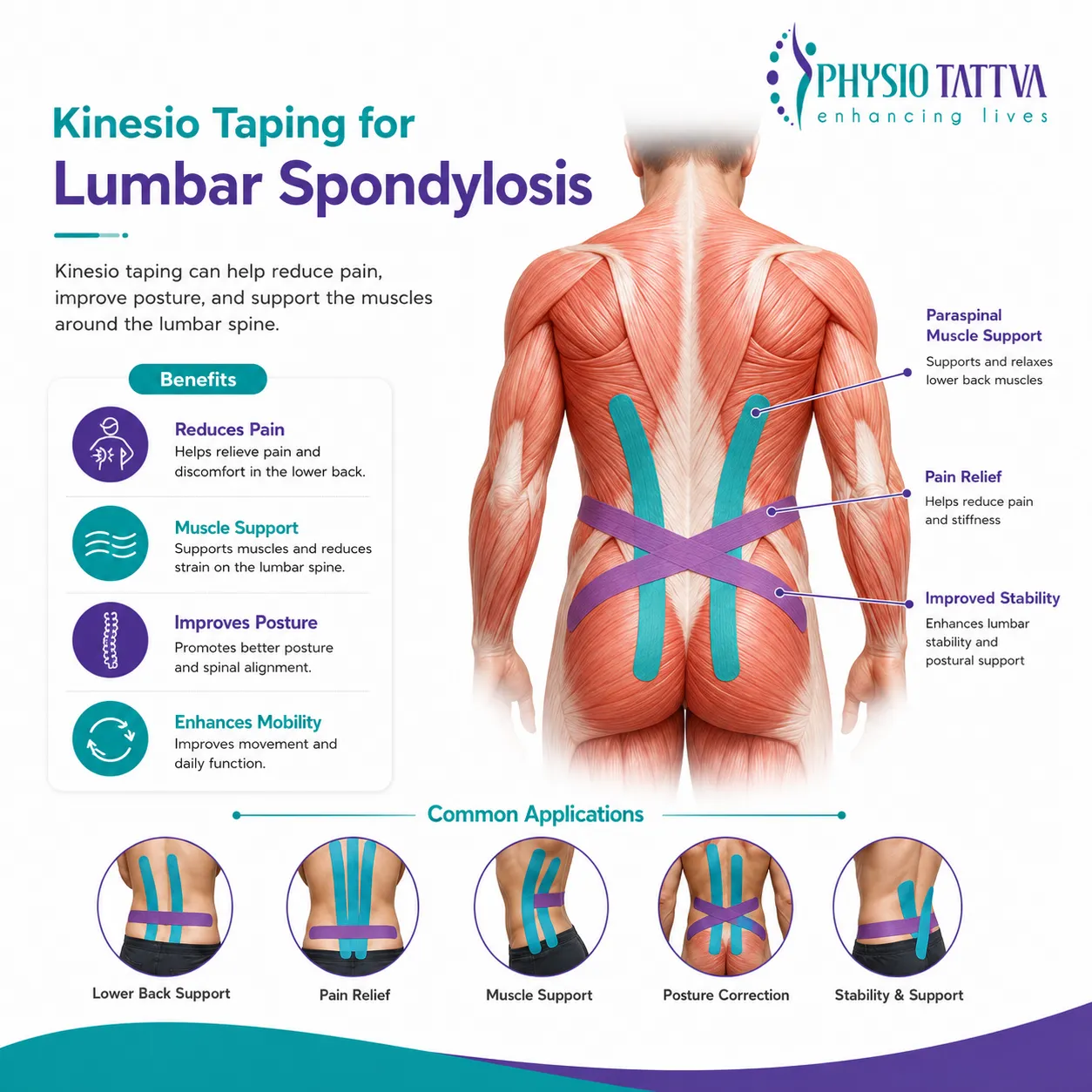
However, a typical application for general lumbar support might involve:
- Preparation: The skin must be clean, dry, and free of oils or lotions.
- "I" Strips: Two long strips are applied vertically on either side of the spine, along the main back muscles (erector spinae). These are often applied while you bend forward to stretch the skin.
- Decompression Strip: A shorter strip is applied with a moderate stretch horizontally across the most painful point in the lower back. The ends are laid down with no stretch.
This combination provides support, decompression, and pain relief right where it's needed.
Is Kinesio Taping a Standalone Solution?
Kinesio taping therapy for lumbar spondylosis is not a standalone cure; it works best when integrated into a comprehensive treatment plan. Consider it a supportive tool that enhances your ability to participate more effectively in the key components of your recovery.
- Physical Therapy & Exercise: The tape can reduce pain enough to allow you to perform prescribed strengthening and stretching exercises.
- Posture Correction: It serves as a constant physical reminder to maintain good posture.
- Manual Therapy: It can prolong the benefits of chiropractic adjustments or massage therapy.
Achieve Comfortable, Confident Movement with Support from Physiotattva
If you're struggling with pain from lumbar spondylosis and looking for a drug-free, non-invasive way to find relief, Kinesio taping therapy is an excellent option to discuss with your healthcare provider. A certified professional can create a taping strategy tailored specifically to your symptoms and anatomy.
At Physiotattva physiotherapy clinics in Bangalore and Hyderabad, you receive personalised care tailored to your specific needs, ensuring effective results and comfort throughout your journey to recovery.
Don’t wait to start your recovery! Get in touch with Physiotattva for more details! Contact us at +91 89510 47001.
Why Physiotattva?
22+
50,000+
95%
200+
25+
4.8
Cities We Serve

Bangalore
At Physio Tattva, we are committed to bring access to quality physio care through ultra-modern clinics and high-skilled practitioners to all.
.webp)
Hyderabad
At Physio Tattva, we are committed to bring access to quality physio care through ultra-modern clinics and high-skilled practitioners to all.
.webp)
Vishakhapatnam
At Physio Tattva, we are committed to bring access to quality physio care through ultra-modern clinics and high-skilled practitioners to all.
Core Treatments
Core Conditions
Core Symptoms
Frequently Asked Questions
How long can I wear KT tape for my lower back?

Are there any side effects to Kinesio taping?
Can I apply the tape myself for lumbar spondylosis?
Does Kinesio tape work for spinal arthritis?
How is Kinesio tape different from a back brace?






%20(1)-p-3200.jpeg)


.jpg)
.webp)
.webp)
.webp)