




Living with the sharp, radiating pain of a herniated disc, often referred to as a slipped or bulging disc, can be physically limiting and distressing. While medical care is important, simple at-home therapies can play a valuable role in easing discomfort and supporting overall pain management.
Hot and cold therapy are among the most effective and accessible options. However, knowing which one to use and when is essential. Using heat or ice at the wrong time may provide little relief or even worsen symptoms.
This article explains the science behind hot and cold therapy for a herniated disc and provides clear guidance on how and when to use each approach safely for maximum relief.
The Role of Cold Therapy (Cryotherapy): The Inflammation Fighter
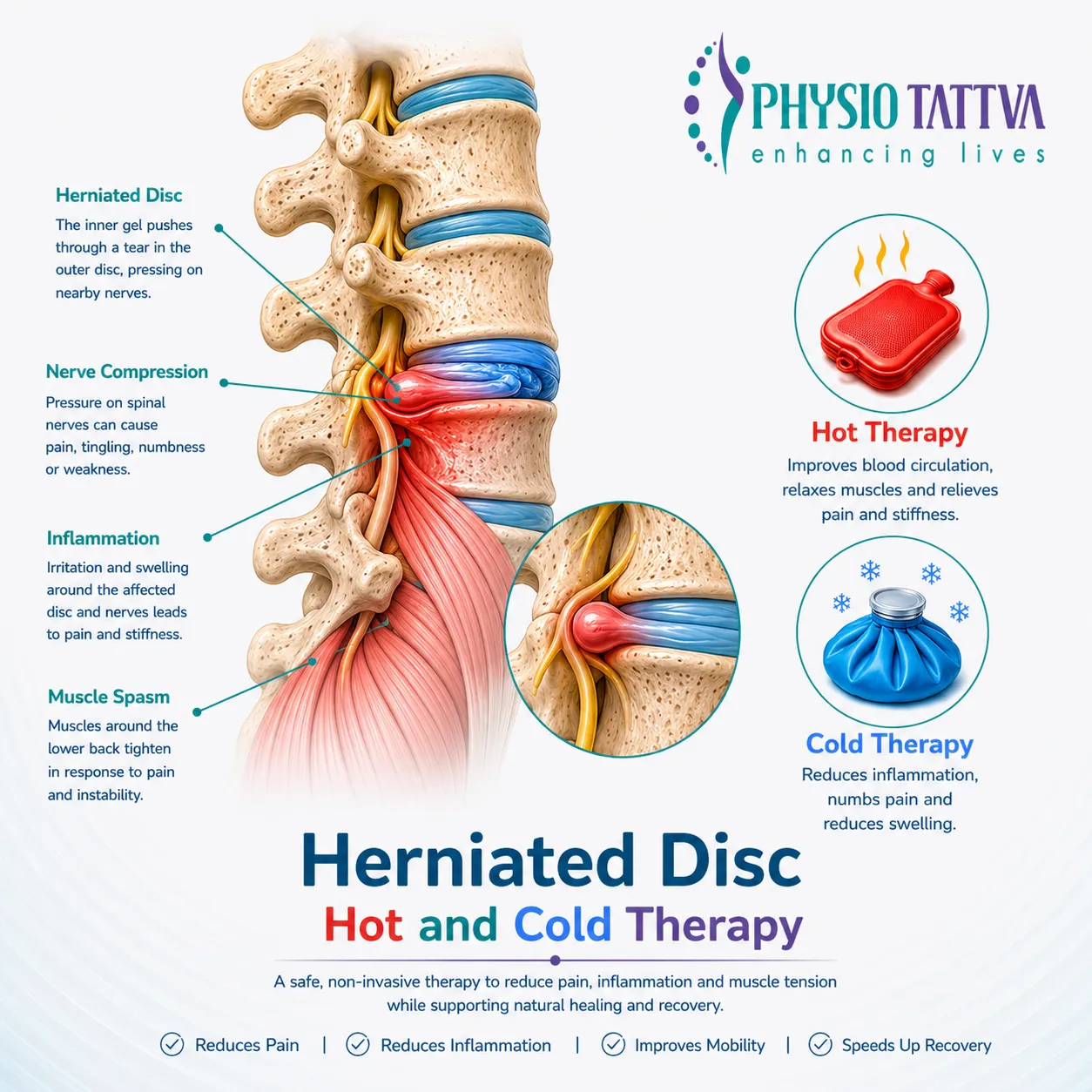
Think of cold therapy as your first-response team. Its primary job is to combat acute inflammation and numb pain.
How it Works: When you apply cold to your back, it causes vasoconstriction—the narrowing of blood vessels. This process has several key benefits:
- Reduces Inflammation and Swelling: By restricting blood flow, cold therapy limits the amount of inflammatory fluid reaching the injured area. This is crucial for a herniated disc, where inflammation around the nerve root is a major source of pain.
- Numbs the Area: Cold slows down nerve signals, acting as a natural local anesthetic to provide temporary but effective pain relief.
- Decreases Muscle Spasms: It can help calm the painful muscle spasms that often accompany a disc injury.
When to Use COLD Therapy?
Use cold therapy during the acute phase of your injury or during a flare-up.
- First 24-72 Hours of Injury: Immediately after the injury occurs or you feel the first sharp pains, cold is your best friend.
- After Physical Activity: Apply cold after a physical therapy session, exercise, or any activity that aggravates your back to prevent a flare-up of inflammation.
- For Sharp, Intense Pain: If you experience a sudden spike in sharp, shooting pain (often associated with sciatica), an ice pack can help calm the irritated nerve.
How to Apply Cold Therapy Safely?
To ensure effective pain relief and avoid skin irritation or injury, cold therapy should always be applied correctly and in a controlled manner:
- Protect Your Skin: Never apply ice or a frozen gel pack directly to the skin. Always wrap it in a thin towel or cloth to prevent ice burns.
- Duration: Apply cold therapy for 15–20 minutes at a time to avoid excessive tissue cooling.
- Frequency: Cold packs can be reapplied every 2–3 hours, especially during acute pain or inflammation.
- Tools: Common options include gel packs, a bag of frozen peas, or ice cubes placed in a sealed plastic bag.
The Role of Heat Therapy (Thermotherapy): The Muscle Relaxer
Once the initial, intense inflammation has subsided, heat therapy steps in to address stiffness and muscle tension.
How it Works: Applying heat has the opposite effect of cold: it causes vasodilation, the widening of blood vessels.
- Increases Blood Flow: Widened blood vessels bring more oxygen- and nutrient-rich blood to the area, which helps facilitate the healing process.
- Soothes Tight Muscles: Heat is excellent for relaxing the tight, spasming muscles in your back that are trying to "guard" the injured disc. This can dramatically reduce stiffness and improve mobility.
- Reduces Aching Pain: It provides a comforting, soothing sensation that can alleviate the dull, chronic ache associated with a healing herniated disc.
When to Use HEAT Therapy?
Use heat therapy during the chronic or sub-acute phase of your recovery.
- After the First 72 Hours: Once the initial inflammation is under control, switch to heat.
- Before Stretching or Light Activity: Applying heat for 15-20 minutes before you stretch or do gentle exercises can warm up the muscles, making movement easier and less painful.
- For Morning Stiffness: If you wake up with a stiff, aching back, a warm shower or heating pad can help you get moving.
- For Dull, Aching Pain: Heat is best for the persistent, achy pain that comes from muscle tension, not the sharp pain of nerve irritation.
Caution: Do not apply heat during the initial acute phase, as it can increase inflammation and swelling, making the pain worse.
How to Apply Heat Therapy Safely?
When using heat therapy for herniated disc–related pain and stiffness, following basic safety guidelines helps prevent skin irritation and ensures effective relief:
- Use Moderate Heat: The heat should be comfortably warm, not scalding hot.
- Protect Your Skin: Use a towel or cloth as a barrier between the heating pad and your skin.
- Duration: Apply for 15-20 minutes at a time.
- Safety First: Never fall asleep while using an electric heating pad to avoid burns.
- Tools: Use an electric heating pad, a moist heat pack, a warm compress, or take a warm bath or shower. Moist heat is often considered more effective at penetrating deep muscle tissue.
What About Alternating? Contrast Therapy
Contrast therapy involves alternating between hot and cold applications. This creates a "pumping" action in your blood vessels (vasodilation followed by vasoconstriction), which can help flush out inflammation and reduce muscle stiffness simultaneously.
This can be useful in the sub-acute phase (a few days after the initial injury) when you have both lingering inflammation and muscle stiffness.
A Simple Contrast Therapy Protocol:
- Start with 3-4 minutes of heat.
- Immediately follow with 1 minute of cold.
- Repeat this cycle 3-5 times.
- Always end with cold to finish with an anti-inflammatory effect.
Safe Use of Heat and Cold in Herniated Disc Care
Hot and cold therapy is a simple, inexpensive, and effective tool in your herniated disc recovery toolkit. Remember this simple rule:
- ICE for Injury and Inflammation (sharp, new pain).
- HEAT for Healing and stiffness (dull, lingering aches).
Always protect your skin, limit applications to 20 minutes, and listen to your body. If a therapy seems to be making your pain worse, stop immediately.
Disclaimer: This information is for educational purposes only and is not a substitute for professional medical advice. Always consult with your doctor or physical therapist to get an accurate diagnosis and a treatment plan tailored to your specific condition.
Using Heat and Ice Effectively for Herniated Disc Recovery
Hot and cold therapy can be a simple yet effective part of managing herniated disc pain when used at the right time and in the correct way. Cold therapy helps control inflammation and sharp pain during flare-ups, while heat therapy supports muscle relaxation and stiffness relief during recovery. When combined with guided physiotherapy and medical advice, these therapies can improve comfort, mobility, and overall recovery outcomes.
At Physiotattva physiotherapy clinics in Bangalore and Hyderabad, you receive personalised care tailored to your specific needs, ensuring effective results and comfort throughout your journey to recovery.
Don’t wait to start your recovery! Get in touch with Physiotattva for more details! Contact us at +91 89510 47001.
Why Physiotattva?
22+
50,000+
95%
200+
25+
4.8
Cities We Serve

Bangalore
At Physio Tattva, we are committed to bring access to quality physio care through ultra-modern clinics and high-skilled practitioners to all.
.webp)
Hyderabad
At Physio Tattva, we are committed to bring access to quality physio care through ultra-modern clinics and high-skilled practitioners to all.
.webp)
Vishakhapatnam
At Physio Tattva, we are committed to bring access to quality physio care through ultra-modern clinics and high-skilled practitioners to all.
Core Treatments
Core Conditions
Core Symptoms
Frequently Asked Questions
Is heat or cold better for sciatica nerve pain from a herniated disc?

Can I use both hot and cold therapy?
What should I do if the pain gets worse after using heat?
How do I know if I have a herniated disc or just muscle strain?
When is it urgent to see a doctor for a herniated disc?






%20(1)-p-3200.jpeg)


.jpg)
.webp)
.webp)
.webp)