




For individuals with Distal Muscular Dystrophy (DMDy), there is no cure that can reverse the underlying genetic condition. Therefore, management focuses on slowing progression, maintaining function, and maximizing quality of life. Manual therapy, a hands-on approach performed by skilled healthcare professionals, is a cornerstone of this supportive care.
Unlike treatments that target the disease itself, manual therapy addresses the secondary consequences of muscle weakness and wasting, such as joint stiffness, muscle tightness, and pain.
Understanding Distal Muscular Dystrophy: A Brief Overview
Distal Muscular Dystrophy refers to a group of rare inherited muscle conditions that primarily affect the muscles farthest from the centre of the body. The condition presents with distinct characteristics that influence movement and daily function, including:
- What It Is: A group of rare genetic muscle disorders that cause progressive weakening and degeneration of voluntary muscles.
- Key Feature: Progressive muscle weakness and wasting that typically begins in the distal muscles, including the hands, feet, lower legs, and forearms.
- Progression: The condition usually progresses slowly when compared to other forms of muscular dystrophy.
- Common Challenges: Difficulties with fine motor skills such as buttoning or writing, foot drop caused by weakness in ankle muscles, and balance or walking issues.
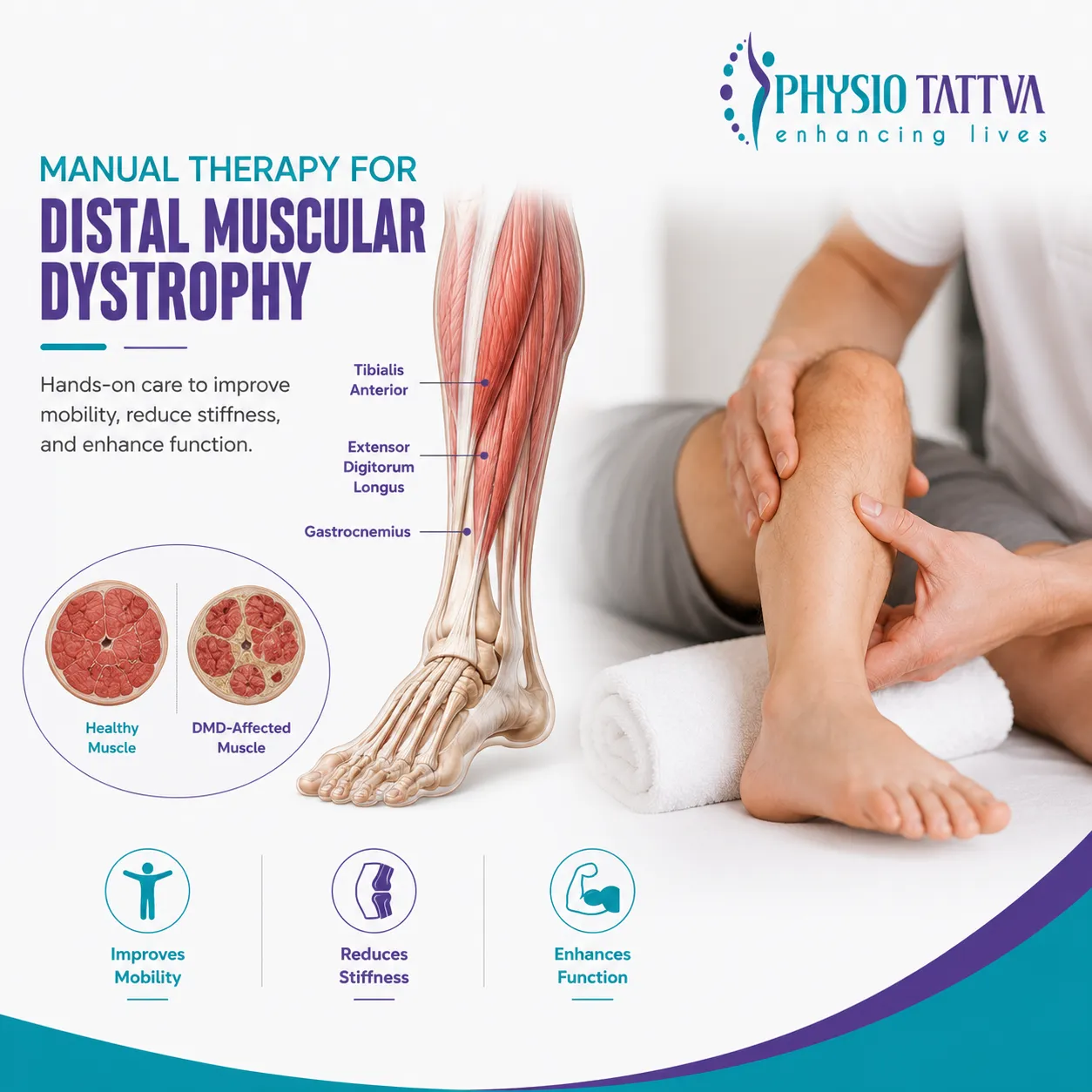
Goals of Manual Therapy for Distal Muscular Dystrophy
The primary objective is not to "strengthen" the weakened muscles through aggressive techniques (which can be harmful), but to maintain the health of the surrounding systems. The goals are:
- Maintain or Improve Joint Range of Motion (ROM): As muscles weaken, they can become tight, leading to joint contractures (permanent shortening of muscle/tendon tissue). Manual therapy helps keep joints moving freely.
- Reduce Pain and Discomfort: Muscle imbalances and compensatory movements can lead to strain, soreness, and pain in other areas of the body.
- Enhance Flexibility and Reduce Muscle Tightness: Gently stretching muscles and the surrounding connective tissue (fascia) can prevent stiffness.
- Optimize Function: By keeping joints mobile and muscles pliable, manual therapy helps individuals perform daily activities for as long as possible.
- Improve Circulation: Gentle soft tissue techniques can help promote blood flow to tissues.
Key Manual Therapy Techniques for Distal Muscular Dystrophy Care
A therapist specializing in neuromuscular conditions will use a combination of gentle, targeted techniques. Aggressive or deep tissue work is contraindicated as it can damage fragile muscle fibers.
Passive Range of Motion (PROM)
Passive range of motion exercises are a foundational part of manual therapy for neuromuscular conditions and are performed carefully to maintain joint health and flexibility.
- What it is: The therapist moves the patient's joint through its full available range without the patient's assistance.
- Why it's used: This is the most critical technique to prevent contractures in joints like the ankle, wrist, and fingers. For someone with foot drop, regular passive dorsiflexion (moving the foot upward) is essential.
Gentle Stretching
Gentle stretching is used to maintain muscle length and prevent stiffness without placing stress on weakened muscle fibres.
- What it is: The therapist applies a slow, sustained, and gentle stretch to a specific muscle or muscle group. The stretch is held for 20-30 seconds and should never be painful.
- Why it's used: To lengthen muscles that are prone to tightening, such as the calf muscles (gastrocnemius/soleus) to manage foot drop, or the forearm flexors to maintain hand-opening ability.
Joint Mobilization
Joint mobilisation focuses on improving joint mechanics and comfort rather than stretching the muscles themselves.
- What it is: Small, graded, passive movements of the joint surfaces themselves. This is different from stretching a muscle.
- Why it's used: To improve the mechanics of a joint, reduce stiffness, and manage pain. For example, gentle mobilizations of the small bones in the foot and ankle (tarsals) can improve mobility and comfort during walking.
Soft Tissue Mobilization / Therapeutic Massage
Soft tissue techniques are applied with controlled pressure to support circulation, reduce tightness, and improve tissue health.
- What it is: A variety of hands-on techniques applied to muscles, ligaments, and fascia. For DMDy, the pressure is always light to moderate.
- Effleurage (Gliding Strokes): Long, sweeping strokes to warm up tissues, improve circulation, and promote relaxation.
- Petrissage (Gentle Kneading): Used to reduce focal areas of muscle tightness (not deep "knots") and improve tissue pliability.
- Myofascial Release (MFR): A gentle, sustained pressure technique to release restrictions in the fascia, the connective tissue that surrounds muscles.
Important Considerations and Safety Precautions for Manual Therapy
When using manual therapy to manage Distal Muscular Dystrophy, careful planning and professional expertise are essential to ensure safety and effectiveness. Because dystrophic muscles are more fragile, therapy must always be gentle, individualised, and delivered as part of a broader care strategy. Key considerations include:
- Expertise is Essential: Seek a Physical Therapist (PT) or Occupational Therapist (OT) with experience in treating neuromuscular disorders. They understand the fragility of dystrophic muscle.
- "No Pain, No Gain" Does NOT Apply: Manual therapy for muscular dystrophy should never be painful. Pain is a signal that the tissue may be overstressed, which can lead to further muscle damage.
- Individualized Plan: The specific type of distal myopathy, its stage, and the individual's symptoms dictate the treatment plan. There is no one-size-fits-all approach.
- Part of a Comprehensive Program: Manual therapy is most effective when integrated with other interventions, including:
- Therapeutic Exercise: Gentle strengthening of unaffected or less-affected muscles, balance training, and endurance exercises.
- Orthotics & Bracing: Ankle-Foot Orthoses (AFOs) are commonly prescribed to manage foot drop and improve gait safety.
- Assistive Devices: Canes, walkers, and adaptive tools for daily living.
- Patient Education: Teaching the patient and their family how to perform safe home stretching and range of motion exercises.
Personalised Manual Therapy for Distal Muscular Dystrophy Care at Physiotattva
Manual therapy is a vital, non-invasive component of managing Distal Muscular Dystrophy. By focusing on maintaining joint mobility, reducing muscle tightness, and managing pain through gentle, specialized techniques, it directly contributes to preserving function, preventing secondary complications like contractures, and enhancing the overall quality of life for individuals living with the condition. It should always be performed by a qualified therapist as part of a personalized and comprehensive care plan.
At Physiotattva physiotherapy clinics in Bangalore and Hyderabad, you receive personalised care tailored to your specific needs, ensuring effective results and comfort throughout your journey to recovery.
Don’t wait to start your recovery! Get in touch with Physiotattva for more details! Contact us at +91 89510 47001.
Why Physiotattva?
22+
50,000+
95%
200+
25+
4.8
Cities We Serve

Bangalore
At Physio Tattva, we are committed to bring access to quality physio care through ultra-modern clinics and high-skilled practitioners to all.
.webp)
Hyderabad
At Physio Tattva, we are committed to bring access to quality physio care through ultra-modern clinics and high-skilled practitioners to all.
.webp)
Vishakhapatnam
At Physio Tattva, we are committed to bring access to quality physio care through ultra-modern clinics and high-skilled practitioners to all.
Core Treatments
Core Conditions
Core Symptoms
Frequently Asked Questions
Is manual therapy painful for someone with muscular dystrophy?

Can manual therapy cure Distal Muscular Dystrophy?
How often would I need manual therapy sessions?
Who is a suitable candidate for this therapy?



%20(1)-p-3200.jpeg)


.jpg)
.webp)
.webp)
.webp)