




If you’ve ever experienced a persistent, deep ache in your buttock that travels down the back of your leg, you may have encountered the frustrating condition known as piriformis syndrome. While stretching and traditional therapies offer relief for some, a growing number of patients are finding powerful, targeted relief through an innovative treatment: dry needling therapy for piriformis syndrome.
This article will break down everything you need to know, what piriformis syndrome is, how dry needling works, and whether it could be the key to unlocking your recovery.
Understanding Piriformis Syndrome
Before diving into the solution, it's essential to understand the problem.
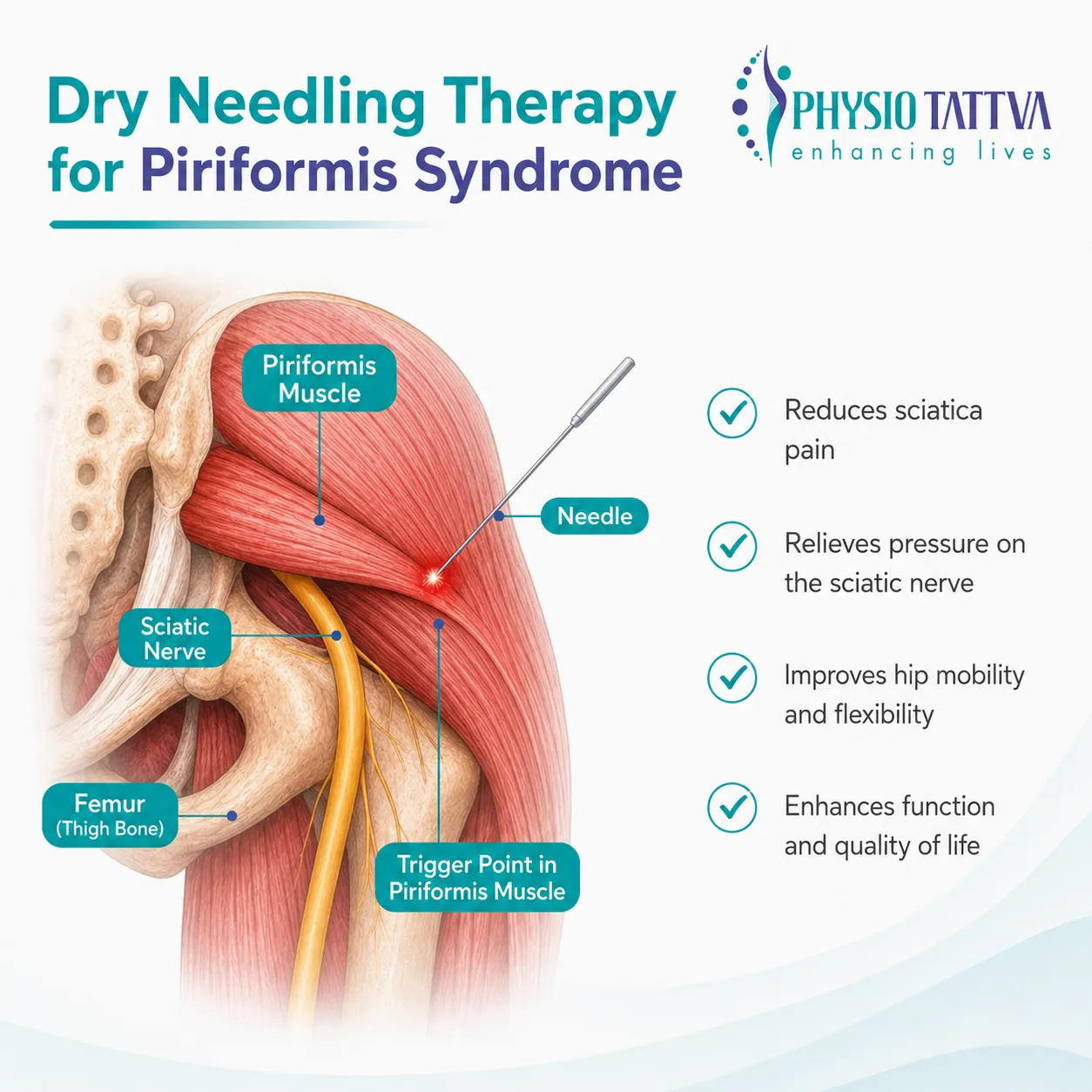
The piriformis is a small, pear-shaped muscle located deep within the buttock, behind the gluteus maximus. It runs from the lower spine to the top of the femur (thighbone) and is crucial for rotating the leg and hip outward.
Piriformis syndrome occurs when this muscle spasms, tightens, or becomes inflamed, putting pressure on the adjacent sciatic nerve. The sciatic nerve runs directly underneath (and in some people, through) the piriformis muscle. This compression mimics the symptoms of sciatica, leading to significant pain and discomfort.
Common Symptoms of Piriformis Syndrome
- A deep, dull ache or sharp pain in the buttock.
- Pain that radiates down the back of the thigh, calf, and sometimes into the foot (sciatic-like pain).
- Increased pain after prolonged sitting, climbing stairs, or running.
- Reduced range of motion in the hip joint.
- Tingling or numbness in the back of the leg.
What is Dry Needling Therapy?
Dry needling is a modern, science-based treatment performed by trained physical therapists, chiropractors, and physicians. It is not the same as acupuncture.
- Dry Needling is based on Western neuroanatomy and physiology. It involves inserting a thin, monofilament needle (a "dry" needle with no medication) directly into a myofascial trigger point.
- Acupuncture is a component of Traditional Chinese Medicine (TCM). It involves inserting needles into specific points along "meridians" to balance the flow of energy (Qi).
The primary goal of dry needling is to target and release trigger points—hyper-irritable "knots" of contracted muscle fibre that cause pain and dysfunction.
How Dry Needling Therapy for Piriformis Syndrome Works
The piriformis muscle is notoriously difficult to reach. It lies deep beneath the large gluteal muscles, making it challenging for massage or foam rolling to have a significant impact. This is where dry needling excels.
Here’s the step-by-step mechanism for how dry needling therapy for piriformis syndrome provides relief:
- Precise Targeting: A trained practitioner uses their anatomical knowledge to accurately locate the trigger points within the piriformis muscle.
- Needle Insertion: The thin needle is inserted through the skin and overlying muscle to directly access the tight piriformis bundle.
- Eliciting a Local Twitch Response (LTR): When the needle contacts the trigger point, it often elicits an LTR—an involuntary spinal cord reflex where the muscle fibers contract and then relax. This twitch is the "reset" button for the muscle.
- Breaking the Pain Cycle: The LTR and the presence of the needle create several positive effects:
- Mechanical Release: The twitch forcibly untangles the knotted muscle fibers.
- Chemical Change: It helps flush out pain-causing chemicals (like substance P and bradykinin) that have accumulated in the trigger point.
- Improved Blood Flow: It increases circulation to the area, bringing oxygen and nutrients needed for healing.
- Nerve Desensitization: It helps calm the irritated nerve endings, reducing the overall pain signals sent to the brain.
By releasing the tension in the piriformis muscle, the pressure on the sciatic nerve is alleviated, directly addressing the root cause of the pain.
What to Expect During a Dry Needling Session for Piriformis Syndrome
Understanding the steps involved can help you feel more comfortable and confident before your treatment. A dry needling session for piriformis syndrome is structured, controlled, and tailored to your specific symptoms.
- Assessment: Your therapist will first assess your posture, movement patterns, and palpate (feel) the gluteal and hip area to pinpoint the exact location of the trigger points.
- Positioning: You will lie comfortably on your stomach or side.
- Sterilisation: The practitioner will clean the skin over the treatment area with an alcohol swab.
- Treatment: The sterile needle will be inserted. You may feel a tiny prick or nothing at all. As the practitioner manipulates the needle to find the trigger point, you might feel a deep, achy sensation or the characteristic "twitch." While the twitch can be surprising, it is a sign that the treatment is working effectively. The needles typically remain in place for a few seconds to a few minutes.
- Post-Treatment: It is common to feel a dull ache or soreness in the treated muscle, similar to the feeling after an intense workout. This can last for 24-48 hours and is a normal response.
Key Benefits of Dry Needling Therapy for Piriformis Syndrome
Dry needling therapy offers several clinically proven benefits for individuals experiencing piriformis syndrome, particularly when pain is persistent or resistant to conventional treatments. By targeting the underlying muscular dysfunction, this approach supports both symptom relief and long-term recovery.
- Rapid Pain Relief: Many patients report a noticeable reduction in buttock and leg pain, along with improved mobility, sometimes even after the first session.
- Highly Targeted Treatment: Dry needling reaches the deep piriformis muscle more effectively than most manual therapies, allowing precise release of stubborn trigger points.
- Restores Normal Muscle Function: By deactivating trigger points, the piriformis muscle can relax and function properly without ongoing spasms or nerve compression.
- Accelerates Recovery: When combined with physiotherapy exercises and movement correction, dry needling helps speed up rehabilitation and reduces recurrence.
- Reduces Reliance on Medication: As a non-pharmacological treatment, dry needling provides effective pain relief without the side effects associated with long-term medication use.
Is Dry Needling a Standalone Cure?
While highly effective, dry needling therapy for piriformis syndrome works best as part of a comprehensive treatment plan. A full recovery often involves addressing why the piriformis muscle became tight in the first place.
A complete program should include:
- Dry Needling: To release the immediate knots and pain.
- Manual Therapy: Soft tissue massage on the surrounding muscles.
- Stretching: Gentle piriformis, hamstring, and hip flexor stretches to maintain flexibility.
- Strengthening: Exercises to build strength in weaker supporting muscles, especially the gluteus medius and core, to prevent recurrence.
- Postural and Ergonomic education: Modifying sitting habits or activity levels that contribute to the problem.
Deciding Whether Dry Needling Is the Right Treatment for You
Dry needling therapy can be an effective option for individuals who continue to experience piriformis syndrome symptoms despite trying conventional treatments. Understanding when and why this approach may help can guide you toward a more informed recovery decision.
- Dry needling is well-suited for chronic piriformis pain that has not responded fully to stretching, rest, or manual therapy.
- The technique directly targets deep muscle trigger points, helping reduce spasms and relieve pressure on the sciatic nerve.
- Many patients notice improvements in pain levels and mobility when dry needling is included in a structured physiotherapy programme.
- Treatment should always be delivered by a qualified and certified practitioner trained specifically in dry needling techniques.
- A professional assessment ensures the therapy is appropriate for your condition and supports safe, long-term recovery.
Supporting Long-Term Recovery from Piriformis Pain
Piriformis syndrome can be persistent and limiting when deep muscle tension continues to irritate the sciatic nerve. Dry needling therapy offers a precise, evidence-based approach to releasing these trigger points, reducing pain, and restoring normal muscle function. When delivered by a trained practitioner and combined with targeted stretching, strengthening, and movement correction, it can help break the cycle of pain and support lasting recovery. For individuals seeking a focused, non-pharmacological solution, dry needling can be a valuable part of a comprehensive physiotherapy plan.
At Physiotattva physiotherapy clinics in Bangalore and Hyderabad, you receive personalised care tailored to your specific needs, ensuring effective results and comfort throughout your journey to recovery.
Don’t wait to start your recovery! Get in touch with Physiotattva for more details! Contact us at +91 89510 47001.
Why Physiotattva?
22+
50,000+
95%
200+
25+
4.8
Cities We Serve

Bangalore
At Physio Tattva, we are committed to bring access to quality physio care through ultra-modern clinics and high-skilled practitioners to all.
.webp)
Hyderabad
At Physio Tattva, we are committed to bring access to quality physio care through ultra-modern clinics and high-skilled practitioners to all.
.webp)
Vishakhapatnam
At Physio Tattva, we are committed to bring access to quality physio care through ultra-modern clinics and high-skilled practitioners to all.
Core Treatments
Core Conditions
Core Symptoms
Frequently Asked Questions
Is dry needling therapy painful for piriformis syndrome?

How many sessions will I need for piriformis syndrome?
Are there any side effects of dry needling?
Who is a good candidate for this treatment for piriformis syndrome?






%20(1)-p-3200.jpeg)


.jpg)
.webp)
.webp)
.webp)